Have you ever wanted to stop a larger opponent in their tracks while training in Bremen? To master a sidekick in Taekwondo, you must drive your heel forward while turning your hips to create a wall of power. I used to struggle with my balance until I learned to tuck my knee tight before the strike. My years of teaching black belts have taught me that this is the most vital defensive move you can learn. Let’s break down the steps so you can land a perfect strike every time.
What Is a Sidekick in Taekwondo?
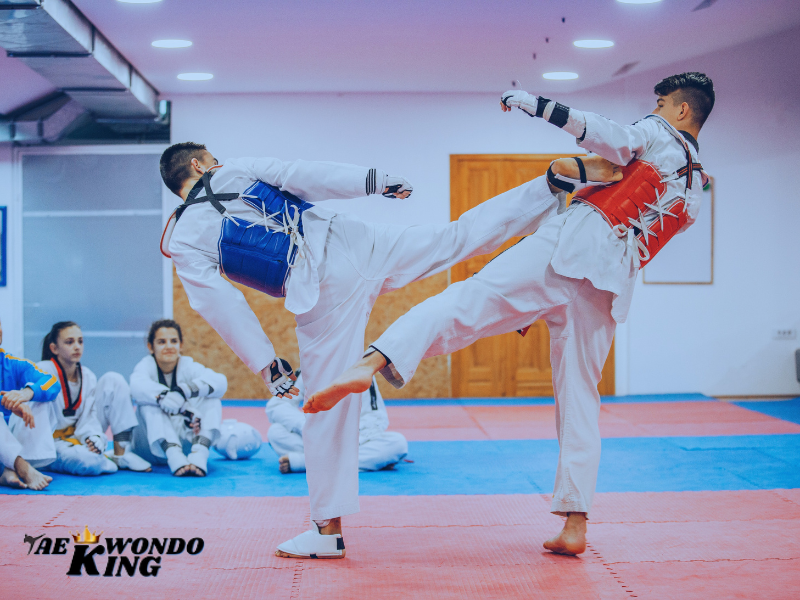
The sidekick in Taekwondo is a straight, powerful kick aimed at an opponent’s midsection or head. It is executed by extending the leg in a straight line while maintaining balance and posture. This kick combines speed, strength, and precision.
Step-by-Step Guide to Perform a Sidekick in Taekwondo
The sidekick in Taekwondo is one of the most effective and powerful techniques. It is widely used for self-defense, sparring, and demonstrations. Mastering this kick requires proper technique, balance, and practice. Whether you’re a beginner or experienced, learning the sidekick in Taekwondo enhances your overall martial arts skills.
Mastering the sidekick in Taekwondo involves breaking it into simple steps:
1. Start in a Fighting Stance
- Stand with your feet shoulder-width apart.
- Keep your knees slightly bent.
- Place your dominant leg behind you.
This stance prepares your body for the sidekick in Taekwondo.
2. Lift Your Knee
- Bring your back leg up towards your chest.
- Point your knee at the target.
- Maintain a firm balance on your standing leg.
This step is crucial for aiming your sidekick in Taekwondo.
3. Pivot on the Standing Foot
- Rotate your standing foot outward.
- Align your body sideways to the target.
- Ensure your hips and shoulders are squared.
This movement generates power for the sidekick in Taekwondo.
4. Extend Your Leg
- Push your leg out in a straight line.
- Use the heel of your foot to strike the target.
- Keep your toes pointed slightly downward.
The extension is the defining motion of the sidekick in Taekwondo.
5. Retract Your Leg
- Pull your leg back immediately after striking.
- Return to your fighting stance.
Quick retraction enhances speed and prevents counterattacks during the sidekick in Taekwondo.

Tips to Improve Your Sidekick in Taekwondo
Practice Balance
Use a wall or balance exercise to stabilize your stance.
Strengthen Your Legs
Build power by incorporating squats, lunges, and resistance training.
Focus on Targeting
Use a punching bag or target pads for accuracy.
Stretch Regularly
Flexibility is essential for a high and strong sidekick in Taekwondo.
Maintain Posture
Avoid leaning too far forward or backward during the kick.
How to Master the Sidekick in Taekwondo
The sidekick in Taekwondo is often called the “king of kicks” because it is so hard to stop. You start by lifting your knee to your chest, which we call “chambering.” From there, you push your heel out in a straight line while pivoting your standing foot. In the USA, many self-defense experts love this move because it keeps a safe gap between you and an attacker. It is not about how high you go, but how much force you put into that straight line.
- The Chamber: Pull your knee high to hide your intent from your rival.
- The Foot: Pull your toes back so only your sharp heel hits the target.
- The Pivot: Turn your bottom foot away to unlock your hip for more reach.
Summary: A strong sidekick depends on a tight chamber and hitting with the heel to maximize impact and safety.
Common Mistakes and How to Fix Them
I see many students try to swing their leg like a bat, but a sidekick in Taekwondo should be a stab. If you don’t turn your hips over, you lose all your power and might hurt your knee. I found that practicing next to a wall helped me keep my leg straight and my body lean in check. Many US gyms use heavy bags to test if the kick is pushing through the target or just tapping it.
| Mistake | Result | The Fix |
| No Pivot | Low Power | Turn base foot 180 degrees |
| Hitting with Toes | Broken Toes | Flex the ankle to show the heel |
| Leaning Too Far | Loss of Balance | Keep your head over your hips |
Summary: Avoiding common errors like poor foot placement ensures your kick is both powerful and safe for your joints.
My Personal Training Secrets
When I was getting ready for my black belt, I did fifty sidekicks on each leg every single day. I found that the sidekick in Taekwondo got much better when I worked on my side-glute strength. It is a slow process, but the first time you feel that solid “thud” on a heavy bag, you know it is working. Be patient with your body and focus on the form before you try to add speed.
Summary: Consistent repetition and building specific hip muscles are the best ways to develop a world-class sidekick.
Common Mistakes to Avoid
Poor Foot Alignment
Always strike with your heel, not your toes.
Lack of Pivot
Rotating your standing foot is crucial for power.
Slow Retraction
Leaving your leg extended makes you vulnerable.
Overextension
Avoid overreaching, as it can affect your balance.
Why Is the Sidekick in Taekwondo Important?
The sidekick in Taekwondo is versatile and effective. It’s used in:
- Sparring: To create distance and score points.
- Self-Defense: To incapacitate opponents with a single strike.
- Demonstrations: To showcase precision and power.
The sidekick in Taekwondo combines both offensive and defensive elements.
Training Drills for the Sidekick in Taekwondo
Wall-Supported Kicks
Practice slow kicks while holding a wall for balance.
Target Practice
Use a focus pad or shield to improve accuracy.
Speed Drills
Perform rapid sidekicks to build speed.
Strength Training
Incorporate weighted ankle straps for resistance.
Conclusion
The sidekick in Taekwondo is a cornerstone technique that showcases the martial arts’ precision and power. By following the proper steps and practicing regularly, anyone can master this kick.
Focus on balance, posture, and speed to make your sidekick in Taekwondo effective in both sparring and self-defense. With dedication and consistent training, you can elevate your Taekwondo skills to new heights.
FAQs
Start in a fighting stance. Your body should face slightly sideways.
Lift your knee to your chest. Pivot your standing foot outward.
Push your heel straight out. Keep your leg fully extended.
The heel is the striking surface. This gives the kick maximum power.
Keep your core tight. Focus on your supporting leg.
Pivot your hips and use your whole body. Drive the kick through the target.
Use a wall for support. Focus on form and control first.
Dropping the knee or striking with the wrong part of the foot. These reduce power and accuracy.
Stretch daily for flexibility. Practice slowly, then increase speed and power.

Founder, Owner, and CEO of TaekwondoKing.
He is one of the top 100 martial artists in the World and among the top 20 referees in Bangladesh.
Ehatasamul Alom is an esteemed Kukkiwon Certified Taekwondo 3rd Dan Black Belt with over 15 years of experience in this dynamic martial art. Born in Rajshahi, Bangladesh, Ehatasamul’s journey with Taekwondo began at the tender age of seven. His passion led him to compete at national and international levels, where he has bagged numerous awards and honors. He is also a member of the Taekwondo National Referee Panel.
With a Bachelor’s degree in Sports Science from the prestigious Rajshahi University, Ehatasamul has a deep understanding of the technical and scientific aspects of martial arts and some other martial arts.
In 2022, Ehatasamul created the “TaekwondoKing.com” to share his knowledge, Free Resources, Values, and Real experiences. His articles focus on Taekwondo training techniques, competition strategies, Sport Products Reviews, and the art’s rich history and philosophy. He also writes about the importance of mental fortitude and discipline, key aspects of his teaching philosophy. He has already launched many sports, Taekwondo, and health-related Free online tools. His goal is to inspire both beginners and seasoned practitioners worldwide through insightful and engaging content.
If you need any help, contact Ehatasamul Alom at any time.