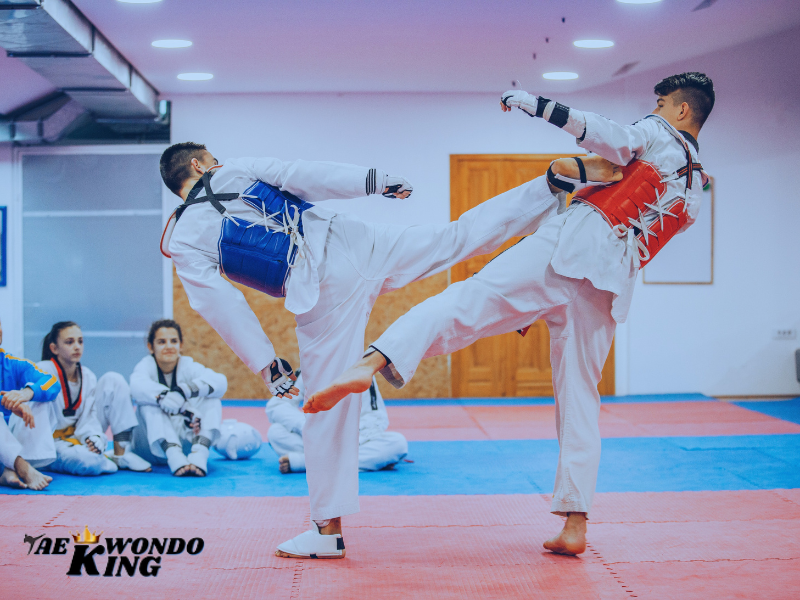
Standing in a drafty sports hall in Reading on a wet Saturday morning, I remember the exact moment the “Taekwondo speed vs power” debate clicked for me. I was sparring a lad much smaller than me. I launched a roundhouse kick that felt like a sledgehammer. It hit his ribs with a thud that echoed off the gym walls. My coach just shook his head. No point.
Seconds later, my opponent flicked a light, whip-like kick that barely grazed my head guard. Beep. The electronic scoring system lit up. He got three points; I got a sore foot and a lesson in humility.
If you are training in a UK club, you have likely felt this frustration. Do you spend your evening smashing the heavy bags, or do you work on being fast like a cat? It is a tough balance. This guide shares what I have learned from years on the mats. We will look at when to train for speed, when to build power, and how British schools blend the two.
What Speed and Power Mean in Taekwondo
In our sport, these two things are like tea and milk. They go together, but they are not the same.
Speed in Taekwondo explained
Speed is about how fast you can react and move. It is not just about your foot moving through the air. It includes your reaction time when you see an opening. Speed also covers execution speed, how fast the kick goes from the floor to the target. Finally, there is recovery speed. If you miss, how fast can you get your foot back down to avoid being hit?
Power in Taekwondo explained
Power is about force generation. It is the weight you put behind the strike. This comes from your hip rotation and how well you use the floor. In Taekwondo, we call this “mass transfer.” It is the difference between a slap and a punch. True power needs a solid connection to the ground and a body that moves as one unit.

How Speed and Power Affect Different Taekwondo Styles
Where you train and what style you do will change your focus. Context matters more than ego here.
WT (Olympic-style) Taekwondo
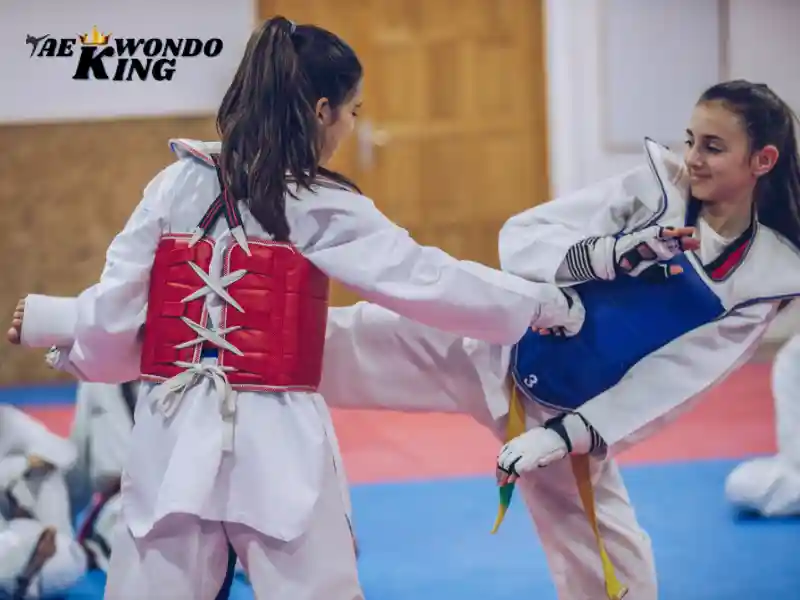
In World Taekwondo (WT) clubs, speed is king. Because we use electronic hogus (chest protectors), you only need to hit with enough “threshold” to trigger the sensor. If you are too slow, your opponent will score and move before your heavy kick even arrives. Here, we focus on fast, snappy contact.
ITF and traditional training
International Taekwon-Do Federation (ITF) and traditional schools often value power more. There is a huge focus on technique and “sine wave” movement. In these classes, you spend more time on breaking boards and patterns. An examiner wants to see that your kick could actually stop a fight, not just trigger a sensor.
Speed vs Power in Sparring
This is where the debate gets real on the mats. You can hear the difference: the sharp snap of a fast kick versus the dull thud of a powerful one.
Why speed often wins matches
In a modern match, the first person to touch usually gets the point. Speed allows you to:
- Score first: You beat the other person to the punch (or kick).
- Disrupt rhythm: Fast, light kicks keep your opponent from setting up their own attacks.
- Save energy: It takes less breath to flick a fast kick than to throw a heavy “house” kick.
When power still matters
Power is not useless in a fight. It helps with clinch control. If you are strong, you can push opponents away. It also creates psychological pressure. If an opponent knows your kicks hurt, they become hesitant. They stop coming forward. That fear gives you control over the ring.
Speed vs Power in Gradings and Patterns
When you stand in front of a panel of black belts, they are not looking for points. They are looking for mastery.
What examiners look for
Instructors look for control and balance. If you throw a fast kick but fall over, you fail. They want to see a “snap” at the end of the move. This is where speed and power meet. It is a sharp release of energy that shows you have the muscle to stop the kick exactly where you want it.
Common grading mistakes
Many students try to “muscle” their way through a grading. They tense up, which actually makes them slower. Others rush through their patterns to look fast, but they lose their stance. You must show structure. A fast kick without a solid stance is just a flail.
Physical Differences Between Speed and Power Training
Your body adapts to how you treat it. You cannot train for a marathon and expect to win a sprint.
Muscles and nervous system
Speed training wakes up your fast-twitch muscle fibres. It trains your brain to send signals to your legs faster. Power training is more about coordination and raw strength. It teaches your body to use every muscle, from your calves to your shoulders, to drive into a target.
Injury risks for each approach
- Speed: Watch your hamstrings and groin. Fast, cold kicks can pull muscles easily.
- Power: Watch your joints. Hitting heavy bags constantly can jar your knees, hips, and lower back. Always wrap your ankles or use proper footwear if your club allows it.
How UK Taekwondo Clubs Typically Train Both
Most clubs in the UK do not pick just one. A standard session usually blends them.
Typical class structure
A good session starts with mobility. We then move to technical drills where we work on speed. This is usually done in the air or against light pads. Toward the end, we bring out the heavy pads for power work. Finally, we put it all together in controlled sparring.
Seasonal focus shifts
If a big competition is coming up, the coach will pivot to speed and “points” drills. During the “off-season” or before a grading, we focus on strength, fitness, and the raw power needed for breaking techniques.
When to Focus on Speed Training
Speed is your best friend when you need to be sharp and reactive.
Ideal times to prioritise speed
- Two weeks before a match: You want your legs to feel “bouncy” and light.
- During fitness peaks: When you are at your fittest, your nerves can handle high-speed drills.
- Point-stop sparring: When the rules reward the first touch.
Speed training examples
Try rapid fire kicks on a shield. Do ten kicks in five seconds. Use reaction pads where the partner flashes a target and you must hit it instantly. These drills build that “twitch” you need to score.
When to Focus on Power Training
Power is your foundation. Without it, your speed has no “bite.”
Ideal times to prioritise power
- Early in the season: Build the muscle base you need for the rest of the year.
- Before a grading: You need to ensure your kicks can break a board or a plastic re-breakable.
- Strength phases: When you are spending more time in the gym than on the mats.
Power training examples
Use heavy bag work. Don’t just kick it; try to kick through it. Slow-motion kicks are also great. Hold a kick for five seconds at the highest point. It builds the deep hip strength that creates real force.
British Expert Advice on Speed vs Power
I asked a local legend about this balance to see if my experience matched the pros.
“Speed scores points, but power builds the kick. The best students learn when to use each. If you only have speed, you are a tagger. If you only have power, you are a statue. You must be both.”
— Master Jonathan Reeves, 6th Dan WT, Surrey
Common Mistakes in Speed and Power Training
We all make them. Here is what to avoid so you don’t waste your time in the dojang.
Speed mistakes
The biggest error is sacrificing technique. If your knee is not in the right place, the kick won’t land well, no matter how fast it is. Also, tension is a speed killer. If your shoulders are up by your ears, you will be slow. Stay loose until the moment of impact.
Power mistakes
Many people over-tense their whole body. This makes the move “telegraphed,” meaning the opponent sees it coming a mile away. Also, don’t train power when you are exhausted. That is when you stop using your hips and start using your joints, which leads to injury.
Taekwondo Speed vs Power Training Comparison
This comparison reflects training approaches commonly used in UK WT clubs.
| Feature | Speed Focus | Power Focus |
| Main Benefit | Faster scoring and timing | Effective strikes and breaking |
| Best Used For | Tournament sparring | Gradings and self-defence |
| Key Muscle | Fast-twitch fibres | Core and glutes |
| Risk if Overdone | Poor form and “flailing” | Joint strain and fatigue |
How to Balance Speed and Power in One Week
You don’t have to choose. You can do both if you plan your week properly.
Sample weekly focus split
- Monday: Speed-focused (Fast pad work and footwork).
- Wednesday: Power-focused (Heavy bag and slow strength drills).
- Thursday: Mixed Technical (Patterns and light sparring).
- Saturday: Full Sparring (Applying both in a live setting).
Listening to your body
If your knees feel “clicky,” back off the power. If your legs feel heavy like lead, skip the speed drills and do some stretching. Taekwondo is a marathon, not a sprint. You want to be kicking when you are eighty.
The Mental Side of Speed vs Power
Training choices change how you feel. Speed builds sharpness. When you are fast, you feel clever and agile. It gives you a mental edge. Power builds assurance. Knowing you can hit hard makes you feel safe.
In my experience, the most “dangerous” people in the gym are the calm ones. They have the power to finish a fight, but the speed to make sure they never have to. That balance builds a quiet composure that wins more than just trophies.
Why the Best Taekwondo Practitioners Train Both
At the end of the day, Taekwondo is about adaptability. A one-trick pony gets found out very quickly in a match. If you only have speed, a strong opponent will walk through your kicks. If you only have power, a fast opponent will dance around you all day.
Training both makes you a complete martial artist. It keeps your body healthy and your mind engaged. Whether you are in a hall in London, Manchester, or Reading, the goal is the same: to be better than you were yesterday.
Final Recommendation
If you are a beginner, focus on power and technique first. Build the right “shape” for your kicks. Once your body knows the path, the speed will come naturally. If you are a senior grade, start playing with the “gears.” Learn how to throw a light, fast probe to set up a heavy, powerful finish.
FAQs
Taekwondo speed vs power training compares fast strikes with heavy strikes. Speed hits first, power hits harder. Most students train both for balance.
It depends on your goal. Speed helps in sparring and quick points. Power helps in breaks and strong impact. A mix usually works best.
Use light pads and short bursts. Practise fast kicks and footwork drills. Keep form clean and relaxed. Speed grows when muscles stay loose.
Train strength with squats, core work, and slow strong kicks. Use heavy bags for impact. Focus on hip drive and timing, not just force.
Not really. Good speed can boost power with snap and timing. When both work together, strikes feel sharp and heavy at the same time.
Try two speed sessions and two power sessions each week. Keep sessions short and focused. Rest days help muscles recover and grow stronger.
Yes, it gives you an edge. Speed scores points fast, while power shows control and impact. Blending both makes your style more complete.

Founder, Owner, and CEO of TaekwondoKing.
He is one of the top 100 martial artists in the World and among the top 20 referees in Bangladesh.
Ehatasamul Alom is an esteemed Kukkiwon Certified Taekwondo 3rd Dan Black Belt with over 15 years of experience in this dynamic martial art. Born in Rajshahi, Bangladesh, Ehatasamul’s journey with Taekwondo began at the tender age of seven. His passion led him to compete at national and international levels, where he has bagged numerous awards and honors. He is also a member of the Taekwondo National Referee Panel.
With a Bachelor’s degree in Sports Science from the prestigious Rajshahi University, Ehatasamul has a deep understanding of the technical and scientific aspects of martial arts and some other martial arts.
In 2022, Ehatasamul created the “TaekwondoKing.com” to share his knowledge, Free Resources, Values, and Real experiences. His articles focus on Taekwondo training techniques, competition strategies, Sport Products Reviews, and the art’s rich history and philosophy. He also writes about the importance of mental fortitude and discipline, key aspects of his teaching philosophy. He has already launched many sports, Taekwondo, and health-related Free online tools. His goal is to inspire both beginners and seasoned practitioners worldwide through insightful and engaging content.
If you need any help, contact Ehatasamul Alom at any time.