Standing in a cold leisure centre in Sheffield on a Thursday night taught me a lot about gravity. I was trying to hold a slow side kick, but I just ended up hopping around like a startled flamingo. It was a bit embarrassing, but it made me realise that taekwondo balance training is the secret sauce for every great martial artist. You do not need magic to stay upright; you just need the right drills and a bit of grit.
Why Balance Is So Important in Taekwondo
If you cannot stand on one leg, you cannot kick. It is as simple as that.
Balance affects every kick and movement
When you lift your leg, your centre of gravity shifts. Good balance helps you control the “chamber” or the knee lift. It lets you reach higher and pull your leg back without falling over. Without it, your kicks lose all their power.
Where most students lose balance
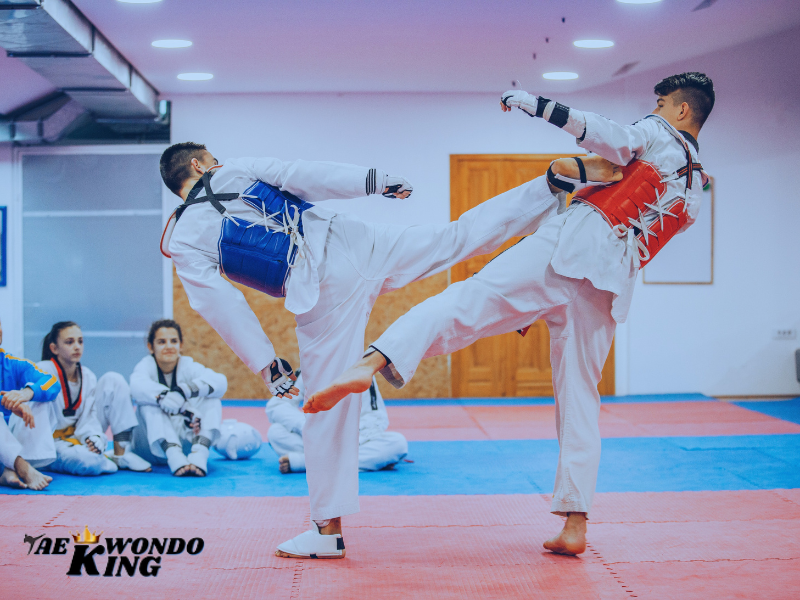
Most people wobble during side kicks or back kicks. These moves require you to turn your hips while staying on one foot. Recovery is also a big issue. Many students land flat on their faces after a big turning kick because they did not train their reset.

Static vs Dynamic Balance in Taekwondo
You need two types of stability to be a complete fighter.
Static balance explained
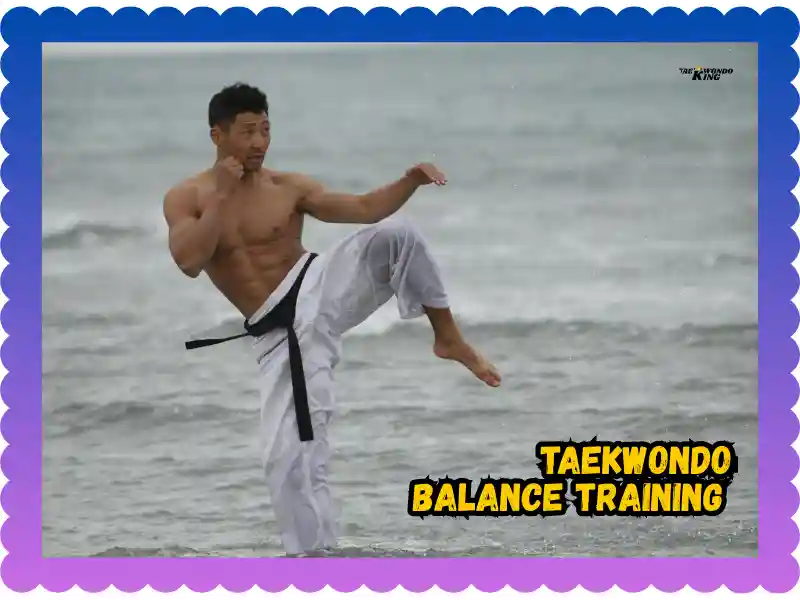
This is about staying still. Think of holding a chamber pose or a high one-leg stance. It builds the small muscles in your ankles and feet. It is the foundation for technical beauty.
Dynamic balance explained
This is balance in motion. It happens when you kick while moving forward or changing direction. In sparring, you are rarely standing still, so your body needs to know how to stay upright while flying through the air.
Common Balance Problems Beginners Face
Do not worry if you feel like a bowl of jelly. Everyone starts there.
Physical causes
Often, beginners have weak ankles. Your feet are not used to gripping the mat. Poor hip control is another big one. If your glutes are weak, your leg will feel heavy and pull you off course.
Mental causes
Rushing is the biggest mistake. People want to kick fast before they can kick slow. Overthinking also makes you stiff. If you fear falling, your body tenses up, which actually makes you more likely to tumble. Just relax and feel the floor.
The Foundations of Good Taekwondo Balance
Good stability starts from the ground up.
Foot placement and pressure
Think of your foot as a tripod. You want pressure on your big toe, little toe, and heel. Do not just lean back on your heel. Spreading your weight helps you grip the mat like a cat.
Core engagement (without over-tensing)
Your core is your anchor. You do not need to pull it in so tight that you cannot breathe. Just keep it firm. This connects your upper body to your legs and keeps you from swaying.
Basic Taekwondo Balance Training Drills
You can do these simple drills anywhere, even while waiting for the kettle to boil.
Single-leg stance progressions
Start by standing on one leg for 30 seconds. Once that is easy, try closing your eyes. It is much harder than it looks! This forces your brain to rely on your muscles rather than your sight.
Slow kick balance drills
- Front kick holds: Lift your knee, extend the kick slowly, and hold for five seconds.
- Side kick pauses: Hold the side chamber and feel the burn in your hip.
- Roundhouse resets: Kick, then hold the leg out before putting it down gently.
Dynamic Balance Drills for Kicking Control
Now we add some movement to the mix.
Moving kick drills
Try a step-kick-hold sequence. Step forward, fire a kick, and hold the finish for three seconds. This teaches your body to find its centre after a big move.
Sparring-style balance drills
Bounce lightly on the balls of your feet. On a signal, change direction or fire a quick counter-kick. This mimics the chaos of a real match while keeping you in control of your feet.
Balance Training for Sparring
In a match, balance is your best defence.
Staying balanced under pressure
If you miss a kick, you are vulnerable. Balance helps you get your foot back on the floor fast. If someone pushes you, a strong base prevents you from falling and losing points.
Reducing falls and slips
Sports hall floors can be slippery. Training your balance helps you reposition your feet instantly. It keeps you safe and ready to fire back.
How Often Should You Train Balance for Taekwondo?
Consistency beats intensity every single time.
Adding balance into normal classes
You do not need a separate hour for this. Practice your balance during warm-ups or while the instructor is explaining a drill. Every second on one leg counts.
Short home balance sessions
Spend 5 to 10 minutes a day at home. Doing it barefoot on a hard floor is best. It strengthens the arches of your feet and builds long-term stability.
British Expert Advice on Taekwondo Balance Training
I once spoke to a top coach who gave me the best tip for steady kicks.
“Balance improves fastest when students slow down and feel the floor beneath them.”
— Master Helen Foster, 6th Dan WT, Nottingham
Common Balance Training Mistakes
- Locking the standing knee: This makes you stiff. Keep a tiny bend in your leg.
- Holding breath: This raises your centre of gravity. Keep your breathing low and steady.
- Rushing drills: Speed hides bad balance. Slow down to find the truth.
- Training one side: We all have a “lazy” leg. Give it extra love.
Taekwondo Balance Training at a Glance
This table shows how to plan your weekly stability work.
| Training Type | Example Drill | Frequency | Purpose |
| Static | Chamber holds | 3–4× weekly | Muscle control |
| Dynamic | Step-kick drills | 2–3× weekly | Movement stability |
| Sparring | Recovery drills | Weekly | Safety and speed |
Balance Training for Different Levels
Beginners
Focus on slow holds. Do not worry about how high you kick. Just focus on not falling over. Patience is your best friend here.
Intermediate & Advanced
Try standing on a folded mat or a cushion to create an unstable surface. This makes your ankles work twice as hard. You can also try multi-kick sequences without putting your foot down.
Balance, Confidence, and Mental Control
When you trust your feet, your mind calms down. You stop hesitating before a kick. You feel more “planted” and ready. That quiet confidence shows in your technique and how you carry yourself in the dojang.
Mastering the Stillness: Stability for 2026 Competition
In modern Taekwondo, a kick without balance is just a wasted movement. Whether you are performing a slow, controlled Poomsae or an explosive 360 Crescent Kick, your ability to maintain a “Keystone” center of gravity is what separates the masters from the amateurs.
1. The “Top-Down” Method
Many beginners make the mistake of looking at their feet when they lose balance. In 2026, we teach the Top-Down method:
- Focus Point: Keep your eyes on a fixed point at eye level.
- Shoulder Alignment: Your shoulders must stay parallel to your hips. If your torso leans too far back to gain height, your center of gravity moves outside your “base of support,” causing a fall.
- The Core Anchor: Tighten your lower abdominals (Danjeon) to act as a stabilizer between your upper and lower body.
2. The Ball-of-Foot Advantage
A common error is standing “flat-footed” or on the heel.
- Why it fails: Resting on the heel locks the ankle, making it impossible to micro-adjust to shifts in weight.
- The Pro Tip: Stay light on the ball of your supporting foot. This engages the calf muscles and allows for the fast pivoting required for power generation.
3. Stability Training Drills
| Drill | Focus Area | Reps/Sets |
| Static Chamber Hold | Ankle Stability | 30s per leg |
| Slow-Mo Side Kicks | Core Control | 10 Reps per leg |
| Eyes-Closed Balance | Proprioception | 15s per leg |
4. Proprioception: The Mind-Body Map
Your brain uses “Proprioception” to know where your limbs are without looking at them. In 2026, we recommend training on uneven surfaces (like grass or a foam pad) to force the brain to communicate more efficiently with the stabilizing muscles in the ankle and knee.
Expert Insight: If you feel yourself losing balance mid-kick, do not try to “catch” yourself with your arms. Instead, bend your supporting knee slightly. Lowering your center of mass closer to the ground provides an instant increase in stability.
Why Better Balance Improves Everything in Taekwondo
Improving your balance makes everything else easier. Your techniques look cleaner. You get injured less because your joints are stable. Most of all, training becomes more fun because you feel in total control of your body. It is the best gift you can give your martial arts journey.
FAQs
Taekwondo balance training helps you stay steady on one leg. It improves kicks, blocks, and turns. Good balance means more control and fewer slips.
Start with simple drills like single-leg stands and slow kicks. Use a wall for support if needed. Short daily practice builds confidence fast.
Yes, better balance gives you stronger control in the air. Your hips stay stable, so kicks rise higher and land clean. Form feels smoother too.
Train three to four times a week for best results. Ten minutes per session is enough. Small, steady work beats long, rare sessions.
Try slow front kicks, side kicks, and hold poses. Add wobble boards or cushions later. These drills wake up core muscles and sharpen focus.
Yes, strong balance protects ankles and knees. You react faster and land safer. It lowers the risk of twists during fast moves or sparring.
Very useful. It keeps you steady when you strike or turn. In sparring and poomsae, clean balance makes every move look sharp and controlled.

Founder, Owner, and CEO of TaekwondoKing.
He is one of the top 100 martial artists in the World and among the top 20 referees in Bangladesh.
Ehatasamul Alom is an esteemed Kukkiwon Certified Taekwondo 3rd Dan Black Belt with over 15 years of experience in this dynamic martial art. Born in Rajshahi, Bangladesh, Ehatasamul’s journey with Taekwondo began at the tender age of seven. His passion led him to compete at national and international levels, where he has bagged numerous awards and honors. He is also a member of the Taekwondo National Referee Panel.
With a Bachelor’s degree in Sports Science from the prestigious Rajshahi University, Ehatasamul has a deep understanding of the technical and scientific aspects of martial arts and some other martial arts.
In 2022, Ehatasamul created the “TaekwondoKing.com” to share his knowledge, Free Resources, Values, and Real experiences. His articles focus on Taekwondo training techniques, competition strategies, Sport Products Reviews, and the art’s rich history and philosophy. He also writes about the importance of mental fortitude and discipline, key aspects of his teaching philosophy. He has already launched many sports, Taekwondo, and health-related Free online tools. His goal is to inspire both beginners and seasoned practitioners worldwide through insightful and engaging content.
If you need any help, contact Ehatasamul Alom at any time.