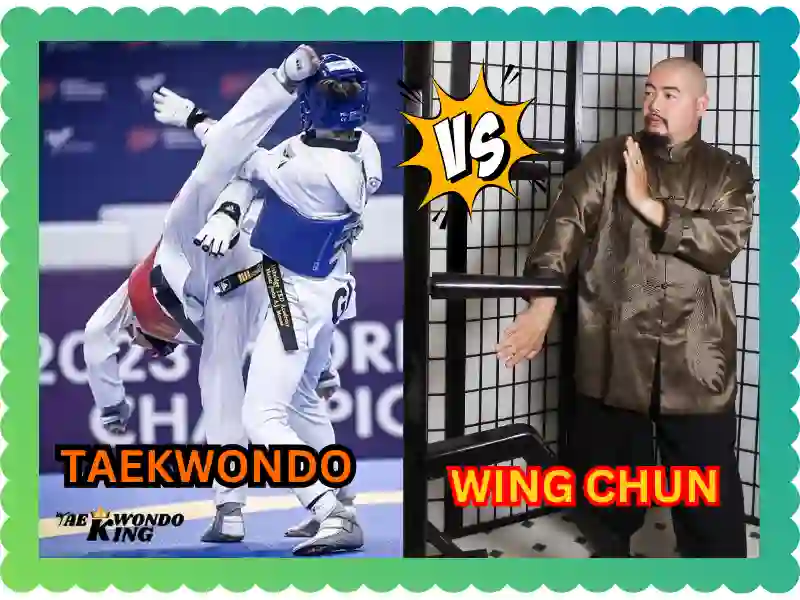
Ever wonder which martial art would suit you best while walking through the historic center of Hanover? When looking at Tiquando vs Wing Chun, the main choice is between the high-speed, long-range kicks of Taekwondo and the fast, close-quarters hand trapping of Wing Chun. I remember my first sparring match where I struggled to find the right gap; it taught me that range is everything. As a long-time trainer who has studied both the “way of the foot” and the “beautiful springtime” style, I can help you find your perfect fit. Let’s explore which path will help you reach your goals today.
Historical Background
A common inquiry within the martial arts community is the comparison of various styles, especially Tiquando VS Wing Chun. These two separate martial arts possess individual philosophies, techniques, and histories. In this article, I will explore the main distinctions and similarities between Taekwondo and Wing Chun, offering a thorough comparison to aid in your comprehension of their unique characteristics.
Tiquando:
Tiquando is a Korean traditional fighting style that has its origins in ancient Korean martial arts like Taekkyeon and Subak. It was standardized during the 1940s and 1950s, with General Choi Hong Hi playing a major role in its progress. Taekwondo focuses on quick, powerful kicks and lively hand movements, blending aspects of fighting, protection, competition, fitness, and philosophy.
Wing Chun:
Wing Chun, a Chinese martial art, was created in the Qing Dynasty. Ng Mui, a Shaolin Buddhist nun, and her student Yim Wing Chun are credited with this. Wing Chun’s main focus is on close combat, highlighting efficient movement, straight punches, and centerline principles. It is known for being practical and effective in real-life self-defense scenarios.

Comparing the Range of Tiquando vs Wing Chun
The biggest difference between Tiquando vs Wing Chun is the distance you keep from your partner. Taekwondo (often spelled Tiquando by beginners) is a Korean art that uses long legs to strike from far away. Wing Chun is a Chinese system that works best when you are close enough to touch your opponent’s chest. In the USA, many people pick Taekwondo for the great leg workout, while those in busy cities often prefer Wing Chun for tight-space safety.
- Taekwondo: Uses about 80% kicks to keep people at a distance.
- Wing Chun: Uses “sticky hands” to control an opponent’s arms at close range.
- Movement: Taekwondo is light and bouncy, whereas Wing Chun is direct and stable.
Summary: Taekwondo prioritizes maintaining a safe distance through athletic kicking, while Wing Chun focuses on controlling and striking from a very close range.
Technical Skills and Training Tools
If you choose Tiquando vs Wing Chun, your daily drills will look very different. In a Taekwondo “dojang,” you will spend hours hitting pads and practicing high-flying jumps to build power. In a Wing Chun “kwoon,” you might spend your time on a wooden dummy to learn how to deflect strikes with ease. I have found that Taekwondo builds amazing lung power, but Wing Chun gives you a unique “feel” for an opponent’s next move.
| Feature | Taekwondo (TKD) | Wing Chun |
| Primary Weapon | Powerful high kicks | Rapid chain punches |
| Philosophy | Dynamic and sport-like | Efficient and direct |
| Key Tool | Kicking shields | Wooden Dummy (Mook Yan Jong) |
Summary: Taekwondo training emphasizes cardiovascular endurance and explosive power, while Wing Chun focuses on structural efficiency and tactile reflexes.
My Personal View on Finding Your Path
I have spent years on the mats looking at Tiquando vs Wing Chun to see which one creates a better sense of self. I love the freedom I feel when I land a perfect spinning kick, but I also value the calm focus that Wing Chun trapping brings to my mind. For most of my friends in the USA, the choice often comes down to what is most fun for them and how the local master teaches. Both paths lead to the same result: a stronger, more confident version of yourself.
Summary: The most effective martial art is the one that keeps you engaged and consistently shows up for your personal growth and physical health.
Tiquando vs Wing Chun: Philosophical Underpinnings
Tiquando Philosophy:
The five principles that guide Tiquando are Courtesy, Integrity, Perseverance, Self-Control, and Indomitable Spirit. These principles aim to develop both physical abilities moral character and ethical conduct. Practitioners are advised to incorporate these principles into their everyday routines, advocating for a well-rounded and controlled way of living.
Wing Chun Philosophy:
The core principles of Wing Chun focus on being pragmatic, effective, and straightforward. It focuses on efficient and precise movements, reducing unnecessary energy and motion. The fundamental principle in Wing Chun is centerline theory, which involves controlling and attacking along the central axis of the opponent’s body. This method encourages the concept of swiftly and efficiently neutralizing a rival.
Techniques and Training
Tiquando Techniques:
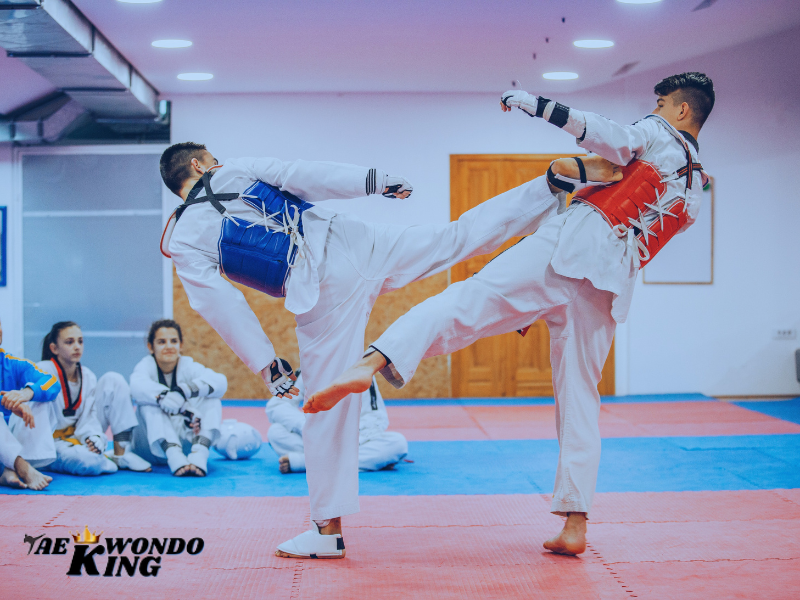
Tiquando is famous for its strong, fast, and high kicks including the roundhouse kick, sidekick, and spinning hook kick. It also integrates hand moves, such as punches, blocks, and strikes. Training frequently involves patterns (poomsae), combat (kyorugi), and breaking skills (kyokpa). Key elements of Taekwondo training include physical fitness, flexibility, and endurance.
Wing Chun Techniques:
Wing Chun prioritizes close-quarters combat tactics, highlighting fast, straight strikes, trapping, and control skills. Primary methods involve chain punches, palm strikes, and low kicks. Training in Wing Chun frequently includes practicing different forms like Siu Nim Tao, Chum Kiu, and Biu Jee, as well as sensitivity drills like Chi Sao and training with a wooden dummy. The focus in the art is on speed, precision, and control rather than on raw strength.
Training Focus and Methodology
Tiquando Training:
Training in Tiquando frequently focuses heavily on the competitive aspects of sports, particularly Olympic-style sparring. Traditional Taekwondo schools also emphasize forms (poomsae), which are a series of movements symbolizing defensive and offensive techniques. Physical fitness in Tiquando training is achieved through focusing on physical conditioning, flexibility, and endurance.
Wing Chun Training:
Wing Chun training prioritizes practical self-defense applications, focusing on realistic and effective techniques to counter threats. Practice involves sensitivity exercises (Chi Sao) that enhance reflexes and tactile perception, enabling individuals to react naturally to an adversary’s actions. Forms and wooden dummy training aid in perfecting techniques and enhancing precision.
Taekwondo vs Wing Chun Similarities
- Martial Discipline: Both Taekwondo and Wing Chun instill a sense of discipline and respect in practitioners. These values are essential in fostering a positive and respectful training environment, promoting personal growth and ethical behavior.
- Self-Defense Focus: While their approaches differ, both Tiquando and Wing Chun are effective self-defense systems. They teach practitioners how to protect themselves and respond to various threats, enhancing personal safety and confidence.
- Physical and Mental Development: Both martial arts contribute to physical fitness, mental discipline, and personal growth. Practitioners develop strength, flexibility, coordination, and mental focus through consistent practice.
Differences between Tiquando vs Wing Chun
- Combat Range:
- Tiquando: Emphasizes long-range techniques, particularly powerful, high, and fast kicks. Tiquando’s combat approach is more linear and direct, focusing on speed and impact from a distance.
- Wing Chun: Focuses on close-quarters combat, utilizing quick, direct strikes, trapping, and control techniques. Wing Chun’s combat approach is more compact and efficient, designed for close-range encounters.
- Technique Variety:
- Tiquando: Specializes in striking techniques, with a particular emphasis on kicking. The variety of kicks in Taekwondo is extensive, showcasing the art’s focus on leg techniques.
- Wing Chun: Offers a range of techniques, including strikes, trapping, and control techniques. Wing Chun’s approach is more holistic, incorporating hand strikes, low kicks, and grappling elements.
- Training Environment:
- Tiquando: Training often includes competitive sparring, form practice, and breaking techniques. The environment is often oriented towards sport and competition, especially in schools that follow the Olympic style.
- Wing Chun: Training often simulates real-life self-defense scenarios, incorporating sensitivity drills and wooden dummy training. The environment is more focused on practical self-defense applications and refining technique precision.
Choosing the Right Path: Tiquando vs Wing Chun
Tiquando and Wing Chun provide distinct and valuable methods for martial arts learning, each with specific strengths and principles. Tiquando is known for its impressive and forceful kicking techniques, which encourage fitness, competition, and a disciplined way of living. On the flip side, Wing Chun offers a very efficient and practical self-defense technique that focuses on precision, efficiency, and fighting in close quarters.
As someone who has practiced and coached Tiquando for a long time, I suggest individuals try out different martial arts to see which one suits their goals and interests the most. Both Taekwondo and Wing Chun provide valuable avenues for achieving mastery in martial arts.
Whether you are interested in improving physical fitness, competing, or learning self-defense techniques. In the end, your decision between Tiquando and Wing Chun should be based on your goals, hobbies, and the principles you aim to develop in your practice of martial arts.
FAQs
Tiquando uses long-range kicks and fast moves. Wing Chun works in close range with simple hits and blocks. Both train timing and balance in different ways.
Wing Chun feels better for tight spaces and real self-defense. Tiquando works best with distance and room to kick. The right choice depends on your needs.
Wing Chun is simple at the start. Tiquando has forms, kicks, and ranks to learn. Both take time to master.
Tiquando fits kids, athletes, and people who enjoy sport and speed. It also offers events and belts that help track progress.
Wing Chun fits adults who want fast results in close-range fighting. Its moves are small and simple, which can help with real-life self-defense.
Tiquando builds strong legs and cardio. Wing Chun builds arm strength, posture, and timing. Both boost coordination in different ways.
Yes. Tiquando adds distance, kicks, and speed. Wing Chun adds close hand skills and control. The mix can create a balanced skill set that grows over time.

Founder, Owner, and CEO of TaekwondoKing.
He is one of the top 100 martial artists in the World and among the top 20 referees in Bangladesh.
Ehatasamul Alom is an esteemed Kukkiwon Certified Taekwondo 3rd Dan Black Belt with over 15 years of experience in this dynamic martial art. Born in Rajshahi, Bangladesh, Ehatasamul’s journey with Taekwondo began at the tender age of seven. His passion led him to compete at national and international levels, where he has bagged numerous awards and honors. He is also a member of the Taekwondo National Referee Panel.
With a Bachelor’s degree in Sports Science from the prestigious Rajshahi University, Ehatasamul has a deep understanding of the technical and scientific aspects of martial arts and some other martial arts.
In 2022, Ehatasamul created the “TaekwondoKing.com” to share his knowledge, Free Resources, Values, and Real experiences. His articles focus on Taekwondo training techniques, competition strategies, Sport Products Reviews, and the art’s rich history and philosophy. He also writes about the importance of mental fortitude and discipline, key aspects of his teaching philosophy. He has already launched many sports, Taekwondo, and health-related Free online tools. His goal is to inspire both beginners and seasoned practitioners worldwide through insightful and engaging content.
If you need any help, contact Ehatasamul Alom at any time.