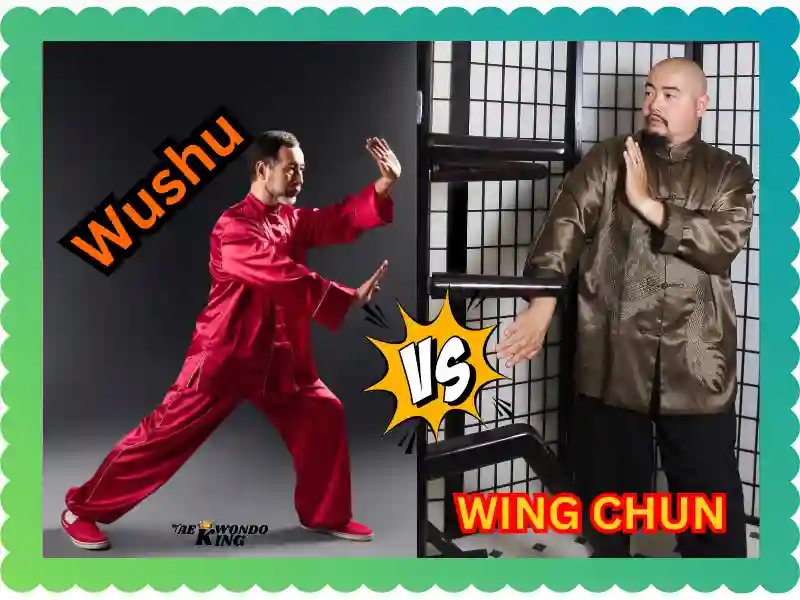
Ever watched a movie in Dresden and wondered why some fighters move like water while others fly through the air? The choice of Wing Chun vs. Wushu comes down to whether you want a close-range self-defense system or a flashy, athletic performance art. I once tried a Wushu jump and landed flat on my face, making me realize I much prefer the grounded, fast handwork of Wing Chun. As a martial arts coach who has studied Chinese combat for years, I can help you see the nodes of difference between these two “entities.” Let’s look at which style fits your own goals best today.
What is Wing Chun? A Brief Diagram
Wing Chun could be a conventional Chinese martial art that centers on speed. Close-range combat and commonsense self-defense methods. Starting in southern China, Wing Chun emphasizes proficient development, adjustment, and accuracy over brute drive. Specialists are prepared to respond quickly to dangers. Leveraging timing, and strategy to incapacitate or divert adversaries.
Key Characteristics of Wing Chun
Close-Range Combat:
Known for its capacity to adjust to kept spaces. Wing Chun professionals remain inside near nearness to their adversaries.
The economy of Movement: Each development is coordinated, utilizing negligible constrain for the greatest effect.
Affectability and Reactivity:
Specialists frequently utilize Chi Sao (sticky hands) to create affectability. which permits them to feel and respond to their opponent’s developments.

What is Wushu? An Outline of This Martial Arts and Its Variations
Wushu, on the other hand. May be a more enveloping term utilized to depict different Chinese martial arts. Counting both conventional shapes and cutting-edge, competitive hones. Advanced Wushu, advanced around the world. Incorporates a center on gymnastic developments, expressive methods, and physical conditioning. Whereas Wushu offers a few authentic roots with Wing Chun. It separates in its accentuation on execution, creativity, and physical aesthetics.
Key Characteristics of Wushu
Tasteful and Performative: Wushu includes liquid, energetic developments. Consolidating flips turns, and hops that exhibit physicality and elegance.
Flexibility: Wushu covers both empty-hand shapes and weapon shapes. Giving professionals a wide run of aptitudes.
Seriously Physical Conditioning: Specialists of Wushu regularly experience thorough preparation to construct quality, adaptability, and perseverance.
Wing Chun vs. Wushu: Beginnings and Philosophical Underpinnings
The martial arts world is endless. With each teacher carrying a special mix of logic, procedure, and culture. Two exceedingly regarded however differentiating styles. Wing Chun vs Wushu, have picked up worldwide notoriety due to their adequacy, magnificence, and significant social legacy. For apprentices, devotees, or experienced military specialists. Understanding the contrasts between Wing Chun and Wushu. It can give an understanding into which hone best adjusts with their objectives. Be it self-defense, wellness, creativity, or individual development.
Authentic Roots of Wing Chun
Legend has it that Wing Chun was created by a Shaolin sister named Ng Mui. and afterward popularized by martial artists such as Ip Man. The craftsmanship shape was made to supply dependable self-defense. This strategy is for individuals of smaller stature, emphasizing the ability to overestimate.
Roots and Improvement of Wushu
The term Wushu is interpreted as “martial arts” in Chinese. Including different styles that date back thousands of a long time. Advanced Wushu evolved as a don within the 20th century. Combining conventional strategies with a more structured approach suited for competitions and exhibitions. Wushu isn’t bound to one specific fashion. Instep, it typifies various martial arts conventions in China. Such as Changquan (Long Clench hand) and Nanquan (Southern Clench hand).
Methods and Aptitudes: Wing Chun vs. Wushu
The strategies in Wing Chun and Wushu are distinctive. Not as it were in appearance but too in application and logic.
Wing Chun Methods
Chain Punching:
Known as the “straight blast,” this strategy includes conveying different quick punches in speedy progression.
Catching and Avoidance:
Wing Chun professionals utilize procedures like Pak Sao (slap hand) to catch and avoid approaching assaults.
Centerline Hypothesis:
This rule instructs specialists to protect. And assault along the centerline, the body’s most helpless region.
Wushu Strategies
Tall Kicks and Clearing Developments:
Wushu emphasizes agility, adaptability, and broad utilization of tall and moo kicks.
Energetic Shapes:
Shapes, or Taolu, incorporate expound schedules combining methods with a solid accentuation on speed, control, and exactness.
Weapons Preparing: Practitioners train with conventional Chinese weapons such as the sword (Jian), staff (Weapon), and skewer (Qiang). Which are integral to competitive Wushu.
Comparing Wing Chun vs. Wushu
The main split in Wing Chun vs. Wushu is their core purpose. Wing Chun is a practical “southern” style built for tight spaces and quick, direct hits to the center line. Modern Wushu is often a “northern” sport that looks like a mix of dance and gymnastics with high kicks and wide sweeps. In the USA, you will often find Wushu at big tournaments, while Wing Chun is mostly taught in smaller, private clubs.
- Wing Chun: Focuses on “Chi Sao” (sticky hands) and short-range power.
- Wushu: Focuses on “Taolu” (forms) that show off speed, jumps, and grace.
- Defense: Wing Chun is for the street; Wushu is for the stage or sport.
Summary: Wing Chun is a combat-focused system for close encounters, whereas Wushu is an aesthetic sport emphasizing athletic prowess and performance.
Which One Should You Learn?
If you want to feel safe walking home at night, the Wing Chun vs. Wushu debate leans toward Wing Chun. It does not require you to be a pro athlete to be good at it. However, if you want to get in the best shape of your life and learn how to use a sword or staff, Wushu is amazing. US parents often pick Wushu for their kids to build balance and confidence through hard physical work.
| Feature | Wing Chun | Wushu |
| Main Goal | Practical Defense | Sport & Art |
| Movements | Short & Fast | Long & Flowing |
| Fitness | Moderate | Very High |
Summary: Your decision should be based on whether your priority is learning direct self-defense or achieving high-level physical conditioning through artful movement.
My Personal View on the Two Styles
I have spent time in both worlds, and I can tell you that Wing Chun vs. Wushu both offer a great way to learn about Chinese culture. I found that Wing Chun made me much calmer in a crowd because I knew how to guard my space. Wushu gave me a sense of joy because of how it felt to move my body in such big, beautiful ways. No matter which you pick, you are starting a path that will make you a stronger person.
Summary: Both disciplines provide valuable insights into martial heritage while improving different aspects of mental and physical wellbeing.
Which is Way Better for Self-Defense?
On the off chance that self-defense is the essential goal. Wing Chun is frequently seen as more viable due to its center on close-range battling. Speedy reaction, and accentuation on debilitating an aggressor with negligible effort. Its core strategies are planned to neutralize dangers viably. And quickly, particularly in restricted spaces.
Wushu, whereas viable in its conventional shapes. Inclines more toward the performative side of martial arts. Competitive Wushu, particularly, needs the coordinate common sense for real-world self-defense. In any case, the conventional styles included inside Wushu can be valuable for self-defense. If the case is adjusted and prepared suitably.
Is Wing Chun way better than Wushu for self-defense?
Wing Chun is for the most part considered more commonsense for self-defense. Due to its center on close-range combat and effectiveness. Whereas Wushu emphasizes tasteful execution and physicality.
Which Martial Arts is harder to memorize?
Both have their challenges. Wing Chun requires creating affectability and control to a near extent. Whereas Wushu includes serious physical conditioning and gymnastic abilities.
Do Wing Chun and Wushu utilize weapons?
Wing Chun essentially centers on hand-to-hand procedures. But a few styles incorporate the butterfly swords and long posts. Wushu incorporates broad weapons preparation. With swords, staffs, and lances being common.
Can Wushu be utilized viably in a genuine battle?
Conventional Wushu strategies can be viable in combat. But competitive or present-day Wushu inclines more towards execution. And may not be as down to earth for real-world self-defense.
Which martial arts is superior for wellness?
Wushu for the most part offers a more strong workout due to its gymnastic and high-energy developments. Whereas Wing Chun makes strides in wellness through muscle control, adjustment, and reflex preparation.
Is Wing Chun simpler for tenderfoots compared to Wushu?
Wing Chun can be less demanding to begin with since it centers on crucial self-defense aptitudes. Wushu regularly requires more adaptability and stamina. Which can be challenging for tenderfoots.
Can I learn both Wing Chun and Wushu?
Yes, numerous martial artists ponder numerous disciplines to broaden their abilities. In any case, it’s basic to adjust the differentiating procedures and methods of insight into each craftsmanship.
What is the most contrast between Wing Chun and Wushu?
Wing Chun could be a close-combat martial art centered on viable self-defense. Whereas Wushu is more sweeping, mixing conventional shapes. And modern athletic components for execution.
Which martial arts includes a more prominent accentuation on speed?
Both emphasize speed but in several ways. Wing Chun centers on quick, effective strikes within the near run. Whereas Wushu joins speed in broader, more energetic developments.
Is Wing Chun or Wushu more well-known around the world?
Wushu features an expansive taking after. Particularly in China and in martial arts competitions. Wing Chun is additionally universally prevalent. Due to its affiliation with Bruce Lee and commonsense self-defense.
Physical Wellness and Conditioning
Both Wing Chun and Wushu offer critical physical benefits. But they do so in totally different ways:
Wing Chun:
Professionals create quality, reflexes, and nimbleness without high-impact conditioning. Preparing centers on muscle control, soundness, and perseverance.
Wushu:
The athletic requests are higher due to gymnastic developments. Specialists construct dangerous quality and adaptability. And cardiovascular continuance through thorough, full-body works out.
Mental and Otherworldly Benefits: Teach and Focus
Martial arts frequently give mental and otherworldly development. Both Wing Chun and Wushu emphasize teaching, regard, and self-mastery.
Wing Chun:
Centers on creating persistence, mindfulness, and a calm mindset. Through Chi Sao and drills, professionals learn to tune in and adjust to rivals.
Wushu:
Emphasizes diligence, mental perseverance, and teaching. Specialists learn to achieve a balance between the intellect and the body. Improving by and large self-confidence and strength.
Ubiquity and Worldwide Reach
Both Wing Chun and Wushu have critical followings around the world. Even though for distinctive reasons:
Wing Chun:
Picked up universal acclaim mostly through Bruce Lee. They started his martial arts travel with Wing Chun sometime recently creating Jeet Kune Do. The worldwide Wing Chun community proceeds to extend. With schools and classes accessible around the world.
Wushu:
Incorporates a massive taking after in China and is celebrated in numerous worldwide competitions. Present-day Wushu has ended up a staple in martial arts competitions. And is recognized by universal military arts organizations.
Choosing Between Wing Chun and Wushu
The choice between Wing Chun and Wushu eventually depends on individual objectives and inclinations:
For Commonsense Self-Defense:
Wing Chun’s viable procedures are regularly more compelling for real-world circumstances.
For Wellness and Tasteful Request:
Wushu gives an energetic. Outwardly locks in a workout with a solid center on adaptability and aerobatic aptitudes.
For Individual Improvement:
Both offer mental and physical development. But Wing Chun inclines towards calm, systematic preparation. Whereas Wushu offers escalated and expressive development.
Conclusion
Choosing between Wing Chun and Wushu depends to a great extent on what you need from a martial arts hone. Both expressions bring something interesting to the table. Wing Chun is commended for its down-to-earth self-defense methods. Whereas Wushu stands out for its stylish magnificence and physical meticulousness. As a Taekwondo professional with broad martial arts encounter. Investigating these martial arts can give you important experiences. And indeed complementary procedures to upgrade your travel in Taekwondo or other disciplines.
Whichever martial arts you select. The travel itself guarantees gigantic physical and mental rewards. And for a more profound investigation of martial arts information and preparing assets. Be beyond any doubt to visit TaekwondoKing. Com for master bits of knowledge and direction.
FAQs
Wing Chun focuses on close-range self-defense. Wushu focuses on performance, speed, and acrobatic forms for sport and display.
Yes, Wing Chun is designed for real self-defense. Wushu is mainly for competition and visual skill, not fighting.
Wing Chun is easier to start due to simple movements. Wushu needs flexibility and time to master complex forms.
Wushu is a real martial art system. Modern Wushu is sport-based, while traditional styles focus on combat roots.
Yes, beginners can start both. Wing Chun suits those wanting self-defense. Wushu suits those who enjoy movement and fitness.
Wushu gives strong cardio and flexibility. Wing Chun builds coordination, balance, and hand speed.
Choose Wing Chun for self-defense focus. Choose Wushu for sport, flow, and athletic performance.

Founder, Owner, and CEO of TaekwondoKing.
He is one of the top 100 martial artists in the World and among the top 20 referees in Bangladesh.
Ehatasamul Alom is an esteemed Kukkiwon Certified Taekwondo 3rd Dan Black Belt with over 15 years of experience in this dynamic martial art. Born in Rajshahi, Bangladesh, Ehatasamul’s journey with Taekwondo began at the tender age of seven. His passion led him to compete at national and international levels, where he has bagged numerous awards and honors. He is also a member of the Taekwondo National Referee Panel.
With a Bachelor’s degree in Sports Science from the prestigious Rajshahi University, Ehatasamul has a deep understanding of the technical and scientific aspects of martial arts and some other martial arts.
In 2022, Ehatasamul created the “TaekwondoKing.com” to share his knowledge, Free Resources, Values, and Real experiences. His articles focus on Taekwondo training techniques, competition strategies, Sport Products Reviews, and the art’s rich history and philosophy. He also writes about the importance of mental fortitude and discipline, key aspects of his teaching philosophy. He has already launched many sports, Taekwondo, and health-related Free online tools. His goal is to inspire both beginners and seasoned practitioners worldwide through insightful and engaging content.
If you need any help, contact Ehatasamul Alom at any time.