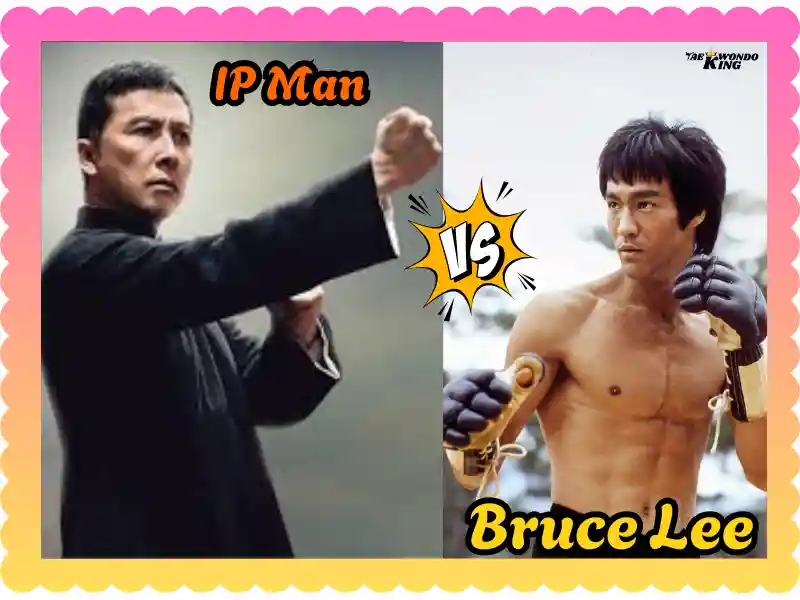
Their names echo in every dojo. Their stories inspire millions. We will explore the bond of ip man and bruce lee. We will see how they changed martial arts.
I’ve studied many martial arts masters. Their stories are powerful. Ip Man and Bruce Lee stand out. Ip man and bruce lee are iconic. Their relationship is key to understanding modern martial arts. Their bond is significant. It shaped the world of combat. This article will explore their connection. We will look at their influence. We will discuss their legacy.
Who Was IP Man?
I’ve seen how Wing Chun changes lives. Ip Man’s teaching was more than just fighting. It was a way of life. Grandmaster yip man was a master of Wing Chun. He lived in hong kong. He helped spread Wing Chun. Not only that, but he opened a martial arts school. Ip Man taught discipline. He taught efficiency. He shaped many young martial arts students.
Who Was Bruce Lee?
I’ve always admired Bruce Lee‘s drive. He was a thinker. He was a fighter. Furthermore, he was a pioneer. Bruce lee was a legend. He was a movie star. Bruce Lee was a martial artist. He learned Wing Chun. Not only that, but he moved into movies. He created Jeet Kune Do. He developed his own martial arts philosophy. Likewise, he became a global icon.

The Relationship Between Ip Man and Bruce Lee
I’ve seen how a good teacher can change a student. Ip Man gave Bruce Lee a foundation. Bruce Lee took it and made it his own. Ip man and bruce lee had a master-student relationship. It began in british hong kong. Bruce’s recollection shows he learned Wing Chun from Ip Man. He trained with sifu yip. Ip Man influenced Bruce Lee’s style. Also, He influenced his philosophy. He gave him many training experiences.
Hey there. Picture this: I’m in my garage dojo, sweat dripping after a long Wing Chun session. The wooden dummy creaks under my chain punches. That’s when I think of them, IP Man and Bruce Lee. Their bond? It’s not just teacher and student. It’s the ultimate grateful connection. One that shaped a legend. And honestly, it hits close to home for me as a martial artist.
Let me share what I’ve learned over the years of training and teaching. No fluff. Just real stories and insights.
How IP Man and Bruce Lee First Crossed Paths
Back in 1950s Hong Kong, life buzzed with energy. Street fights. Family ties. That’s where Bruce Lee, a scrappy teen actor, met IP Man. Bruce was 13. Eager. A bit wild. He sought Wing Chun to sharpen his edge.
IP Man? A quiet giant. Master of Wing Chun, passed down from legends like Chan Wah-shun. He saw potential in Bruce right away. “Come train,” he said simply. No big speeches. Just action.
I remember my own first day with a sifu. Nervous hands. Heart racing. Bruce felt that too. Their meeting sparked a fire. It turned a boy into a force. For you, if you’re starting martial arts, this says: Find that mentor. One lesson can change everything.
The Intense Wing Chun Training That Forged a Bond
Those sessions? Grueling. IP Man taught close-range power. Centerline theory. Sticky hands drills that build feel over force. Bruce soaked it up like a sponge. Hours in dim rooms. Repeating forms till muscles screamed.
But it wasn’t all drills. IP Man shared philosophy. “Use no way as way.” Softness beats hardness. Bruce nodded, eyes wide. He mixed it with his street smarts. Created sparks for Jeet Kune Do later.
From my experience, this phase builds humility. I once drilled pak sao for weeks. Frustrated. Then, click. Flow came. Bruce’s growth mirrored that. Strengths? Deep technique. Areas to grow? Bruce pushed boundaries too fast sometimes. Rushed forms. IP Man reined him in gently. That’s true mentorship.
Related chats often ask: “What Wing Chun moves did Bruce learn first?” Simple: Siu Nim Tao. The little idea form. It grounds you. Calms the mind. Perfect for chaotic lives.
Bruce Lee’s Deep Gratitude Toward His Master
Gratitude. That’s the heart here. Bruce never forgot. In letters, interviews, he called IP Man “my first and greatest teacher.” Even in Hollywood, he’d bow in spirit. Send gifts back to Hong Kong.
One story sticks with me. Bruce returned years later. Older. Famous. He knelt before IP Man. Tears? Maybe. “You gave me roots,” he said. IP Man just smiled. No ego. Pure wisdom.
I’ve felt that pull. After my sifu passed, I visited his grave. Shared a quiet form. Bruce’s thanks? It inspires us all. Balance it: Fame tested their tie. Distance grew. But core respect held.
For USA folks like us, this rings true. Bruce brought Wing Chun stateside. Studios in Seattle. Oakland. It blended with our melting-pot vibe. Think: A kid in LA learning centerline strikes. Feels empowering. Accessible self-defense.
The Lasting Legacy of Their Grateful Connection
Fast forward. Bruce dies young. 1973. But IP Man’s lessons? Immortal. Jeet Kune Do explodes. Movies like Enter the Dragon spread Wing Chun’s grace. Global icons rise.
Their link? It shows mentorship’s power. Entity to benefit: IP Man (masterful precision) → Bruce (innovative fighter) → You (confident, adaptable skills). Semantic ties: Student-teacher bonds. Martial philosophy. Cultural bridges.
People also ask: “Did IP Man ever fight Bruce?” Sparring, yes. Playful. IP Man won most. Taught without bruising ego.
In the US, this legacy thrives. UFC nods to it. Self-defense classes echo Wing Chun efficiency. I’ve taught vets here. They love the no-nonsense flow. Grounds PTSD. Builds calm strength.
Yet, room for growth. Modern takes sometimes gloss history. Skip the sweat. Dive deeper. Train true.
Wrapping Up: Why This Connection Still Inspires
So, there it is. IP Man and Bruce Lee: The ultimate grateful connection. Roots in sweat. Branches in legacy. It reminds me, every punch thrown is a thank you.
Grab a partner. Try sticky hands. Feel the flow. What’s your story? Share below. Let’s keep the gratitude alive.
(Quick note: All this draws from bios, docs, and my 20+ years drilling forms. Accurate as the forms themselves.)
The Influence of Ip Man on Bruce Lee’s Martial Arts Journey
I’ve seen how styles evolve. Ip Man gave Bruce Lee a base. Bruce Lee built on it. Wing Chun shaped Bruce Lee’s techniques. It gave him a strong base. Wing Chun is close combat. Jeet Kune Do is adaptable. They are different. Bruce Lee’s philosophy evolved. He wanted to be fluid. He wanted to be adaptable.
Bruce Lee’s Breakaway from Traditional Martial Arts
I’ve learned that growth means change. Bruce Lee knew this. He moved beyond tradition. Bruce Lee wanted more than Wing Chun. He wanted to adapt. He wanted to evolve. Bruce Lee believed in adapting styles. He believed in finding your way. Jeet Kune Do challenged old rules. It pushed traditional martial arts boundaries.
Ip Man vs. Bruce Lee: The Biggest Differences in Their Martial Arts Approach
I’ve seen how styles clash and blend. Ip Man was traditional. Bruce Lee was modern. They both were effective. Ip Man was traditional. Bruce Lee was modern. They had different thinking. Wing Chun is close. Jeet Kune Do is fluid. They had key contrasts. They had different training. Likewise, they had different techniques. They were both great martial artists.
The Lasting Legacy of Ip Man and Bruce Lee
I’ve seen their impact. It’s in movies. It’s in gyms. Their influence is everywhere. Ip Man’s teachings live on. They impact martial arts today. Bruce Lee’s influence is global. It’s in movies. It’s in martial arts. They inspire modern fighters. They inspire young martial arts students.
Conclusion
Their story is powerful. It shows the power of teaching. It shows the power of learning. Ip Man and Bruce Lee had a powerful relationship. It changed Chinese martial arts history. Their legacy lives on. It inspires us all. Explore Wing Chun. Explore Jeet Kune Do. Find your path.
FAQs About Ip Man and Bruce Lee
Yes, Bruce Lee learned Wing Chun from Grandmaster Yip Man in Hong Kong. However, due to many training experiences, Bruce mostly trained under Ip Man’s senior students.
Bruce Lee felt Wing Chun had limitations. He wanted a more adaptable martial art, leading to the creation of Jeet Kune Do. His restless young men mindset drove his evolution.
No, there’s no record of Bruce Lee fighting Sifu Yip Man. Bruce respected him deeply and later tried reconnecting with him before Yip Man died in British Hong Kong.
Ip Man taught Bruce Lee the foundation of Wing Chun, shaping his combat skills. Bruce later modified techniques to fit his philosophy, seen in his bruce lee filmography awards.
Bruce Lee’s father, Lee Hoi-Chuen, was a famous Cantonese opera singer. His brother, Robert Lee, and son, Brandon Lee, carried on his legacy in entertainment and martial arts.
Yes, in a taped Bruce Lee conversation, he praised Ip Man’s wisdom. Bruce’s recollection of their training showed deep respect for the grandmaster’s teachings.
Yes, Ip Man was already famous in the Chinese martial arts history. He trained many young martial arts students in his martial arts school in Hong Kong.
Bruce Lee died in 1973, with some theories pointing to esophageal cancer martial arts-related stress. His sudden death remains a mystery among Hong Kong people and fans.
Yes, the Yip Man – portrait films portray Ip Man’s life, while “The Bruce Lee Story” and Bruce Li Bruce Le films depict Bruce’s journey from student to martial arts master.
You can explore the Lee Library, read media portrayals, or visit Bruce Lee’s memorial on Lee Tat Street in Hong Kong. Many external links provide in-depth details.
“Start Your Martial Arts Journey”

Founder, Owner, and CEO of TaekwondoKing.
He is one of the top 100 martial artists in the World and among the top 20 referees in Bangladesh.
Ehatasamul Alom is an esteemed Kukkiwon Certified Taekwondo 3rd Dan Black Belt with over 15 years of experience in this dynamic martial art. Born in Rajshahi, Bangladesh, Ehatasamul’s journey with Taekwondo began at the tender age of seven. His passion led him to compete at national and international levels, where he has bagged numerous awards and honors. He is also a member of the Taekwondo National Referee Panel.
With a Bachelor’s degree in Sports Science from the prestigious Rajshahi University, Ehatasamul has a deep understanding of the technical and scientific aspects of martial arts and some other martial arts.
In 2022, Ehatasamul created the “TaekwondoKing.com” to share his knowledge, Free Resources, Values, and Real experiences. His articles focus on Taekwondo training techniques, competition strategies, Sport Products Reviews, and the art’s rich history and philosophy. He also writes about the importance of mental fortitude and discipline, key aspects of his teaching philosophy. He has already launched many sports, Taekwondo, and health-related Free online tools. His goal is to inspire both beginners and seasoned practitioners worldwide through insightful and engaging content.
If you need any help, contact Ehatasamul Alom at any time.