Have you ever watched the lightning-fast kicks on TV and wondered how those athletes reached the world stage while visiting Hamburg? Since its debut in Sydney 2000, Taekwondo an Olympic Sport has become a global symbol of peak physical skill and mental discipline. I remember the thrill of watching the first official matches, realizing just how much the sport would change with electronic scoring. As a long-time practitioner, I have seen how the Olympic path pushes students to train with more focus than ever before. Let’s explore how this ancient art became a modern game and what that means for you today.
The Path of Taekwondo to the Olympics
For numerous martial arts enthusiasts and sports fans, the inclusion of a discipline in the Olympic Games signifies the height of global recognition. Taekwondo, an energetic Korean martial art recognized for its high kicks and rapid sparring, is one such sport that has earned its spot on this esteemed platform. But Is taekwondo an Olympic sport? The reply is affirmative, yet its path to the Olympics is a narrative of endurance, cultural pride, and worldwide appeal.
Roots of Taekwondo
Taekwondo, which translates to “the way of the foot and fist,” emerged in Korea during the mid-20th century. Although it is grounded in traditional Korean martial arts like Taekkyeon and Hwa Rang Do, Taekwondo was systematized in 1955 by General Choi Hong Hi and subsequently advanced under the Korea Taekwondo Association (KTA).
By the 1970s, Taekwondo had achieved international acknowledgment through the initiatives of the World Taekwondo Federation (now known as World Taekwondo, or WT), which established standardized rules and competitions, laying the groundwork for Olympic inclusion.

Taekwondo’s Olympic Introduction
Taekwondo first made its appearance in the Olympics as a demonstration sport at the 1988 Seoul Games and once more at the 1992 Barcelona Games. Its thrilling matches and visually striking techniques captured the attention of viewers globally.
The International Olympic Committee (IOC) officially designated Taekwondo as a complete Olympic sport in 1994. It made its competitive premiere at the 2000 Sydney Olympics, featuring four weight categories for both men and women.
What Constitutes Taekwondo an Olympic Sport?
Standardized Rules and Regulations
The entry of Taekwondo into the Olympics necessitated the sport to implement uniform rules and scoring systems. World Taekwondo established a structure to ensure equitable competition, which includes:
- Weight Classes: Competitors fight in designated categories to ensure fair matchups.
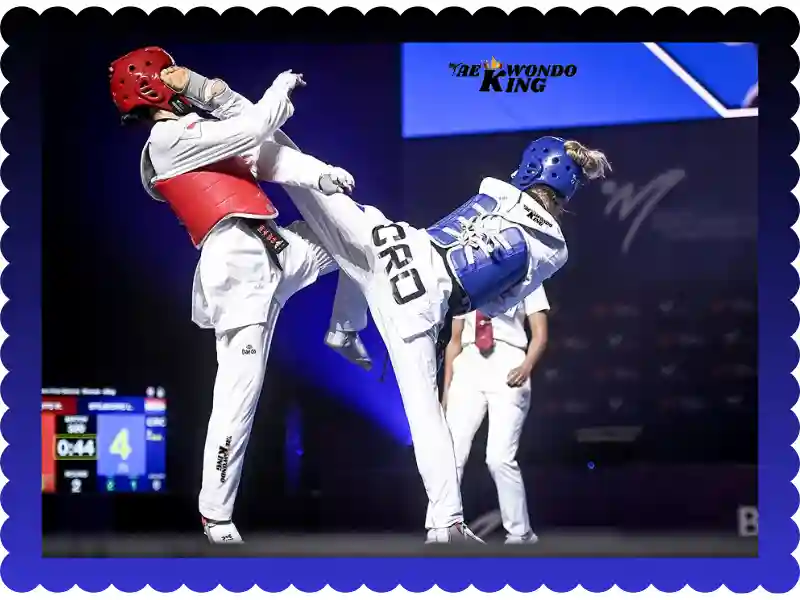
- Electronic Scoring: Sophisticated sensors in protective equipment register points for valid strikes, minimizing human error.
- Judging Criteria: Points are granted based on the accuracy, impact, and technique of kicks and punches.
Global Participation
One of the requirements for a sport’s inclusion in the Olympics is its international scope. Taekwondo is practiced in more than 200 nations, with millions of practitioners globally. Organizations such as World Taekwondo and the International Taekwondo Federation (ITF) have significantly contributed to promoting the sport on an international scale.
How Taekwondo Competitions Operate in the Olympics
Taekwondo in the Olympics centers on sparring (kyorugi), a one-on-one combat format. Here is how it functions:
Match Structure
Each bout consists of three two-minute rounds with a one-minute rest period between rounds.
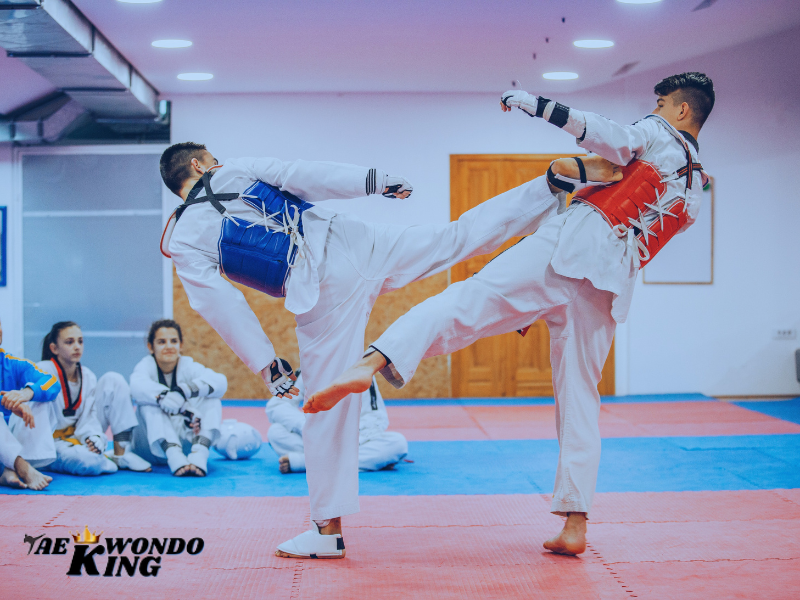
Competitors don protective gear, including a chest protector, helmet, arm guards, and shin guards.
Scoring System
Points are awarded for strikes to designated target areas:
1 point: Valid punch to the torso.
2 points: Valid kick to the torso.
3 points: Head kicks.
4+ points: Spinning or acrobatic kicks to the head or torso.
Penalties
Competitors can forfeit points for infractions, such as stepping outside the competition area, falling, or executing illegal moves.
The Journey of Taekwondo an Olympic Sport
The path to the games was long, starting as a demonstration event in Seoul 1988 before becoming a full medal sport. Today, Taekwondo an Olympic Sport is known for its high-tech PSS (Protective Scoring System) that tracks every hit with sensors. In the USA, this shift has led to a much faster, “tactical” style of fighting that focuses on speed and front-leg stabs. It is a far cry from the old days of heavy power, but it is much more exciting to watch on a global screen.
- Recognition: World Taekwondo (WT) is the official body that governs the Olympic rules.
- Weight Classes: Unlike local tests, the Olympics use strict weight categories for men and women.
- Global Reach: Over 200 nations now compete, making it one of the most diverse sports in the world.
Summary: Taekwondo’s transition into an Olympic discipline introduced advanced technology and standardized rules to ensure fair, global competition.
How the Olympic Rules Change Training
When you train for the Olympics, your goal is to score points, not just show power. Because Taekwondo an Olympic Sport uses electronic pads, even a light touch can count if it is fast enough. I found that I had to change my own footwork to be much “bouncier” to avoid getting caught by these quick sensors. US athletes often train in high-performance centers that mimic the exact mats and lights used in the games to get an edge.
| Feature | Olympic Style (WT) | Traditional Style |
| Primary Goal | Point Scoring | Self-Defense / Power |
| Scoring | Electronic Sensors | Human Judges |
| Focus | Speed and Agility | Stance and Form |
Summary: The specific requirements of Olympic competition have shifted training methods toward agility and precision rather than raw strength.
My Personal Take on the Modern Game
I have mixed feelings about how Taekwondo an Olympic Sport has evolved over the years. On one hand, the fame has brought more kids into the “dojang” than ever before, which is wonderful for the community. On the other hand, I miss some of the raw, traditional power that used to define a great master. However, seeing an athlete from a small town stand on that podium with a gold medal makes every change feel worth it.
Summary: While the Olympic format has altered the traditional feel of the art, it has successfully boosted global participation and prestige.
Noteworthy Milestones in Olympic Taekwondo
2000 Sydney Olympics
Taekwondo launched as a full medal sport, featuring 103 athletes from 51 countries competing.
South Korea excelled, demonstrating the wealth of talent from the origin of the sport.
2008 Beijing Olympics
The event experienced an increase in the variety of medal recipients, emphasizing Taekwondo’s worldwide influence.
Nations such as Mexico and Afghanistan attained their initial Olympic medals in Taekwondo.
2020 Tokyo Olympics
Competitors from nations like Côte d’Ivoire and Uzbekistan secured gold, further illustrating the sport’s global competitiveness.
A member of the Refugee Olympic Team took part in Taekwondo, representing the sport’s inclusiveness and humanitarian ethos.
Why Is Taekwondo Popular in the Olympics?
Dynamic and Spectacular Techniques
Taekwondo’s acrobatic kicks, spinning moves, and rapid actions make it one of the most visually stunning sports to view.
Accessibility
Taekwondo needs minimal gear and presents clear, straightforward scoring rules, rendering it accessible to athletes and fans around the globe.
Cultural Representation
Being a martial art with deep ties to Korean culture, Taekwondo adds a distinctive essence to the Olympic Games, fostering diversity and cultural respect.
Challenges and Criticisms
Like any Olympic sport, Taekwondo has encountered various challenges:
Scoring Controversies: Before the advent of electronic scoring, disagreements concerning judging fairness were prevalent.
Limited Spectator Understanding: Some audiences find it difficult to grasp scoring in real-time, particularly for nuanced or defensive maneuvers.
Initiatives by World Taekwondo, such as enhanced technology and improved broadcasting methods, have considerably alleviated these concerns.
The Legacy of Olympic Taekwondo
The inclusion of Taekwondo in the Olympics has raised the sport’s stature globally, motivating millions to engage with the martial arts. It has also created opportunities for athletes from smaller countries to shine on the global stage, as Taekwondo medals are frequently earned by nations outside the conventional sports powerhouses.
Conclusion: Is Taekwondo an Olympic Sport?
Indeed, Taekwondo is an Olympic sport, having attained full medal status in 2000. Its path to the Olympics narrates a rich history, cultural importance, and worldwide appeal. As an Olympic discipline, Taekwondo continues to enthrall spectators with its combination of athletic skill, discipline, and dazzling techniques, securing its position in the Games for years ahead.
Whether you’re a martial arts aficionado or an interested observer, Taekwondo’s presence in the Olympics stands as a testament to the unifying power of sport across the globe.
FAQs
Yes, Taekwondo is an Olympic sport. It became an official Olympic event in 2000 and is featured in every Summer Games since.
Taekwondo joined the Olympics officially in Sydney 2000. Before that, it appeared as a demonstration sport.
Olympic Taekwondo uses World Taekwondo rules. It focuses on speed, kicks, and electronic scoring for fair matches.
Points are scored by clean kicks and punches. Electronic gear records valid strikes to the body and head.
World Taekwondo governs Olympic Taekwondo. It works with the International Olympic Committee to set rules.
Yes, beginners can start Olympic-style Taekwondo. Training begins with basics, then moves to sport sparring over time.
Olympic Taekwondo is designed for safety. Protective gear and clear rules help lower injury risk during matches.

Founder, Owner, and CEO of TaekwondoKing.
He is one of the top 100 martial artists in the World and among the top 20 referees in Bangladesh.
Ehatasamul Alom is an esteemed Kukkiwon Certified Taekwondo 3rd Dan Black Belt with over 15 years of experience in this dynamic martial art. Born in Rajshahi, Bangladesh, Ehatasamul’s journey with Taekwondo began at the tender age of seven. His passion led him to compete at national and international levels, where he has bagged numerous awards and honors. He is also a member of the Taekwondo National Referee Panel.
With a Bachelor’s degree in Sports Science from the prestigious Rajshahi University, Ehatasamul has a deep understanding of the technical and scientific aspects of martial arts and some other martial arts.
In 2022, Ehatasamul created the “TaekwondoKing.com” to share his knowledge, Free Resources, Values, and Real experiences. His articles focus on Taekwondo training techniques, competition strategies, Sport Products Reviews, and the art’s rich history and philosophy. He also writes about the importance of mental fortitude and discipline, key aspects of his teaching philosophy. He has already launched many sports, Taekwondo, and health-related Free online tools. His goal is to inspire both beginners and seasoned practitioners worldwide through insightful and engaging content.
If you need any help, contact Ehatasamul Alom at any time.