Have you ever struggled to reach head-height during a sparring session in Stuttgart? Achieving higher kicks in Taekwondo requires a mix of hip mobility, core strength, and proper pivot technique. I remember feeling stuck at waist level until I realized my standing foot was not rotating enough. With over a decade of black belt experience, I have coached many students to unlock their full range of motion. Let us walk through the best ways to get your feet flying high today.
Why Higher Kicks in Taekwondo Are Important?
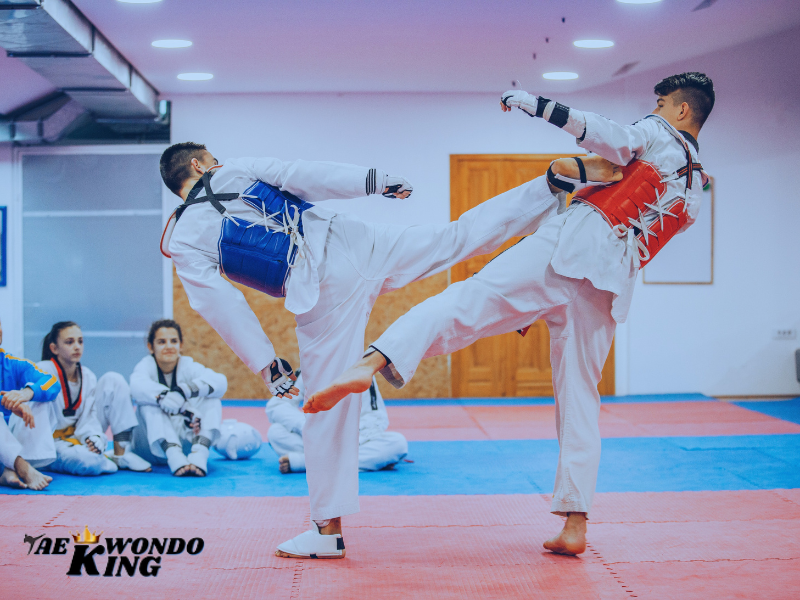
Higher kicks in Taekwondo enhance flexibility, power, and precision. They are essential for sparring, forms, and competitions. Developing this skill boosts your overall performance.
Tips to Achieve Higher Kicks in Taekwondo
Taekwondo is known for its impressive kicks. Many practitioners aim to improve their skills and achieve higher kicks in Taekwondo. Whether you’re a beginner or advanced, mastering high kicks takes dedication and proper techniques.

Improve Flexibility
- Stretch daily to loosen muscles.
- Focus on hamstrings, hip flexors, and groin stretches.
Warm-Up Properly
- Always warm up before practicing kicks.
- Dynamic stretches prevent injuries and prepare muscles.
Practice Correct Technique
- Pay attention to form.
- Use your hips to drive the kick upward.
Strengthen Your Core and Legs
- Strong muscles support higher kicks.
- Include squats, lunges, and planks in your training.
Balance and Stability
- Practice standing on one leg.
- Use a wall or balance tools to improve control.
Repetition Is Key
- Practice your kicks regularly.
- Repetition builds muscle memory for higher kicks in Taekwondo.
The Secret to Higher Kicks in Taekwondo
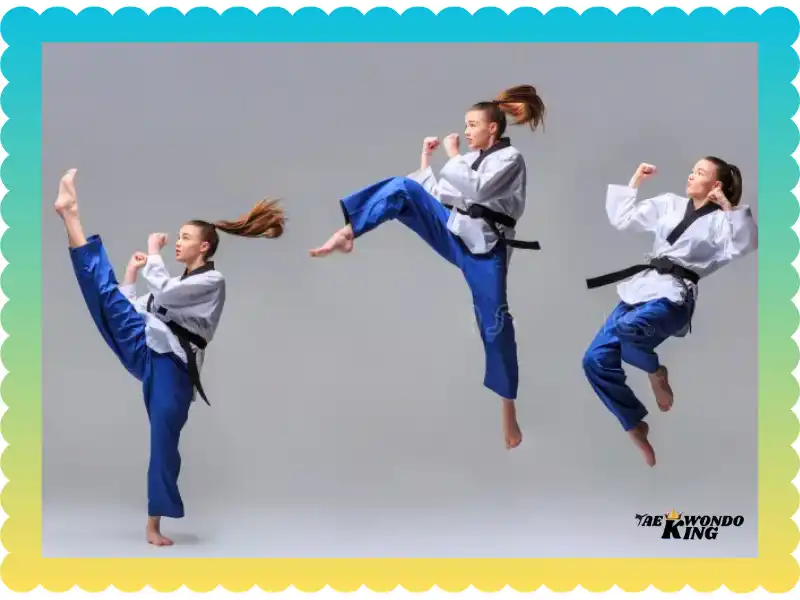
To get your leg up, you must focus on your hips rather than just your legs. The key to higher kicks in Taekwondo is the pivot of your supporting foot. If your toes point at the target, your hips stay locked and low. In the USA, many schools use “wall drills” to help students find the right angle for their base foot. This small change opens your joints and lets your leg soar with much less effort.
- The Pivot: Turn your standing foot 180 degrees away from the kick.
- The Knee: Pull your knee high toward your chest before you snap the kick.
- The Lean: Tilt your upper body slightly back to balance the weight of your leg.
Summary: Proper hip alignment through a deep pivot is the most vital step for reaching higher targets safely.
Flexibility Drills for Daily Practice
You do not need to be a gymnast to see progress, but you do need to stretch the right way. For higher kicks in Taekwondo, dynamic stretches work better than sitting still. I found that “leg swings” helped me more than long, painful splits ever did. Many US-based martial artists now use PNF stretching, which involves tensing and relaxing the muscle. This method tricks your nervous system into letting your muscles stretch a bit further each day.
| Stretch Type | Target Area | Best Time |
| Leg Swings | Hips and Glutes | Before Class |
| Butterfly Stretch | Inner Thighs | After Class |
| PNF Stretching | Hamstrings | Twice a Week |
Summary: Using active, dynamic movements helps your muscles prepare for the explosive speed needed for high-level striking.
My Personal Path to Better Reach
When I first started, I thought I was just “too short” to kick high. I spent months frustrated until I started filming my forms to check my posture. I saw that I was slouching, which killed my height and power. Once I kept my spine straight and my core tight, higher kicks in Taekwondo became much easier to do. It takes patience, but seeing that first kick hit the top of the heavy bag makes it all worth it.
Summary: Consistent self-correction and maintaining a strong posture are essential for turning flexibility into functional height.
Best Stretches for Higher Kicks in Taekwondo
Front Splits
- Stretch your hamstrings and hip flexors.
- Perform this stretch gradually to avoid strain.
Butterfly Stretch
Opens up your hips for sidekicks and roundhouse kicks.
High Kicks Stretch
Swing your legs as high as possible in controlled movements.
Pigeon Pose
Loosens the glutes and improves hip flexibility.
Common Mistakes When Trying to Achieve Higher Kicks in Taekwondo
Skipping Warm-Ups
- Increases the risk of injury.
- Prevents muscles from reaching full range.
Overstretching
- Can lead to muscle tears.
- Stretch to your limit without pain.
Focusing Only on Flexibility
- Neglecting strength training can reduce power.
- Combine flexibility with leg and core strength.
Drills to Practice Higher Kicks in Taekwondo
High Knee Raises
Boosts hip mobility and leg strength.
Wall Kicks
Use a wall for support to perfect your form.
Leg Swings
Increases the height of your kicks gradually.
Resistance Training
Use ankle weights to build power in your kicks.
The Role of Consistency in Higher Kicks
Consistency is key when aiming for higher kicks in Taekwondo. Train regularly and focus on gradual improvement. Small daily efforts lead to long-term success.
Benefits of Higher Kicks in Taekwondo
Improved Agility
Enhances movement during sparring.
Better Control
Allows you to execute precise kicks.
Boosted Confidence
Mastering high kicks builds self-assurance in your abilities.
Stronger Body
Improves overall leg and core strength.
Final Thoughts
Achieving higher kicks in Taekwondo requires dedication, practice, and proper technique. Focus on flexibility, strength, and balance to see consistent improvement. Whether you’re aiming for a front kick, sidekick, or roundhouse. These tips will help you reach your goals.
FAQs
Practice stretching daily, focus on leg flexibility and strengthen your core and hip muscles.
Flexibility allows your legs to move freely. It reduces strain and improves kick height.
The hamstrings, hip flexors, and glutes are crucial. Strong core muscles also help.
Yes, proper form, balance, and controlled breathing are essential for height and accuracy.
Good balance keeps your body stable. It prevents falls and lets you focus on the kick.
Yes, splits increase leg flexibility. They are excellent for improving kick height.
Dynamic stretches, high-kick repetitions, and leg raises are effective drills.
Yes, speed adds power and precision. It makes your kicks more dynamic.
It depends on your starting flexibility and dedication. Regular practice shows results in weeks or months.
Yes, higher kicks increase your range and effectiveness. They are also impressive in demonstrations and competitions

Founder, Owner, and CEO of TaekwondoKing.
He is one of the top 100 martial artists in the World and among the top 20 referees in Bangladesh.
Ehatasamul Alom is an esteemed Kukkiwon Certified Taekwondo 3rd Dan Black Belt with over 15 years of experience in this dynamic martial art. Born in Rajshahi, Bangladesh, Ehatasamul’s journey with Taekwondo began at the tender age of seven. His passion led him to compete at national and international levels, where he has bagged numerous awards and honors. He is also a member of the Taekwondo National Referee Panel.
With a Bachelor’s degree in Sports Science from the prestigious Rajshahi University, Ehatasamul has a deep understanding of the technical and scientific aspects of martial arts and some other martial arts.
In 2022, Ehatasamul created the “TaekwondoKing.com” to share his knowledge, Free Resources, Values, and Real experiences. His articles focus on Taekwondo training techniques, competition strategies, Sport Products Reviews, and the art’s rich history and philosophy. He also writes about the importance of mental fortitude and discipline, key aspects of his teaching philosophy. He has already launched many sports, Taekwondo, and health-related Free online tools. His goal is to inspire both beginners and seasoned practitioners worldwide through insightful and engaging content.
If you need any help, contact Ehatasamul Alom at any time.