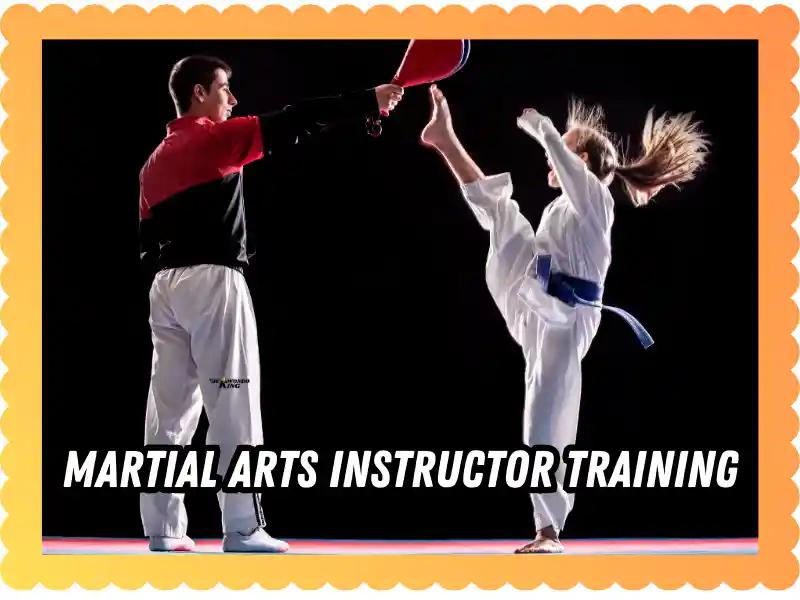
Stepping into my first Martial Arts Instructor Training class in Denver felt like diving headfirst into a wild adventure. I had years of practice, but learning how to teach others was a whole new game. After countless hours on the mat and even more moments of self-doubt, I found my true voice as a coach.
In this guide, I’ll share what I wish I knew back then , the small wins, the big lessons, and how you can start strong. Stick around if you’re ready to turn your passion into a powerful journey.
This article explores the key aspects of martial arts instructor training, including online options, school operation, and how to handle problem students.
Why Become a Martial Arts Instructor?
Teaching martial arts is more than just training new students. It’s about sharing a passion, helping people grow, and maintaining a safe learning environment. Many professional instructors choose this path to:
- Develop leadership skills
- Earn black belt skill recognition
- Gain full instructor status
- Help different students achieve their goals
Becoming a qualified instructor also provides career opportunities, including working at member schools, running your school, or offering online courses.
Requirements for Martial Arts Instructor Training
Necessary Experience
Before joining an instructor program, you need proper training. Most schools require at least a black belt skill level before considering instructor certification. Some programs, like the GMAU instructor course, offer structured training.
Legal Requirements
Every country or state has different legal requirements for martial arts instructors. Some may require:
- Background checks
- First aid & CPR certification (1st aid/CPR instructor)
- Liability insurance
- Business licenses for school operation
Checking local laws before starting is crucial.
Instructor Certification Programs
To teach martial arts, you must enroll in an instructor program. Options include:
- Krav Maga Instructor Certification – Ideal for self-defense training
- Shotokan Karate Ultimate Instructor Course – Designed for traditional karate training
- CMAT Instructor Training – Covers advanced martial arts teaching techniques
- Online Course Certifications – Perfect for flexible learning
Some programs provide instant access to training materials, while others require in-person training.
Check the Taekwondo Equipment’s latest price on Amazon.

Types of Martial Arts Instructor Training
Here I will show you the Types of Martial Arts Instructor Training:
Shotokan Karate Instructor Training
Shotokan Karate is a traditional style that focuses on power, discipline, and kata. The Shotokan Karate Ultimate Instructor Course helps instructors gain full instructor status.
This course covers:
- Advanced katas and techniques
- Teaching different students
- Managing low student levels
Muay Thai Instructor Training
Muay Thai is a combat sport focusing on strikes using fists, elbows, knees, and shins. Instructors must have a strong foundation and complete additional teacher training.
Key focus areas include:
- Strength and conditioning
- Teaching new students basic strikes
- Handling problem students
Krav Maga Instructor Training
Krav Maga is a self-defense system used by military and law enforcement. To become a Krav Maga instructor, you must complete an instructor program like the Krav Maga Instructor Certification.
Skills taught include:
- Defense against armed attackers
- Fast reaction training
- Training top gear students
Online Martial Arts Instructor Training
For those who need flexibility, online course options provide instant access to training. Many college featured articles highlight the benefits of online training, including:
- Learning at your own pace
- Access to featured articles and videos
- No travel required
Programs like GMAU Instructor Certification provide high-quality training with online testing.
Instructor Skill Matrix
In our Dallas Leadership Academy, we evaluate prospective instructors across four key pillars.
The Professional Instructor Benchmarks
| Pillar | Requirement | 2026 Metric |
| Technical | Black Belt or Equivalent | Flawless demonstration of all basic and intermediate curriculum. |
| Pedagogy | Teaching Methods | Ability to explain one technique in 3 different ways (Visual, Auditory, Kinesthetic). |
| Compliance | Legal & Safety | Current CPR, AED, and background clearance documentation. |
| Leadership | Student Progress | Measured by student retention and promotion success rates. |
The “Leadership Lab” Verdict
Becoming a “great” instructor is a lifelong journey of continuous learning. In 2026, the best instructors are those who act as lead students—constantly refining their own skills while staying humble enough to learn from their pupils. The transition from doing to teaching is the most difficult belt you will ever earn, but it is also the most rewarding.
How to Teach Martial Arts Effectively
Handling Different Students
Each student learns differently. New students need more patience, while top gear students require advanced techniques. A good instructor must:
- Adapt teaching methods
- Encourage discipline and focus
- Identify and support low student levels
Dealing with Problem Students
Problem students can disrupt the class. A professional instructor should:
- Set clear rules
- Use positive reinforcement
- Guide students towards self-improvement
Ranking and Testing Students
A martial arts school must rank students properly. Testing involves:
- Demonstrating learned techniques
- Showing discipline and control
- Meeting skill requirements for the next rank
Proper ranking keeps students motivated and ensures skill development.
The 45-Minute “First Flight” Lesson Plan
The first 45 minutes of a student’s Taekwondo journey are the most critical. Your goal isn’t just to teach them how to kick; it’s to make them feel capable, safe, and inspired.
This template is designed for a 2026 “New Student Experience,” focusing on a balance of traditional etiquette and immediate physical success.
1. The Opening Ritual (0:00 – 0:05)
Goal: Establish the boundary between the “outside world” and the “Dojang.”
- The Bow (Kyung-ye): Explain that the bow is a sign of mutual respect, not subservience.
- The Tenets: Briefly mention Courtesy and Integrity.
- The “Attention” Stance (Charyot): Teach them how to stand perfectly still. This is their first lesson in self-control.
2. Kinetic Warm-Up (0:05 – 0:15)
Goal: Raise core temperature while introducing basic TKD movements.
- Dynamic Stretching: Leg swings (front/side) and arm circles.
- The “Fighting Stance” (Kyorugi Joonbi): Teach the bounce. Explain that fluidity is the key to speed.
- Reaction Drill: On your clap, they switch feet. This develops the “mind-body” connection immediately.
3. The “Power” Introduction (0:15 – 0:30)
Goal: Give them the satisfaction of hitting a target safely.
- The Straight Punch (Jireugi): Focus on the “pull-back” hand (Heisoo) to teach equal and opposite force.
- The Front Snap Kick (Ap-chagi): 1. Chamber: Lift the knee. 2. Snap: Hit with the ball of the foot. 3. Retract: Pull the foot back before setting it down.
- Target Work: Have an assistant hold a soft paddle. Let the student hit it 5 times. The sound of the “snap” is the best recruitment tool you have.
4. Basic Self-Defense / Application (0:30 – 0:40)
Goal: Show the practical value of what they just learned.
- The Wrist Release: If someone grabs their wrist, show them how to rotate toward the “weak point” (between the thumb and fingers).
- The “Kihap” (The Shout): Teach them how to use their voice to startle an attacker and brace their core.
- Micro-Sparring: A very controlled game of “Shoulder Tag” to introduce movement without the fear of being kicked.
5. The Closing & “The Hook” (0:40 – 0:45)
Goal: Leave them wanting more.
- Cool Down: Light static stretching while you talk about the path to Yellow Belt.
- The “Tenet of the Day”: Ask them how they can use “Indomitable Spirit” at school or work tomorrow.
- The Final Bow: Dismiss the class with a strong “Kamsahamnida!” (Thank you).
Instructor’s Success Checklist
- [ ] The Name Rule: Use the student’s name at least three times during the session.
- [ ] The “One Win” Policy: Ensure they leave having mastered at least one thing (even if it’s just the bow).
- [ ] Safety First: Check their foot placement on the kick. Most beginners hurt their toes by not “curling” them back.
The 2026 “Introductory” Handout
After class, hand them a small card that includes:
- A QR code to a 1-minute “Home Practice” video.
- The 5 Tenets printed clearly.
- The date of their next scheduled class.
AI Peer Tip: In 2026, students value “clarity” over “mystery.” Don’t be afraid to explain the why behind a movement. For example, “We chamber the knee so the opponent doesn’t know which kick is coming.” This intellectual engagement builds long-term retention.
School Operation and Business Aspects
Running a Martial Arts School
Operating a school involves more than teaching. You must handle:
- Payment methods for student fees
- Marketing and advertising
- Maintaining safety standards
Online Options for Schools
Many schools now offer online courses for remote students. This allows:
- More accessibility for students worldwide
- Passive income for instructors
- Greater flexibility in teaching
Member Schools and Associations
Joining member schools under a recognized organization improves credibility. Many professional instructors become part of organizations like:
- World Karate Federation
- International Krav Maga Federation
- Muay Thai World League
Being a part of these groups enhances reputation and attracts more students.
Achieving Full Instructor Status
To reach full instructor status, you must:
- Complete a certified instructor program
- Gain necessary experience
- Pass an exam and evaluation
Some programs, like Leo Grant Certified Instructor Training, provide official recognition worldwide.

Conclusion
Becoming a martial arts instructor is a rewarding journey. It requires dedication, training, and meeting legal requirements. Whether you specialize in Krav Maga, Shotokan Karate, or Muay Thai, martial arts instructor training prepares you to teach with confidence.
Start your journey today with online course options, or enroll in an instructor program to achieve full instructor status.
Learn more about martial arts instructor training and start your journey today!
FAQ: Martial Arts Instructor Training
To become a certified instructor, complete a training program, meet legal requirements, and gain teaching experience. Some programs offer online courses for flexibility.
Popular styles include Krav Maga, Shotokan Karate, and Muay Thai. Each style has its own instructor programs and certification requirements.
Yes, many programs offer online options with instant access to training materials, video lessons, and exams. This allows flexible learning from anywhere.
Most schools require a black belt skill level, 1st aid/CPR instructor certification, and completion of an instructor program before teaching new students.
Yes! Once certified, you can open a school, teach at member schools, or offer online courses. Ensure you meet legal requirements for school operation.

Founder, Owner, and CEO of TaekwondoKing.
He is one of the top 100 martial artists in the World and among the top 20 referees in Bangladesh.
Ehatasamul Alom is an esteemed Kukkiwon Certified Taekwondo 3rd Dan Black Belt with over 15 years of experience in this dynamic martial art. Born in Rajshahi, Bangladesh, Ehatasamul’s journey with Taekwondo began at the tender age of seven. His passion led him to compete at national and international levels, where he has bagged numerous awards and honors. He is also a member of the Taekwondo National Referee Panel.
With a Bachelor’s degree in Sports Science from the prestigious Rajshahi University, Ehatasamul has a deep understanding of the technical and scientific aspects of martial arts and some other martial arts.
In 2022, Ehatasamul created the “TaekwondoKing.com” to share his knowledge, Free Resources, Values, and Real experiences. His articles focus on Taekwondo training techniques, competition strategies, Sport Products Reviews, and the art’s rich history and philosophy. He also writes about the importance of mental fortitude and discipline, key aspects of his teaching philosophy. He has already launched many sports, Taekwondo, and health-related Free online tools. His goal is to inspire both beginners and seasoned practitioners worldwide through insightful and engaging content.
If you need any help, contact Ehatasamul Alom at any time.