Starting a Wednesday night class in a chilly sports hall in Leeds can be a bit of a shock to the system. I remember standing there with stiff hips after a long day at my desk, feeling more like a rusty gate than a martial artist. It took me a while to learn that a solid taekwondo stretching routine is about more than just doing the splits. You need a plan that preps your joints for those high kicks while keeping your muscles safe and warm.
Why Taekwondo Requires a Different Stretching Routine
Most sports just need you to move. Taekwondo asks you to move your legs at high speeds to head height.
The demands of Taekwondo kicking
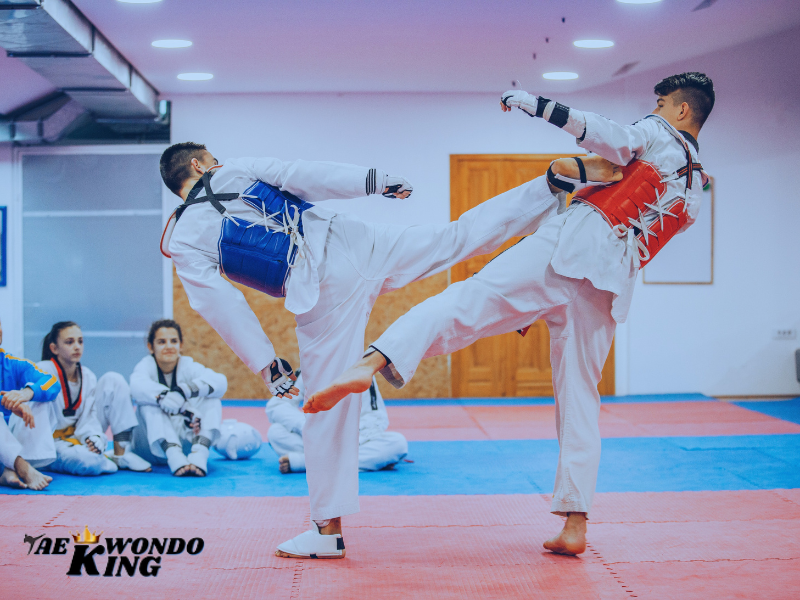
To kick well, your body needs to do four things fast. First, you must “chamber” or lift your knee. Next, you snap the leg out with power. Then, you pull it back just as fast. Finally, you have to do this over and over. This puts a lot of stress on your hips and lower back.
Common injuries caused by poor stretching
If you skip your routine, you might feel a sharp twinge in your groin. I have seen many students deal with hip flexor pain or pulled hamstrings because they rushed. Even lower back tightness often comes from tight legs pulling on your spine.

Warm-Up vs Stretching (Most People Get This Wrong)
There is a big difference between getting warm and getting flexible.
What a warm-up actually does
A good warm-up raises your core heat. It makes your blood flow faster to your muscles. In a cold UK hall, this is vital. It wakes up your joints and helps your brain react faster to a partner’s movement.
When stretching helps , and when it hurts
You should never stretch “cold” muscles. It is like pulling a cold rubber band; it might snap. Use dynamic moves before you train. Save the long, deep holds for the end of the night when you are nice and warm.
The Ideal Taekwondo Stretching Routine Structure
Think of your training session in three clear parts to get the best results.
Three phases explained
- Pre-class: Move your limbs to get loose.
- During class: Do quick resets between drills to stop muscles from seizing up.
- Post-training: This is when you hold deep stretches to actually grow more flexible.
How long each phase should take
Spend about 5 to 8 minutes before class on movement. After class, spend 10 to 15 minutes on deep holds. Being consistent matters more than being intense for one day.
Dynamic Stretching Routine Before Taekwondo Training
This phase is all about motion. You want to tell your brain that your legs are about to move through a wide range.
Lower body mobility drills
- Hip circles: Stand on one leg and draw big circles with the other knee.
- Leg swings: Swing your leg forward and back, then side to side. Keep it relaxed.
- Walking lunges: Take a long step and twist your torso. It opens the hips and wakes up the core.
Taekwondo-specific movement prep
I like to do slow front kicks without any snap. Just lift the leg and feel the hamstrings wake up. You can also hold a side kick chamber for a few seconds. In a quiet hall, you’ll hear the mats squeak as you find your balance. It’s a great way to focus.
Static Stretching Routine After Taekwondo Class
Now that you are sweaty and warm, you can work on your actual reach.
Hamstrings and calves
Sit on the floor with your legs straight. Reach for your toes gently. Don’t bounce! You can also stand against a wall to stretch your calves. This helps prevent that “tight” feeling the next morning.
Hip flexors and groin (critical for high kicks)
The “Butterfly stretch” is a classic for a reason. Sit with the soles of your feet together and let your knees drop. For the hip flexors, try a deep lunge with your back knee on the floor. It should feel like a dull pull, never a sharp pain.
Glutes and lower back
Lie on your back and hug one knee to your chest. Then, let that knee fall across your body for a spinal twist. It releases all the tension from those twisting kicks.
Stretching for Higher Kicks (Safely)
Everyone wants a head-height kick, but you can’t force it.
Active flexibility vs passive flexibility
It is one thing to have someone push your leg up. It is another thing to lift it there yourself. You need strong muscles to hold the stretch. Strength and flexibility must grow together.
Mistakes that stall progress
Don’t force the splits if your body says no. I see people hold their breath when a stretch gets tough. This makes your muscles tighten up. Breathe out, relax, and let the muscle let go.
Beginner vs Advanced Taekwondo Stretching Needs
Your routine stays the same, but how you do it changes as you get better.
Beginners should focus on
Just getting to class and moving is a win. Focus on a range that does not hurt. Work on your form first. The height will come with time and regular practice.
Advanced students can add
Higher belts often use “PNF” stretching. This is where you tense the muscle while stretching it, then relax. It helps “trick” the nervous system into allowing a deeper range.
How Often Should You Stretch for Taekwondo?
If you only stretch once a week at the club, you won’t see much change.
Training days vs rest days
On training days, follow the full routine. On rest days, do 10 minutes of light mobility. It keeps the blood moving and stops you from feeling like a statue.
Stretching around UK lifestyles
Many of us sit at desks all day in the UK. This makes our hips very tight. A quick 5-minute stretch after work, before you even get to the club, can make a huge difference in your evening session.
British Expert Advice on Taekwondo Stretching
I once asked a senior master how to get better kicks. His answer stayed with me.
“Flexibility in Taekwondo comes from patience, not pressure. The kick improves when the joint feels safe.”
— Master Andrew Collins, 7th Dan WT, Birmingham
Common Taekwondo Stretching Mistakes (And How to Fix Them)
- Stretching cold: Always jog for five minutes first.
- Bouncing: This can cause tiny tears in the muscle. Keep it smooth.
- Ignoring one side: We all have a “good” leg. Spend extra time on your stiff side.
- Rushing: You can’t rush biology. Give it months, not days.
Taekwondo Stretching Routine at a Glance
This table shows how to plan your time based on what we do in UK clubs.
| Phase | Type | Duration | Main Focus |
| Before Class | Dynamic | 5–8 mins | Joint mobility and heart rate |
| During Training | Light Resets | 2–3 mins | Staying loose between drills |
| After Class | Static | 10–15 mins | Long-term flexibility gains |
Stretching at Home Between Classes
You don’t need a gym to get flexible.
10-minute home routine idea
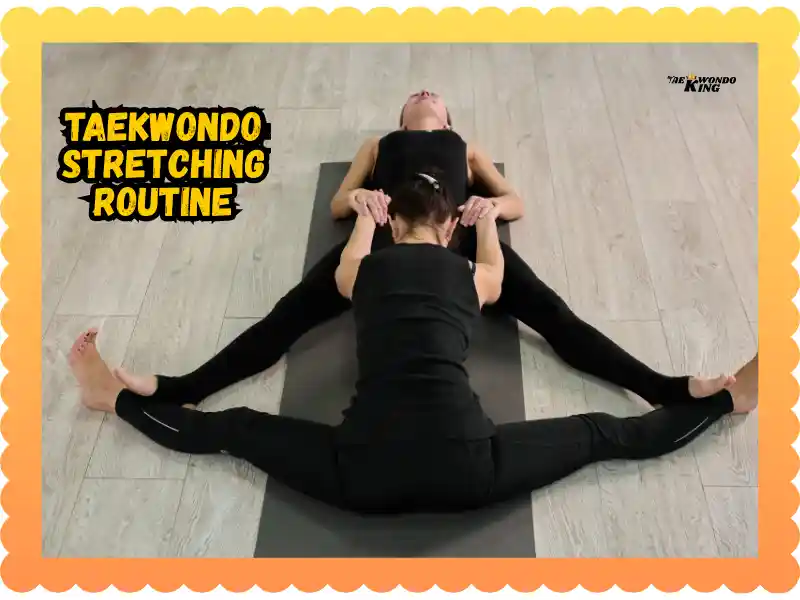
Try a “pancake” stretch while watching TV. Sit with your legs wide and lean forward slightly. Do some slow hip circles while the kettle boils. These small moments add up.
Best time of day to stretch
I find that stretching after a warm shower is best. Your muscles are relaxed and ready to move. Morning stretching is okay, but be very gentle as your body is naturally stiffer then.
Stretching for Longevity: The 2026 Methodology
In the 2026 Taekwondo landscape, we no longer view stretching as a “pre-class chore.” It is a neuromuscular reset that prepares your body for the unique torque of Korean martial arts. Stretching properly doesn’t just make you flexible; it makes you durable.
1. The Golden Rule: Warm Up Before You Stretch
Never stretch a “cold” muscle. Think of your muscles like a rubber band, if it’s frozen, it snaps; if it’s warm, it expands.
- Warm-up Goal: 5–10 minutes of light cardio (jogging, jumping jacks) to raise your core temperature by 1–2 degrees.
- The “Sweat” Marker: You should have a light sheen of sweat before you attempt a deep split.
2. Dynamic vs. Static: The 2026 Consensus
Research now shows that long, static holds before training can actually decrease explosive power.
- Before Class (Dynamic): Focus on Leg Swings and Hip Circles. Use controlled momentum to reach your current range of motion.
- After Class (Static): This is where you build permanent flexibility. Hold stretches for 30–60 seconds while your muscles are deeply fatigued and warm.
3. Essential Muscle Targets
| Muscle Group | Kick Application | Primary Stretch |
| Hamstrings | Front Kick / Axe Kick | Seated Forward Fold |
| Hip Flexors | Roundhouse / Side Kick | Deep Runner’s Lunge |
| Adductors | Side Split / Turning Kick | Butterfly Stretch |
| Calves | Footwork / Jumping | Wall Push Stretch |
4. PNF: The Flexibility “Cheat Code”
Proprioceptive Neuromuscular Facilitation (PNF) is the most effective way to see rapid gains.
- Stretch the muscle to its limit.
- Contract that same muscle (push against a partner or the floor) for 6 seconds at 50% strength.
- Relax and immediately sink deeper into the stretch.
- Result: You bypass the “Stretch Reflex” that usually prevents the muscle from lengthening.
Expert Insight: Injury often happens when the antagonist muscle (the one opposite the kick) is too tight. If you feel a “pull” in your back during a front kick, it’s likely your hamstrings acting as a brake. Focus on those areas to “unlock” your natural height.
Taekwondo 5 Stretches for High Kick Flexibility
This video provides a visual demonstration of the critical stretches for kick height, including the technical nuances of hip positioning discussed in the guide.
What Stretching Should Feel Like
It should feel like a “useful” discomfort. It is a slow, warm pull in the belly of the muscle. If you feel anything sharp or “electric” near a joint, stop right away. I’ve had nights where I felt like I was making no progress, but then one day, a kick just felt “easy.” Those quiet wins are what keep you coming back.
Why Consistent Stretching Improves More Than Just Kicks
A good taekwondo stretching routine changes how you move in daily life. You’ll find you have better balance when walking the dog. Your technique in class will look cleaner. Most importantly, you will be able to train for years without injury. It makes the whole sport much more fun.
Final Recommendation
From my experience, the best taekwondo stretching routine is simple, patient, and repeatable. I no longer chase pain or copy flashy drills. I stretch with purpose, respect the cold halls we train in, and give my body time to adapt. When stretching supports training instead of fighting it, kicks improve naturally. Flexibility follows safety, not force.
FAQs
A taekwondo stretching routine warms muscles and loosens joints. It boosts kicks, balance, and speed. It also helps cut strain and keeps training safer.
Do light dynamic stretches before class. Save deep holds for after training. This keeps muscles warm and lowers the risk of pulls or tightness.
Keep it simple. Ten to fifteen minutes is enough for most sessions. Short, steady work beats long, rushed stretching every time.
Focus on hips, hamstrings, groin, and calves. Try leg swings, lunges, and splits. These areas help with high kicks and quick footwork.
Yes. Start slow and gentle. Use easy moves and short holds. As your body adapts, you can add deeper stretches and more range.
Yes, regular stretching improves flexibility and control. Kicks feel higher and smoother. Over time, your form looks cleaner and more relaxed.
Daily light stretching is fine and often helpful. Listen to your body. Stop if you feel sharp pain and rest when muscles feel sore.

Founder, Owner, and CEO of TaekwondoKing.
He is one of the top 100 martial artists in the World and among the top 20 referees in Bangladesh.
Ehatasamul Alom is an esteemed Kukkiwon Certified Taekwondo 3rd Dan Black Belt with over 15 years of experience in this dynamic martial art. Born in Rajshahi, Bangladesh, Ehatasamul’s journey with Taekwondo began at the tender age of seven. His passion led him to compete at national and international levels, where he has bagged numerous awards and honors. He is also a member of the Taekwondo National Referee Panel.
With a Bachelor’s degree in Sports Science from the prestigious Rajshahi University, Ehatasamul has a deep understanding of the technical and scientific aspects of martial arts and some other martial arts.
In 2022, Ehatasamul created the “TaekwondoKing.com” to share his knowledge, Free Resources, Values, and Real experiences. His articles focus on Taekwondo training techniques, competition strategies, Sport Products Reviews, and the art’s rich history and philosophy. He also writes about the importance of mental fortitude and discipline, key aspects of his teaching philosophy. He has already launched many sports, Taekwondo, and health-related Free online tools. His goal is to inspire both beginners and seasoned practitioners worldwide through insightful and engaging content.
If you need any help, contact Ehatasamul Alom at any time.