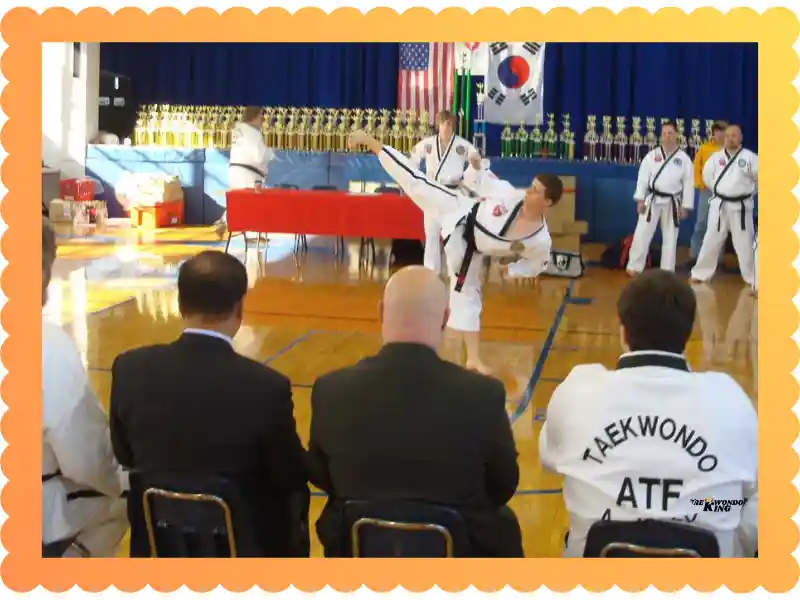
Saturday morning arrives with a chill in a sports hall in Coventry. You stand on the blue mat. Five judges sit in a row. They look very serious. The hall goes silent. You bow and wait for the signal. I remember how scary this felt the first time. It is easy to think they are looking for tiny flaws to fail you. But once you learn how judges score poomsae, the fear goes away. It turns into a clear plan. You stop guessing and start training for what truly counts. Let us look at how the scores really work in the UK.
Why Understanding Poomsae Scoring Changes Everything
Most students train very hard. But many train “blind” because they do not know what the judges want to see.
Why students often feel confused by scores
You might do the same form twice but get different scores. This feels odd. Judges do not give feedback in the middle of a match. This leaves you wondering what went wrong. You might think you were fast and strong, yet the score stayed low.
How scoring knowledge improves confidence
When you know the rules, there are fewer surprises. You can set clear priorities for your training. You will know exactly which move needs more work. This makes your practice sessions much smarter and your mind much calmer.

Who the Judges Are in UK Poomsae Events
Judges are not just guessing who looks best. They are highly trained experts who follow strict rules.
UK judging structure explained simply
Most judges in the UK are WT-certified referees. They follow British Taekwondo (BT) standards. They have years of experience. Many are senior black belts who have spent decades on the mats.
What judges can and cannot do
A judge cannot coach you. They must stay neutral. They do not use emotions to score. Judge also do not compare you to the person who went before you. They score your form against a “perfect” version in their mind.
The Two Main Parts of Poomsae Scoring
All your marks come from two clear areas. These are Accuracy and Presentation.
Accuracy score (technical correctness)
This is about doing the right move at the right time. Judges look for correct hand positions and stances. They watch your balance and how you turn. If you miss a step or turn the wrong way, your accuracy score drops.
Presentation score (performance quality)
This is about how well you perform the form. It covers your power control and rhythm. Judges look for your “energy” and expression. They want to see that you are calm and in total control of your body.
How Accuracy Is Judged in Poomsae
This is the part of the score where most students lose their marks. Even small slips count.
Common accuracy deductions
Small wobbles are easy to spot. A tiny scrape of the foot on the floor can cost you. Judges look for the length of your front stance. They check if your hands are in the correct “chamber” before a block. If your feet move after you land, that is a deduction.
Sequence and direction mistakes
If you take a wrong turn, the judges will see it. If you miss a single block, your score will fall. You must stay on the correct lines of the pattern. Stepping too far to the left or right shows a lack of floor awareness.
How Presentation Is Judged (And Why It’s Misunderstood)
Many people think presentation means looking angry or acting dramatic. That is not true.
What “presentation” really means
It is about controlled power. Judges want to see a clear contrast between fast and slow moves. Your breathing should be natural and timed with your strikes. It is about showing a quiet, calm confidence that fills the room.
Common presentation mistakes
Rushing is the biggest error. Students often move so fast that the techniques look blurry. Over-tensing your muscles also looks bad. It makes you look stiff. Forced facial expressions can also distract from a good performance.
Timing, Rhythm, and Power , What Judges Prefer
The best poomsae is not the fastest one. It is the one with the best control.
Why rhythm matters more than speed
Judges look for a “flow.” Every technique should have a clear start and a clear finish. There should be tiny pauses in the right places. This shows you are not just rushing to finish. It shows you understand the form.
Power vs control
Clean technique will always beat a loud, messy strike. Power is good, but only if you stay balanced. If you kick so hard that you stumble, the power does not matter. The judges want to see that you can stop your power exactly where you want it.
How Small Errors Add Up in Poomsae Scoring
One tiny mistake will not ruin your day. But many small ones will.
The “death by a thousand cuts” effect
If every stance is one inch too short, the judges keep taking off tiny marks. These add up very fast. Slight losses of balance might look small to you, but they show the judges that your core is weak.
Why judges don’t ignore “minor” errors
Judges look for patterns in your technique. If you always forget to chamber your arm, it shows you have not practised the basics. They value consistency over a few “flashy” high kicks.
British Expert Insight on Poomsae Scoring
I spoke to a senior judge in London about what makes a student stand out.
“Most competitors lose points before the first turn. Stance width, posture, and calm breathing tell judges immediately how prepared you are. If you start with a weak stance, we know the rest will be a struggle.”
— Master Andrew Whitfield, WT International Referee, London
What Judges Score vs What Students Think
In the UK, there are a few myths about what gets the most marks.
| Students Focus On | Judges Actually Score |
| Being very fast | Control and rhythm |
| A very loud kihap | Timing and balance |
| Max power everywhere | Contrast and precision |
| Looking intense | Calm composure |
How Scoring Differs Between Gradings and Competitions
The environment changes what the judges look for most.
Grading day scoring priorities
In a club grading, they want to see if you are ready for the next belt. They look for etiquette and effort. They want to see that you know your syllabus and can follow instructions.
Competition scoring priorities
In a tournament, the margins are much smaller. They look for tiny technical details. Presentation quality matters more here. They compare your performance to the highest standards in the country.
What Judges Ignore (Surprisingly)
This part makes many students feel much better before they step out.
Things that don’t cost points
Being nervous is okay. Judges expect it. They do not take off marks for a bit of facial tension. They also do not care about your body type or height. As long as your moves are correct and strong, you can score well.
How to Train Smarter Once You Understand Scoring
Knowing the rules helps you spend your time on the right things.
Training adjustments that raise scores
Do more slow reps. This helps you find your balance. Check your stances in a mirror every time. Use a video to review your own form. You will see the wobbles that you cannot feel while you are moving.
What to practise less
Do not just do full-speed runs all the time. This hides your mistakes. Stop over-powering every move until you lose your balance. Also, stop copying others. Every person has a slightly different way of moving that suits their body.
The Poomsae Scorecard: Deciphering the 10.0 Point Scale
In 2026, the British Taekwondo Referee Department continues to follow the World Taekwondo (WT) standard, but with a specific focus on “Mastery of the Performance.” If you’re competing in the UK this year, your score is essentially two separate evaluations combined.
1. Accuracy (4.0 Points)
Judges start with a perfect 4.0 and chip away at it.
- -0.1 (Small Mistake): Hand slightly out of line, base foot pivoting too much, or a slight balance tremor.
- -0.3 (Serious Mistake): Performing an Arae-makki instead of a Momtong-makki, doing the wrong stance entirely, or a complete loss of balance.
- -0.6 (Major Penalty): Restarting the Poomsae or a massive deviation from the set path.
2. Presentation (6.0 Points)
This is where the winners are decided in 2026. This section is divided into three sub-categories, each worth 2.0 points:
- Speed & Power: The ability to generate explosive force with crisp, accelerating movements.
- Control of Power & Rhythm: Demonstrating “Softness and Hardness.” It shouldn’t be one-speed; there must be a cadence to the movements.
- Expression of Energy: The “martial spirit.” This includes eye contact (gaze), confidence, and the intensity of your breathing.
3. The “Drop High/Low” System
At major UK championships, you will see 3, 5, or 7 judges. To ensure fairness:
- The system removes the highest score and the lowest score.
- The remaining scores are averaged.
- Tie-break Rule: If total scores are tied, the athlete with the higher Presentation score wins. If still tied, the higher total (including the dropped scores) wins.
Summary Table for 2026 Grading/Competition
| Criteria | Max Points | Common Deduction |
| Accuracy | 4.0 | -0.1 (Hand placement) |
| Speed/Power | 2.0 | Slow transitions |
| Rhythm/Control | 2.0 | Robotic, uniform speed |
| Energy/Gaze | 2.0 | Looking at the floor |
Expert Insight: In the 2026 season, judges are heavily penalizing “flick” kicks. If you don’t show a clear, controlled retraction (snap-back) before putting your foot down, expect a presentation deduction under the “Control” category.
Common Myths About Poomsae Judging
These myths cause unnecessary stress.
- “Judges prefer certain clubs”: Not true. They score what they see on the mat.
- “Bigger movements score higher”: No. Accurate movements score higher.
- “You must look aggressive”: No. You must look focused and calm.
- “One mistake ruins everything”: You can always recover and still get a good score.
Emotional Control and Its Impact on Scoring
Your feelings can change how your body moves.
How nerves affect technique
When you are scared, your stances get shallow. You start to rush your timing. You might skip the pauses that give the form its rhythm. The judges can “feel” your tension, which lowers your presentation mark.
Calm habits judges notice
Steady breathing is a sign of a pro. Smooth transitions between moves show that you are relaxed. A confident finish with a strong bow leaves a great last impression on the judging panel.
Thoughts on How Judges Score Poomsae
Judges are not looking for a perfect robot. They want to see a student who understands the art. They want to see clean basics and calm execution. If you focus on your balance and your rhythm, the high scores will follow. Trust your training and keep your head up.
Final Recommendation
Do not let the fear of a low score stop you from competing. Now that you know how judges score poomsae, you can train with a clear goal. I find that filming your form at home is the best way to spot tiny errors. You can fix your stances before you ever get to the sports hall. You will feel much more ready for your next big event in the UK.
FAQs
Judges score poomsae on accuracy and presentation. They check technique, balance, power, and rhythm. Small errors reduce points quickly.
Accuracy means correct stances, blocks, and kicks. Moves must match the official pattern. Wrong steps or angles lead to clear deductions.
Presentation covers power, speed, focus, and flow. Judges want sharp moves and strong spirit. Smooth rhythm can lift your final score.
Yes, each mistake costs points. Extra steps, wobbles, or pauses add up fast. Clean, simple execution often scores higher than flashy moves.
Most events use several judges, often five or more. They score at the same time. High and low marks may be removed for fairness.
Yes, timing matters a lot. Moves should be crisp and steady. Rushing or slowing down breaks rhythm and lowers presentation marks.
Practise basics daily and film your form. Focus on balance and strong stances. Small fixes can raise scores more than big changes.

Founder, Owner, and CEO of TaekwondoKing.
He is one of the top 100 martial artists in the World and among the top 20 referees in Bangladesh.
Ehatasamul Alom is an esteemed Kukkiwon Certified Taekwondo 3rd Dan Black Belt with over 15 years of experience in this dynamic martial art. Born in Rajshahi, Bangladesh, Ehatasamul’s journey with Taekwondo began at the tender age of seven. His passion led him to compete at national and international levels, where he has bagged numerous awards and honors. He is also a member of the Taekwondo National Referee Panel.
With a Bachelor’s degree in Sports Science from the prestigious Rajshahi University, Ehatasamul has a deep understanding of the technical and scientific aspects of martial arts and some other martial arts.
In 2022, Ehatasamul created the “TaekwondoKing.com” to share his knowledge, Free Resources, Values, and Real experiences. His articles focus on Taekwondo training techniques, competition strategies, Sport Products Reviews, and the art’s rich history and philosophy. He also writes about the importance of mental fortitude and discipline, key aspects of his teaching philosophy. He has already launched many sports, Taekwondo, and health-related Free online tools. His goal is to inspire both beginners and seasoned practitioners worldwide through insightful and engaging content.
If you need any help, contact Ehatasamul Alom at any time.