Ever wonder if those high kicks actually work when you’re walking home in a city like Leipzig? Many ask if taekwondo good for self-defense is a reality, and the answer is a solid yes because it builds the distance control and explosive power needed to stop a threat before it gets close. I remember a training partner who escaped a scary situation just by using the fast footwork we practiced every Tuesday night.
As a long-time practitioner, I can tell you that while the sport is flashy, the real-world utility lies in the muscle memory and calm mind you develop. Let’s look at how these skills can keep you safe and confident in your daily life today.
Understanding Taekwondo
Taekwondo, starting from Korea, is one of the foremost well known martial arts all-inclusive. It is known for its energetic kicking procedures, quick footwork, and effective strikes. The craftsmanship of Taekwondo emphasizes both physical and mental teach, making it a comprehensive hone for wellness, self-defense, and individual advancement.
At TaekwondoKing.com, we accept that Taekwondo is much more than fair a don; it may be a way of life that prepares specialists with the abilities to ensure themselves whereas cultivating regard, lowliness, and tirelessness.

The Core Methods of Taekwondo for Self-Defense
As a Taekwondo national and worldwide player, coach, black belt 3rd Dan holder, and national Taekwondo official. Is taekwondo good for self-defense? I have gone through numerous, a long time submerged within the world of martial arts. Through my broad encounter, I have come to get it the qualities and restrictions of Taekwondo, especially when it comes to self-defense. This article will investigate the viability of Taekwondo for self-defense, considering its strategies, preparing strategies, and logic.
1. Capable Kicks
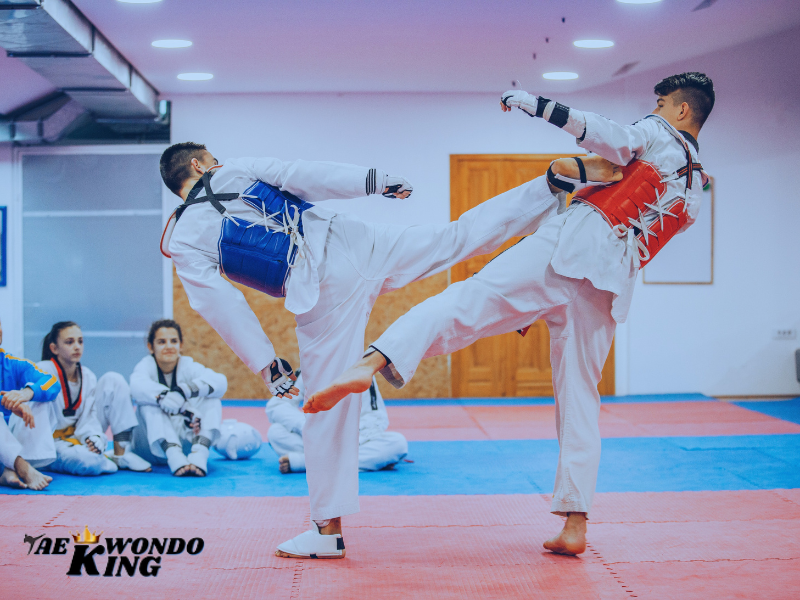
One of the foremost recognizing highlights of Taekwondo is its capable kicks. Strategies just like the roundhouse kick, sidekick, and turning snare kick can provide obliterating constrain when executed accurately. These kicks are outlined to keep an adversary at a separate, which is pivotal in self-defense scenarios. The speed and control of Taekwondo kicks can cripple an aggressor, giving the guard with an opportunity to elude.
2. Strikes and Pieces
Whereas Taekwondo is celebrated for its kicks, it too incorporates an assortment of hand strikes, squares, and punches. Procedures such as the knife-hand strike, ridge-hand strike, and straight punch are fundamental components of Taekwondo preparing. Squares are similarly critical, as they empower specialists to divert or neutralize approaching assaults. The combination of strikes and squares in Taekwondo gives a well-rounded approach to self-defense.
3. Footwork and Versatility
Taekwondo emphasizes dexterity and versatility, which are basic in self-defense. Successful footwork permits professionals to move around an opponent, making points for counter-attacks or finding openings to withdraw. The capacity to move rapidly and productively can be the distinction between maintaining a strategic distance from an assault and being caught off watch.
4. Situational Mindfulness
At TaekwondoKing.com, we push the significance of situational mindfulness as a key element of self-defense. Taekwondo preparing frequently incorporates drills that reenact real-life circumstances, making a difference understudies create the capacity to evaluate their environment and expect potential dangers. Being mindful of one’s environment and recognizing threat early can anticipate clashes from heightening.
The Qualities of Taekwondo for Self-Defense
1. Separate Control
One of the essential focal points of Taekwondo in self-defense is its center on remove control. The long-range kicks and quick footwork permit specialists to preserve a secure remove from an attacker. This capacity to control the remove can avoid an attacker from closing in, decreasing the hazard of hooking or close-quarters combat.
2. Flexibility
Taekwondo’s flexibility makes it appropriate for a wide run of self-defense scenarios. Whether confronting a single assailant or different adversaries, Taekwondo procedures can be adjusted to the circumstance. The combination of tall kicks, fast strikes, and sly maneuvers offers an adaptable approach to guarding oneself.
3. Physical Wellness
The physical conditioning picked up through Taekwondo preparing upgrades in general wellness, quality, and perseverance. In a self-defense circumstance, these traits are priceless. A fit and dexterous practitioner is better prepared to react rapidly, provide capable strikes, and withstand the physical requests of a showdown.
4. Mental Teach
Taekwondo isn’t almost about physical methods; it too develops mental teach. Specialists are prepared to stay calm beneath weight, think deliberately, and make speedy choices. This mental grit is significant in self-defense, where freeze can lead to botches. Taekwondo professionals learn to remain centered, evaluate the circumstance, and respond effectively.
5. Certainty
At TaekwondoKing.com, we emphasize the significance of self-confidence in self-defense. The certainty picked up through Taekwondo preparing can prevent potential aggressors. A certain position, eye contact, and confident behavior can flag to an aggressor that the individual they are focusing on isn’t a simple casualty. This mental advantage can anticipate an assault from occurring within the to begin with put.
The Impediments of Taekwondo for Self-Defense
1. Sport-Oriented Center
Whereas Taekwondo is compelling for self-defense, it is critical to recognize that a few angles of training may be more sport-oriented. Competitive Taekwondo centers on point scoring and adhering to particular rules, which may not continuously interpret to real-life self-defense circumstances. For occasion, in a competition, professionals may depend on tall kicks, but in a road showdown, moo kicks and hand strikes may well be more viable.
2. Limited Grappling Strategies
Taekwondo basically centers on striking and kicking, with less accentuation on hooking, joint locks, or ground fighting. In self-defense circumstances where an aggressor oversees to shut the separate and lock in hooking, a Taekwondo professional may ought to depend on basic self-defense standards or cross-train in other martial arts that specialize in hooking, such as Judo or Brazilian Jiu-Jitsu.
3. Preparing Environment
The controlled environment of a Taekwondo Dojang (preparing lobby) contrasts essentially from the unusual nature of real-life showdowns. Whereas TaekwondoKing.com advocates for reasonable preparing scenarios, it is imperative to recognize that no preparing can completely duplicate the chaos of a road quarrel. Specialists must be mindful of this confinement and be arranged to adjust their strategies to the circumstance.
Coordination of Taekwondo into a Comprehensive Self-Defense Strategy
1. Cross-Training
To address a few of the limitations mentioned earlier, cross-training in other martial arts can improve a Taekwondo practitioner’s self-defense capabilities. For a case, learning to hook procedures from Judo or Brazilian Jiu-Jitsu can complement Taekwondo’s striking abilities. Combining diverse martial arts disciplines makes a more well-rounded self-defense skill set.
2. Practical Self-Defense Training
At TaekwondoKing.com, we energize practical self-defense preparing that goes past conventional methods. This incorporates learning how to guard against common assaults, such as snatches, chokes, and weapon dangers. Down to earth preparing too includes practicing in different situations, such as confined spaces or on uneven surfaces, to mimic real-world conditions.
3. Awareness and Shirking
The finest frame of self-defense is dodging perilous circumstances through and through. Taekwondo instructs the significance of mindfulness and de-escalation procedures. Understanding how to peruse body dialect, distinguish potential threats, and avoid encounter can avoid numerous clashes from emerging. At TaekwondoKing.com, we believe that self-defense starts with making keen choices and remaining watchful.
4. Continued Learning and Adjustment
Self-defense is a progressing prepare of learning and adjustment. As military craftsmen, we must persistently refine our abilities, remain educated approximately unused procedures, and adjust our preparing to changing circumstances. TaekwondoKing.com is committed to giving assets and direction for professionals who look for to evolve their self-defense capacities.
Why Taekwondo Works for Personal Safety
When people ask if taekwondo good for self-defense is effective, they are usually looking for practical tools. The art’s biggest strength is “distance management,” using your legs the longest and strongest weapons on your body to keep an attacker at bay. In the USA, many schools focus on “Olympic style” sparring, but traditional dojangs still teach vital hand strikes and blocks designed for the street.
- Distance Control: Kicks like the “push kick” allow you to push an attacker away and create space to run.
- Situational Awareness: Training teaches you to keep your head up and spot danger before it reaches you.
- Striking Power: A single, well-placed roundhouse kick can end a confrontation by targeting a leg or torso.
Summary: Taekwondo provides a unique advantage in self-defense by leveraging leg length to maintain a safe distance from potential attackers.
Mental Grit and the “Fight or Flight” Response
A huge part of why taekwondo good for self-defense is a common topic is the mental shift it creates. In a high-stress moment, your body often freezes, but the repetitive nature of Taekwondo drills turns your responses into second nature. For the US audience, this “confidence boost” is a top reason parents enroll their kids, as it helps them stand tall against bullies. I’ve found that the calm I feel during a tough sparring match translates perfectly to staying cool in a heated real-world argument.
| Self-Defense Skill | Taekwondo Benefit | Daily Life Result |
| Reflexes | Faster reaction to movement | Avoiding accidents/falls |
| Confidence | Stronger body language | Less likely to be a target |
| Discipline | Emotional control | Better conflict resolution |
Summary: The mental conditioning in Taekwondo prepares individuals to remain decisive and composed during unexpected or threatening encounters.
My Personal Experience with Practical Safety
I’ve learned that the answer to taekwondo good for self-defense isn’t just about the moves, but the habits you build. I once felt a surge of panic in a dark parking lot, but my training kicked in I checked my exits, kept my hands ready, and walked with purpose. It wasn’t a “movie fight” moment; it was the discipline of the dojang keeping me safe. While no art is a magic shield, the strength and speed you gain here are tools you’ll be glad to have in your pocket.
Summary: Practical self-defense is as much about the proactive mindset and physical readiness developed in training as it is about the techniques themselves.
Conclusion: Is Taekwondo Great for Self-Defense?
In conclusion, Taekwondo could be a highly effective martial art for self-defense, advertising effective techniques, mental discipline, and physical conditioning. In any case, like several martial arts, it has its restrictions, and professionals should be mindful of these when depending on Taekwondo for self-defense.
By joining Taekwondo with commonsense self-defense preparing, cross-training in other martial arts, and maintaining a solid center on awareness and shirking, people can develop a comprehensive self-defense methodology. At TaekwondoKing.com, we are committed to making a difference specialists accomplish their self-defense goals and gotten to be sure, competent protectors of themselves and others.
Whether you’re an apprentice or an experienced martial art, Taekwondo can empower you to ensure yourself whereas developing a solid intellect and body. The journey of self-defense is one of nonstop development, and TaekwondoKing.com is here to bolster you each step of the way.
FAQs
Yes, Taekwondo is good for self-defense. It teaches speed, distance control, and powerful kicks to stop threats quickly.
Taekwondo trains fast reactions and awareness. These skills help you escape danger and protect yourself safely.
Taekwondo uses speed and timing, not strength alone. This helps smaller people handle bigger attackers at a safe distance.
Yes, Taekwondo kicks are very useful. Long-range kicks help keep attackers away and give time to escape.
Taekwondo is strong for distance defense. Other arts focus on grappling or close range. The best choice depends on your needs.
Yes, Taekwondo teaches kids safe self-defense skills. It also builds confidence, focus, and discipline.
Yes, many Taekwondo schools teach self-defense drills. These include blocks, escapes, and awareness skills.

Founder, Owner, and CEO of TaekwondoKing.
He is one of the top 100 martial artists in the World and among the top 20 referees in Bangladesh.
Ehatasamul Alom is an esteemed Kukkiwon Certified Taekwondo 3rd Dan Black Belt with over 15 years of experience in this dynamic martial art. Born in Rajshahi, Bangladesh, Ehatasamul’s journey with Taekwondo began at the tender age of seven. His passion led him to compete at national and international levels, where he has bagged numerous awards and honors. He is also a member of the Taekwondo National Referee Panel.
With a Bachelor’s degree in Sports Science from the prestigious Rajshahi University, Ehatasamul has a deep understanding of the technical and scientific aspects of martial arts and some other martial arts.
In 2022, Ehatasamul created the “TaekwondoKing.com” to share his knowledge, Free Resources, Values, and Real experiences. His articles focus on Taekwondo training techniques, competition strategies, Sport Products Reviews, and the art’s rich history and philosophy. He also writes about the importance of mental fortitude and discipline, key aspects of his teaching philosophy. He has already launched many sports, Taekwondo, and health-related Free online tools. His goal is to inspire both beginners and seasoned practitioners worldwide through insightful and engaging content.
If you need any help, contact Ehatasamul Alom at any time.