The coach starts explaining a front kick. Thirty seconds later, one child is staring at the ceiling, another is fixing a belt, two are quietly wrestling, and someone asks if they are sparring yet. I watched this exact scene unfold on a Tuesday afternoon in a busy Seattle dojang, and the coach’s next move made all the difference. This is not always a discipline problem. Sometimes the lesson itself needs to change. Coaching children with short attention spans starts with understanding that children learn differently from adults, and long explanations can lose young athletes fast.
Movement, short instructions, repetition, games, and clear routines all help far more than repeating the same lecture louder. Attention friendly coaching should benefit the whole class, not just the one child who seems distracted.
It matters to be clear about one thing early on. A short attention span is a common description, not a medical diagnosis, and a coach should never diagnose ADHD based on behavior in a dojang. Attention naturally shifts with age, sleep, stress, hunger, excitement, task difficulty, and the environment around the child. Positive Coaching Alliance specifically notes that attention and executive function difficulties can appear without an ADHD diagnosis and may be affected by stress or tiredness.
This guide will show coaches how to recognize attention challenges, structure classes better, shorten instructions, use movement effectively, choose stronger drills, manage distractions, support different age groups, work with parents, and use a simple attention friendly coaching tool.
What Does a Short Attention Span Look Like in Youth Sports?
Before changing the lesson, a coach needs to know what they are actually seeing. One distracted child does not always signal a real attention problem.
Common Signs During Practice
Watch for looking around during instructions, forgetting drill steps, leaving the line, talking to partners, touching equipment, starting before instructions finish, needing repeated reminders, losing interest in repetitive drills, switching activities without permission, and struggling to wait.
Attention vs Misbehavior
A possible attention issue sounds like “I forgot what step three was.” A possible behavior issue sounds like “I know the rule, but I am choosing to ignore it.” The two can absolutely overlap, so coaches should stay curious rather than jumping to one conclusion.
When Attention Drops Suddenly
Poor sleep, a stressful day at school, hunger, heat, a class running too long, a drill becoming too difficult, or too much waiting can all cause a sudden drop in focus. The CDC notes that adequate sleep supports focus and concentration, while insufficient sleep is associated with attention and behavior problems.
Why Do Children Lose Focus During Taekwondo Practice?
A child may not be trying to make the coach’s life harder. Sometimes the lesson is simply asking for more attention than the child can give in that moment.
The Explanation Is Too Long
When a coach talks for four minutes while kids stand still, energy rises and attention disappears fast.
Too Much Waiting
Long lines create boredom, talking, horseplay, and distraction, a pattern that shows up constantly in busy taekwondo martial arts for kids classes with too few stations.
The Drill Is Too Easy
A skilled child may lose interest fast when there is no real challenge in front of them.
The Drill Is Too Hard
A child may look distracted simply because they feel confused, not because they lack focus.
The Class Has Too Many Transitions
Moving between the line, a circle, pairs, bags, mats, and back to the line again can create real confusion for younger students.
The Child Needs More Movement
Positive Coaching Alliance recommends using movement and hands-on teaching when working with athletes who struggle with attention and executive function.
How to Coach Children With Short Attention Spans
The goal is not forcing children to sit still for longer. The goal is designing practice so they can listen, move, try, and learn all at once.
Use the Preview, Teach, Review Method
Preview: “today we are learning three parts of the round kick.” Teach: demonstrate one part, then let them try it. Review: “what comes first?” Positive Coaching Alliance specifically recommends previewing, teaching, and reviewing information while keeping it short and simple.
Give 1 to 2 Instructions at a Time
Skip long chains like stance, chamber, hip turn, extend, recoil, foot down, reset guard. Instead say “stance first, then chamber,” then move.
Show Before Explaining Too Much
Follow show, say, try, rather than explaining every detail before anyone moves.
Ask Children to Demonstrate
Questions like “who can show me,” “what is the first step,” or “show your chamber” turn passive listening into active participation, similar to the demonstration methods in taekwondo first learning technique.
Repeat the Same Coaching Language
Use consistent terms for ready, stop, reset, switch, partner, guard, and stance. Consistency reduces the mental load on every child in the room.
How Long Should a Coach Talk to Children Before a Drill?
There is no universal magic number for every age and class. The real goal is keeping explanations brief, active, and age appropriate.
Use the “Talk Less, Move More” Principle
Explain one point, demonstrate it, move, then correct while children practice rather than talking through every detail first.
Watch for the Attention Drop
Feet starting to move, children looking at each other, talking beginning, children copying the wrong thing, and hands touching equipment all signal it is time to change the format, not simply raise your volume.
Replace Long Explanations With Micro-Cues
Short cues like “chamber,” “hands up,” “turn,” “reset,” “eyes here,” or “switch” carry the message without losing the room.
Best Taekwondo Drills for Children With Short Attention Spans
This section becomes one of the most useful parts of the guide for working coaches.
Pad-Hit Reaction Games
The coach calls a number, the child reacts, movement stays quick, and rounds stay short.
Color or Direction Games
Assign meanings like red for stance, blue for guard, or yellow for kick to turn instruction into a fast reaction game.
Mirror Drills
The coach moves and children copy, then leaders switch so everyone gets a turn leading.
Kick-and-Reset Games
Teach kick, land, guard, reset as one repeatable sequence that builds good habits automatically.
Balance Challenges
Chamber holds, single leg balance, and controlled kicks all build focus through physical control rather than sitting still.
Partner Reaction Games
Keep rounds short and switch partners often to maintain energy and attention.
Technique Treasure Hunt
Send children looking for specific skills such as chamber, guard, stance, or pivot around the room.
Skill Stations
Set up kick pads, footwork, balance, and a reaction game as separate stations.
A set of colorful floor markers, like these on Amazon, makes color and direction games easy to run without any extra setup time.
Why Stations Work
Stations mean less waiting, more movement, smaller groups, more repetitions, and easier coach observation across the whole room.
How to Structure a Taekwondo Class for Better Attention
Good class design prevents many attention problems before they even start.
Use a Predictable Class Routine
A reliable flow covers greeting, warm up, skill of the day, partner drill, game, challenge, cool down, and closing, similar to the structure covered in taekwondo practice reasons.
Keep Transitions Fast
Prepare pads, cones, targets, belts, and water breaks before each transition begins, not during it.
Give Children Jobs
Roles like equipment helper, demonstration partner, repetition counter, line leader, or timer all give children a sense of ownership.
Use Visual Class Cues
Simple signs for listen, move, stop, switch, and water reduce how much a coach has to repeat verbally.
Keep Children Active
The CDC reports that physical activity can support children’s attention, memory, and brain health. For school age children, CDC guidance recommends at least 60 minutes of moderate to vigorous physical activity each day, though a Taekwondo class is only one part of that daily total.
How to Manage Distractions Without Constantly Saying “Pay Attention”
“Pay attention” gets old fast for everyone in the room, coach included.
Use an Attention Signal
A clap pattern, a bell, a hand signal, a Korean command, or a “Kihap” followed by a freeze all work well once the class learns the routine.
Move Toward the Distracted Child
Sometimes standing closer works far better than shouting across the room.
Give the Child a Job
Turning distraction into responsibility often solves the problem faster than any verbal reminder.
Reduce the Waiting Time
Instead of one child working while nine watch, use pairs, stations, or small groups to keep everyone engaged.
Reinforce the Behavior You Want
A simple line like “I like how this group reset before I asked” goes further than any correction. Positive Coaching Alliance recommends frequent positive reinforcement and noticing small successes when coaching young athletes with attention and executive function challenges.
How to Keep Children Engaged Without Turning Every Class Into a Game
Fun matters, but Taekwondo still needs real structure underneath it.
Make the Skill the Game
Rather than a random running game, make footwork the game, make reaction the game, or make balance the game itself.
Use Friendly Competition
Accuracy points, team repetitions, reaction challenges, and balance contests all add energy without losing focus on the actual skill.
Avoid Making Everything About Winning
Effort, control, learning, teamwork, and improvement matter just as much as winning, a balance that supports the confidence building work in reasons to high self esteem in taekwondo. Positive Coaching Alliance’s youth sport guidance stresses engaging, age appropriate practices and notes that fun is a major part of keeping young athletes involved.
Coaching Children With Short Attention Spans by Age
Children do not all need the exact same coaching style.
Ages 4 to 6
Focus on movement, imitation, very short instructions, simple games, and frequent changes, while avoiding long technical talks or complex combinations.
Ages 7 to 9
Add simple skill challenges, partner work, short combinations, and visual goals to build on the early foundation.
Ages 10 to 12
Add more technical detail, self assessment, tactical games, and longer skill blocks as attention and skill both grow.
Teens
Shift toward autonomy, purpose, goal setting, technical detail, and real athlete feedback. The USOPC offers a How to Coach Kids course focused on creating safe, fun, engaging experiences for children, along with Connection-Based Coaching focused on relationships and emotional intelligence, both of which fit naturally into the coaching progression described in ultimate guide to teaching kids taekwondo.
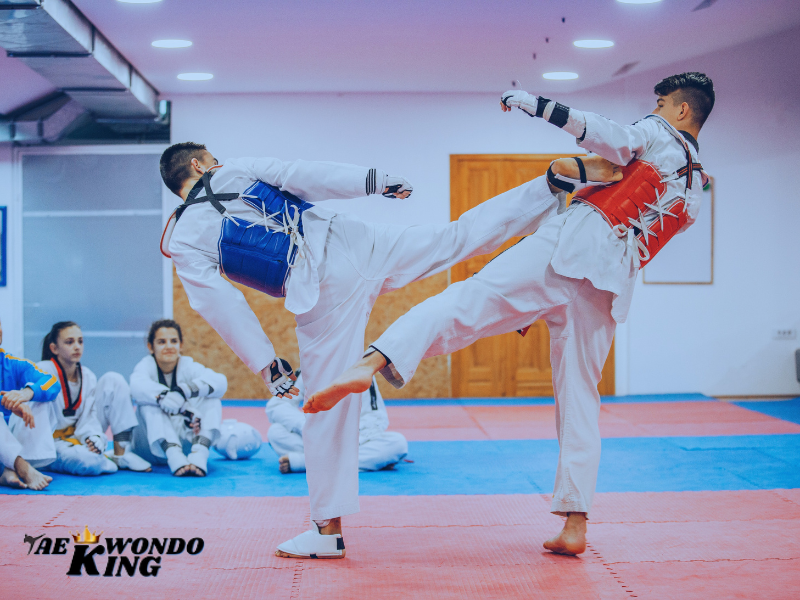
Coaching Children With Attention Challenges in Kyorugi
Sparring adds extra stimulation. That can help engagement, but it can also make focus harder to hold onto.
Use Short Sparring Rounds
Break rounds into 20 to 30 second tasks with a short reset and a new goal each time, rather than one long continuous round.
Give One Tactical Goal
Simple direction like “watch distance,” “use one counter,” or “keep your guard after kicking” keeps the task manageable, similar to the pacing in taekwondo kyorugi rules wt.
Reduce Sensory Overload
Watch for loud music, too many athletes shouting at once, a crowded space, or multiple coaches giving instructions at the same time.
Use Clear Stop Signals
Every child needs to know exactly when to stop, where to go, and what to do right after stopping.
Safety Comes Before Attention Training
If a child cannot safely follow stop commands, modify or stop the activity rather than simply demanding more focus in the moment.
Coaching Children With Short Attention Spans in Poomsae
Poomsae can feel repetitive, so coaches need to make that repetition meaningful.
Break Poomsae Into Small Sections
Instead of running the entire form again and again, break it into stance section, hand technique, transition, turn, and ending, matching the section by section approach in taekwondo poomsae rules wt.
Use One Focus Per Round
Round one can target stance, round two posture, round three timing, and round four breathing.
Use Peer Observation
A prompt like “watch your partner’s front stance, what do you notice” keeps the observing child just as involved as the one performing.
How to Correct a Child Who Keeps Losing Focus
Correction should feel like coaching, not a courtroom hearing.
Use a Private Check-In
Ask “are you tired,” “is this drill too easy,” “do you know what to do next,” or “would you like me to show it again” quietly and directly.
Reduce the Mental Load
Positive Coaching Alliance recommends slowing the pace and reducing mental load when an athlete is off task or disruptive.
Give a Short Reset
Water, a breathing pause, one quiet minute, or a simpler drill can all reset a struggling child quickly.
Return to Success Quickly
Avoid making the child sit out for half the class unless safety genuinely requires it.
What Not to Do When Coaching Children With Short Attention Spans
Do Not Shame the Child
Skip lines like “why can’t you sit still,” “everyone else can do it,” or “you’re always a problem.”
Do Not Assume Laziness
A struggling child is often confused or overloaded, not simply unmotivated.
Do Not Diagnose
Avoid telling parents “your child has ADHD” or “your child has a disorder.” A coach can describe observed behavior without making a clinical diagnosis.
Do Not Keep Increasing Your Volume
Louder does not automatically mean clearer, and it often makes the room more tense instead of more focused.
Do Not Use Long Punishments for Short Attention Problems
A short attention lapse does not call for an extended punishment that eats into training time.
Do Not Compare Siblings or Teammates
Comparisons tend to create resentment rather than motivation.
Attention-Friendly Coaching: Quick Comparison
The biggest change is often not the child. It is the lesson design. A small shift in how instructions are delivered can make a large class feel far calmer.
Table 1: Traditional vs Attention-Friendly Coaching
| Traditional Approach | Attention-Friendly Approach |
|---|---|
| Long explanation | Short cue |
| One long drill | Short rounds |
| Long lines | Stations |
| “Pay attention” | Clear attention signal |
| Repeat the same lecture | Show again |
| Correct from across the room | Move closer |
| Punish distraction | Redirect |
| One pace for everyone | Adjust task |
| Coach talks most | Child moves and tries |
Positive Coaching Alliance recommends concise instructions, demonstrations, attention getters, and active engagement rather than relying on lengthy verbal instruction.
Best Class Structure for Children With Short Attention Spans
Treat this as a practical template rather than a rigid formula. Age, class size, space, and skill level should all shape the exact timing.
Table 2: Example 60-Minute Attention-Friendly Class
| Time | Activity | Coaching Focus |
|---|---|---|
| 0 to 5 min | Greeting and movement | Connection |
| 5 to 10 min | Warm-up game | Energy |
| 10 to 15 min | Skill demo | One key point |
| 15 to 25 min | Skill stations | Repetition |
| 25 to 35 min | Partner drill | Application |
| 35 to 45 min | Reaction game | Engagement |
| 45 to 53 min | Kyorugi or Poomsae task | Skill use |
| 53 to 57 min | Challenge | Motivation |
| 57 to 60 min | Review and bow | Recall |
A simple interval timer, available here on Amazon, keeps this kind of tightly timed class on track without a coach constantly checking the clock.
USA Expert Advice on Coaching Children With Attention Challenges
This section anchors the guide in real, documented youth sports expertise.
Positive Coaching Alliance
Positive Coaching Alliance is a well established U.S. youth sports coaching authority. Its attention and executive function guidance recommends clear and concise directions, consistent communication, movement based learning, the preview, teach, review method, positive reinforcement, calm body language, private constructive conversations, and breaks or choices when appropriate.
Children’s National Partnership
Positive Coaching Alliance developed this attention resource in partnership with the SCORE Program at Children’s National, which gives the guidance a stronger clinical and youth development foundation.
Dr. Bruce Perry: Regulation Before Reasoning
Dr. Bruce Perry, M.D., Ph.D., is a well known child development expert whose broader work centers on the idea that a highly dysregulated child cannot fully absorb reasoning until they feel calm first. Applied loosely to a dojang setting, this suggests creating calm before teaching, rather than adding more words to an already overloaded moment. He is referenced here as a general child development expert, not as a Taekwondo specific authority.
USOPC: How to Coach Kids
The United States Olympic and Paralympic Committee provides a free How to Coach Kids course designed around safer, more fun, and more engaging youth sport experiences.
Expert Takeaway for Taekwondo
Translated into dojang language, the guidance from all of these sources lands on one simple idea: less standing, more moving, fewer words, more doing.
How to Work With Parents When a Child Struggles to Focus
Parents need useful observations, not labels attached to their child.
Describe What You See
A good description sounds like “he loses focus during long explanations but does well during pad drills.” Avoid saying “he has an attention problem.”
Share What Works
Tell parents that short cues help, movement helps, visual demonstrations help, and smaller groups help.
Ask Parents for Context
Useful questions include whether this is new, whether the child struggles with the same thing elsewhere, and whether anything helps at home.
Know When to Refer
Coaches should never diagnose. If parents raise concerns about persistent attention or behavior issues, encourage them to speak with an appropriate healthcare or school professional.
Build an Attention-Friendly Taekwondo Coaching Tool
This section turns the guide into something coaches can actually use, not just read.
Recommended Tool Name
A Taekwondo Attention-Friendly Class Planner, sometimes called a Kids Taekwondo Focus and Drill Generator, fits this need well.
Tool Inputs
Useful inputs include child age, belt level, class size, coach count, whether the focus is Kyorugi or Poomsae, session length, the specific attention challenge, skill goal, available equipment, space size, energy level, and preferred activity type.
Tool Outputs
The tool should generate a class structure, a drill sequence, short coaching cues, a transition plan, attention signals, station setup, movement breaks, behavior prompts, and review questions.
Add an “Attention Load” Score
Score the planned lesson based on speaking time, waiting time, drill length, number of instructions, transitions, movement, repetition, and group size.
Add a “Chaos Risk” Alert
Flag long lines, too many instructions, too much waiting, unclear transitions, too many students per station, or insufficient equipment before class even starts.
Add a “Coach Cue Generator”
For a child who keeps looking away during kick instruction, the tool might generate the cue “watch once, then you try,” paired with an activity like demonstrate one kick, have the child perform three reps, then switch.
Attention-Friendly Coaching Planning Table
Coaches can run a simple planning check before class. The goal is not making coaching robotic. It is spotting obvious attention traps before fifteen kids start bouncing off the walls.
Table 3: Class Attention Check
| Question | Low Attention Risk | High Attention Risk |
|---|---|---|
| Explanation length | Short | Long |
| Waiting | Low | High |
| Movement | Frequent | Limited |
| Instructions | 1 to 2 | Many |
| Drill length | Short | Long |
| Transitions | Clear | Confusing |
| Groups | Small | Large |
| Feedback | Specific | Vague |
How to Measure Whether Your Coaching Is Working
Do not guess. Watch what actually changes over time.
Track Engagement
Measure time on task, participation, completed repetitions, waiting time, and interruptions across a few classes.
Track Skill Learning
Ask whether the child can repeat the skill, remember the cue, and perform without constant reminders.
Track Behavior
Look for fewer interruptions, faster transitions, better response to stop signals, and more cooperative partner work.
Ask the Child
Simple questions like “what part was fun,” “what was hard,” “which drill helped you learn,” or “what should we do again” go a long way. Positive Coaching Alliance emphasizes knowing athletes as individuals, asking open ended questions, and using informal pre and post practice time to build relationships.
A 10-Minute Coach Prep Routine Before Class
This gives coaches something to use immediately, not just something to think about later.
Minute 1 to 2: Pick One Skill
For example, focus the class around the round kick chamber.
Minute 3 to 4: Reduce the Explanation
Write the skill as two short cues, such as “knee up” and “turn and kick.”
Minute 5 to 6: Pick One Game
Turn that same skill into a movement based game.
Minute 7 to 8: Plan the Transition
Know exactly where pads go, where children stand, and how groups will move between stations.
Minute 9: Pick One Attention Signal
Choose a single signal for the entire class and stick with it consistently.
Minute 10: Pick One Success Behavior
Set a simple target, such as “today I want every child to stop on the first signal.”
Coaching Children With Short Attention Spans Checklist
Before class, confirm the lesson goal is clear, equipment is ready, instructions are short, movement is built in, the attention signal is ready, and transitions are planned.
During class, demonstrate first, use one to two instructions at a time, keep children moving, reduce waiting, give specific praise, use short cues, watch for fatigue, and redirect calmly.
After class, reflect on what held attention, where children lost focus, which drill worked, whether the explanation ran too long, whether transitions caused problems, and what should change next class.
Frequently Asked Questions About Coaching Children With Short Attention Spans
How do you coach a child with a short attention span?
Use short instructions, frequent movement, consistent language, and quick positive feedback rather than long explanations.
How long can children focus during sports practice?
There is no single rigid number. Attention varies by age, the individual child, the task, the environment, and their level of interest that day.
How do I keep kids focused during Taekwondo class?
Shorten explanations, add movement, use stations, and rely on clear, consistent attention signals throughout class.
What are the best Taekwondo drills for children with short attention spans?
Reaction games, color and direction games, mirror drills, kick and reset sequences, and short skill stations all work well.
How do you teach martial arts to children who cannot sit still?
Build the lesson around movement instead of long verbal explanations, and give children an active job whenever possible.
How can coaches reduce distractions in children’s Taekwondo classes?
Use clear attention signals, move closer to distracted students, shorten wait times, and reinforce the behavior you want to see.
Should Taekwondo coaches use games to teach children?
Yes, as long as the game is built around the actual skill being taught rather than existing as a separate reward activity.
How can I help a child remember Taekwondo techniques?
Use the preview, teach, review method along with consistent language and cues repeated across every class.
What should I do if a child keeps interrupting class?
Try a private check-in first, reduce mental load, offer a short reset, and bring the child back into the activity quickly.
How should coaches work with parents about attention problems?
Describe specific observed behavior, share what helps in class, and avoid attaching any diagnostic label to the conversation.
Should a Taekwondo coach diagnose ADHD?
No. Coaches can observe and describe behavior, but they should never diagnose a medical or developmental condition.
Can physical activity help children’s attention?
Yes. CDC sources associate physical activity with benefits including attention, memory, and brain health in children.
Final Recommendation
After years of coaching children across a wide range of ages and attention levels, my honest take is simple: the lesson usually needs to change before the child does. I keep my instructions short, build movement into almost everything, and use the same attention signal every single class so students always know what it means. Coaching children with short attention spans is not about controlling every wiggle in the room. It is about designing practice so kids can succeed while moving, trying, and learning at their own pace. Build predictable routines, stay patient, and watch how much calmer your entire class becomes once the structure does the heavy lifting instead of your voice.

Founder, Owner, and CEO of TaekwondoKing.
He is one of the top 100 martial artists in the World and among the top 20 referees in Bangladesh.
Ehatasamul Alom is an esteemed Kukkiwon Certified Taekwondo 3rd Dan Black Belt with over 15 years of experience in this dynamic martial art. Born in Rajshahi, Bangladesh, Ehatasamul’s journey with Taekwondo began at the tender age of seven. His passion led him to compete at national and international levels, where he has bagged numerous awards and honors. He is also a member of the Taekwondo National Referee Panel.
With a Bachelor’s degree in Sports Science from the prestigious Rajshahi University, Ehatasamul has a deep understanding of the technical and scientific aspects of martial arts and some other martial arts.
In 2022, Ehatasamul created the “TaekwondoKing.com” to share his knowledge, Free Resources, Values, and Real experiences. His articles focus on Taekwondo training techniques, competition strategies, Sport Products Reviews, and the art’s rich history and philosophy. He also writes about the importance of mental fortitude and discipline, key aspects of his teaching philosophy. He has already launched many sports, Taekwondo, and health-related Free online tools. His goal is to inspire both beginners and seasoned practitioners worldwide through insightful and engaging content.
If you need any help, contact Ehatasamul Alom at any time.