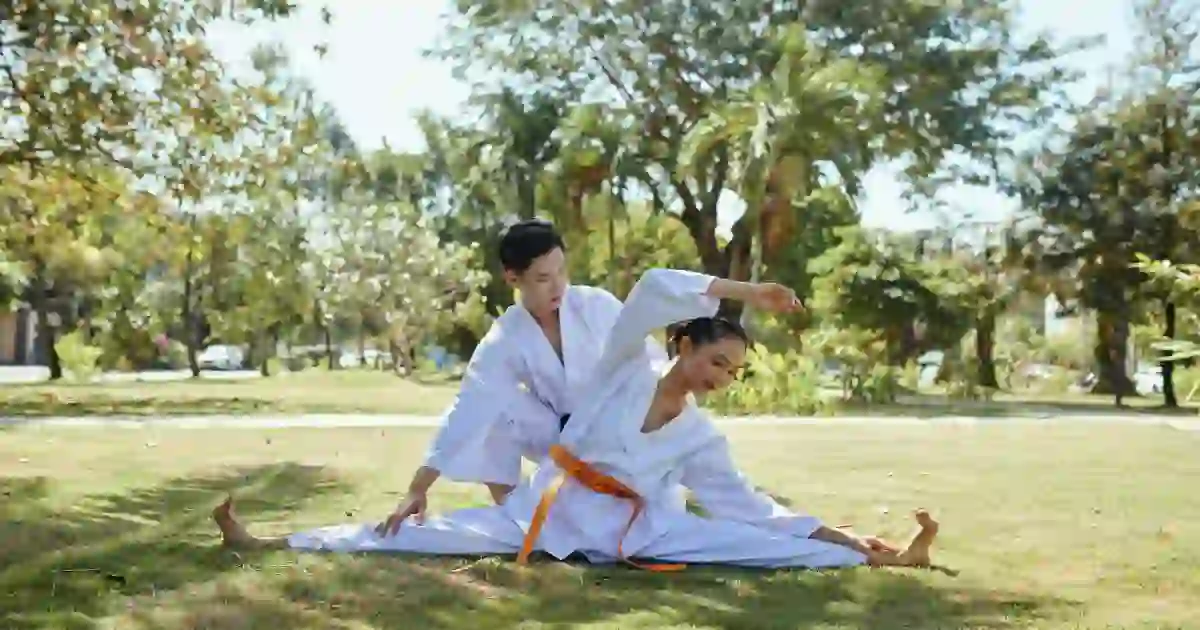
The bell rings. Gloves come off. Chest is still pumping hard. I have seen this exact moment play out in a small gym in Minneapolis, where one athlete grabbed water right away and another dropped flat on the mat like the round lasted three hours. That gap between the two reactions is exactly why cool down exercises after sparring matter so much. A good post sparring routine does not need to be complicated. It just needs to be consistent, simple, and matched to how hard the session actually was. In this guide I will walk through what to do right after sparring, the best cool down moves, how long to spend on them, and the safety signs every coach and athlete should know.
Why Cool Down After Taekwondo Sparring?
A cool down is the bridge between hard Kyorugi and normal daily activity. It is not meant to squeeze in another workout. It exists to bring the session to a calm, steady end.
What happens after a hard sparring round?
A tough round leaves the body in a different state than it started in.
- Elevated heart rate
- Heavy breathing
- High muscle demand
- Rising body heat
- Local muscle fatigue in the legs and hips
- Repeated kicking and stance changes
- Mental stress and leftover adrenaline
These effects build up fast, which is why sparring stress on the body deserves the same attention given in how is taekwondo hard on body.
What a cool-down can realistically do
A short cool down helps in a few honest ways.
- Gradually lowers exercise intensity
- Helps breathing settle back to normal
- Gives athletes a controlled transition
- Creates space for light mobility work
- Builds a routine athletes can repeat every class
The American College of Sports Medicine recommends a few minutes of easy activity as an active cool down, and notes that even around five minutes can help.
What a cool-down cannot guarantee
It matters to stay honest here rather than overselling results. A cool down does not prevent all soreness. It does not prevent every injury. It does not fully clear metabolic waste from muscles, and it does not guarantee faster recovery or block delayed onset muscle soreness. Research on active cool downs and post exercise stretching remains mixed, with limited evidence behind many of the recovery claims people repeat online.
How Long Should You Cool Down After Sparring?
The right length depends on how hard the session was, how long the rounds ran, the athlete’s condition, and what comes next on the schedule.
5-minute cool-down
This shorter option fits light technical sparring, beginner classes, and short sessions.
- 2 minutes of easy walking
- 1 minute of breathing
- 2 minutes of gentle mobility
10-minute cool-down
Reach for this length after normal Kyorugi sessions, multiple sparring rounds, or moderate to hard training days.
15-minute cool-down
Save this for hard competition style sessions, several intense rounds back to back, or long training blocks. This is not a mandatory number for every class, just a useful upper range for the toughest days.
When should the cool-down start?
Follow this simple order: hard sparring, then easy movement, then breathing, then mobility, then optional stretching, then hydration.
15 Best Cool Down Exercises After Sparring
This section is the main answer to the search, so I will walk through each move with timing, purpose, a coaching cue, and who might need to modify it.
1. Easy Walking
Walk slow circles around the mat while relaxing the shoulders and letting breathing settle. Suggested time is 1 to 3 minutes.
2. Slow Side Steps
Step left, then right, keeping the motion small and relaxed. This helps after long stretches of forward and back sparring footwork.
3. Easy Marching
March in place at a gentle pace if stopping suddenly feels uncomfortable on the joints.
4. Deep Breathing While Walking
Pair light movement with steady breathing. Inhale comfortably, exhale slowly, and avoid holding the breath by force.
5. Shoulder Rolls
Roll the shoulders in slow circles. This helps after holding a guard position through several rounds.
6. Arm Swings
Swing the arms gently front to back. Keep this slow. It is not the place for another speed drill.
7. Hip Circles
Draw slow circles with the hips. This targets the joint stress from repeated chambering and kicking.
8. Gentle Leg Swings
Swing each leg with a smaller range than during warm up. The goal is movement, not chasing a new flexibility record five minutes after sparring.
9. Standing Quadriceps Stretch
This targets the quadriceps and front thigh. Use a wall or partner for support if balance feels off after hard sparring.
10. Standing Calf Stretch
Useful after heavy footwork, repeated bouncing, push offs, and kicking.
11. Hamstring Stretch
Keep the stretch comfortable and skip any aggressive pulling.
12. Hip Flexor Stretch
This is especially relevant after repeated knee chambers during sparring.
13. Adductor and Groin Mobility
Wide stances, lateral movement, and kicking all demand strong hip movement, which makes this stretch worth including.
14. Gentle Glute Stretch
Offer both a standing and a seated version depending on space and athlete comfort.
15. Child’s Pose or Gentle Floor Mobility
Treat this as an optional final movement rather than a required step for every athlete.
A simple foam roller, like this one on Amazon, pairs well with steps 9 through 14 for athletes who want a little extra muscle relief after sparring.
Best Cool Down Exercises by Muscle Group
Not every sparring session stresses the same muscles. A heavy kicking round is not the same as a footwork heavy round, so the cool down should shift with it.
Hips and hip flexors
Use hip circles, a gentle hip flexor stretch, and easy leg swings.
Quadriceps
Use walking, a gentle quad stretch, and light knee bends.
Hamstrings
Use a gentle hamstring stretch paired with controlled mobility work.
Calves and ankles
Use walking, a calf stretch, and simple ankle circles.
Groin and adductors
Use gentle lateral movement along with comfortable adductor mobility.
Shoulders and upper body
Use shoulder rolls, arm swings, and a gentle chest opening stretch.
A light resistance band, available here on Amazon, can add gentle tension to hip and shoulder mobility work without straining tired muscles.
10-Minute Cool Down Routine After Sparring
This section should be one of the most useful parts of the guide, since it gives coaches something to run right after the final round without turning the dojang into a yoga studio.
Minute 0 to 2: Easy walking
Keep a slow pace, relax the hands, and let breathing settle naturally.
Minute 2 to 4: Light mobility
Move through shoulder rolls, hip circles, and ankle circles.
Minute 4 to 6: Gentle lower-body mobility
Add leg swings, easy knee bends, and controlled hip movement.
Minute 6 to 9: Comfortable stretching
Pick from quadriceps, calves, hamstrings, and hip flexors based on what the session stressed most.
Minute 9 to 10: Breathing and reset
Stand or sit comfortably, slow the breathing down, and hydrate right after.
10-Minute Post-Sparring Routine Table
A good post sparring routine should be easy to remember on a busy class night. If a coach needs a stopwatch, a clipboard, a calculator, and three assistants just to run it, the routine is too complicated for a normal Tuesday class.
| Time | Exercise | Main Goal |
|---|---|---|
| 0 to 2 min | Easy walking | Gradual transition |
| 2 to 3 min | Slow marching | Keep moving |
| 3 to 4 min | Shoulder rolls | Upper body relaxation |
| 4 to 5 min | Hip circles | Hip mobility |
| 5 to 6 min | Ankle circles | Lower leg mobility |
| 6 to 7 min | Quad stretch | Front thigh |
| 7 to 8 min | Calf stretch | Calf and ankle |
| 8 to 9 min | Hamstring stretch | Back of thigh |
| 9 to 10 min | Breathing | Mental reset |
Should You Stretch After Sparring?
This question deserves a careful answer, since the common internet response is often more confident than the actual research supports.
Static stretching after sparring
Static stretching can be part of a cool down. It may feel relaxing. It can help maintain or slowly build range of motion, as long as it stays comfortable rather than forced, a balance also discussed in flexibility is the most important part of Taekwondo training.
Does stretching reduce muscle soreness?
Do not oversell this one. A 2021 systematic review found insufficient evidence that post exercise stretching improves strength recovery or reduces delayed onset muscle soreness compared with passive recovery. A 2025 meta-analysis also found no statistically significant improvement across several recovery outcomes tied to stretching.
How hard should a stretch feel?
Use a simple cue with your students: gentle tension is fine, sharp pain is not. ACSM’s recovery guidance gives similar advice, pointing coaches away from sharp or intense pain during any stretch.
When stretching may not be the priority
Skip or modify stretching when there is an acute injury, sharp pain, real swelling, a suspected muscle strain, joint pain, or any suspected concussion.
Active Recovery vs. Static Stretching After Sparring
These two ideas often get blended together, though they serve different purposes.
What is active recovery?
Active recovery includes walking, easy cycling, gentle movement, and light mobility work.
What is static stretching?
Static stretching includes a quad stretch, calf stretch, hamstring stretch, and hip flexor stretch.
Which should come first?
For a practical routine, follow this order: easy movement, then breathing, then mobility, then optional static stretching.
What does the research say?
Active cool down may support some immediate physiological recovery measures, but evidence that it meaningfully improves next day performance or soreness stays limited. This honest gap is part of what keeps a guide trustworthy rather than promotional.
What to Drink After Sparring
Cooling down covers only part of recovery. Fluids matter just as much.
Start with fluids
Water needs shift with sweat loss, training duration, heat, and humidity in the room.
When electrolytes may matter
Electrolyte needs vary by sweat rate, heat, session length, and individual differences. Not every Taekwondo student needs a sports drink after every class, so avoid treating that as a blanket rule.
Hydration in hot U.S. dojangs
A summer evening in Houston is not the same as a cool January class in Minnesota. Room temperature, weather, and personal sweat rate all shift how much fluid an athlete actually needs. ACSM’s recovery material notes that hydration before, during, and after exercise plays an important role in recovery, especially in hot or humid conditions.
What to Eat After Hard Sparring
This section stays practical rather than turning into a full nutrition lecture.
Why post-training food matters
Food after training supports energy replacement, protein needs, carbohydrate refill, and the athlete’s overall diet.
Simple post-sparring meal ideas
- Rice, chicken, and vegetables
- Eggs, toast, and fruit
- Yogurt, fruit, and oats
- Milk, banana, and a sandwich
When you do not need a complicated recovery shake
A normal balanced meal works well for most athletes most of the time, which matches the everyday approach covered in taekwondo supercharges your fitness.
Recovery After Light vs. Hard Sparring
Not every sparring session calls for the same recovery plan, and matching the routine to the session keeps training realistic.
| Sparring Type | Cool-Down | Stretching | Recovery Focus |
|---|---|---|---|
| Light technical | 5 min | Optional | Normal hydration |
| Moderate | 5 to 10 min | Gentle | Fluids and a meal |
| Hard Kyorugi | 10 to 15 min | Gentle | Fluids, food, and rest |
| Competition | Individualized | Optional | Full recovery plan |
| Pain or injury | Stop and assess | Do not force | Medical guidance if needed |
After light technical sparring
Keep the routine simple and short, similar to the pacing used in taekwondo sparring tkd.
After hard sparring
Give extra time for breathing, walking, hydration, and honest observation of how the athlete feels.
After tournament sparring
Multiple bouts call for longer recovery windows, steady food and fluids, real sleep, and medical checks when something feels off.
What to Do After a Very Hard Sparring Session
Sometimes an athlete is not just a little tired, and the routine needs to shift.
First: stop hard activity
Do not add extra conditioning just because the athlete looks tough enough to handle it.
Second: assess how they feel
Ask about dizziness, nausea, an unusual headache, vision problems, confusion, unusual weakness, or sharp pain.
Third: use easy movement if appropriate
Only bring in light movement if the athlete feels well and shows no signs of injury.
Fourth: hydrate and recover
Move toward fluids, food, rest, and sleep once the athlete is stable.
Concussion Safety After Taekwondo Sparring
A cool down should never double as a way to manage a possible head injury, which makes this section essential rather than optional.
Possible concussion signs
Watch for headache, dizziness, confusion, balance problems, memory trouble, nausea, slowed responses, and vision problems. The CDC notes that concussion symptoms can appear right away or show up later, and they may affect physical, cognitive, emotional, and sleep function.
What should a coach do?
If a concussion seems possible, stop the athlete’s participation, remove them from sport, check for danger signs, and never allow a same day return to sparring. The CDC’s current guidance is clear that athletes with a suspected concussion should be pulled from sport and only return after proper medical clearance, a standard that fits the broader safety approach in taekwondo safety and medical rules.
Do not stretch a suspected injury
A cool down routine is not a substitute for injury treatment or medical evaluation.
USA Expert Advice on Recovery After Sparring
This section leans on established U.S. sports bodies rather than one coach’s personal opinion, which keeps the guidance grounded.
American College of Sports Medicine guidance
ACSM’s recovery resources cover active cool down, hydration, mobility, stretching, and everyday recovery habits. ACSM recommends an easy active cool down and treats stretching as a possible part of post exercise recovery, while the wider research stays more cautious about claims that stretching speeds recovery.
Expert reference: Douglas Casa, PhD
Douglas Casa, PhD, is a well known U.S. sports hydration and exertional heat expert linked to the Korey Stringer Institute at the University of Connecticut. I am not attaching a direct quote to him here, since I have not verified an exact statement tied to Taekwondo sparring, but his broader work on hydration and heat safety supports the caution used throughout this guide.
What U.S. coaches can apply
Coaches can apply individual recovery plans, heat awareness, steady hydration habits, close athlete monitoring, clear concussion protocols, and a mindset that avoids treating every athlete the same way, echoing the coaching standards in taekwondo referee rules.
Cool Down Exercises for Kids After Sparring
Youth athletes need extra attention, since they may not describe symptoms clearly.
Keep the routine simple
Stick with walking, easy breathing, gentle mobility, and simple stretches, in line with the approach used in ultimate guide to teaching kids taekwondo.
Ask how the child feels
Do not assume a quiet child is automatically fine after a hard round.
Watch for unusual behavior
Pay close attention to confusion, unsteady walking, dizziness, headache, vomiting, or unusual sleepiness. The CDC recommends coaches learn to recognize concussion signs and remove young athletes from play whenever a concussion is suspected, a habit that pairs well with the safety mindset in which martial arts for kids.
Common Cool-Down Mistakes After Sparring
Stopping completely right away
Some athletes handle a sudden full stop poorly, so a gradual transition usually feels better.
Stretching too aggressively
More stretch is not automatically a better stretch, especially right after hard sparring.
Turning the cool-down into conditioning
Skip the burpee punishment at the end. The sparring rounds already made their point, a philosophy that matches the coaching style in effective exercises to manage anger from a Taekwondo perspective.
Ignoring pain
Learn to tell the difference between normal fatigue, muscle tightness, sharp pain, joint pain, and real injury symptoms.
Forgetting hydration
This matters even more after long or hot sessions.
Treating ice baths as mandatory
Cold water immersion has some evidence behind certain soreness outcomes, but it is not required after every sparring session, and research across different recovery outcomes stays mixed.
Post-Sparring Recovery Checklist for Taekwondo Athletes
Use this simple checklist after any sparring session.
- Stop hard activity
- Walk for several minutes
- Slow the breathing down
- Add gentle mobility
- Try optional comfortable stretching
- Drink fluids
- Eat a normal recovery meal
- Check for unusual symptoms
- Sleep and recover
- Report any injuries
How Coaches Can Build a Post-Sparring Cool-Down
Step 1: Know how hard the session was
Consider the number of rounds, round length, intensity, athlete age, heat, and whether it was a competition setting.
Step 2: Start with movement
Avoid jumping straight into long stretches before the body has settled.
Step 3: Add mobility
Target the areas used heavily in that day’s sparring, similar to the muscle group breakdown earlier in this guide.
Step 4: Let athletes settle
Use breathing, light walking, and calm instruction rather than rushing them out the door.
Step 5: Hydration and post-class checks
Ask about pain, dizziness, headache, or unusual fatigue before athletes head home, a habit that supports the long term goals in how taekwondo build self discipline.
Ready-to-Use 10-Minute Taekwondo Post-Sparring Plan
0 to 2 minutes: Walk
Take slow laps around the mat to start the transition.
2 to 4 minutes: Mobility
Move through shoulder rolls, hip circles, and ankle circles.
4 to 6 minutes: Lower-body movement
Add gentle leg swings, easy knee bends, and slow side steps.
6 to 9 minutes: Optional stretching
Choose from quads, calves, hamstrings, and hip flexors.
9 to 10 minutes: Breathing
Finish standing or seated in a comfortable position.
A basic yoga mat, found on Amazon here, gives athletes a clean, comfortable spot for this final stretching and breathing block.
Frequently Asked Questions About Cool Down After Sparring
What are the best cool down exercises after sparring?
Walking, easy marching, gentle mobility, breathing, and comfortable stretching cover most of what an athlete needs.
How long should you cool down after Taekwondo sparring?
A practical range runs from 5 to 15 minutes, depending on session intensity and how the athlete feels.
Should you stretch after sparring?
Yes, gentle stretching can be included if it feels comfortable, but avoid claiming it is proven to prevent soreness or speed up recovery.
What should I do immediately after hard sparring?
Stop hard activity, walk, breathe, check for symptoms, hydrate, and then move into recovery.
Is walking good after sparring?
Yes, easy walking is one of the simplest and most reliable active cool down options available.
Should I use an ice bath after sparring?
Treat it as optional and situation dependent rather than a strict requirement after every session.
What should I drink after sparring?
Start with plain fluids and factor in session length, sweat loss, heat, and personal needs before adding anything else.
Can I stretch if my muscles hurt after sparring?
Gentle movement can be reasonable for normal soreness, but sharp pain or a suspected injury should never be stretched through.
What if I get dizzy after sparring?
Stop training, sit or lie down safely, and seek medical help if the dizziness feels severe, lasts a while, or comes with other concerning symptoms.
What if I get a headache after sparring?
Since sparring can involve contact to the head, treat a new headache with caution rather than dismissing it as normal fatigue. Follow concussion protocols and get medical evaluation when needed.
Do cool-down exercises prevent muscle soreness?
No strong promise should be made here. Current evidence does not reliably show that post exercise stretching prevents delayed onset muscle soreness.
Final Recommendation
After years of coaching and competing in Taekwondo, my honest advice is simple: keep the cool down short, calm, and consistent rather than complicated. I always start with easy walking, move into light mobility, and only add stretching if the athlete feels comfortable and pain free. I never treat a cool down as a fix for real injury, and I always watch closely for concussion signs before letting anyone call it a normal tired day. Build a routine you can repeat every single class, adjust it based on how hard the session ran, and your athletes will leave the mat safer and ready to come back stronger.

Founder, Owner, and CEO of TaekwondoKing.
He is one of the top 100 martial artists in the World and among the top 20 referees in Bangladesh.
Ehatasamul Alom is an esteemed Kukkiwon Certified Taekwondo 3rd Dan Black Belt with over 15 years of experience in this dynamic martial art. Born in Rajshahi, Bangladesh, Ehatasamul’s journey with Taekwondo began at the tender age of seven. His passion led him to compete at national and international levels, where he has bagged numerous awards and honors. He is also a member of the Taekwondo National Referee Panel.
With a Bachelor’s degree in Sports Science from the prestigious Rajshahi University, Ehatasamul has a deep understanding of the technical and scientific aspects of martial arts and some other martial arts.
In 2022, Ehatasamul created the “TaekwondoKing.com” to share his knowledge, Free Resources, Values, and Real experiences. His articles focus on Taekwondo training techniques, competition strategies, Sport Products Reviews, and the art’s rich history and philosophy. He also writes about the importance of mental fortitude and discipline, key aspects of his teaching philosophy. He has already launched many sports, Taekwondo, and health-related Free online tools. His goal is to inspire both beginners and seasoned practitioners worldwide through insightful and engaging content.
If you need any help, contact Ehatasamul Alom at any time.