A nervous mom once stood next to me at a pro shop in San Diego, California, staring at a wall of shin guards with no idea where to even begin. She is far from the only one. Walking into a sporting goods store for the first time can feel overwhelming when everything on the shelf looks equally important. Do you need a chest protector right away? Should you spend more on a premium dobok? And why are there so many different shin guards on that wall alone? A solid taekwondo gear buying guide should answer these questions clearly, without pushing you toward gear you do not actually need yet. I have helped hundreds of students and parents sort through exactly this decision, and this guide breaks it all down so you buy the right gear the first time.
What Taekwondo Gear Do You Really Need?
Not every student needs every piece of equipment on day one. Your current training level and your school’s specific requirements should guide your shopping list far more than any online buying guide alone.
Training Essentials
A dobok, a belt, and a mouthguard cover the absolute basics required for almost any beginner class. Everything else can wait until your instructor tells you it is time. Our guide on what beginners should focus on first covers the technique side of this same early stage.
Sparring Equipment
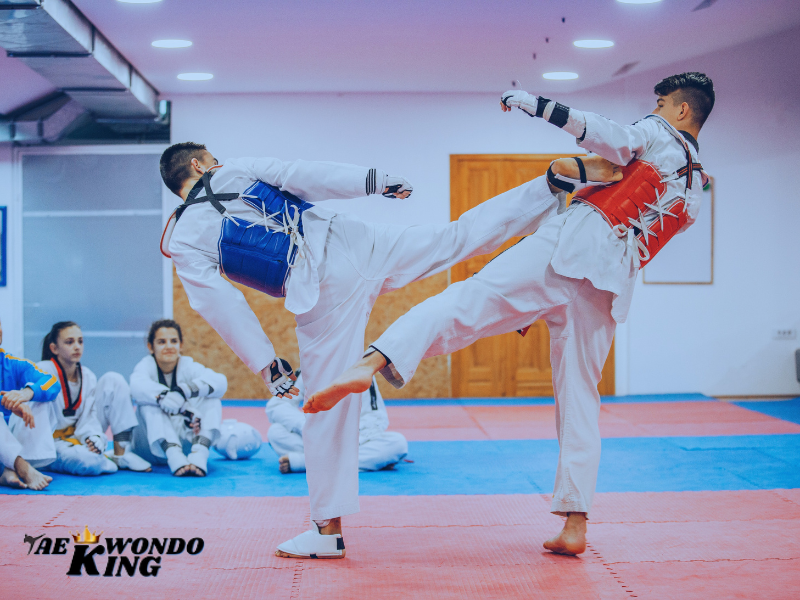
Once sparring begins, expect to add shin guards, forearm guards, and possibly headgear depending on your school’s specific safety policies for contact drills. Our breakdown of taekwondo sparring strategies for TKD pairs well with this stage of gear shopping.
Competition Equipment
Tournaments introduce stricter requirements, often including electronic chest protectors and foot sensors that regular classroom training rarely demands. Budget for this stage separately, since it typically represents the largest single jump in overall gear cost.
Optional Accessories
Gear bags, extra doboks, and belt display racks fall into the optional category. They add convenience without affecting your actual training or safety in any meaningful way, though many families find them worth the small extra cost over time.
School Specific Requirements
Every dojang sets its own exact standards for approved gear and brands. Always confirm with your instructor before making a significant purchase, since requirements vary widely between schools, and buying the wrong item can mean an unwanted return down the road.
Essential Taekwondo Equipment Explained
Understanding what each piece of equipment actually does makes buying decisions much easier. Start with the basics before investing money in more advanced gear.
Dobok (Uniform)
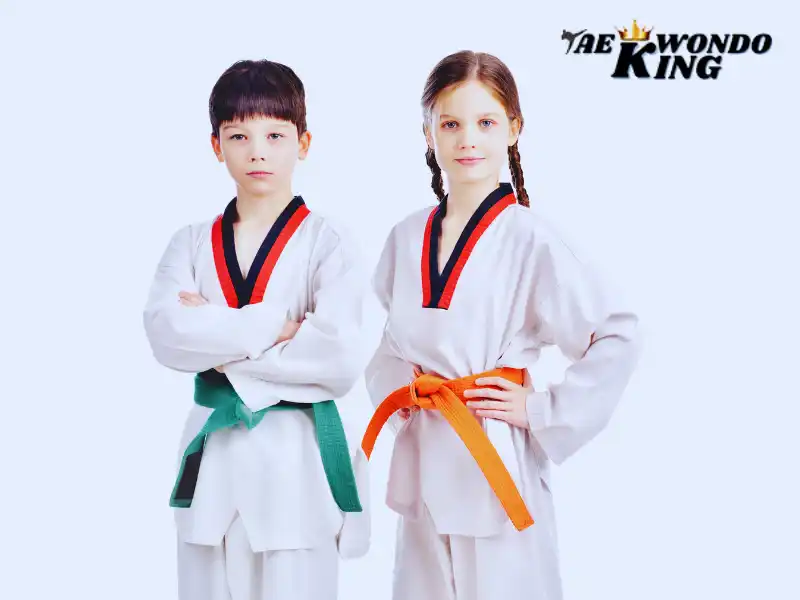
Your dobok is the uniform you will wear at every single class, which makes it the single most important purchase for any new student.
Training Dobok
A standard training dobok favors comfort and durability over appearance, holding up well to repeated washing and daily wear over months of regular practice.
Competition Dobok
Competition doboks often use lighter, more tailored fabric designed to meet World Taekwondo appearance and movement standards required during sanctioned events.
Lightweight vs Heavyweight Fabric
Lightweight fabric suits hot climates and fast paced training, while heavyweight fabric holds up better under frequent, intense use across a long training career.
Belt
Your belt represents rank, but it also serves a simple practical purpose by keeping your dobok jacket closed and secure during training.
Color Belts
Color belts typically come in standard widths and lengths tied to student rank, with most schools providing or selling the correct belt directly during promotion. Buying the correct width matters more than most beginners realize, since an oversized belt tends to loosen constantly during class.
Black Belts
Black belts often use heavier stitching and sometimes embroidered detail, reflecting the years of consistent training required to earn one in the first place. Many students choose to have their name or school embroidered once they finally reach this milestone.
Protective Equipment
Protective gear exists to let you train and spar with confidence, rather than constantly worrying about getting hurt during normal contact drills.
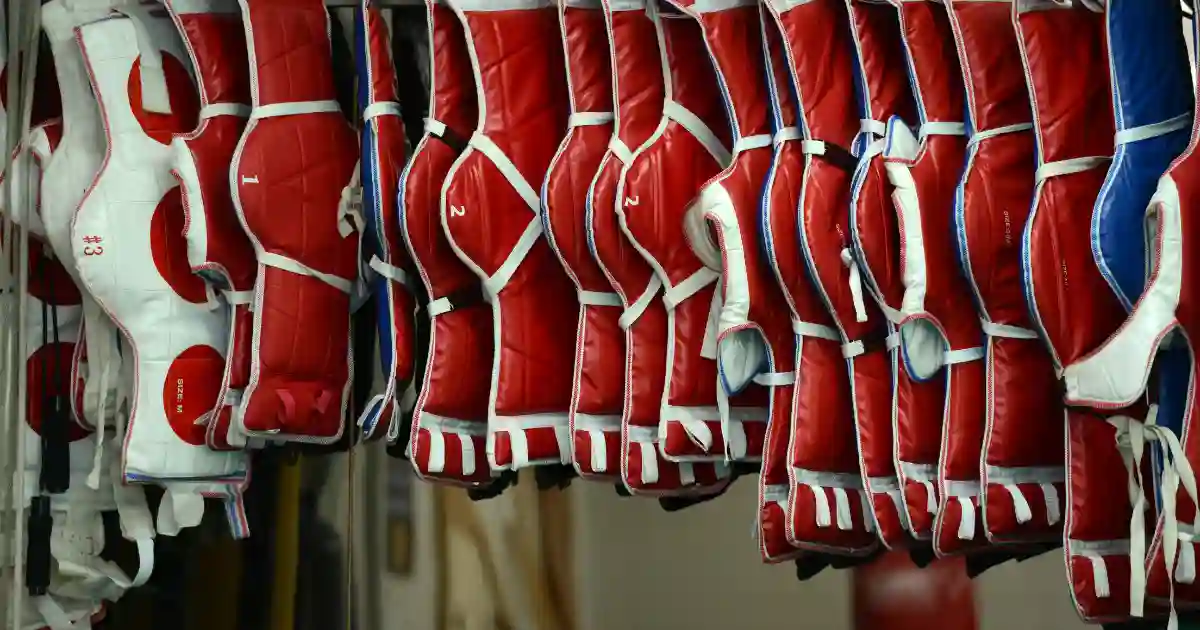
Chest Protector (Hogu)
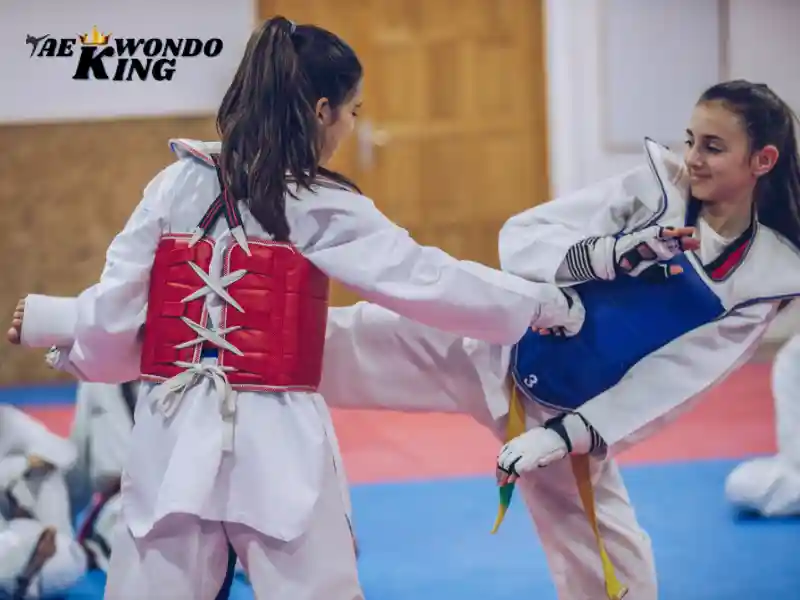
A chest protector absorbs impact from kicks during sparring, and most schools require one before allowing students to begin contact training. Look closely at the strap system, since a chest protector that shifts during a kick offers noticeably less protection than one that stays firmly in place.
Headgear
Headgear reduces the risk of cuts and concussions during sparring, and many schools require it starting at the intermediate level of training. Ventilation matters here too, since poor airflow inside cheaper headgear can make longer sparring sessions genuinely uncomfortable.
Shin Guards
Shin guards protect one of the most frequently struck areas during sparring, making them one of the very first protective items most students purchase. A slim, low profile design works best for taekwondo specifically, since bulkier guards can slow down fast kicking combinations.
Forearm Guards
Forearm guards shield the arms during blocking, a detail beginners often overlook until their first few sparring sessions leave some noticeable bruising. They tend to wear out faster than other gear simply because blocking happens on nearly every single exchange.
Gloves
Padded gloves protect the hands during punches and blocks, and many schools require them alongside forearm guards once sparring becomes a regular part of class. A snug wrist closure keeps them from sliding around mid exchange.
Foot Protectors
Foot protectors cushion kicks while protecting the feet from impact, particularly important for students without extensive natural foot conditioning built up over years. They also help protect a partner’s body from the harder edges of an unprotected foot.
Mouthguard
A mouthguard is one of the cheapest pieces of gear on this entire list, and it remains one of the most important for protecting your teeth. Even light contact sparring carries enough risk that skipping this item is rarely worth the small savings.
Groin Protector
A groin protector is considered essential safety gear for any student participating in regular sparring, regardless of age or experience level. Comfort under the dobok matters here, since a bulky or poorly fitted design tends to get skipped during actual class.
Table 1: Essential vs Optional Taekwondo Gear
One thing I tell new students is simple. Buy what you need today, not everything you might need six months from now. This keeps costs manageable without sacrificing any actual safety.
| Equipment | Beginner | Intermediate | Competition |
|---|---|---|---|
| Dobok | Required | Required | Required |
| Belt | Required | Required | Required |
| Mouthguard | Required | Required | Required |
| Shin Guards | Optional | Required | Required |
| Forearm Guards | Optional | Required | Required |
| Chest Protector | School Dependent | Required | Required |
| Headgear | School Dependent | Required | Required |
| Electronic Socks | Not Needed | Optional | WT Required |
How to Choose the Right Dobok
A dobok should help you move freely while standing up to regular training wear. Comfort matters far more than flashy designs or unnecessary branding.
Choosing the Correct Size
A properly sized dobok allows full range of motion during kicks without excess fabric bunching up or restricting your movement during class.
Fabric Weight
Lighter fabric works well for warmer climates and fast paced training, while heavier fabric offers more durability for students training several times a week across a long season.
Breathability
Breathable fabric keeps you cooler during intense sparring sessions, which matters considerably more than most beginners expect during their first few months of regular, sweat heavy training.
Durability
A well made dobok should survive dozens of washes without fraying seams or fading color, saving you money over the long run compared to cheaper, thinner alternatives.
WT Approved Uniforms
Competitors need uniforms that meet official World Taekwondo standards, so always confirm approval status before purchasing a dobok specifically intended for tournament use rather than everyday practice.
Beginner vs Premium Doboks
Beginners rarely need a premium dobok right away. A mid range option offers plenty of durability and comfort until competition becomes a genuine goal.
How to Choose Protective Gear
Protective equipment should fit securely without restricting your natural movement. Good protection lets you focus entirely on training instead of constantly adjusting loose gear.
Chest Protector (Hogu)
Look for a snug, adjustable fit that stays in place during kicks. A taekwondo chest protector from Amazon with adjustable side straps offers a reliable starting option for most beginners.
Headgear
Choose headgear with secure chin straps and adequate padding around the temples, since a loose fit reduces protection right when you need it most.
Shin Guards
Properly sized shin guards should cover from just below the knee to the top of the foot without sliding during movement. This pair of shin guards on Amazon offers a comfortable, secure fit favored by many beginners.
Forearm Guards
Forearm guards should stay in place through active blocking drills without needing constant readjustment between exchanges.
Gloves
Look for gloves with enough padding to protect knuckles while still allowing a comfortable, natural grip during blocking and striking drills.
Foot Protectors
Foot protectors should fit snugly around the arch without restricting toe movement needed for balance and quick pivots during sparring.
Mouthguard
A boil and bite mouthguard offers a solid custom fit at an affordable price point, making it an easy first purchase for any new student. This mouthguard set from Amazon includes multiple pieces, which is handy for growing children.
Groin Protector
Fit matters enormously here, since a poorly sized groin protector provides far less actual protection than a properly fitted one.
Electronic Scoring Equipment
Electronic chest protectors and foot sensors are required for WT sanctioned competition, though regular classroom training rarely calls for this specialized, more expensive equipment.
Table 2: What to Look for Before Buying Protective Gear
I have watched students spend an entire sparring round fixing loose equipment instead of actually training. A few simple checks before buying can prevent that exact frustration.
| Feature | Why It Matters |
|---|---|
| Correct Size | Better protection |
| Secure Straps | Less movement |
| Lightweight Design | Faster kicks |
| Quality Padding | Better impact absorption |
| WT Approval | Tournament eligibility |
Best Taekwondo Gear for Beginners
Your first gear setup does not have to be expensive. The goal is safe, reliable equipment that supports learning rather than impressing anyone in the room.
Budget Friendly Choices
Entry level gear from reputable brands offers solid protection at a fraction of the cost of premium competition equipment most beginners simply do not need yet. Many gyms even keep a small selection of loaner gear available for a student’s very first few classes.
Value Over Brand Names
A lesser known brand with good padding and secure straps often outperforms an expensive name brand item that fits poorly on your particular body type. Fit and function should always outrank a logo when you are just getting started.
Starter Gear Packages
Many retailers bundle a mouthguard, shin guards, and forearm guards together at a discount. This taekwondo starter gear set on Amazon bundles several essentials into a single convenient order for new students.
Common Beginner Mistakes
Buying oversized gear expecting a child to grow into it, or skipping a mouthguard entirely to save a few dollars, are two mistakes I see constantly among new families.
Parent Buying Tips
Bring your child along when possible, since trying gear on in person avoids the hassle of returns and ensures a proper, comfortable fit from the very start.
Competition Gear Buying Guide
Tournaments often carry stricter equipment rules than regular weekly classes. Checking requirements early avoids frustrating, last minute surprises right before your match.
WT Approved Equipment
Confirm that your chest protector, headgear, and dobok all carry official World Taekwondo approval well before your tournament registration deadline arrives, since replacing gear last minute is rarely convenient.
Electronic Chest Protectors
Electronic chest protectors register scoring kicks automatically during sanctioned matches, and most competitors either rent or purchase one specifically for tournament season rather than daily practice.
Tournament Inspections
Officials inspect gear before matches to confirm proper fit and certification, so arrive early enough to fix any last minute equipment issues calmly.
Electronic Foot Protectors
Paired with electronic chest gear, sensor equipped foot protectors ensure accurate scoring during officially sanctioned WT competition matches.
Backup Equipment
Bringing a spare mouthguard or extra hand wraps prevents a small equipment failure from turning into a stressful, avoidable problem on competition day.
Trusted Taekwondo Gear Brands
Several manufacturers have built strong reputations for quality, durability, and genuinely competition ready equipment. The best brand often depends on your specific goals and budget.
Adidas
Known widely for comfort and general training gear, Adidas remains a popular, easy to find choice among students who are not yet focused on competition. Their doboks in particular are widely available at most local sporting goods stores.
Daedo
Daedo built its reputation primarily through electronic scoring systems used at major WT sanctioned competitions around the world. Serious competitors often encounter Daedo gear directly at tournament check in tables.
Mooto
Mooto is often associated with premium, high quality uniforms and gear favored by more serious, long term competitors.
KPNP
KPNP specializes in sensor technology for electronic chest protectors, making it a familiar name among dedicated competition athletes.
Tusah
Tusah offers solid gear across nearly every level, from casual beginners all the way up to serious competitive athletes, at a genuinely fair price point. Their broad range makes them a common recommendation for families outfitting more than one child.
Vision Taekwondo
Vision produces reliable protective gear that balances quality and affordability, appealing especially to intermediate students upgrading from basic starter equipment.
Hayashi
Hayashi is respected for durable protective gear built to withstand frequent, intense training across multiple combat sports beyond taekwondo alone.
Pine Tree
Pine Tree remains a popular, budget friendly choice for beginners who need dependable gear without the higher price tag of premium competition brands.
Table 3: Popular Taekwondo Brands Compared
Students often ask whether the most expensive brand is automatically the best choice. In reality, the right answer depends heavily on how and where you actually train.
| Brand | Best For | Strength |
|---|---|---|
| Adidas | General Training | Comfort |
| Daedo | WT Competition | Electronic Systems |
| KPNP | WT Competition | Sensor Technology |
| Mooto | Premium Training | High Quality Uniforms |
| Tusah | All Levels | Good Value |
| Pine Tree | Beginners | Affordable Options |
How Much Should You Spend?
Buying quality gear is a genuine investment, but spending more is not always necessary. Focus your budget on value, durability, and real safety first.
Beginner Budget
A basic starter kit covering a dobok, belt, and mouthguard typically costs less than most people expect, making the entry point into taekwondo genuinely affordable for most families.
Intermediate Budget
Adding sparring gear like shin guards, forearm guards, and gloves increases your total investment, though quality mid range options remain reasonably priced for most families willing to shop around a little.
Competition Budget
Electronic scoring gear and a competition ready dobok represent the largest jump in cost, reserved specifically for students actively preparing for sanctioned tournaments.
When Premium Gear Is Worth It
Premium gear earns its price once training frequency and competition goals increase significantly, since durability becomes more important than initial savings at that stage.
Avoiding Unnecessary Upgrades
Resist upgrading gear simply because a teammate owns a newer version. Functional, well maintained equipment rarely needs replacing purely for cosmetic reasons.
Common Buying Mistakes to Avoid
Most equipment regrets come from rushing the purchase process entirely. Taking a few extra minutes to compare options carefully can genuinely save money later.
Buying by Appearance
Choosing gear based purely on color or design, rather than fit and padding quality, often leads directly to disappointing performance during actual training sessions.
Ignoring Sizing Charts
Skipping a brand’s specific sizing chart in favor of guesswork frequently results in gear that fits poorly and needs an unnecessary return or exchange soon after arriving.
Choosing the Cheapest Option
The lowest priced item on a page is not always the best value, especially when padding quality and strap durability suffer noticeably as a result of that lower price.
Forgetting School Requirements
Some schools require specific brands or colors for competition, so always confirm requirements with your instructor before finalizing any significant gear purchase online or in store.
Buying Oversized Equipment
Purchasing oversized gear expecting a child to grow into it usually backfires, since ill fitting protection genuinely compromises safety during regular training.
Skipping Quality Checks
Failing to check stitching, padding density, and strap strength before buying often leads to gear that wears out far faster than expected.
Ignoring Return Policies
Always check a retailer’s return policy before ordering gear online, since sizing issues are common and a flexible policy saves real frustration later.
Caring for Your Taekwondo Gear
Good maintenance genuinely extends the life of your equipment while keeping it fresh, hygienic, and safe to use during every single class.
Washing Your Dobok
Wash your dobok after every training session using cold water to preserve both the fabric and any embroidered patches or belt rank markings sewn onto the sleeves.
Cleaning Protective Gear
Wipe down chest protectors, headgear, and shin guards regularly with a gentle disinfecting spray to control bacteria buildup from repeated sweat exposure during class.
Drying Equipment Properly
Air dry protective gear fully before storing it, since trapped moisture inside padding creates the perfect environment for mold and lingering odor.
Preventing Odors
A gear deodorizing spray from Amazon designed specifically for sports equipment helps control odor buildup in gloves, shin guards, and headgear between washes.
Inspecting for Damage
Check straps, padding, and stitching regularly for early signs of wear, since small issues are far easier and cheaper to address before they become bigger problems.
When to Replace Worn Gear
Replace any protective gear once padding compresses noticeably or straps lose their elasticity, since worn equipment no longer provides reliable protection during sparring.
Table 4: Gear Maintenance Schedule
I still smile when I remember a student opening a gym bag after leaving damp gear inside all weekend. Let us just say everyone in that class learned exactly why drying equipment properly matters.
| Equipment | Cleaning Frequency |
|---|---|
| Dobok | After every training session |
| Mouthguard | After every use |
| Gloves | Weekly |
| Shin Guards | Weekly |
| Headgear | Weekly |
| Chest Protector | Weekly or after heavy sparring |
| Gym Bag | Monthly |
A well organized taekwondo gear bag from Amazon with separate compartments makes this entire maintenance routine considerably easier to stay on top of week after week.
USA Expert Advice on Buying Taekwondo Gear
Coaches who have outfitted hundreds of students over the years tend to repeat a remarkably similar message about gear.
“The best equipment is not the most expensive option on the shelf. It is the gear that fits properly, protects you well, and actually encourages you to keep training consistently.” Master Kevin Alvarez, USA based taekwondo instructor and longtime gear consultant for local competitors.
Buy Quality Before Quantity
A smaller collection of well made, properly fitted gear outperforms a larger collection of cheap, poorly fitted equipment nearly every single time over a full training season.
Ask Instructors Before Purchasing
Your instructor knows exactly what your school requires and can often recommend specific brands based on years of watching students use different equipment across many belt levels.
Try Equipment Whenever Possible
Trying gear on in person, even at a local shop before ordering the same item online, helps confirm sizing and comfort before you commit to a purchase.
Choose Certified Competition Gear
Always confirm WT certification before buying gear specifically intended for tournament use, since uncertified equipment can disqualify you from competing entirely.
Replace Damaged Protection Immediately
Cracked padding or torn straps compromise safety immediately, and waiting to replace damaged gear puts you at unnecessary risk during regular sparring sessions.
Real life context worth remembering here. Before many local tournaments across Texas and California, athletes gather around equipment inspection tables checking straps and padding one final time. Competitors often borrow a replacement mouthguard or adjust loose headgear just minutes before their match begins. Buying the right gear, and checking it carefully before tournament day, avoids that entirely unnecessary stress.
Frequently Asked Questions
What Gear Do Beginners Need for Taekwondo?
Beginners typically need a dobok, a belt, and a mouthguard to start regular classes. Additional sparring gear usually comes later once contact training actually begins.
Do I Need a Chest Protector for Regular Classes?
This depends entirely on your specific school’s policy. Some schools require a chest protector early, while others wait until students reach an intermediate level.
Which Taekwondo Brand Is Best?
No single brand works best for everyone. Adidas suits general training well, while Daedo and KPNP dominate electronic scoring gear for serious competitors.
How Much Does Taekwondo Gear Cost?
A basic beginner kit costs relatively little, while a full competition setup with electronic scoring gear represents a considerably larger investment reserved for serious athletes.
What Equipment Is Required for WT Tournaments?
WT tournaments typically require certified electronic chest protectors, foot sensors, an approved dobok, and standard protective gear like headgear and a mouthguard.
How Do I Choose the Correct Dobok Size?
Check the manufacturer’s specific sizing chart against your height and weight, since sizing can vary noticeably between different taekwondo gear brands.
Can I Buy a Complete Starter Kit?
Yes, many retailers sell bundled starter kits covering the essentials in one order, which often saves money compared to buying each item separately.
How Long Does Taekwondo Gear Last?
A dobok typically lasts one to two years of regular use, while protective gear like shin guards can last several years with proper care and maintenance.
How Often Should I Replace Protective Equipment?
Replace protective equipment once padding compresses noticeably, straps lose elasticity, or visible cracks appear anywhere on the surface of the gear.
Is Expensive Gear Worth Buying?
Expensive gear becomes worth the investment once training frequency and competition goals increase, though beginners rarely need premium equipment right from the very start.
Final Recommendation
After years of watching students and parents navigate their very first gear purchase, my honest advice stays simple and consistent. Focus this taekwondo gear buying guide advice on fit and safety first, brand name second, and price a distant third. Start with the essentials, ask your instructor before buying anything expensive, and only upgrade to competition gear once tournaments genuinely become part of your training goals. Good gear should disappear into the background during class, letting you focus entirely on technique rather than constantly adjusting loose straps or worn padding. That quiet confidence, more than any logo on the box, is exactly what properly fitted gear should give every student.
If today’s questions go beyond gear alone, a few more resources from our site may help round out your training plan. Our guide on taekwondo safety and medical rules by World Taekwondo explains the official standards behind much of the equipment covered in this guide. New students should also check our overview of taekwondo basics for complete beginners and the first technique every beginner should learn for a broader introduction beyond gear alone.
Parents outfitting a child for the first time often find our pieces on choosing the right martial art for kids and teaching kids healthy habits through taekwondo genuinely useful alongside this guide. Our article on building self discipline in children through training also connects well with the consistency that proper gear helps support.
Competitors preparing for their first sanctioned event should read our breakdowns of official taekwondo kyorugi rules by World Taekwondo, taekwondo poomsae rules and regulations, and para taekwondo competition rules by WT to understand exactly how equipment requirements tie into tournament regulations. For readers curious about the officiating side of these standards, our piece on what it takes to become a skilled taekwondo referee offers a helpful behind the scenes look at how gear gets checked before a match.
Weight and body type also shape certain gear decisions, and our guides on taekwondo weight limit rules explained and choosing a martial art based on height offer useful context here. Women and girls new to the sport may also appreciate our articles on why taekwondo is good for girls and finding the right martial art for a small woman.
Gear alone will not build real skill, and our pieces on why flexibility matters so much in taekwondo, taekwondo moves worth learning early, and the most common injuries in taekwondo and how to prevent them round out the training side of what proper equipment supports. Readers focused on the discipline and mindset behind consistent training should also see our guide on how taekwondo builds real self discipline and reasons to keep practicing taekwondo consistently.
Finally, if you are searching for a school to try new gear in person before buying, our local guides to taekwondo academies in Atlanta, taekwondo classes in Dallas, and taekwondo learning centers in Las Vegas can help point you toward a school with instructors happy to answer these exact questions in person. You can browse even more training and buying guides on our full blog.
Ready to start shopping? You can browse taekwondo starter kits on Amazon, compare chest protectors and headgear here, check current shin guard and forearm guard sets, or look at mouthguards and gear bags to get properly equipped before your next class.

Founder, Owner, and CEO of TaekwondoKing.
He is one of the top 100 martial artists in the World and among the top 20 referees in Bangladesh.
Ehatasamul Alom is an esteemed Kukkiwon Certified Taekwondo 3rd Dan Black Belt with over 15 years of experience in this dynamic martial art. Born in Rajshahi, Bangladesh, Ehatasamul’s journey with Taekwondo began at the tender age of seven. His passion led him to compete at national and international levels, where he has bagged numerous awards and honors. He is also a member of the Taekwondo National Referee Panel.
With a Bachelor’s degree in Sports Science from the prestigious Rajshahi University, Ehatasamul has a deep understanding of the technical and scientific aspects of martial arts and some other martial arts.
In 2022, Ehatasamul created the “TaekwondoKing.com” to share his knowledge, Free Resources, Values, and Real experiences. His articles focus on Taekwondo training techniques, competition strategies, Sport Products Reviews, and the art’s rich history and philosophy. He also writes about the importance of mental fortitude and discipline, key aspects of his teaching philosophy. He has already launched many sports, Taekwondo, and health-related Free online tools. His goal is to inspire both beginners and seasoned practitioners worldwide through insightful and engaging content.
If you need any help, contact Ehatasamul Alom at any time.