The first time you watch a taekwondo bout, the referee sounds like they are speaking in code. Short words. Sharp tone. Then the fighters stop, bow, or step back. It feels like everyone but you got the manual.
That is why I dug into Taekwondo referee terminology. I wanted one clear guide that explains each command, shows when you hear it, and warns you about the confusing parts. Along the way I found something I did not expect. Even official-looking sources do not agree on spelling. So I’ll tell you where the sources differ, instead of pretending it is all neat.
A quick honesty note. I’m sharing what I found in public sources, such as World Taekwondo rule documents, federation seminar pages, and Olympic explainers. I’m not a certified referee, and I’m not sharing a personal memory of officiating. When I describe a USA tournament below, I’ll label it as an example scenario. Rules change, so confirm anything important with your own federation.
Why Taekwondo Referee Terminology Is Harder Than It Looks
You might think a few Korean words would be easy. Then you hit the spelling problem. One word can appear three or four ways.
I saw “kye-sok,” “kyesok,” “kye-shi,” and “gye-sok” in different places. Some are the same word spelled differently. Some are different words that look alike. That is where most beginners get stuck.
The Spelling Problem Nobody Warns You About
Korean words get written in English by sound. There is no single fixed spelling. So each federation, rulebook, and blog picks its own.
Here are examples I came across. These are my reading of the sources, so treat them as a guide, not a ruling.
| Spellings you may see | Likely the same word |
|---|---|
| Kal-yeo, kalyeo, kalryeo, kal-lyo | Break |
| Kye-sok, kyesok, kae-sok | Continue |
| Keu-man, keuman, ku-man | Stop |
| Charyeot, cha-ryeot, chah-ryut | Attention |
Which Spelling Should You Use?
I would follow the document your event uses. World Taekwondo rule documents I saw use forms like “kal-yeo,” “kye-sok,” and “keu-man.” Your local federation may differ.
If you are studying for a seminar, use the spelling in your seminar materials. Matching the test helps more than being “right” in the abstract.
The Core Commands in a Taekwondo Bout
Let me start with the words you will hear in almost every bout. These form the backbone of Taekwondo referee terminology.
I’ll list them in the order a bout usually runs. Then I’ll explain the ones that confuse people.
| Command | Meaning | When you hear it |
|---|---|---|
| Charyeot | Attention | Athletes line up at the start |
| Kyeong-rye | Bow | Athletes bow to each other and officials |
| Joon-bi | Ready | Athletes take their fighting stance |
| Shi-jak | Start | The bout or round begins |
| Kal-yeo | Break | The referee pauses action |
| Kye-sok | Continue | Action resumes after a pause |
| Keu-man | Stop | The round or match ends |
Several of these appear in the sources I checked. The World Taekwondo event outline I found says a contest starts with the center referee’s “Joon-bi” and “Shi-jak.” An Oxford club rules document also uses the same two steps.
Charyeot and Kyeong-rye: The Opening Ritual
The bout begins with a bow. One Australian rules document says contestants step behind their marks, bow on the commands “charyeot” and “kyeong-rye,” then put on headguards.
I find this part helpful for beginners. The bow sets the tone. It is also a clear signal that the formal part has started.
Joon-bi and Shi-jak: Ready, Then Go
“Joon-bi” means ready. “Shi-jak” means start. The two come as a pair. First you get ready, then you go.
NBC’s Olympic explainer describes it the same way. The referee calls “joon-bi” and then “shi-jak” to begin the match. If you remember only two words, remember these.
Kal-yeo and Kye-sok: Pause and Resume
“Kal-yeo” means break. It tells fighters to stop and separate. “Kye-sok” means continue. It restarts the action.
Here is a detail I found useful. After a “kal-yeo,” athletes are not allowed to attack each other. One glossary says this directly. An attack after “kal-yeo” can lead to a penalty, which I’ll cover below.
Keu-man: When It Is Over
“Keu-man” means stop. In several sources, it ends the round. The World Taekwondo rules document I saw says a round begins with “shi-jak” and ends with “keu-man.”
So here is a simple trick. “Kal-yeo” is a pause inside the round. “Keu-man” is the end. Mixing those up is one of the most common beginner errors.
Taekwondo Referee Terminology for Penalties and Points
Penalties cause the most confusion. Here the words matter a lot, because they change the score.
I also found a real conflict between sources here. Let me walk through it.
Gam-jeom: The Penalty Everyone Knows
“Gam-jeom” means a penalty. When a referee gives one, the opponent gets one point. NBC’s glossary says this plainly.
Prohibited acts can include attacking after “kal-yeo,” attacking a fallen opponent, and grabbing or pushing. These examples come from the sources I read. The full list is in the current rulebook.
One source also says certain penalties can give two points in the last 10 seconds of a round. I could not verify that detail in an official document, so check the current rules before relying on it.
Kyong-go: Warning, or No Longer Used?
This is where sources disagree. Older rule documents and several web pages describe “kyong-go” as a warning. Two warnings cost a point, in those versions.
But one source I found says “kyong-go” was dropped from current World Taekwondo rules. It says acts like grabbing, pushing, or stepping out now earn a “gam-jeom.”
I’m not certain which version applies to your event. Local or older rules may still use warnings. Check your rulebook date.
| Term | What older sources say | Caution |
|---|---|---|
| Kyong-go | Warning, two equal one point | May be dropped in current WT rules |
| Gam-jeom | Penalty, gives opponent one point | Main penalty in newer rules |
Joo-eui: Caution
I also saw “Joo-eui” in the table of contents of an older World Taekwondo rules document. It appears next to “Caution” under the procedures. I cannot confirm how it is used today. If it comes up in your seminar, ask your instructor.
Timing and Control Words You Will Hear
Beyond the basics, referees use words to manage time and stoppages. These come up less often. But they matter when something goes wrong.
This is where small spelling differences cause the biggest confusion.
Shi-gan and Kye-shi: Time and Time Out
Sources use these two words in different ways. One Saskatchewan seminar page lists “Kyeshi” as a time out and “Shigan” as an injury time out. A parenting-style article describes “shi-gan” as a pause for time-related issues like resetting the clock or fixing equipment.
I’m not certain how every federation defines them. The safest move is to learn the version in your own seminar materials.
Counting: Why Referees Count in Korean
When a fighter goes down from a legitimate technique, the referee can count. NBC’s explainer says the referee starts at “ha-nah” (one) and goes up to “yeol” (ten) in Korean, one count per second.
World Taekwondo hand signal materials I found list counting to 8 and counting to 10 as separate items. So the rules can have different stages. I would review the current rulebook for the exact steps.
Hong and Chung: The Two Colors
You will also hear the colors. “Hong” means red. “Chung” or “Cheong” means blue. The Saskatchewan page shows the call “Cheong! Hong!” at the start.
One glossary I saw lists “Hong” as the contestant wearing red. Spelling for blue varies, just like the commands.
The Words Beginners Mix Up Most
Some terms sound close but do different jobs. These pairs trip people up the most.
I made a quick table of the pairs I think matter most.
| Pair | The difference |
|---|---|
| Kal-yeo vs Keu-man | Pause inside the round vs end of the round |
| Joon-bi vs Shi-jak | Get ready vs begin |
| Kal-yeo vs Kye-shi | Break in action vs time stoppage (usage varies) |
| Kyong-go vs Gam-jeom | Warning (older rules) vs penalty point |
A Memory Trick That Works for Me
I use short pictures. “Kal-yeo” is a hand slicing between two fighters. “Keu-man” is a closed door. “Shi-jak” is a starting gun.
These tricks are my own and not official. But they make the words stick. Try making your own.
Do Not Rely on One Source
Because spellings and meanings vary, I would never trust a single page. Cross-check two or three. Better yet, ask a certified referee.
I’m especially careful with blog-style glossaries. One I saw lists a few words that differ from World Taekwondo documents. I could not confirm them, so I’d treat them as unverified.
Hand Signals and Voice Together
Referees do not only speak. They also use hand signals. This helps athletes, judges, and the crowd follow along, even in a loud room.
World Taekwondo has a hand signal guide that pairs signals with terms. The list I found includes declaring “kal-yeo” and “kye-sok,” “kye-shi,” “shi-gan,” “keu-man,” counting, “gam-jeom,” and several prohibited acts like pushing and attacking below the waist.
Why Voice and Hand Signals Go Together
A shout alone can get lost. A signal alone can be missed. Using both tells everyone the same thing.
This matters for Taekwondo referee terminology too. If you only learn the words, you miss half of the language. Learn the signals alongside them.
How I Would Practice
Stand in front of a mirror. Say each command. Make the matching signal. Watch yourself.
Then watch real bouts with the sound on. Try to name each call before the referee finishes saying it. It feels silly at first. It works.
Taekwondo Referee Terminology in a USA Tournament
Many readers here are in the United States. So let me add some USA context. I’ll mix real, sourced facts with a clearly labeled example.
First, what I found. USA Taekwondo has a referee certification process. An archived page lists steps like completing a certification seminar, passing a written exam, passing a practical exam, and getting an evaluation of refereeing skills.
That page is archived, so it may be out of date. Check USA Taekwondo’s current pages before acting on it.
What a USA Seminar Setting Can Look Like
A USA Taekwondo seminar application I found describes a kyorugi seminar that uses a Daedo system with judge controllers and athletes who spar. It also mentions items like a background check and SafeSport for the process.
This tells me that terminology is not just classroom talk. You use it with real athletes and real scoring equipment.
Example Scenario (Not a Real Story)
Picture a state championship in a school gym in the US. The ring is set up. The athletes line up. Nervous parents fill the bleachers.
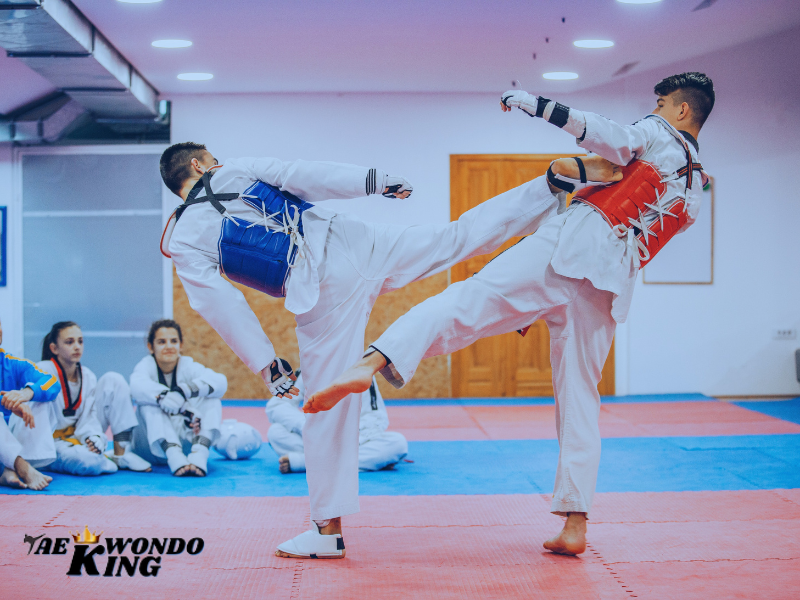
The center referee calls “charyeot” and “kyeong-rye.” The athletes bow. Then “joon-bi” and “shi-jak.” Ten seconds in, a fighter pushes. The referee calls “kal-yeo,” signals, and declares the penalty. Then “kye-sok.” The round goes on.
I made that scene up to show the flow. It is not a memory. But notice how the words match the sources above.
| Moment in the example | Term you would hear |
|---|---|
| Athletes line up | Charyeot |
| Athletes bow | Kyeong-rye |
| Fight begins | Joon-bi, then shi-jak |
| Push happens | Kal-yeo, then a penalty call |
| Action resumes | Kye-sok |
A Second Example: The Parent in the Stands
Here is another example scenario, also made up. A parent at a US tournament does not know the words. They hear “gam-jeom” and think their child did something terrible.
A short explanation fixes it. It is just a penalty that gives the opponent a point. I think clear terminology also helps families feel included. That is my opinion, not a sourced fact.
Common Mistakes When Learning Referee Terminology
I’ll share the mistakes I would watch for. These are common patterns, not stories about me.
| Mistake | Better approach |
|---|---|
| Learning one spelling only | Learn the main variants you may see |
| Mixing up kal-yeo and keu-man | Remember pause vs end |
| Trusting one blog | Cross-check with official rules |
| Learning words without signals | Practice voice and hand signals together |
| Using old rules | Check the date of your rulebook |
Treating Old Rules as Current
This one is easy to do. You find a clear PDF online. It looks official. But it may be from years ago.
I saw rule documents from 2003 and 2017 in my search. Rules have changed since then. An Australian Taekwondo guide also says World Taekwondo made significant rule changes in June 2026. So always check the date.
Memorizing Without Using
Words fade if you never use them. Say them aloud. Use them in practice bouts. Ask a friend to quiz you.
A short daily routine works better than one long cram session. Five minutes a day for two weeks goes a long way.
Roles and Related Terms Around the Ring
Commands are only part of the vocabulary. You will also hear words for the people and tools around the ring. Knowing them makes seminar materials easier to read.
I’ll keep this short, because usage differs by event.
Center Referee, Judges, and Other Officials
A bout usually has a center referee and judges. The World Taekwondo documents I saw also mention timekeepers and system operators. One rules summary notes that points can be wrongly registered when an operator misreads the referee’s declaration.
That detail stuck with me. It shows why clear, consistent calls matter. Another person must hear and act on your words.
A web glossary I found lists Korean words for referee and judge (“joo-sim” and “bu-sim”). I could not confirm them in an official document. I would treat them as unverified until you see them in your seminar materials.
Scoring System Words
Many events use electronic protectors, often called a PSS, short for protector scoring system. The Saskatchewan referee resource lists a “PSS test” as part of the pre-bout steps. Event outlines I found also mention electronic headgear.
So PSS belongs in your referee terminology list too. It is not Korean, but you will hear it often at larger events.
Terms From the Rulebook Itself
Rule documents add their own vocabulary. Words like “contest area,” “boundary line,” “scoring area,” and “prohibited acts” show up again and again. One older World Taekwondo contents page also lists sections on hand signals, calling contestants, and annulment of points.
These plain-English terms matter as much as the Korean ones. A referee needs both.
A Simple Two-Week Plan to Learn the Terms
You do not need a fancy system. You need a short routine you will keep. Here is the plan I would try.
This is my own suggestion, not an official method.
Week One: The Core Seven
Spend the first week on the seven core commands from the first table. Say each one aloud. Learn what it means and when it comes up.
Add the hand signal for each, where you have a guide. By the end of the week, you should be able to run through a full opening in your head.
Week Two: Penalties, Timing, and Variants
In the second week, add penalty and timing words. Then review spelling variants. Keep a short list of the forms your federation uses.
Finish by watching a full bout with the sound on. Try to call each stage before the referee does. If you miss one, note it and review it the next day.
Test Yourself With a Friend
Ask a friend to read a short bout script to you. Respond with the matching command or signal. It feels awkward, but it works.
If you are headed to a seminar, ask your instructor which materials the test uses. Study those first.
Frequently Asked Questions
These are quick answers. I kept them short so you can scan them.
What does “kal-yeo” mean in taekwondo?
It means “break.” The referee uses it to pause the action and separate the fighters. Athletes must not attack after it.
What is the difference between kal-yeo and keu-man?
“Kal-yeo” pauses the action inside a round. “Keu-man” means stop and ends the round. I’d verify the exact use in your event’s rules.
What does “gam-jeom” mean?
It means a penalty. A gam-jeom gives the opponent one point.
What does “shi-jak” mean?
It means “start.” The referee says it to begin the bout or round, after “joon-bi.”
Is “kyong-go” still used?
I’m not certain. Older rules used it as a warning. One source says it was dropped from current World Taekwondo rules. Check your event’s rulebook.
How do I become a referee in the USA?
USA Taekwondo uses certification seminars with written and practical exams, according to an archived page I found. Details may have changed, so visit the current USA Taekwondo referee pages.
Final Thoughts
My biggest lesson is that Taekwondo referee terminology is simple at the core and messy at the edges. A handful of words cover most of a bout. But spellings, older rules, and different federations add confusion. Knowing that ahead of time saves a lot of frustration.
My honest advice is to start with the core commands, then add penalties and timing words. Pair every word with its hand signal. And always check the date and source of your rules. You do not need to memorize everything in one weekend. Learn a little each day, and ask a certified referee when the sources disagree.
Sources I Used
- NBC Olympics explainers on taekwondo rules and terms (nbcolympics.com)
- World Taekwondo competition rules documents and event outlines, including older editions (2003 and 2017 versions appeared in my search)
- World Taekwondo IR hand signal guide, as hosted by a national federation
- An Australian masters games sparring rules document
- An Oxford University Taekwondo club rules document
- A Saskatchewan WT referee seminar resource page
- USA Taekwondo archived referee certification page and a 2025 referee seminar application
- Australian Taekwondo referee guide mentioning June 2026 rule changes
- Several web glossaries, which I treated as unverified when they conflicted with rule documents

Founder, Owner, and CEO of TaekwondoKing.
He is one of the top 100 martial artists in the World and among the top 20 referees in Bangladesh.
Ehatasamul Alom is an esteemed Kukkiwon Certified Taekwondo 3rd Dan Black Belt with over 15 years of experience in this dynamic martial art. Born in Rajshahi, Bangladesh, Ehatasamul’s journey with Taekwondo began at the tender age of seven. His passion led him to compete at national and international levels, where he has bagged numerous awards and honors. He is also a member of the Taekwondo National Referee Panel.
With a Bachelor’s degree in Sports Science from the prestigious Rajshahi University, Ehatasamul has a deep understanding of the technical and scientific aspects of martial arts and some other martial arts.
In 2022, Ehatasamul created the “TaekwondoKing.com” to share his knowledge, Free Resources, Values, and Real experiences. His articles focus on Taekwondo training techniques, competition strategies, Sport Products Reviews, and the art’s rich history and philosophy. He also writes about the importance of mental fortitude and discipline, key aspects of his teaching philosophy. He has already launched many sports, Taekwondo, and health-related Free online tools. His goal is to inspire both beginners and seasoned practitioners worldwide through insightful and engaging content.
If you need any help, contact Ehatasamul Alom at any time.