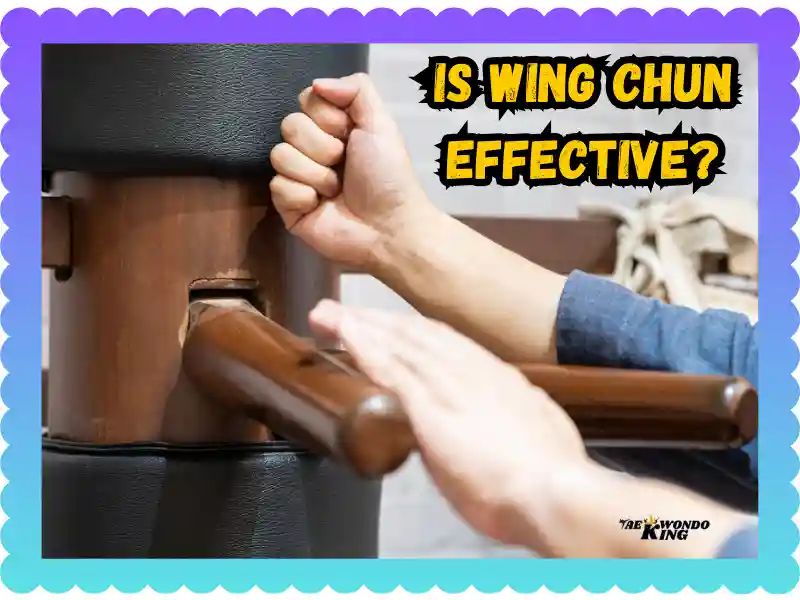
Ever wondered if a close-range art could really keep you safe during a busy night in Leipzig? Many people ask if Wing Chun effective for self-defense, and the answer is yes, because it focuses on quick strikes and keeping your center line safe. I remember feeling small in my first class, but I soon learned that skill beats size when you use the right angles. As a coach who has trained in many styles, I can tell you that this art is a genius way to end a fight fast.
In this guide, we will break it all down. You will learn about Wing Chun’s techniques, strengths, and weaknesses. By the end, you will know if Wing Chun is effective for you.
What Is Wing Chun?
Wing Chun is a Chinese martial art. It is known for close-range combat and fast punches. The style is simple, direct, and practical. Unlike other martial arts, it does not rely on strength. Instead, it uses skill, speed, and technique.
The goal of Wing Chun is to defend and attack at the same time. This makes it a powerful self-defense system. But, is Wing Chun effective in real life? Let’s find out.
Wing Chun is a martial art with fast strikes and smart defense. Many people ask, “Is Wing Chun effective?” The answer depends on how and where you use it. Some say it is great for self-defense. Others say it does not work well in real fights. Let’s look at how these smart moves can work for you in the real world today.

The Key Principles of Wing Chun
To understand if Wing Chun is effective, you need to know its core ideas.
1. Centerline Theory
The centerline is an invisible line down the middle of the body. Wing Chun fighters protect this line and attack their opponent’s centerline. This makes strikes fast and hard to block.
2. Economy of Motion
Wing Chun does not waste movement. Every action is short and direct. This helps fighters stay fast and energy-efficient.
3. Simultaneous Attack and Defense
Unlike other martial arts, Wing Chun blocks and hits at the same time. This makes it hard for opponents to react.
4. Sensitivity Training
Wing Chun fighters use “Chi Sau” or “sticky hands” drills. These drills help them feel an opponent’s moves and react instantly.
These ideas make Wing Chun powerful. But does this mean Wing Chun is effective in a real fight? Let’s explore further.
The Strengths of Wing Chun
Many believe Wing Chun is effective because of its unique advantages. Here are some reasons why:
1. Fast Strikes
Wing Chun uses quick, straight punches. These strikes are hard to block and can overwhelm an opponent.
2. Great for Close Combat
Wing Chun is perfect for fighting in small spaces. If an attacker gets too close, Wing Chun allows fast counters.
3. Works for All Sizes
Since it does not rely on strength, Wing Chun is good for smaller people. It teaches smart techniques rather than brute force.
4. Trains Reflexes
Sticky hands drills help fighters react fast. This can give an edge in a real fight.
5. Efficient Movements
Wing Chun does not use high kicks or fancy spins. It keeps movements simple and effective.
Because of these strengths, many say Wing Chun is effective for self-defense. But what about its weaknesses?
The Weaknesses of Wing Chun
Even though Wing Chun is effective in some cases, it has its flaws. Here are some issues:
1. Lack of Ground Fighting
Wing Chun is designed for standing combat. If a fight goes to the ground, it loses effectiveness.
2. Limited Sparring in Training
Some Wing Chun schools do not practice real sparring. This makes it hard for students to test their skills in a real fight.
3. Struggles Against Long-Range Strikes
Wing Chun works best up close. If an opponent keeps their distance and throws long punches or kicks, it can be hard to counter.
4. Not Always Practical in MMA
MMA fighters often use wrestling and grappling. Since Wing Chun lacks these, it is less effective in cage fights.
So, while Wing Chun is effective in some situations, it is not perfect.
Why Is Wing Chun Effective for Defense?
The reason Wing Chun effective techniques work so well is their focus on the “center line.” By guarding the middle of your body, you protect all your vital spots at once. In the USA, many people like this style because it does not require you to be a super athlete to be safe. It uses your opponent’s force against them, which is perfect if you are smaller than the other person.
- Short Range: You learn to strike from just inches away, which is great for tight spots.
- Simultaneous Move: You block and hit at the exact same time to save seconds.
- Structure: You use your whole body weight behind every small move for more power.
Summary: Wing Chun is a practical defense system that relies on geometric positioning and speed rather than raw physical strength.
Modern Training and Reality
To make Wing Chun effective in the modern world, you have to practice against “live” energy. I found that my skills grew the most when I started to spar with friends who moved fast and hit hard. In the USA, some of the best schools add “pressure testing” to make sure the moves work under stress. It is one thing to do a drill, but it is another to stay calm when someone is truly rushing at you.
| Concept | Benefit | Real-World Use |
| Chi Sao | Better Reflexes | Feeling a grab before it happens |
| Chain Punches | Overwhelm Foe | Stopping a fight in seconds |
| Low Kicks | Stay Balanced | Keeping your feet on the ground |
Summary: Testing techniques against a resisting partner is the only way to ensure martial arts skills translate to real-life situations.
My Personal Take on the Art
I used to think I needed to be a bodybuilder to feel safe, but Wing Chun effective logic changed my mind. I love how it feels like a game of chess played at high speed where every move has a clear reason. It took me a few months to stop using my muscles and start using my bones for structure, but once it clicked, everything felt easy. It is a deep journey that builds your mind as much as your hands.
Summary: Success in Wing Chun comes from mastering structural alignment and mental focus rather than relying on muscular effort.
Is Wing Chun Effective for Self-Defense?
Yes, Wing Chun is effective for self-defense, but only if trained properly. Here’s why it can work:
- It teaches fast, powerful strikes.
- It helps react quickly to attacks.
- It works well in tight spaces.
- It does not rely on size or strength.
However, self-defense situations are unpredictable. If an attacker takes the fight to the ground, Wing Chun may not help. So, while Wing Chun is effective, it is best to combine it with other skills.
Is Wing Chun Effective in Street Fights?
Street fights are chaotic. There are no rules, and anything can happen. So, is Wing Chun effective in a street fight?
It depends on the fighter.
Wing Chun gives useful tools like:
- Quick punches.
- Strong defenses.
- Close-range control.
But street fights can include:
- Weapons.
- Multiple attackers.
- Ground fighting.
Since Wing Chun lacks ground techniques, it may not be enough. This is why some fighters mix Wing Chun with wrestling or boxing.
If trained well, Wing Chun is effective in a street fight. But only if the fighter knows how to adapt.
Is Wing Chun Effective in MMA?
MMA fights mix striking, grappling, and wrestling. Wing Chun is effective for fast punches, but it has weaknesses in MMA.
MMA fighters train for:
- Long-range striking.
- Ground combat.
- High-level conditioning.
Since Wing Chun lacks these, it is not common in MMA. However, some fighters mix Wing Chun techniques with other styles. This makes them more complete fighters.
So, Wing Chun is effective for some MMA techniques but not as a full fighting style.
How to Make Wing Chun More Effective?
If you want to make Wing Chun effective, here are some tips:
- Practice Sparring – Train against resisting opponents.
- Add Strength Training – Stronger muscles help in fights.
- Learn Ground Fighting – Jiu-Jitsu or wrestling can cover Wing Chun’s weaknesses.
- Train Against Different Fighters – Practice with boxers, kickboxers, and grapplers.
- Use It in Real Scenarios – Test your skills under pressure.
By following these steps, you can make Wing Chun effective in more situations.
Famous Wing Chun Fighters
Some fighters prove Wing Chun is effective. Here are a few:
1. Ip Man
The legendary master of Wing Chun. He taught Bruce Lee and made Wing Chun famous.
2. Bruce Lee
Bruce Lee used Wing Chun as his base before creating Jeet Kune Do. He believed in testing martial arts in real fights.
3. Tony Ferguson (MMA Fighter)
He uses wing chun techniques in the UFC, showing that some parts of wing-chun are effective in MMA.
These fighters show that Wing Chun can work if trained properly.
Conclusion: Is Wing Chun Effective?
So, is Wing Chun effective?
- Yes, for self-defense.
- Yes, for close-range fighting.
- Good for developing speed and reflexes.
- No, for ground fighting.
- No, if training lacks real sparring.
Wing Chun is a great martial art. But it is not perfect. If you want to use it in real fights, combine it with other styles.
If trained correctly, Wing Chun is effective. But it depends on the person using it.
FAQs
Yes, Wing Chun is effective for self-defense. It uses fast strikes and close-range control to handle threats quickly.
Wing Chun focuses on simple moves and direct attacks. This helps save energy and react fast under pressure.
Wing Chun can work in real fights with proper training. Skill, timing, and practice matter more than style alone.
Yes, Wing Chun is beginner friendly. It uses short motions that are easy to learn and repeat.
Wing Chun uses structure and angle, not strength. This helps smaller fighters manage larger opponents.
Some Wing Chun ideas work well. Many fighters mix it with other arts for better results.
Yes, Wing Chun is still effective today. It fits modern self-defense when trained with real movement and pressure.

Founder, Owner, and CEO of TaekwondoKing.
He is one of the top 100 martial artists in the World and among the top 20 referees in Bangladesh.
Ehatasamul Alom is an esteemed Kukkiwon Certified Taekwondo 3rd Dan Black Belt with over 15 years of experience in this dynamic martial art. Born in Rajshahi, Bangladesh, Ehatasamul’s journey with Taekwondo began at the tender age of seven. His passion led him to compete at national and international levels, where he has bagged numerous awards and honors. He is also a member of the Taekwondo National Referee Panel.
With a Bachelor’s degree in Sports Science from the prestigious Rajshahi University, Ehatasamul has a deep understanding of the technical and scientific aspects of martial arts and some other martial arts.
In 2022, Ehatasamul created the “TaekwondoKing.com” to share his knowledge, Free Resources, Values, and Real experiences. His articles focus on Taekwondo training techniques, competition strategies, Sport Products Reviews, and the art’s rich history and philosophy. He also writes about the importance of mental fortitude and discipline, key aspects of his teaching philosophy. He has already launched many sports, Taekwondo, and health-related Free online tools. His goal is to inspire both beginners and seasoned practitioners worldwide through insightful and engaging content.
If you need any help, contact Ehatasamul Alom at any time.