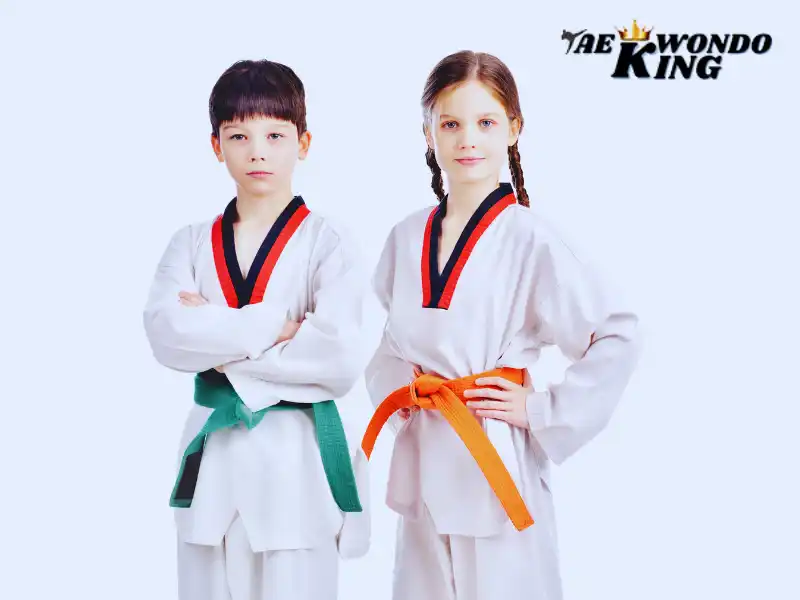
The first time I saw “WTF” on a Taekwondo flyer, I couldn’t help but laugh, until I found out what WTF means in Taekwondo. Spoiler: it’s not what you think! It actually stands for World Taekwondo Federation, the group behind Olympic-style sparring and global rules. I’ve trained under both WTF and ITF systems, and trust me, the differences matter. In this article, I’ll explain what WTF really is, how it shapes training, and why it might be the right fit for you.
As a national and World Taekwondo player, coach, and official, and a 3rd Dan black belt holder. I have long-term experience in Taekwondo martial arts. On my site, TaekwondoKing.com, we regularly jump profound into the history and terminology. And the centrality of different Taekwondo organizations, including WTF. I’ll direct you through the meaning of WTF in Taekwondo. Its history, advancement, and the part it plays in forming the long-term of the don.
Check out the latest prize in Taekwondo equipment on Amazon.

The Arrangement of WTF: A Brief History
The World Taekwondo Federation (WTF) was established on May 28, 1973, in Seoul, South Korea. It was made to serve as the worldwide overseeing body for Taekwondo. Guaranteeing that the martial art might standardize its honing around the world. And get acknowledgment as an Olympic wearer. The organization was a reaction to the developing requirement for consistency in Taekwondo competitions. And preparing techniques for distinctive nations.
For those who visit TaekwondoKing.com, it’s fundamental to get the roots of WTF. The organization initially developed to set up universal solidarity in Taekwondo honing. Particularly after the wear started picking up notoriety as all-inclusive.
If you are a fan of Taekwondo or have looked for some training in it, the acronym “WTF” rings familiar to your ears. More recently, the funny acronym has become synonymous in pop culture with something else entirely. For those of us in martial arts who practice Taekwondo, it is far from a joke. In the context of Taekwondo, WTF stands for World Taekwondo Federation (Now changed to WT , World Taekwondo). For practitioners, competitors, or instructors in this martial art., knowing WTF Taekwondo means is a basic necessity.
Why Did WTF Alter Its Title to World Taekwondo?
In 2017, the World Taekwondo Federation authoritatively rebranded itself to World Taekwondo (WT). The reason for this alteration was very simple, due to the rise of social media and cutting-edge web culture. The acronym “WTF” had taken on a broadly distinctive and improper intention.
To dodge perplexity and protect the polished skill of the sports. The overseeing body chose to receive a more advanced title, World Taekwondo. While keeping the same values and objectives. On TaekwondoKing.com, we regularly clarify that despite the title alteration. The center’s mission and goals of the organization stay unchanged. Promoting Taekwondo around the world and setting benchmarks for competitions.
Check out the latest prize in Taekwondo equipment on Amazon.
WTF’s Part in Standardizing Taekwondo Competitions
One of the main reasons for the formation of WTF was to make a standardized framework for World Taekwondo competitions. Sometime recently, WTF’s foundation, distinctive Taekwondo organizations had shifting rules for competing and shapes (known as poomsae). This made it troublesome to have reasonable competition on a global scale.
The World Taekwondo Federation worked to streamline the rules, scoring frameworks, and capabilities. This inevitably permitted Taekwondo to be recognized as an Olympic sport. TaekwondoKing.com highlights that WTF’s commitments were basic to accomplishing Taekwondo’s incorporation within the Olympic Games, with the sport making its big appearance at the 2000 Sydney Olympics.
Since that point, the World Taekwondo Federation. Presently, World Taekwondo has ceaselessly worked to move forward the sport’s competitiveness. And keep up its presence in worldwide sporting events.
The Significance of Poomsae and Fighting Beneath WTF Rules
Within the world of Taekwondo, there are two major angles of hone: poomsae and competing. Poomsae are the organized shapes or designs that Taekwondo specialists must memorize. And perform to illustrate the method, accuracy, and stream. Fighting, on the other hand, is the live combat or competition perspective where participants face off against each other.
WTF, or World Taekwondo, introduced standardized poomsae and competing rules to guarantee reasonableness in worldwide competitions. On TaekwondoKing.com, we regularly emphasize the significance of understanding these benchmarks for anybody trying to compete or instruct Taekwondo at a universal level.
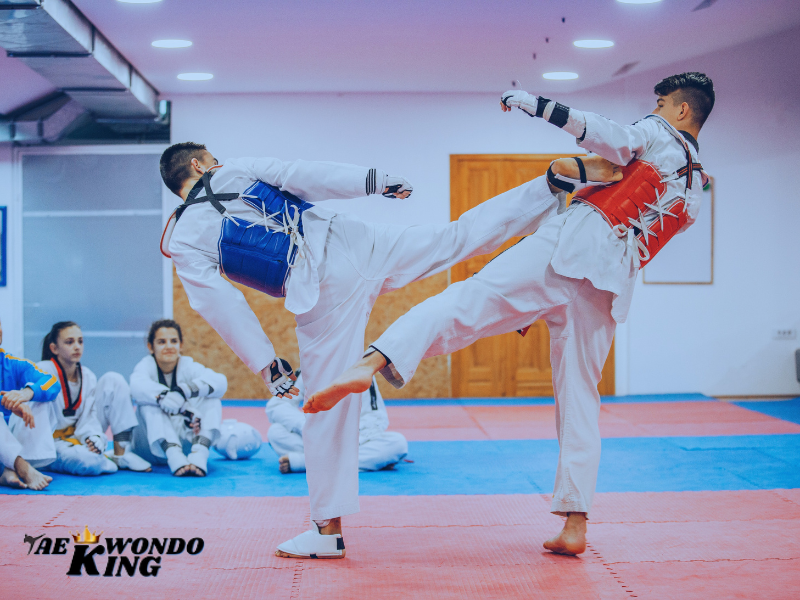
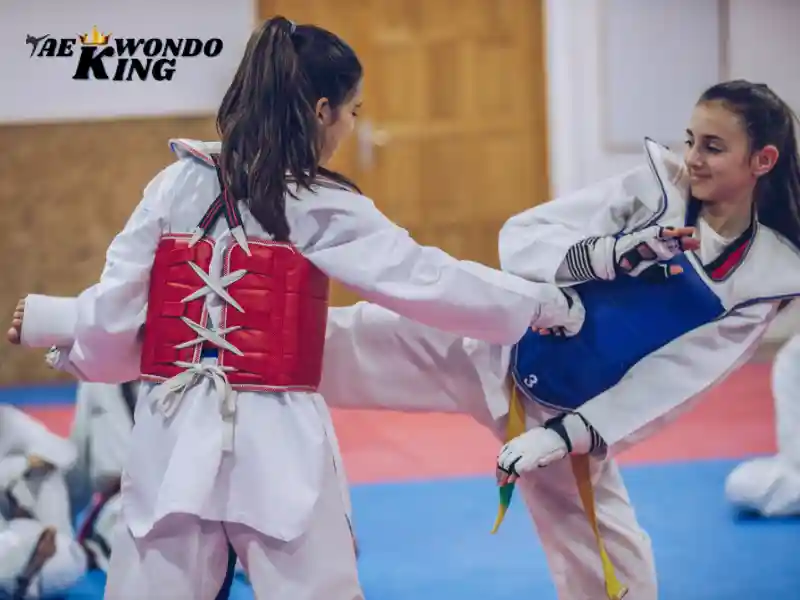
World Taekwondo competition rules prioritize deftness, speed, and technique. Professionals wear defensive adapt, and focuses are granted based on clean, controlled strikes. The organization’s emphasis on security. And sportsmanship guarantees that competing is competitive but not unsafe.
WTF and the Olympic Journey
Taekwondo’s incorporation into the Olympics marked an amazing milestone for the martial arts. Some time recently, the 2000 Sydney Olympics. Taekwondo was exhibited wear within the 1988 Seoul Olympics and the 1992 Barcelona Olympics. The WTF worked persistently with the International Olympic Committee (IOC) to standardize the rules. And guarantee the wear might fit into the Olympic format.
For numerous Taekwondo professionals, taking part in the Olympics is the ultimate objective. On TaekwondoKing.com, we highlight the monstrous pride and honor that comes with speaking to one’s nation in this worldwide competition. The WTF’s endeavors cleared the way for Taekwondo to become a conspicuous Olympic wear. Advertising practitioners worldwide have an opportunity to exhibit their abilities on the greatest arrange.
What is wtf taekwondo?
I remember walking into my gym years ago wearing my brand new uniform. A friend looked at the large letters printed on my chest and started laughing. He asked, “what does wtf stand for in taekwondo?” It is a funny question today. For years, parents and students would politely ask me what does wtf mean in taekwondo or what is wtf in taekwondo.
Before it rebranded, it stood for the World Taekwondo Federation. Now, they just call it World Taekwondo (WT). So, if you are wondering what is wtf taekwondo and what is world taekwondo federation, they are exactly the same governing body that manages the Olympic style of this art. By the way, when was wtf invented? The federation was established back in 1973.
If you are curious about this amazing martial art, let’s dive into the history, rules, and how you can get started.
The Origins and History
Many beginners step onto the mat and ask, what is taekwondo? They want to know, what is the meaning of taekwondo? If we break it down to answer what does taekwondo mean, the Korean word “Tae” means foot, “Kwon” means fist, and “Do” means the way. So, what does taekwondo mean in english? It translates to “the way of the foot and fist.” If you want to know what’s the meaning of taekwondo on a deeper level, it is about discipline.
People often ask how to pronounce taekwondo or how to say taekwondo. It sounds like “tie-kwan-doe.” If you want to know how to say taekwondo in korean, it is very similar but with a softer ‘g’ sound: “tae-gwon-do.” Sometimes people wonder how to spell taekwondo or how do you spell taekwondo. It is usually spelled as one word. What about text slang? People ask what does tkd mean in text, what’s tkd, and what is tkd? It is simply the short abbreviation for the art.
Many new students wonder about geography. They ask where did taekwondo come from and where did taekwondo originate. To answer questions like where does taekwondo come from, where does taekwondo originate from, where does taekwondo originated, and where was taekwondo originated, we look to South Korea. If you are asking where is taekwondo from or what country is taekwondo from, it is strictly a Korean martial art. You are wondering what is the origin of taekwondo, it evolved from older Korean fighting styles like Taekkyeon.
If you want to know what was taekwondo originally called, or if someone asks you what was taekwondo originally called?, the answer is that it was formed from several different schools (kwans) that used names like Tang Soo Do. When was taekwondo invented or when was taekwondo made? The unified name was officially adopted in 1955.
Who started it?
Students ask who created taekwondo, who made taekwondo, and who invented taekwondo. General Choi Hong Hi is widely credited as a primary founder. Some people ask me, how did choi hong hi die? He passed away from stomach cancer in 2002. Beginners also often ask what is itf and wtf taekwondo. ITF (International Taekwon-Do Federation) is the traditional style, while WTF (now WT) is the sport style. When did taekwondo became an olympic sport? It became a full medal event in the year 2000.
Karate vs. Taekwondo and Other Arts
A huge point of confusion is comparing different fighting styles. People ask, how many martial arts are there? There are hundreds worldwide. Some people ask, is taekwondo japanese? No, it is Korean. People ask is taekwondo and martial arts the same? Taekwondo is just one specific type of martial art. Is it a sport? is taekwondo a sport and is taekwondo a martial art? It is proudly both!
Then comes the big debate: what is the difference between karate and taekwondo, what is difference between karate and taekwondo, and what is taekwondo vs karate. People ask is karate and taekwondo the same or is taekwondo the same as karate. They are not. Karate is from Japan and uses deep stances with strong hand strikes. Taekwondo uses fast, high, and jumping kicks. Also, people ask what is kata. Kata is a Japanese term for forms in Karate; in TKD, we call them Poomsae.
I sometimes get random questions like who invented jeet kune do (Bruce Lee) or questions about israeli military training (which uses Krav Maga). People also ask what weapons are used in taekwondo. Traditionally, it focuses on empty hands and feet, though some modern demonstration teams use staffs.
Training, Rules, and Learning at Home
Since 2020, I get tons of messages asking: is it possible to learn taekwondo at home, can i learn taekwondo at home, how to learn taekwondo at home, can you learn taekwondo at home, how can i learn taekwondo at home, how to start taekwondo at home, can i learn taekwondo by myself, and how to learn taekwondo at home by yourself.
My expert advice? You can stretch and learn the basic shapes of kicks in your living room. However, to really learn distance and timing, you need a partner. Finding out how to learn taekwondo safely requires a good master.
If you want to know how to play taekwondo or what are the rules in taekwondo, it is simple. You compete in a ring. How to score points in taekwondo? You score by kicking the electronic body protector or headgear. How to win in taekwondo? Score more points or secure a knockout. Finding out how to be good at taekwondo and how to get better at sparring taekwondo takes years of cardio and drill repetition.
Is it a difficult journey?
People ask what are the hardest sports in the world and is taekwondo hard. It is incredibly physically demanding. Some internet critics ask why is taekwondo so useless. It is absolutely not useless; it just specializes in long-range kicks rather than ground grappling. If you want to know how to beat a taekwondo fighter, you have to close the distance quickly so they cannot use their legs.
Let’s talk kicks. How many kicks in taekwondo? There are dozens of base kicks and hundreds of variations. What is the hardest kick in taekwondo? Usually, the spinning hook kick generates the most knockout force. If you want to know how to spin kick or how to do a spin kick, you must pivot your base foot, look over your shoulder, and release your leg in a straight, snapping line.
Belts are important too. What’s after green belt in taekwondo? Usually, it is the blue belt. I teach my students early on how to put on taekwondo belt and how to tie a taekwondo belt single wrap. It is a proud moment. Is it safe for youth? Is taekwondo good for kids? It is fantastic for teaching discipline, respect, and focus.
Legends and Pop Culture
Fans often ask me who is the best taekwondo player in the world, who is the best taekwondo fighter, or who is the best taekwondo fighter in the world. Historically, legends like Steven López or Servet Tazegül are top tier. Recently, people ask who is cj nickolas. He is an amazing, explosive modern American athlete competing right now.
I also get fun questions from webtoon fans asking is hansu seong related to johan seong. In the fictional “Lookism” universe, yes, they share a martial arts lineage!
| Organization | Meaning | Primary Focus |
| WT (formerly WTF) | World Taekwondo | Olympic Sport, Fast Sparring |
| ITF | International Taekwon-Do Fed. | Traditional Forms, Self-Defense |
WTF Belt Framework and Rank Movement
Beneath WTF (presently World Taekwondo) controls, the belt framework is outlined to guarantee slow, restrained movement through the positions. Beginning from the white belt, practitioners move up through different colored belts until they reach the pined for the dark belt. Indeed, inside the dark belt, there are numerous Dan levels, which demonstrate the higher authority of the craftsmanship.
As a Taekwondo coach and a 3rd Dan black belt holder. I regularly explain on TaekwondoKing.com that the belt framework in Taekwondo isn’t almost about skill but too about individual advancement. The accentuation is on steady hope, regard, and humility. Qualities that the WTF’s worldwide structure guarantees are taken after in Taekwondo schools around the world.
World Taekwondo Championships and Competitions
The WTF organizes a variety of prestigious competitions. The most outstanding being the World Taekwondo Championships, held every two a long time. This occasion assembles the most excellent Taekwondo athletes from around the world to compete for the title of world champion. It may be a confirmation of the aptitudes, commitment, and tirelessness required to exceed expectations in Taekwondo.
On TaekwondoKing.com, we regularly cover the news and accomplishments of these championships. Highlighting key minutes and effective competitors. Competing beneath the WTF’s thorough guidelines could be challenging. But a fulfilling encounter for any specialist who aims to reach the beat of their field.
Check out the latest prize in Taekwondo equipment on Amazon.
Long-term goals of World Taekwondo (WT)
Whereas the World Taekwondo Federation has rebranded to World Taekwondo. Its mission remains enduring: advancing the worldwide development of Taekwondo. And guaranteeing it remains significant in an ever-changing sports landscape. The future of Taekwondo looks bright, with a continued emphasis on development, security, and inclusivity in competitions.
As we talk about regularly on TaekwondoKing.com, the wear is evolving with the integration of modern advances. Such as electronic scoring frameworks and wearable tech for competing matches. These developments guarantee the don remains reasonable. Straightforward, and locks in for both competitors and onlookers.
WTF’s Enduring Effect on Taekwondo
In outline, WTF, or World Taekwondo, has had a significant effect on the improvement and universal acknowledgment of Taekwondo. From standardizing rules to advancing the martial arts in the Olympic organization. WTF has been instrumental in forming Taekwondo into the all-inclusive martial art it is nowadays.
Whether you’re an apprentice, fair beginning your Taekwondo journey, or an experienced specialist. Understanding the noteworthiness of WTF is vital to getting a handle on the broader setting of this martial art. On TaekwondoKing.com, we energize professionals to investigate the history and impact of WTF as a part of their martial arts instruction. Through WTF’s administration, Taekwondo proceeds to develop, enabling people with mental disabilities. And physical apparatuses required for victory both on and off the tangle.
Is it way better to do Taekwondo ITF or WTF?
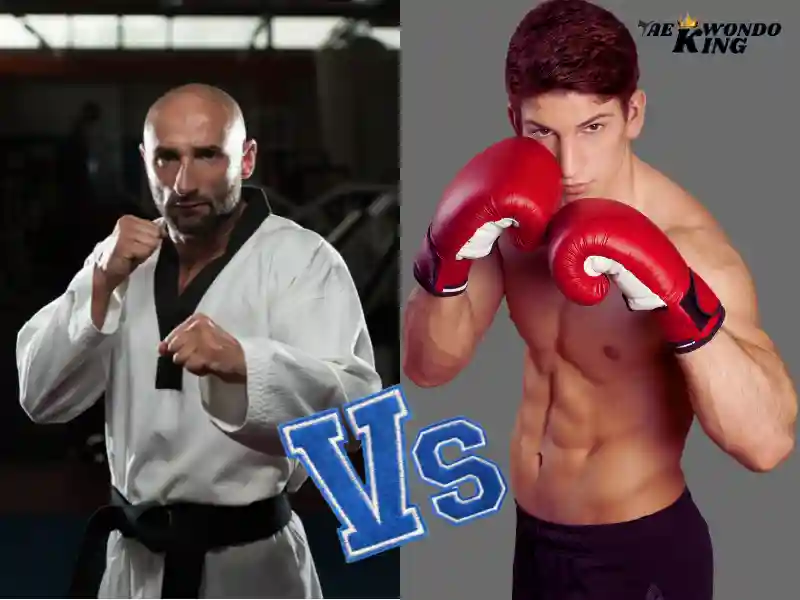
Whether ITF (International Taekwondo Federation) or WTF (World Taekwondo, already World Taekwondo Federation) is way better depends on your objectives and inclinations. ITF centers more on conventional shapes and self-defense methods. With an adjustment of hand strikes and kicks. WTF emphasizes tall, effective kicks and is more situated toward Olympic-style fighting and competition.
ITF: Perfect for those who need a conventional martial arts involvement with a solid center on strategy and shapes (designs).
WTF: Reasonable for those looking to compete in sports. And competitions, particularly at a universal level, are just like the Olympics.
Where is WTF Taekwondo from?
WTF Taekwondo begins in South Korea. It was established in 1973 as an overseeing body for the international sport form of Taekwondo. With an emphasis on full-contact competing and tall kicks. The Kukkiwon is found in Seoul, South Korea. Serves as the central command and is the certification body for WTF Taekwondo.
What came first, ITF or WTF?
The ITF (International Taekwondo Federation) was established to begin within 1966 by Choi Hong Howdy. Frequently considered the father of present-day Taekwondo. The WTF (presently called World Taekwondo) was built up afterward in 1973 after the split between Common Choi and the South Korean government. Which looked to create Taekwondo as a worldwide wear.
Is Kukkiwon ITF or WTF?
The Kukkiwon is the worldwide central command for WTF Taekwondo (presently World Taekwondo). It is mindful of certifying dan positions (black belts). And giving the official rules for Taekwondo honing under WTF. Kukkiwon centers on Taekwondo and is closely related to World Taekwondo’s rules and guidelines. Counting the Olympic competition fashion.
Who is the father of Taekwondo?
Common Choi Hong Hi is broadly recognized as the father of present-day Taekwondo. He established the ITF in 1966 and was instrumental in creating present-day martial arts by combining conventional Korean martial arts with components of karate, which he learned during his time in Japan.
Is Olympic Taekwondo WTF or ITF?
Olympic Taekwondo follows the rules and organization of WTF Taekwondo, which is presently called World Taekwondo (WT). The Olympic form emphasizes full-contact competing with a focus granted fundamentally on kicks. And as it were, body punches are permitted. ITF Taekwondo, on the other hand. Isn’t a portion of the Olympic Recreation and centers more on conventional methods and shapes.
Conclusion
For those looking to memorize more or start their Taekwondo journey. Visit TaekwondoKing.com, where we offer insights, tips, and assets to assist you in succeeding in this energetic martial art. Whether you try to compete or essentially need to create your abilities. Taekwondo has something to offer everybody. Much obliged to the strong establishment laid by WTF.
Check out the latest prize in Taekwondo equipment on Amazon.

Founder, Owner, and CEO of TaekwondoKing.
He is one of the top 100 martial artists in the World and among the top 20 referees in Bangladesh.
Ehatasamul Alom is an esteemed Kukkiwon Certified Taekwondo 3rd Dan Black Belt with over 15 years of experience in this dynamic martial art. Born in Rajshahi, Bangladesh, Ehatasamul’s journey with Taekwondo began at the tender age of seven. His passion led him to compete at national and international levels, where he has bagged numerous awards and honors. He is also a member of the Taekwondo National Referee Panel.
With a Bachelor’s degree in Sports Science from the prestigious Rajshahi University, Ehatasamul has a deep understanding of the technical and scientific aspects of martial arts and some other martial arts.
In 2022, Ehatasamul created the “TaekwondoKing.com” to share his knowledge, Free Resources, Values, and Real experiences. His articles focus on Taekwondo training techniques, competition strategies, Sport Products Reviews, and the art’s rich history and philosophy. He also writes about the importance of mental fortitude and discipline, key aspects of his teaching philosophy. He has already launched many sports, Taekwondo, and health-related Free online tools. His goal is to inspire both beginners and seasoned practitioners worldwide through insightful and engaging content.
If you need any help, contact Ehatasamul Alom at any time.