When I first tried to map out Taekwondo certifications, I got lost fast. Belt certificates, Kukkiwon certificates, instructor courses, coaching cards, referee licenses. Everyone used the word “certified,” but they meant different things. A clear Taekwondo certification roadmap would have saved me weeks of confusion.
In this guide, I’ll walk through the main stages, from your first belt to black belt, instructor training, coaching, and refereeing. I’ll explain who usually issues each certificate, where people get stuck, and what to ask before you spend money. Rules differ by country and association, so I’ll flag what you should verify.
Why a Taekwondo Certification Roadmap Helps
Taekwondo has no single ladder. It has several tracks that share a starting point. Without a map, it’s easy to take a course you don’t need or miss one you do.
That’s why I like to see the whole picture before choosing a step.
“Certified” Can Mean Many Things
A school may give you a certificate when you pass a color belt test. Kukkiwon issues black belt certificates. A national association licenses referees. World Taekwondo runs international referee seminars.
All of these are real. They’re just different. Mixing them up leads to wrong assumptions about what you can do with each one.
Planning Saves Time and Money
Courses, tests, and seminars cost money and weekends. A little planning helps you pick the right order. It also helps you ask better questions of your school and association.
I’ve seen people wait years to learn they needed a certain rank for a certain course. A simple map prevents that.
The Big Picture: Belts First, Then Four Paths
Every Taekwondo journey starts with belts. After black belt, most people choose one or more paths. You can teach, coach, referee, or keep training and competing.
Here’s a quick overview. Details vary by country, so treat it as a guide and not a rulebook.
| Stage | What It Means |
|---|---|
| Colored belts | Learning the basics at a school or club |
| First dan | Black belt certification |
| Higher dan ranks | Long-term advancement and testing |
| Instructor or master training | Teaching credentials |
| Coach and referee tracks | Roles at competitions |
Step 1: Belts and the Road to Black Belt
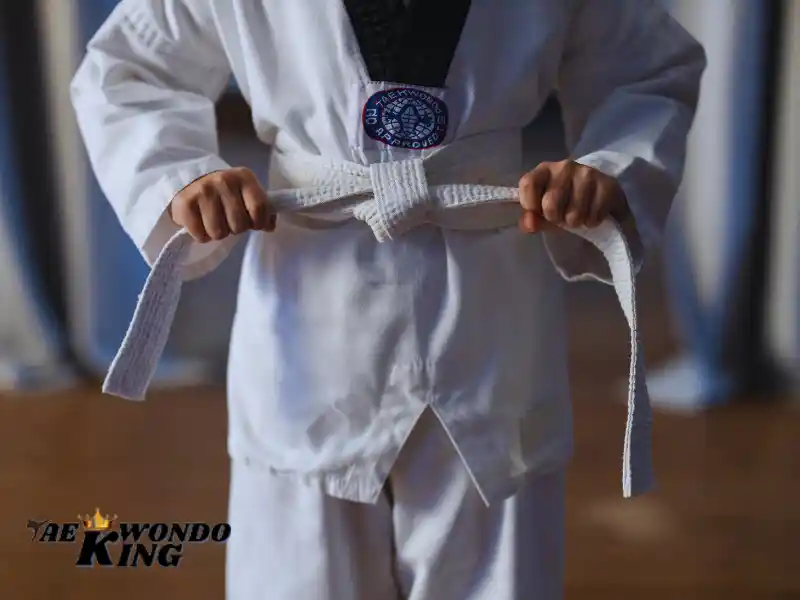
This is where almost everyone begins. You learn forms, kicks, and basics. You test for new belts. Over time, you work toward black belt.
The tricky part is that different organizations issue different certificates along the way.
Colored Belts Come From Your School
Most colored belt certificates come from your school or club. They show that you passed that school’s test. They’re useful records, but they’re usually not international credentials.
Keep every certificate and note the date. Those records help later when you apply for higher ranks.
Kukkiwon Dan Certification
Kukkiwon, based in Seoul, issues the internationally recognized black belt certificate. One national policy document I found says Kukkiwon is the only authority allowed to issue a document shown as a Poom or Dan certificate.
In practice, your school or instructor usually submits your results. Some national guides mention registering successful candidates on Kukkiwon’s online system. As far as I know, children under 15 who pass black belt requirements generally receive a Poom rank instead of Dan. Verify the current age rules with your association.
Pick a School That Can Certify
Before you commit to a school, ask a simple question. Can the instructor submit Kukkiwon certification for students? Not every school does.
I wish I had asked this earlier in my own research. It affects what your black belt will be worth outside your school.
| Certificate Type | Who Usually Issues It |
|---|---|
| Color belt certificate | Your school or club |
| Dan or Poom certificate | Kukkiwon, via a certified instructor |
| National referee license | Your national association |
| International referee license | World Taekwondo |
| Master instructor certificate | Kukkiwon course |
Step 2: Higher Dan Ranks and Testing Panels
After first dan, progress slows. Each higher rank usually takes more time, more experience, and a stronger panel of examiners. This is where patience matters.
I found it helpful to think of these ranks as milestones, not finish lines.
Panels Get More Demanding
One British Taekwondo policy I found describes higher dan tests needing panels with senior Kukkiwon certificate holders. For example, sixth dan candidates need at least one seventh dan examiner or higher on the panel.
Other countries may set different rules. Ask your association how testing works for your next rank.
Time Requirements Vary
Some associations set minimum waiting periods between ranks. Others leave more to the instructor. I can’t give you one universal timeline.
Ask your instructor and your association. Write down the answer, because rules change.
Step 3: The Instructor and Master Course Path
If you want to teach, certification matters more as you grow. Kukkiwon runs instructor and master courses. The details differ by rank.
From Kukkiwon’s own training page, a completion course exists for second and third dan holders who are at least 18 years old. People who finish it become eligible for the Master Certificate when they reach fourth dan. Higher classes of the course are listed for higher dan holders.
Why This Course Matters for Teaching
In many places, being able to certify students depends on holding the right instructor credential. That’s why the course matters for teachers. Without it, you may not be able to submit students for black belt certification.
As far as I understand, requirements have tightened over time. Check the current Kukkiwon information before you plan.
An Instructor Is Not Automatically a Referee
This surprised me. Instructor certification and referee certification are separate tracks. A fourth dan instructor isn’t automatically a licensed referee or a certified coach.
Each track has its own courses, tests, and requirements.
Step 4: The Coach Track
Coaching is a different skill from teaching. A coach reads matches, prepares athletes, and handles the chair during competition. That includes knowing replay rules and conduct expectations.
Coaching education is usually offered through national associations. The details vary a lot, so I can’t describe one standard path. Ask your association what courses or accreditation they offer.
If you’re planning to coach at tournaments, learn the event rules early. Cards, quotas, and conduct rules affect your athletes directly.
Step 5: The Referee Track
Refereeing has its own ladder. It usually starts with local or national courses, then moves up through levels as you gain experience. The first step is almost always your national association.
I covered this path in more detail in other guides, so here’s the short version.
The National Levels
Many countries use classes, like third class, second class, and first class. Some require a minimum rank, and some include age limits. Requirements differ widely, so ask before you assume.
For example, one national referee guide I found lists minimum ranks and age requirements for each class, plus a points system based on experience. Another lists ongoing education requirements.
The International Step
World Taekwondo runs international referee seminars. In the notices I found, applicants usually needed a recommendation from their national association. I also saw requirements like being 21 or older, speaking English, and holding a Global Official License.
Some poomsae seminars asked for Kukkiwon fourth dan or higher, with exceptions. World Taekwondo also reported a Standing International Referee system in 2026. Check the current notice for exact details.
| Track | Best For |
|---|---|
| Instructor | People who love teaching and running a school |
| Coach | People who enjoy guiding athletes through matches |
| Referee | People who value rules, fairness, and calm decisions |
| Competitor | People who want to keep training and testing themselves |
Myths About Taekwondo Certification
A lot of confusion comes from myths. I believed a few of these myself. Clearing them up made the whole system easier to follow.
| Myth | Reality |
|---|---|
| Every certificate is internationally recognized | Many are local to a school or association |
| A black belt makes you a referee | Referee tracks have separate courses and tests |
| One course covers everything | Teaching, coaching, and refereeing are separate |
| Rules are the same everywhere | Requirements differ by country and association |
The “One Certificate Fits All” Myth
It’s tempting to think one document unlocks every door. It doesn’t. Each role has its own requirements, and each organization decides what it recognizes.
The “Black Belt Means Ready” Myth
Black belt is a big milestone. But it’s a starting point for many paths. Teaching, coaching, and refereeing each ask for new skills and extra training.
Mistakes That Cost Time and Money
I’ve made a few of these. I’ve watched others make the rest. They’re all avoidable with a little homework.
| Mistake | Better Approach |
|---|---|
| Choosing a school without asking about Kukkiwon | Ask if the instructor can certify students |
| Assuming all certificates carry equal weight | Check who issues each one |
| Skipping association rules | Read your national association’s requirements |
| Throwing away old records | Keep every certificate and date |
| Waiting too long to ask questions | Ask early, before you pay for anything |
Not Asking Before You Pay
Courses and seminars cost money. Ask what the course leads to, who recognizes it, and what requirements apply. A five-minute email can save you a lot.
Losing Track of Your Records
I used to toss paperwork after each event. Big mistake. Years later, certificates and dates matter for applications. Keep digital copies somewhere safe.
Keeping Your Paperwork in Order
Paperwork isn’t exciting, but it matters. Associations may ask for proof of rank, courses, or experience. A simple folder, digital or paper, solves most problems.
| Document | Why Keep It |
|---|---|
| Belt and dan certificates | Proof of rank for applications |
| Course and seminar certificates | Proof of training for higher levels |
| Event and match records | Proof of experience for referee or coach levels |
| ID numbers and registrations | Needed for online systems |
A Simple System
I keep scans in one folder and a short list of dates in a note. It takes ten minutes after each event. When an application comes up, everything is ready.
A Simple Roadmap Plan You Can Copy
Here’s the plan I’d follow if I were starting again. It isn’t the only way, but it’s a good start.
- Find a school that can certify through Kukkiwon, and ask how it works.
- Train for your black belt and keep every record.
- Decide what you want next: teaching, coaching, refereeing, or competing.
- Ask your national association which courses and levels apply.
- Take one step at a time, and update your plan each year.
The goal isn’t speed. It’s choosing steps that fit where you want to go.
Quick Answers About Taekwondo Certification
What is the difference between a school certificate and a Kukkiwon certificate?
A school certificate comes from your school and shows you passed its test. A Kukkiwon certificate is the internationally recognized black belt document. They aren’t the same thing.
Who can issue a dan certificate?
According to one national policy I found, only Kukkiwon can issue a document labeled as a Poom or Dan certificate. Schools usually submit applications on behalf of students.
Do I need a black belt to become a referee?
It depends on your association and level. Some require a minimum rank. Ask your national association before you assume.
How long does the full roadmap take?
It varies a lot, so I can’t give a reliable timeline. Rank requirements, your training pace, and association rules all matter.
Can kids earn a black belt certificate?
Generally, young students receive a Poom rank until they reach the age for Dan. The exact age rules depend on current Kukkiwon policy, so verify with your association.
Final Thoughts
The biggest lesson I learned is that “certified” means different things in Taekwondo. School belts, Kukkiwon dan ranks, instructor courses, coaching education, and referee licenses all come from different places. Once I separated them, the path made sense.
Be realistic. Requirements change, and each country does things a little differently. Use this Taekwondo certification roadmap as a starting map, check with your national association, and keep good records. Take it one stage at a time, and you’ll build a path that fits you.

Founder, Owner, and CEO of TaekwondoKing.
He is one of the top 100 martial artists in the World and among the top 20 referees in Bangladesh.
Ehatasamul Alom is an esteemed Kukkiwon Certified Taekwondo 3rd Dan Black Belt with over 15 years of experience in this dynamic martial art. Born in Rajshahi, Bangladesh, Ehatasamul’s journey with Taekwondo began at the tender age of seven. His passion led him to compete at national and international levels, where he has bagged numerous awards and honors. He is also a member of the Taekwondo National Referee Panel.
With a Bachelor’s degree in Sports Science from the prestigious Rajshahi University, Ehatasamul has a deep understanding of the technical and scientific aspects of martial arts and some other martial arts.
In 2022, Ehatasamul created the “TaekwondoKing.com” to share his knowledge, Free Resources, Values, and Real experiences. His articles focus on Taekwondo training techniques, competition strategies, Sport Products Reviews, and the art’s rich history and philosophy. He also writes about the importance of mental fortitude and discipline, key aspects of his teaching philosophy. He has already launched many sports, Taekwondo, and health-related Free online tools. His goal is to inspire both beginners and seasoned practitioners worldwide through insightful and engaging content.
If you need any help, contact Ehatasamul Alom at any time.