I used to think a referee only needed a uniform and a good attitude. Then I watched an official dig through a bag between matches looking for a spare shirt that wasn’t there. The match was late, the hall was warm, and everyone could feel the stress. A solid Taekwondo referee equipment checklist would have fixed the whole thing.
In this guide, I’ll cover what to pack for yourself, what events usually provide, and what to look for when checking athletes’ gear. I’ll also share common mistakes and a few habits that make tournament days smoother. Rules differ by association and event, so I’ll flag where to double-check.
What “Equipment” Means for a Taekwondo Referee
The word “equipment” covers more than one thing in this job. Some items are yours. Some come from the organizer. Some belong to the athletes, and you may need to check them.
Once I split it into three groups, packing and preparing got much easier.
Your Personal Kit
This is the stuff you bring: uniform pieces, shoes, ID, water, and a few backups. You control this list. If something is missing, that’s on you.
It’s also the easiest part to improve. A good list takes ten minutes to build and saves you stress for years.
Event-Provided Equipment
Organizers usually supply the mat, scoring systems, video replay setup, and similar items. You don’t pack these. But you should know what to expect, and who to talk to if something looks wrong.
I’ve learned that a quick walk around the contest area before matches helps catch small problems early.
Athlete Equipment Checks
Athletes bring protective gear and uniforms. Depending on the event, officials may help check that gear before a match. At some events, a separate inspection desk handles most of it.
Either way, it helps to know what correct gear looks like.
| Category | Examples |
|---|---|
| Your personal kit | Uniform, shoes, ID, water, spare shirt |
| Event-provided items | Mat, scoring and replay systems, scoreboard |
| Athlete gear | Uniform, protectors, mouthguard |
Your Personal Taekwondo Referee Equipment Checklist
Here’s the core list I’d use. Think of it as a starting point. Your association or event may add or remove items, so check their guidelines first.
I’ve split it into basics and backups to keep it easy to scan.
The Basics You Always Pack
These items cover most situations. Pack them every time, even for small events. Familiar habits prevent forgotten items.
| Item | Why It Matters |
|---|---|
| Uniform pieces | Required by most associations and events |
| Broken-in shoes | Comfort and safety on long days |
| ID or accreditation | Needed for entry and check-in |
| Referee membership card, if you have one | Some associations issue them |
| Water bottle | Keeps you alert in warm halls |
| Snacks | Stops energy crashes between matches |
One association guide I found describes a full outfit with a jacket and tie. Another lists a polo or white shirt with black pants and soft-soled shoes. Your own association’s version is the one that counts.
The “Just in Case” Items
These are the small things that save the day. I never regret packing them. And I have regretted leaving them home.
| Backup Item | Why It Helps |
|---|---|
| Spare shirt | Handles sweat or spills |
| Spare socks | Wet socks ruin a long day |
| Small towel | Quick fix for sweat |
| Pen and small notebook | For notes, schedules, and ideas |
| Phone charger | Keeps your schedule and contacts handy |
I also keep a small bag for these extras. Digging through a messy duffel between matches is stressful.
Uniform and Shoes: Quick Notes
Uniform rules vary a lot, and I’ve covered them in a separate guide. Here’s the short version for your checklist.
Check your association’s referee guide before you buy anything. Some provide pieces for officials, and some leave it to you.
Check the Dress Rule First
Before every event, read the notice for any dress instructions. Some events provide uniform items. Others ask for specific colors or footwear. A two-minute check beats a last-minute scramble.
Don’t Forget the Shoes
Guides I found mention white athletic or Taekwondo shoes, and one lists soft-soled shoes. Whatever your association requires, break them in before the event. Sore feet affect your focus.
What Events Usually Provide
Most tournaments supply the heavy equipment. You won’t pack a mat or a scoring system. But knowing what exists helps you ask smart questions.
Here’s a rough guide. Treat it as common practice, not a rule.
| Item | Who Usually Provides It |
|---|---|
| Mat and contest area | Organizer |
| Scoring and replay systems | Organizer |
| Scoreboards and timing | Organizer |
| Referee uniform pieces | Sometimes the organizer or association |
| Cards used during matches | Check with the event |
| Athletes’ protective gear | Athletes |
Mat and Contest Area
World Taekwondo rules say the contest area needs a flat surface with no obstructing projections. The mat should be elastic and not slippery. As far as I know, the area may also sit on a low platform.
You don’t set it up. But if something looks unsafe, like a curled edge or slippery spot, tell event officials before the match.
Scoring and Replay Systems
Most events use electronic scoring, and many use video replay setups. Some events use sensors in body protectors and, in some cases, in foot gear. Operators and technical staff handle these systems.
What you can do is learn the basics. Ask the technical staff how the setup works at that event, especially if you haven’t used it before.
Cards and Other Match Items
Cards play a role in matches. Coaches use cards to request reviews. As far as I understand, referees also use their own cards in certain situations, like a technical review or a conduct issue. I don’t know exactly who supplies referee cards at each event.
So ask the chief referee or event staff before the first match. It’s a small question that prevents an awkward surprise.
Checking Athlete Equipment
Athletes bring their own protective gear, and officials may help check it. The details depend on the event. Some events have a dedicated inspection desk, and some rely on referees.
An Australian event standards document I found describes a helper who assists the appointed referee. That person checks that athletes have correctly sized, approved equipment, an accredited coach, and proper identification.
The Standard Protective Gear
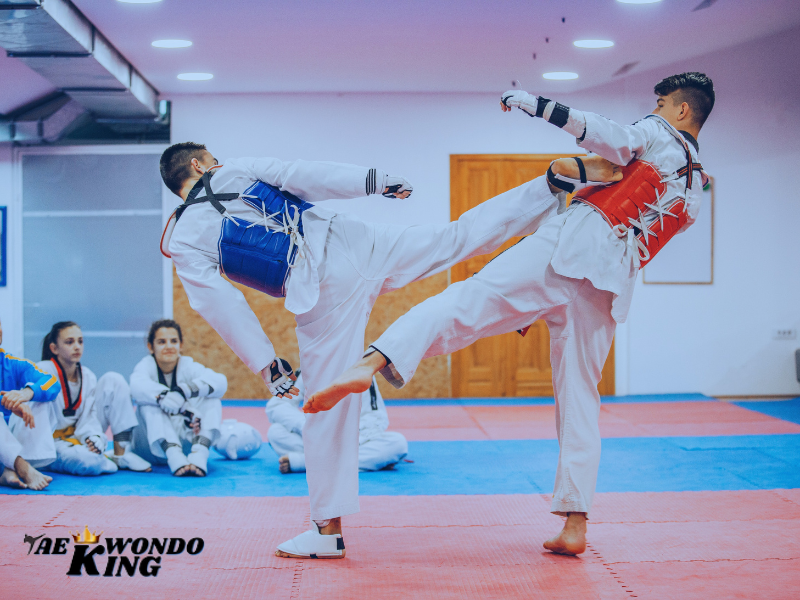
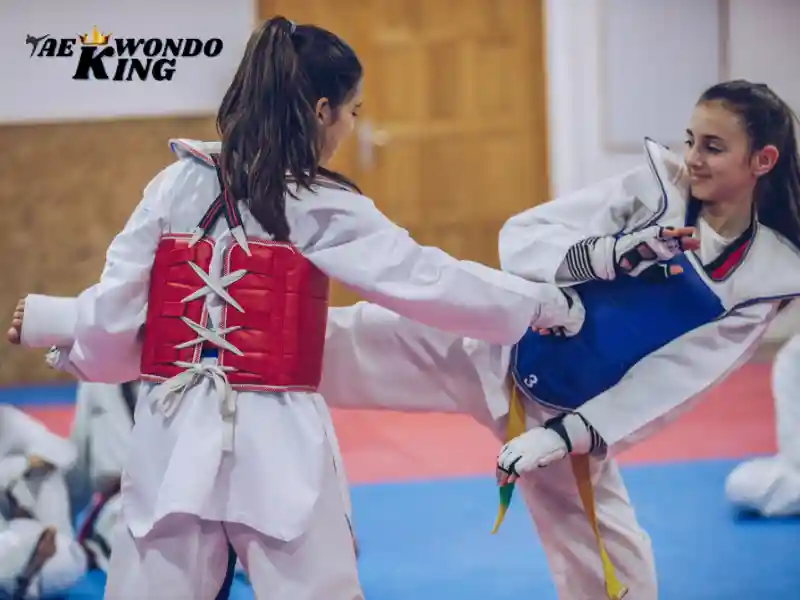
Sparring uses a set of protectors. The exact list depends on the event and category. One public rules page I found lists shin protectors, arm protectors, a chest protector, a mouthguard, a hand protector, a foot protector, and an approved uniform. Head protectors and groin guards are also common.
| Gear Item | What to Look For |
|---|---|
| Uniform | Clean, approved, in good condition |
| Chest protector | Correct size and proper fit |
| Head protector | Secure and well fitted |
| Shin and arm guards | Worn and positioned correctly |
| Hand protector | Worn as required |
| Mouthguard | In place before the match |
| Foot protector or sensor socks | Correctly worn when the system uses them |
This table is a general guide. Your event’s rules decide what’s required.
Approved Products
World Taekwondo has a guideline requiring events on its calendar to use WT-recognized competition uniforms and equipment. I saw that in a 2017 document, so check for updates. Local events may have their own rules.
If you’re unsure whether an item is approved, don’t guess. Ask the inspection desk or the chief referee.
Who Does the Inspection?
It varies. At some events, dedicated staff handle everything. At others, referees assist. I’d ask the chief referee at the briefing so you know what’s expected of you.
A Pre-Event Packing Routine
A list helps, but a routine helps more. I pack in the same order every time. That way, forgetting something feels strange.
Here’s how I break it down.
The Night Before
Lay out your uniform and check every piece. Make sure the shirt is clean, the shoes are ready, and your ID is in the bag. Charge your phone.
Check the event notice one more time. Look for changes in schedule, dress rules, or check-in times.
The Morning Of
Do a quick bag check. Water, snacks, spare shirt, towel, notebook. Leave a little early. Rushing makes everything feel worse.
I also eat something before I leave. A hungry referee at noon is a grumpy referee.
Between Matches
Breaks are short. Use them to drink water, wipe off sweat, and reset. Keep your bag organized so you can find things fast.
If your shirt is soaked, change it. It takes one minute and feels amazing.
Common Equipment Mistakes
I’ve made a few of these. I’ve watched others make the rest. All of them are avoidable with a little preparation.
| Mistake | Better Approach |
|---|---|
| Packing one shirt only | Bring a spare for long days |
| Wearing brand-new shoes | Break them in before the event |
| Forgetting ID or accreditation | Put it in your bag the night before |
| Assuming the event provides everything | Read the event notice and ask |
| Ignoring the athlete gear rules | Learn what your event requires |
Assuming Someone Else Has It
It’s easy to assume another official will bring the extra pen, the spare cards, or the answer to a question. Sometimes they do. Sometimes they assumed you would.
I try to bring my own basics. It’s less stressful and costs almost nothing.
Skipping the Briefing
Briefings often cover equipment details, inspection procedures, and local rules. Missing one can leave you guessing. If you can’t attend, ask a fellow official what was covered.
Special Situations to Pack For
Some events need a little extra thought. Heat, cold, travel, and long schedules all change what you should bring.
| Situation | Extra Item to Pack |
|---|---|
| Hot hall | Extra shirt and a bigger towel |
| Cold hall | A warm layer, if dress rules allow |
| Multi-day event | A second full uniform set |
| Travel | Printed or saved copies of your documents |
| International event | Accreditation and registration documents |
Hot and Cold Halls
Halls can swing from stuffy to chilly. Pack for both when you can. Layers help, but check dress rules so you still look uniform with your fellow officials.
Multi-Day and Travel Events
For multi-day events, I’d pack a second uniform set so you’re not washing clothes at night. When traveling, keep documents and a few essentials in your carry-on bag in case luggage goes missing.
Quick Answers About Referee Equipment
What should a Taekwondo referee carry?
At minimum, your uniform pieces, shoes, ID or accreditation, water, and a spare shirt. Your association or event may add other items.
Do referees need special equipment?
It depends on your association and event. Guides I found focus mainly on uniform and shoes. Organizers usually provide the mat and scoring systems. Ask your association about anything extra.
Do referees check athlete equipment?
Sometimes. Some events have a dedicated inspection desk, while others involve referees. Ask the chief referee at the briefing.
Who supplies the cards used in matches?
I don’t know, and it likely varies by event. Ask the chief referee or event staff before your first match.
Should I bring spare uniform pieces?
Yes. A spare shirt and socks are the easiest backups. For multi-day events, consider a second full set.
Final Thoughts
The biggest lesson I learned is that equipment isn’t exciting, but it affects everything. A prepared referee looks calmer, thinks clearer, and spends less energy on small problems. Splitting the list into personal kit, event items, and athlete checks made it easy to manage.
Be realistic. Requirements differ by association and event, and you won’t remember everything every time. Build your own Taekwondo referee equipment checklist, keep it in your phone, and adjust it after each event. Over time, packing becomes automatic.

Founder, Owner, and CEO of TaekwondoKing.
He is one of the top 100 martial artists in the World and among the top 20 referees in Bangladesh.
Ehatasamul Alom is an esteemed Kukkiwon Certified Taekwondo 3rd Dan Black Belt with over 15 years of experience in this dynamic martial art. Born in Rajshahi, Bangladesh, Ehatasamul’s journey with Taekwondo began at the tender age of seven. His passion led him to compete at national and international levels, where he has bagged numerous awards and honors. He is also a member of the Taekwondo National Referee Panel.
With a Bachelor’s degree in Sports Science from the prestigious Rajshahi University, Ehatasamul has a deep understanding of the technical and scientific aspects of martial arts and some other martial arts.
In 2022, Ehatasamul created the “TaekwondoKing.com” to share his knowledge, Free Resources, Values, and Real experiences. His articles focus on Taekwondo training techniques, competition strategies, Sport Products Reviews, and the art’s rich history and philosophy. He also writes about the importance of mental fortitude and discipline, key aspects of his teaching philosophy. He has already launched many sports, Taekwondo, and health-related Free online tools. His goal is to inspire both beginners and seasoned practitioners worldwide through insightful and engaging content.
If you need any help, contact Ehatasamul Alom at any time.