High kicks look smooth when the body is ready for them. They feel very different when tight muscles pull in every direction. I saw this play out at a small dojang in Phoenix, Arizona, on a chilly Wednesday class. Half the students skipped the warm-up because they arrived late, and within ten minutes, someone joked that their hamstrings had gone on strike. We laughed, stretched properly, and training instantly felt smoother. This guide covers taekwondo stretching for injury prevention in plain, practical terms, so you can train with more confidence and fewer setbacks. Smart stretching will not stop every injury, but it gives your body a much better chance at handling kicks, sparring, and poomsae safely.
Why Stretching Matters in Taekwondo
Stretching supports flexibility, mobility, and clean movement. Paired with strength and proper technique, it may help lower your risk of common training injuries like the ones covered in this breakdown of common taekwondo injuries.
Improve kicking range of motion
A looser hip and hamstring let your kicks travel higher without strain. Students who train hard kicks in taekwondo often notice their form breaks down first at the hip, not the ankle.
Prepare muscles for explosive movement
Warm, pliable muscles react faster during sparring. This matters most during fast exchanges, the kind you’ll read about in strategies for taekwondo sparring.
Reduce muscle stiffness
Stiff muscles slow your reaction time and raise strain risk. A few minutes of daily movement keeps stiffness from building up between classes.
Improve balance and coordination
Flexible hips and ankles support cleaner footwork. Balance carries directly into the taekwondo moves you practice every week.
Support long-term joint health
Healthy joints move through their full range without pinching or grinding. Good habits here connect closely with the official safety and medical guidance many schools already follow.
Boost confidence during training
Students who move without fear of pulling something train harder and progress faster. That confidence builds the same way it does when you work on self-confidence through taekwondo.
Dynamic vs Static Stretching
Both stretch types carry real value, but they serve different purposes. Knowing when to use each one makes your sessions safer and more productive, a lesson covered well in why flexibility matters so much in taekwondo.
What is dynamic stretching?
Dynamic stretching uses controlled, moving motions instead of held positions. It raises your heart rate and body temperature at the same time.
Benefits before training
Moving stretches prep your nervous system for speed and power. This fits the same goals covered in learning taekwondo for fitness.
Examples for taekwondo
Leg swings, hip circles, and slow controlled kicks all count. These moves also build the foundation taught in most first taekwondo techniques.
What is static stretching?
Static stretching means holding one position without bouncing. You settle into the stretch and breathe through it.
Benefits after training
Held stretches help muscles relax and slowly regain length after hard effort. Many students pair this with the fitness gains from taekwondo supercharging overall fitness.
Recovery advantages
Static work after class supports smoother recovery the next day. It plays a role in staying healthy long term, similar to the points made in getting healthy through taekwondo.
Common stretching myths
Many students think more pain means more progress. That belief causes far more harm than good, and it ties into the same mindset problems covered in how taekwondo builds self-discipline.
Table 1: Dynamic vs Static Stretching
Over the years, I’ve noticed students often confuse warming up with stretching. Once they understand the difference, everything else starts to click.
| Stretch Type | Best Time | Primary Benefit |
|---|---|---|
| Dynamic | Before training | Prepare muscles for movement |
| Static | After training | Improve flexibility and recovery |
| Mobility Drills | Before and during warm-up | Better joint movement |
| Foam Rolling | Before or after | Reduce muscle tightness |
If you want a simple tool to speed this up, this stretching and mobility set covers bands, a roller, and a strap in one package.
Best Dynamic Stretches Before Taekwondo
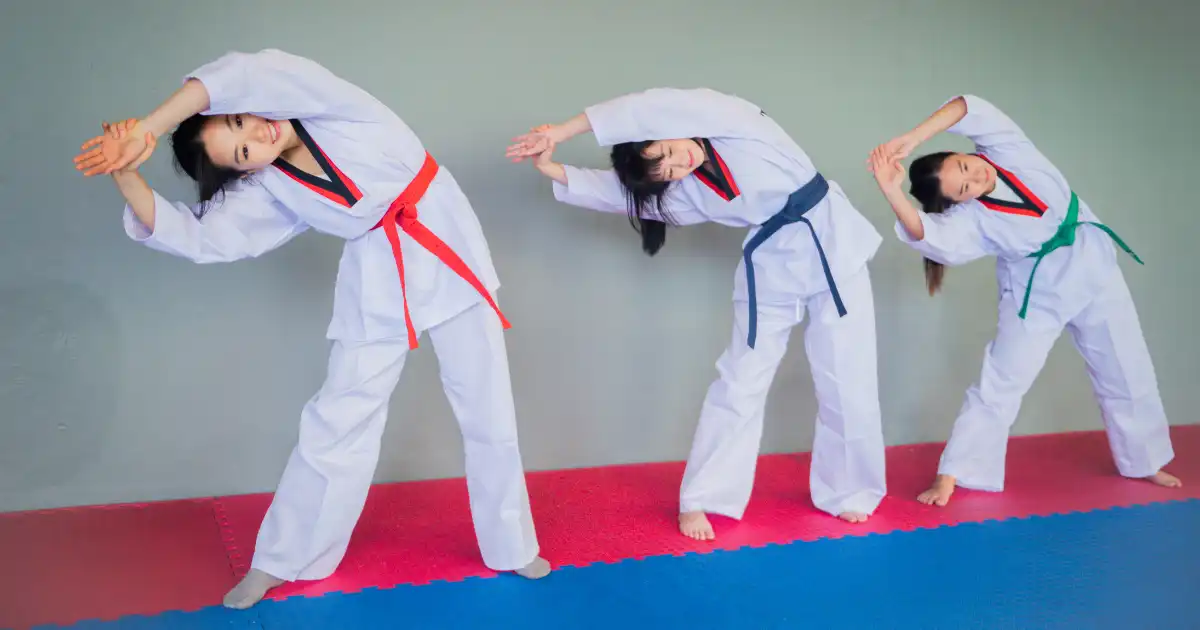
A proper warm-up gradually raises body temperature and preps your muscles for kicking, sparring, and footwork. This same principle shows up in guidance for taekwondo beginners starting their first classes.
Leg swings
Stand near a wall and swing one leg forward and back in a controlled arc. Twenty reps per side wakes up the hip flexors and hamstrings.
Walking lunges
Step forward into a lunge, then bring your back leg through into the next step. This loosens the hips while building basic leg strength.
Hip circles
Stand tall and rotate your hips in a wide circle. Ten circles each direction opens up the joint before kicking drills.
High knees
Jog in place while driving your knees up toward your chest. This raises your heart rate and loosens the hip flexors fast.
Butt kicks
Jog in place while kicking your heels back toward your glutes. Quads loosen quickly with this simple drill.
Lateral lunges
Step out to the side and bend that knee while keeping the other leg straight. Adductors and inner thighs open up well with this move.
Controlled front kicks
Throw slow, controlled front kicks without full power. This primes the same muscles used in full-speed taekwondo moves.
Controlled roundhouse kicks
Practice slow roundhouse kicks at half speed. This warms the hips and core before sparring begins.
A resistance band from this stretch and mobility kit works well for adding light tension to leg swings and lunges.
Best Static Stretches After Training
Cooling down gives your body time to relax after intense effort. Gentle stretching afterward may help improve flexibility over time, especially for adults balancing taekwondo lessons with busy schedules.
Hamstring stretch
Sit with one leg extended and reach toward your toes. Hold gently without bouncing.
Quadriceps stretch
Stand and pull one heel toward your glutes while keeping your knees close together. Hold and switch sides.
Hip flexor stretch
Kneel on one knee and shift your hips forward. This targets the muscles most kicks rely on.
Butterfly stretch
Sit with the soles of your feet together and let your knees drop toward the floor. This opens the groin and inner thighs.
Groin stretch
Sit with legs spread wide and lean gently toward one side. Switch sides after holding.
Calf stretch
Stand facing a wall with one leg back and heel pressed down. This helps prevent tightness that affects pivoting.
Glute stretch
Lie on your back, cross one ankle over the opposite knee, and pull gently toward your chest. This eases hip tightness common after sparring.
Lower back stretch
Lie on your back and pull both knees toward your chest. Hold and breathe slowly.
Table 2: Post-Training Stretching Routine
At our dojang, everyone wants to head home after class. Funny enough, the students who stay five extra minutes to stretch usually complain less the next morning.
| Exercise | Hold Time |
|---|---|
| Hamstring Stretch | 20-30 seconds |
| Hip Flexor Stretch | 20-30 seconds |
| Butterfly Stretch | 20-30 seconds |
| Quad Stretch | 20-30 seconds |
| Calf Stretch | 20-30 seconds |
| Glute Stretch | 20-30 seconds |
A stretching strap from this recommended set makes hamstring and calf stretches much easier to hold without straining your back.
Muscle Groups Every Taekwondo Athlete Should Stretch
Taekwondo relies on full-body movement, but certain muscles work especially hard during kicking and sparring. These same muscle groups come up often in discussions about taekwondo being hard on the body.
Hamstrings
These muscles drive kick height and control the leg during extension. Tight hamstrings limit both power and safety.
Hip flexors
Hip flexors lift the knee during almost every kick. Tightness here shows up as a shortened, stiff-looking kick.
Quadriceps
Quads absorb impact during landings and pivots. Stretching them regularly supports knee health.
Glutes
Strong, flexible glutes stabilize the hip during kicks and stances. Weakness here often shows up as wobbly balance.
Adductors
Inner thigh muscles control lateral movement and full split range. These muscles get pulled often during side kicks.
Calves
Calves absorb shock with every step and pivot. Tight calves make quick footwork feel clunky.
Ankles
Ankle mobility affects balance and kick landing. Loose ankles reduce sprain risk during fast direction changes.
Lower back
The lower back stabilizes your core through kicks and turns. Stiffness here often causes compensation injuries elsewhere.
Shoulders
Shoulders matter more than people expect, especially during blocking and falling. Loose shoulders support safer breakfalls and blocks.
Stretching Mistakes That Increase Injury Risk
Stretching should help your body, not force it beyond its limits. Many injuries happen when flexibility training becomes too aggressive, a pattern also covered in the strengths and weaknesses of taekwondo training.
Stretching cold muscles
Never stretch deeply before warming up. Cold tissue tears more easily than warm tissue.
Bouncing during static stretches
Bouncing, or ballistic stretching, can overstretch muscle fibers. Hold stretches steady instead.
Holding painful positions
Discomfort is normal, but sharp pain is not. Back off the moment you feel pain instead of pushing through it.
Skipping breathing
Holding your breath tightens muscles instead of relaxing them. Slow breathing helps your body ease into each stretch.
Chasing extreme flexibility too quickly
Rushing toward a full split before your body is ready invites strain. Gradual progress protects your joints and tendons.
Ignoring one side of the body
Many students favor their dominant kicking leg. Stretch both sides evenly to avoid long-term imbalance.
Poor posture while stretching
Rounded shoulders or a slouched spine reduce a stretch’s effectiveness. Keep your posture tall and controlled.
Flexibility Without Stability Can Increase Risk
Flexible muscles still need strength. Stability helps you control the range of motion you’ve worked hard to build, something well demonstrated by top athletes discussed in strengths and weaknesses of taekwondo.
Hip strengthening
Strong hips support high kicks without wobbling. Bodyweight hip exercises pair well with your stretching routine.
Core stability
A strong core keeps your spine safe during kicks and turns. Planks and rotational drills build this foundation.
Single-leg balance
Balance drills train the stabilizer muscles stretching alone can’t reach. Try standing on one leg for thirty seconds daily.
Glute activation
Activating the glutes before kicking drills improves control. Simple bridges work well as a warm-up addition.
Controlled kicking drills
Slow, controlled kicks build strength through your full range of motion. This bridges flexibility and usable power.
Resistance band exercises
Bands add light resistance to hip and leg movements. This mobility and resistance band set works well for home practice between classes.
Table 3: Flexibility Exercises and Their Benefits
One student proudly reached a full split but struggled to hold a side kick. That moment reminded our whole class that flexibility and control are teammates, not competitors.
| Exercise | Main Benefit |
|---|---|
| Leg Swings | Dynamic mobility |
| Hip Flexor Stretch | Better kicking posture |
| Hamstring Stretch | Improved kick height |
| Butterfly Stretch | Groin flexibility |
| Calf Stretch | Better pivoting |
| Glute Stretch | Hip mobility |
Weekly Stretching Plan for Taekwondo Students
A simple weekly routine is often more effective than one long stretching session every few weeks. This mirrors the steady approach recommended for taekwondo adults building long-term habits.
Beginners
Stretch three times weekly for ten minutes, focusing on hamstrings, hips, and calves. Keep sessions gentle and short.
Intermediate students
Add daily dynamic warm-ups plus static cooldowns after each class. This pace supports the goals covered in reasons to keep practicing taekwondo.
Advanced athletes
Advanced students often add mobility drills on rest days too. Deeper split work and controlled kicking drills fit well here.
Tournament weeks
Keep stretching light and dynamic close to competition day. Save deep static stretching for after matches are done.
Recovery days
Use gentle static stretching and foam rolling on recovery days. This keeps blood flowing without adding fatigue.
Rest day mobility
Light mobility work on full rest days prevents stiffness from building up. A short ten-minute routine is plenty.
Recovery Habits That Support Injury Prevention
Stretching works best when paired with good recovery habits that help your body adapt to training. Many of these same habits support the broader health benefits described in how learning taekwondo can get you healthy.
Sleep
Muscles repair and rebuild mostly during sleep. Aim for seven to nine hours each night.
Hydration
Dehydrated muscles feel tighter and cramp more easily. Drink water steadily throughout the day, not just before class.
Nutrition
Protein supports muscle repair, while carbohydrates restock energy stores. Balanced meals help your body handle training stress.
Foam rolling
Rolling out tight spots increases blood flow to sore muscles. A basic foam roller like the one in this mobility kit works well for calves, quads, and the upper back.
Massage
Regular massage helps release tension that stretching alone may miss. Even a self-massage tool can help between sessions.
Active recovery
Light walking or swimming on rest days keeps blood flowing without added strain. This supports faster recovery than sitting still.
Load management
Avoid stacking hard training days back to back. Spread intense sessions out to give your body time to adapt.
Table 4: Healthy Stretching Habits vs Common Mistakes
I’ve seen students rush into full splits before they even feel warm. It rarely ends well, and it usually ends with someone making a very dramatic face.
| Healthy Habit | Common Mistake |
|---|---|
| Dynamic warm-up | Stretching cold muscles |
| Gentle progression | Forcing flexibility |
| Consistent routine | Stretching once a week |
| Controlled breathing | Holding your breath |
| Balanced training | Ignoring strength work |
USA Expert Advice on Stretching for Injury Prevention
“Flexibility is valuable, but control is what protects your body during movement.” — Dr. Kelly Starrett, DPT, Physical Therapist, Author of Becoming a Supple Leopard
Warm up before stretching deeply
Save your deepest stretches for after a proper warm-up. Cold, deep stretching offers little benefit and real risk.
Build mobility gradually
Progress week by week instead of chasing instant flexibility. Patience protects joints far better than intensity does.
Pair flexibility with strength
Flexibility without strength leaves joints unprotected. Combine both for lasting results, a balance also covered in how taekwondo builds self-discipline.
Respect recovery days
Recovery days are not wasted time. They let your muscles rebuild stronger than before.
Don’t force painful stretches
Pain during a stretch is a stop signal, not a challenge to push through. Ease off and try again another day.
Real-life context: At many taekwondo schools across California, Florida, and Colorado, instructors start Monday evening classes with dynamic mobility instead of long static stretching. One coach laughed, “Your hips wake up slower than you do.” Everyone smiled, and the kicks looked smoother by the end of class.
When Stretching Isn’t Enough
Sometimes tightness isn’t just tightness. Persistent pain or reduced function may require assessment by a qualified healthcare professional, a boundary worth respecting even for experienced taekwondo martial arts experts.
Ongoing muscle pain
Pain that lingers for days after stretching is not normal. Reduce training load and monitor closely.
Sharp joint pain
Sudden, sharp pain in a joint needs attention right away. Stop training until it’s checked out.
Swelling
Visible swelling after a stretch or kick often points to tissue damage. Ice and rest come first, followed by evaluation.
Recurrent injuries
The same injury returning again and again signals an unresolved problem. A professional assessment can catch what daily stretching misses.
Loss of strength
Sudden weakness in a muscle group is a warning sign, not a flexibility issue. Seek medical guidance promptly.
When to seek medical evaluation
See a doctor or physical therapist if pain, swelling, or weakness lasts more than a few days. Early evaluation prevents small issues from becoming lasting ones.
Frequently Asked Questions
Does stretching prevent taekwondo injuries?
Stretching lowers injury risk when combined with strength training and proper technique. It is not a complete solution on its own.
Should I stretch before or after class?
Use dynamic stretching before class and static stretching after. This order matches how your muscles respond best to each type.
What muscles should taekwondo athletes stretch most?
Hamstrings, hip flexors, and calves need the most attention. These muscles carry the heaviest load during kicks and pivots.
How long should I hold a stretch?
Hold static stretches for twenty to thirty seconds. Repeat two or three times per muscle group.
Can stretching improve kick height?
Yes, consistent stretching gradually increases kick height over weeks and months. Results build slowly, not overnight.
Is dynamic stretching better than static stretching?
Neither is better overall. Dynamic stretching fits best before training, while static stretching fits best afterward.
Can I stretch every day?
Yes, daily gentle stretching is safe and often beneficial. Avoid pushing to painful extremes every single day.
Does stretching reduce soreness?
Stretching may ease mild stiffness, though it won’t eliminate soreness completely. Recovery habits like sleep and hydration help more.
Should beginners do the splits?
Beginners should build flexibility gradually rather than forcing a full split early. Rushing this goal raises injury risk significantly.
When should I stop stretching because of pain?
Stop immediately if you feel sharp, shooting, or worsening pain. Mild tension is normal, but real pain is not.
Final Recommendation
After years on the mats and countless conversations with students dealing with tight hips and sore hamstrings, my advice stays simple. Treat taekwondo stretching for injury prevention as a daily habit, not an occasional afterthought squeezed in before a big test or tournament. Pair dynamic stretching before class with static stretching after, and never skip strength work that supports the flexibility you build. Respect pain as a stop signal, not a challenge, and give your body real recovery time between hard sessions. Do this consistently, and you’ll likely kick higher, move safer, and enjoy far fewer setbacks on your taekwondo journey.

Founder, Owner, and CEO of TaekwondoKing.
He is one of the top 100 martial artists in the World and among the top 20 referees in Bangladesh.
Ehatasamul Alom is an esteemed Kukkiwon Certified Taekwondo 3rd Dan Black Belt with over 15 years of experience in this dynamic martial art. Born in Rajshahi, Bangladesh, Ehatasamul’s journey with Taekwondo began at the tender age of seven. His passion led him to compete at national and international levels, where he has bagged numerous awards and honors. He is also a member of the Taekwondo National Referee Panel.
With a Bachelor’s degree in Sports Science from the prestigious Rajshahi University, Ehatasamul has a deep understanding of the technical and scientific aspects of martial arts and some other martial arts.
In 2022, Ehatasamul created the “TaekwondoKing.com” to share his knowledge, Free Resources, Values, and Real experiences. His articles focus on Taekwondo training techniques, competition strategies, Sport Products Reviews, and the art’s rich history and philosophy. He also writes about the importance of mental fortitude and discipline, key aspects of his teaching philosophy. He has already launched many sports, Taekwondo, and health-related Free online tools. His goal is to inspire both beginners and seasoned practitioners worldwide through insightful and engaging content.
If you need any help, contact Ehatasamul Alom at any time.