Someone asks, “So what is taekwondo?” and your mind goes blank. I have been there more times than I want to admit. I knew the kicks, the forms, and the rules. Still, my first answer always came out messy. That is when I started thinking seriously about how to describe taekwondo in a way that makes sense.
In this guide, I share the simple words that worked for me. You will learn how to describe taekwondo in one line, how to explain it to kids, parents, and friends, and which mistakes to avoid. I also cover what a real class feels like, so your description sounds honest and not like a brochure.
Why How to Describe Taekwondo Is Harder Than It Sounds
Taekwondo looks simple from the outside. People see a white uniform and a few high kicks. Then they think they understand it.
The truth is bigger. Taekwondo is a sport, a self-defense system, a fitness habit, and a way to build discipline. Try to fit all of that into one answer and it gets tangled fast.
The First Time Someone Asked Me
A neighbor once asked what I do on weekends. I said, “It is a Korean martial art with kicks and forms and sparring and belts and…” I kept going. She nodded politely and changed the subject.
That taught me something. People do not want a full lecture. They want a small picture they can hold in their head. Good descriptions start small.
Why Short Answers Work Better
A short answer invites questions. Questions give you room to explain more. When I dump everything at once, people feel lost and stop listening.
I now treat my first answer like a doorway. It only needs to open the door. The rest of the conversation can walk through it.
How to Describe Taekwondo in One Sentence
After a lot of trial and error, I learned that the best one-line answer depends on who is asking. The core idea stays the same. Only the words change.
Here is how I match my answer to the listener.
| Who Is Asking | What I Say |
|---|---|
| A young child | “It is a kicking sport where you learn to be brave and listen well.” |
| A parent | “It is a Korean martial art that builds fitness, focus, and respect.” |
| A friend | “Think kicks, forms, and sparring, with belts for ranking.” |
| A coworker | “It is a martial art and Olympic sport known for fast, high kicks.” |
| A curious beginner | “It trains your body and mind through kicks, patterns, and controlled sparring.” |
Notice that none of these use big words. Each one paints a clear picture in under ten seconds. That is the goal when you think about how to describe taekwondo in real life.
My Go-To Version
If I had to pick just one, I would say this: “Taekwondo is a Korean martial art that uses mostly kicks. People train in it for fitness, self-defense, and sport.”
It is short. It is true. And it works almost every time.
What the Word Taekwondo Actually Means
Starting with the name helps a lot. It gives people something easy to remember. It also shows that taekwondo is more than punching and kicking.
Breaking the Word Into Three Parts
The word comes from Korean, and it has three parts. I explain it like a tiny vocabulary lesson.
| Part | Common Meaning |
|---|---|
| Tae | Foot or kick |
| Kwon | Fist or hand |
| Do | The way, or the path |
Put together, it is often explained as “the way of the foot and the fist.” I like this version because it hints that taekwondo is a path, not just a set of moves.
A Quick Note on Translations
Translations can differ a little between teachers. I am not a language expert, so I stick to this common explanation. If you want to be sure, ask your own instructor how they teach it.
Why the “Do” Part Matters
Many people skip the last syllable. But “do” is where the discipline lives. It is why a good class includes bowing, respect, and patience, not only drills.
When I describe taekwondo to someone new, I mention this part early. It tells them what kind of experience to expect.
How to Describe Taekwondo to Different People
The same description will not work for everyone. A six-year-old cares about fun. A parent cares about safety. A friend cares about whether it looks cool.
Here is how I adjust my words.
Describing Taekwondo to Kids
Kids love action words. I use words like kick, jump, and shout. I also mention belts, because kids love goals they can see.
And I might say, “You learn big kicks, and each time you work hard, you can earn a new belt.” That is honest and exciting. I never promise they will become action heroes.
Describing Taekwondo to Worried Parents
Parents usually want to know two things. Is it safe? And will it help my child?
I answer honestly. Taekwondo is a contact sport, so bumps and bruises can happen. Good schools use protective gear and teach control first.
Then I share what I have noticed in many kids. They listen better, stand taller, and try again after a missed kick. I do not promise results. Every child is different.
Describing Taekwondo to Adults Who Feel Too Old
Adults often tell me, “I am not flexible enough.” I laugh, because I said the same thing once.
I describe taekwondo as something you can start slowly. Flexibility builds over time. A good instructor adjusts to your level. You set your own pace and grow from there.
Describing Taekwondo to Someone Who Only Knows the Olympics
Many people know taekwondo from TV. They picture fast sparring, chest protectors, and head guards. That is the sport side.
I tell them, “That is the competition part. Training also includes forms, basics, and self-discipline.” This fills in the picture without making them feel wrong.
What a Taekwondo Class Really Feels Like
One of the best ways to describe taekwondo is to describe a class. People love details. They want to know what happens when you walk in the door.
Classes differ between schools, so treat this as a general picture.
The Warm-Up and Stretching
Most classes start with a warm-up. You might jog, jump, and stretch.
My legs were so sore after my first few classes that stairs felt like a challenge. I wish someone had told me that was normal. Now I tell every new student.
Basics and Kicking Drills
Next come basics. You practice stances, blocks, punches, and kicks. You repeat them again and again.
This can feel boring at first. I thought so too. But repetition is what makes your kicks clean later. Boring drills build exciting skills.
Poomsae Practice
Then you may practice poomsae, which are set patterns of moves. Think of it as a dance with a purpose. Each move stands for blocking or striking an imaginary opponent.
I used to rush through my forms. A teacher told me to slow down and focus on balance. That small change made my kicks better too.
Sparring and Partner Work
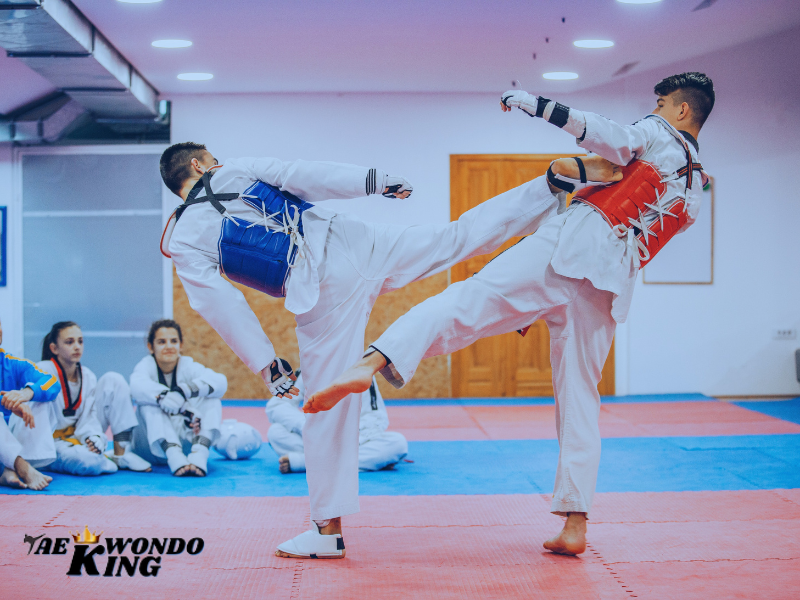
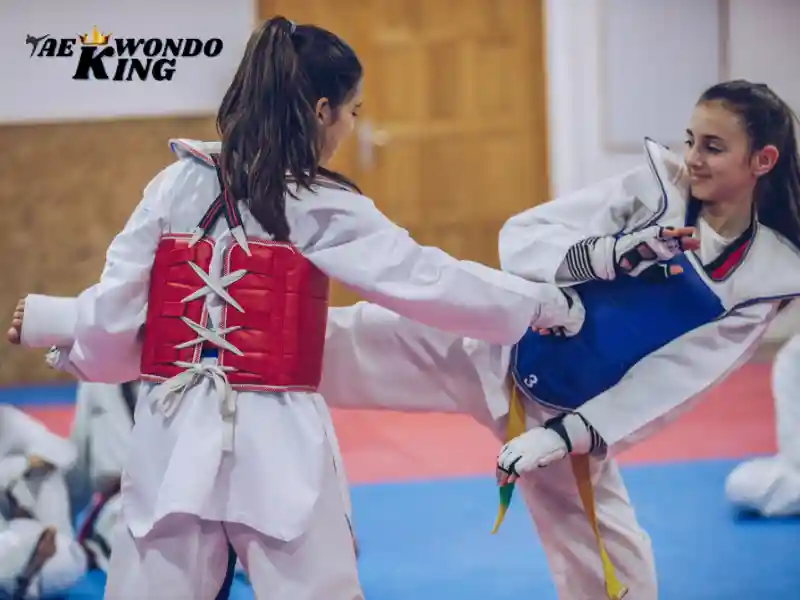
Sparring means practicing with a partner while wearing protective gear. Beginners usually start light and controlled.
My first sparring session was a mess. I kicked too hard and too early, then ran out of breath. I learned that timing matters more than power.
The Cool-Down and Bow
Classes usually end with stretching and a final bow. It feels calm after all that effort.
I like to share this part with people. It shows that taekwondo is about respect as much as energy.
The Main Parts of Taekwondo in Plain Words
When people ask about taekwondo, they often mean different things. Here is how I break it down, so each part is easy to explain.
| Part | Simple Description | Why It Matters |
|---|---|---|
| Kicking techniques | Kicks at many heights and angles | Builds leg strength and balance |
| Poomsae (forms) | Set patterns of blocks, strikes, and stances | Teaches focus and clean technique |
| Kyorugi (sparring) | Controlled fighting with gear and rules | Builds timing and courage |
| Hosinsul (self-defense) | Responses to grabs and attacks | Builds practical confidence |
| Kyukpa (breaking) | Breaking boards with a strike | Tests accuracy and commitment |
How I Describe Kicks
Kicks are the heart of taekwondo. I say, “Taekwondo uses the legs the way other arts use the hands.” Legs are longer and stronger than arms, so kicks can reach farther.
Common kicks include the front kick (ap chagi), roundhouse kick (dollyo chagi), side kick (yeop chagi), and back kick (dwi chagi). You do not need to memorize the names to describe taekwondo well. A simple picture works fine.
How I Describe Poomsae
I tell people that poomsae are like a story told through movement. You practice alone, but you imagine opponents around you.
In competition, judges look at things like accuracy, balance, and power. In class, I think of forms as a way to slow down and check my basics.
How I Describe Kyorugi
Kyorugi is the sparring side. Two people, protective gear, and clear rules. In most competition rules, kicks to the body and head can score points. Punches can score on the body, but punches to the face are not allowed.
I tell beginners it is like a fast game of chess. You think, test, and react.
How I Describe Self-Defense and Breaking
Self-defense, called hosinsul, covers practical responses to grabs and attacks. Breaking, called kyukpa, means breaking boards with a strike.
I describe breaking as a test of focus. People think it is all about force. To me, it is mostly about accuracy and commitment. Not every school teaches these parts the same way, so I always add that.
How to Describe the Uniform and Gear
Gear is the first thing people notice. A few simple words go a long way here.
The Dobok and the Belt
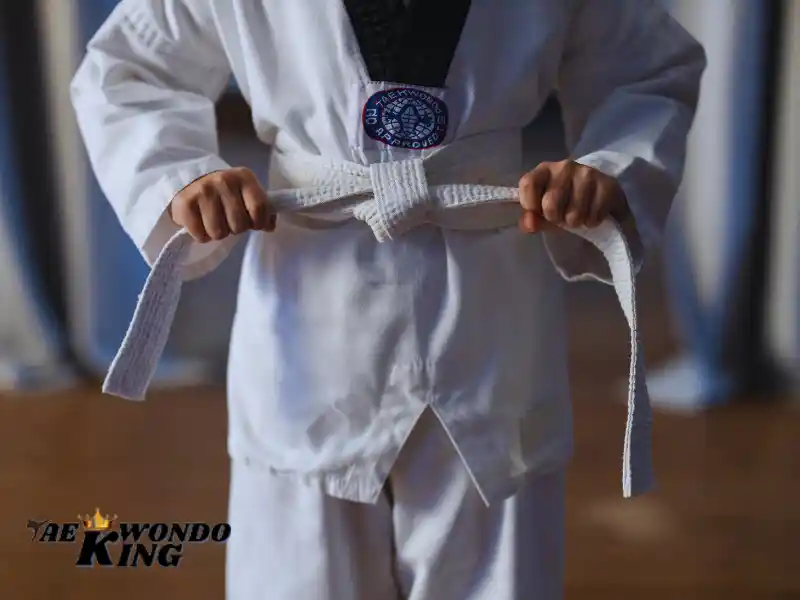
The uniform is called a dobok. It is loose and light, so you can kick freely. The belt holds it closed and shows your rank.
It looks simple. But I learned fast that a loose belt at the wrong moment is embarrassing.
Sparring Gear
For sparring, students usually wear a chest protector, head guard, and mouth guard. Many also wear groin protection and padded gear on forearms and shins.
The exact gear depends on the school and the event. Some competitions use electronic scoring equipment. If you plan to compete, check the rules for your specific event.
How to Describe the Belt System Without Confusing People
Belts are usually the first thing people ask about. They want to know the colors and how long it takes. I answer carefully, because every school is a little different.
The Simple Version
Belts show your level. You start as a beginner, move through colored belts, and may later reach black belt.
Colored belt levels are called gup. Black belt levels are called dan. Many schools count gup levels down and dan levels up. Colors and numbers vary, so I never say “every school does it this way.”
| Level | Simple Meaning |
|---|---|
| White belt | Beginner, just getting started |
| Colored belts | Building skills step by step |
| Higher colored belts | Advanced learning, close to black belt |
| First-degree black belt | Strong basics, and the real work begins |
| Higher dan levels | Years of deeper study and teaching |
What Black Belt Really Means
Many people think black belt means master. In my experience, it means you now know the basics well enough to start learning properly.
A senior student once told me that black belt is where the real work begins. I did not believe it back then. I do now.
How Long Does It Take?
People always ask how long it takes to earn a black belt. The honest answer is that it depends on the school, how often you train, and the person.
I avoid giving a number. If someone promises a very quick black belt, I get cautious. Progress in taekwondo is usually steady, not rushed.
Myths I Hear When People Talk About Taekwondo
Misunderstandings are everywhere. Clearing them up is part of learning how to describe taekwondo honestly.
| Myth | Reality |
|---|---|
| Taekwondo is only kicking | Stances, blocks, and hand strikes are part of training |
| It is just a sport | Many schools teach self-defense and values too |
| Only flexible people can do it | Flexibility grows with practice |
| It is only for kids | Adults train at every level |
| Black belt means unbeatable | It means committed practice, not invincibility |
The “Only Kicking” Myth
Kicks get the spotlight. But I spent a lot of time on stances, blocks, and basic movement. Without a solid base, kicks fall apart.
Is Taekwondo Good for Self-Defense?
This one needs honesty. Taekwondo can teach distance, timing, and confidence. But sport training and real-life self-defense are not the same thing.
Sparring has rules. Real danger does not. I say taekwondo builds useful skills, but no martial art makes you invincible. Avoiding danger is always the best defense.
Mistakes I Made While Learning How to Describe Taekwondo
I made plenty of mistakes when explaining taekwondo. Some were funny. Some made people lose interest fast.
| Mistake | Better Approach |
|---|---|
| Using Korean terms too early | Give the plain English first |
| Talking too long | Start with one sentence |
| Saying what it is not | Describe what makes it unique |
| Promising quick results | Say that progress takes steady practice |
| Only mentioning sparring | Include forms, basics, and values |
The Jargon Trap
Early on, I used Korean terms in my first sentence. Words like poomsae and kyorugi felt natural to me. To everyone else, they sounded like a foreign language, because they were.
Now I give the plain English first. Then I add the Korean word if they seem curious.
The Comparison Trap
I used to explain taekwondo by saying what it was not. “It is not like karate,” I would say. That made me sound defensive.
Now I say what it is. Taekwondo focuses on kicks, especially fast and high ones. That is enough.
How Taekwondo Compares With Other Martial Arts
People often compare martial arts. That is fine if you stay fair. I keep it simple and avoid claiming one art is better.
Karate is known for strikes and has Japanese roots. Taekwondo puts more focus on kicks, especially high and fast ones. Judo focuses on throws and grappling. Boxing is about punches. Each art has its own strengths.
Different Styles Inside Taekwondo
Even inside taekwondo, there are different organizations and styles. World Taekwondo, often shortened to WT, is linked with Olympic-style sparring. ITF-style groups have their own patterns and approach.
Rules and forms can differ between them. If someone asks, I say it depends on the school and organization. I do not pretend to know every detail of every style.
How to Describe the Benefits Without Overselling
Everyone wants to know what taekwondo does for you. I try to answer without turning into a salesperson. Honest answers build more trust.
Fitness and Flexibility
Taekwondo is a full-body workout. Leg strength, balance, and flexibility tend to improve with regular practice.
I say “tend to” on purpose. Results depend on effort and consistency. Someone who trains once in a while will see different results than someone who trains often.
Focus and Confidence
Many students say they feel more focused and confident over time. I have seen this happen in class.
Still, I describe it as common, not guaranteed. Every person grows at their own speed.
What I Would Not Claim
I would not claim that taekwondo cures shyness, guarantees good grades, or keeps you safe from every danger. A martial art is a tool, not magic.
Injuries can also happen, like in any contact sport. Warming up, using proper gear, and training under a good instructor help lower the risk. I always mention that to new families.
The Values Behind Taekwondo
Parents often ask about character, not only kicks. So I always mention the values side. Many schools teach five tenets:
- Courtesy
- Integrity
- Perseverance
- Self-control
- Indomitable spirit
Wording can vary a bit between schools, but the idea stays the same. Taekwondo aims to shape the person, not just the fighter.
How Values Show Up in Class
You see these values in small moments. Students bow when they enter. They wait for their turn. They help partners after sparring.
I have seen impatient students slowly improve just by repeating a form and accepting corrections. Nobody gives a big speech about it. It happens through practice.
How to Describe Taekwondo in an Essay or on a Resume
Some people search for how to describe taekwondo because they need it for a college essay, a personal statement, or a resume. The same rule applies there. Stay specific.
Focus on Skills, Not Just Titles
Writing “I do taekwondo” says very little. Instead, describe what the training taught you. Discipline, goal setting, teamwork, and handling pressure are common examples.
If you hold a rank, mention it plainly. If you competed, say at what level. Keep it truthful. Readers notice exaggeration.
Use One Real Moment
A single honest story beats a list of adjectives. Maybe it was a failed belt test, a tough sparring round, or learning a new form. Describe what happened and what you learned from it.
Here is a sample line you can adapt: “Taekwondo taught me to keep going after I fail. I missed a belt test once, trained harder, and passed the next time.” Replace it with your own true story.
Words That Work Better
Short, clear verbs work best. Words like trained, practiced, competed, taught, and improved sound honest. Big claims like “master of combat” sound false and can hurt you.
Frequently Asked Questions About How to Describe Taekwondo
How do you describe taekwondo in a few words?
Say it is a Korean martial art focused on kicks, discipline, and self-improvement. That covers the core idea in one breath.
What is taekwondo best described as?
Taekwondo is best described as both a martial art and a sport. It includes kicking techniques, forms, sparring, and a strong focus on respect and self-control.
How do you describe a taekwondo class to a beginner?
Tell them a class usually has a warm-up, basics, forms, partner drills, and a cool-down. Add that beginners start slowly and instructors adjust to each level.
Is taekwondo mostly kicking?
Kicks are the main feature, and they make taekwondo stand out. But training also includes stances, blocks, hand strikes, and forms.
How do you describe taekwondo to someone who has never seen it?
Start with a simple picture: a Korean martial art with fast kicks, set patterns, and controlled sparring. Then let their questions guide you.
Final Thoughts
The biggest lesson I learned is simple. You do not need perfect words to describe taekwondo. You need clear ones. Start short, use plain language, and add detail only when people ask for it.
My honest opinion is that the best description is also an honest one. Do not oversell the benefits, and do not hide the hard parts. If you remember that, you will never feel lost when someone asks about taekwondo again. Go slow, stay real, and enjoy the conversation.

Founder, Owner, and CEO of TaekwondoKing.
He is one of the top 100 martial artists in the World and among the top 20 referees in Bangladesh.
Ehatasamul Alom is an esteemed Kukkiwon Certified Taekwondo 3rd Dan Black Belt with over 15 years of experience in this dynamic martial art. Born in Rajshahi, Bangladesh, Ehatasamul’s journey with Taekwondo began at the tender age of seven. His passion led him to compete at national and international levels, where he has bagged numerous awards and honors. He is also a member of the Taekwondo National Referee Panel.
With a Bachelor’s degree in Sports Science from the prestigious Rajshahi University, Ehatasamul has a deep understanding of the technical and scientific aspects of martial arts and some other martial arts.
In 2022, Ehatasamul created the “TaekwondoKing.com” to share his knowledge, Free Resources, Values, and Real experiences. His articles focus on Taekwondo training techniques, competition strategies, Sport Products Reviews, and the art’s rich history and philosophy. He also writes about the importance of mental fortitude and discipline, key aspects of his teaching philosophy. He has already launched many sports, Taekwondo, and health-related Free online tools. His goal is to inspire both beginners and seasoned practitioners worldwide through insightful and engaging content.
If you need any help, contact Ehatasamul Alom at any time.