My first taekwondo tournament felt like walking into a busy airport. Rings everywhere. Buzzers going off. Names called over a speaker I could barely hear. I had trained for months, but I had no clue how the day would actually run.
If you have ever typed “how do taekwondo tournaments work” into a search bar, this guide is for you. I’ll walk you through registration, weigh-ins, brackets, scoring, penalties, and poomsae. I’ll also share the mistakes that cost me energy and calm, so you can skip them. One quick note first: rules change often, so always check the rulebook for your own event.
How Do Taekwondo Tournaments Work From Start to Finish?
Most tournaments follow the same basic path. You sign up, weigh in, get placed in a bracket, compete, and then find out your result. The details change from event to event, but the flow stays close to this.
| Stage | What Happens |
|---|---|
| Registration | You enter online, pick your events, and pay a fee |
| Weigh-in | Officials check your weight (sparring only) |
| Bracket draw | The event sets who meets whom |
| Ring assignment | Your ring and match order get posted |
| Matches | You compete and move forward or go out |
| Medals | Winners get medals and a short ceremony |
Once I saw the whole path, the day stopped feeling random. Every step had a reason.
What Happens Before You Step on the Mat
The work starts weeks earlier. You usually register through your school or a tournament website. You choose your events and your division. Then you pay the entry fee.
Deadlines matter. Many events close entries early, and late sign-ups may cost more or get refused. I have seen students lose a spot just because they waited a day too long.
Read the event information sheet too. It often lists the rules version, weigh-in times, and gear needs. That one page answers about half of the questions people ask on the day.
Single Elimination: Why One Bad Match Can End Your Day
Many tournaments use a single elimination bracket. You win, you move on. You lose, you are done. Small events with few entries may run it differently, so check how yours works.
At bigger events, top-ranked athletes are often seeded. Seeding keeps the strongest fighters from meeting in the first round. At many events, the two semifinal losers also share bronze medals, but this depends on the event.
This part surprised me. You can train for months and have only a few minutes on the mat. That is why calm matters as much as skill.
Sparring and Poomsae: The Two Events You Will See Most
Most tournaments offer two main events. Sparring is called kyorugi. Forms are called poomsae. Some people enter one. Some enter both.
| Comparison Point | Sparring (Kyorugi) | Poomsae (Forms) |
|---|---|---|
| What you do | Fight one opponent | Perform a set pattern of moves |
| Who decides | Scoring system and referees | A panel of judges |
| Contact | Yes, with full gear | None |
| Good fit for | Fast, tactical people | Detail-minded people |
Neither event is “better.” They test different skills, and I respect both.
Kyorugi: Sparring With Rules and Protective Gear
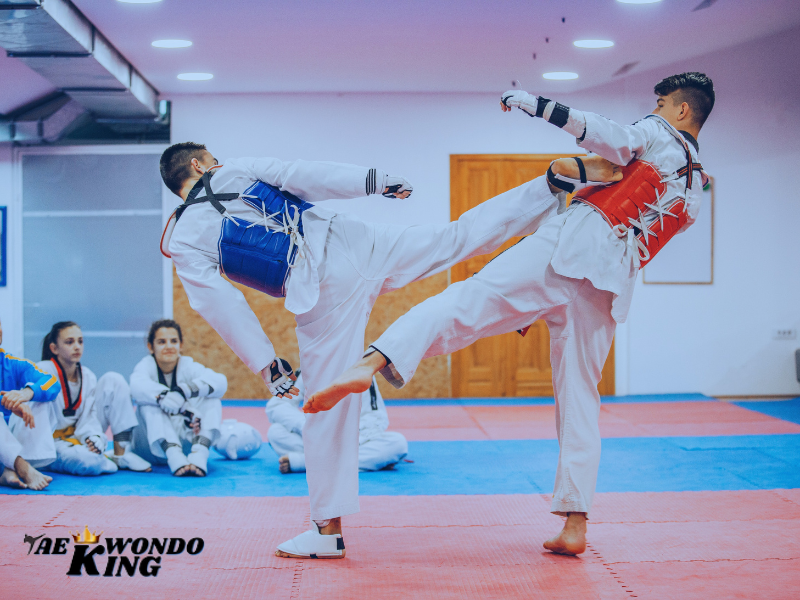
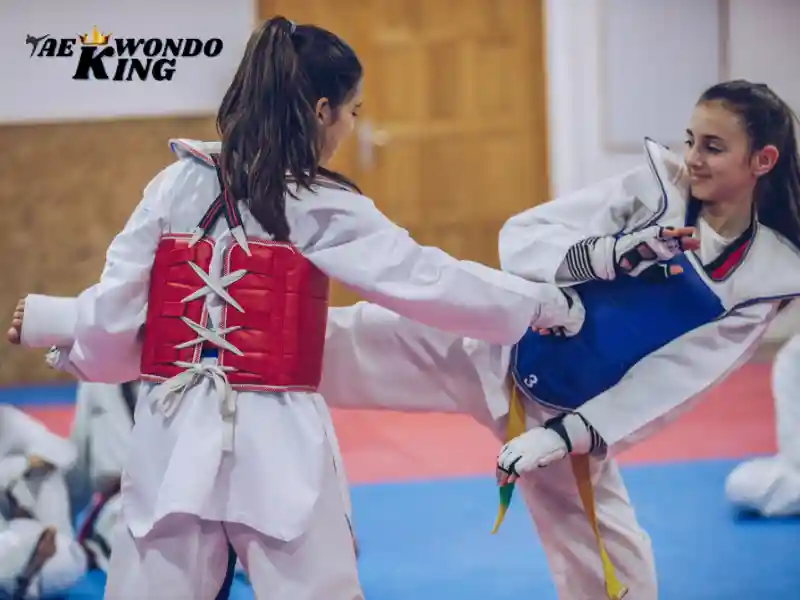
Kyorugi is the part most people picture. Two athletes face off in protective gear. They score points with kicks and body punches.
It looks wild from the stands. From the inside, it feels more like chess at high speed. You read your opponent, set a trap, and then strike.
Poomsae: Forms Judged on Accuracy and Presentation
Poomsae is a fixed pattern of blocks, kicks, and strikes. You perform it alone. Judges watch your technique, balance, and energy.
Some events also include pairs, team forms, and freestyle poomsae. Freestyle uses music and flashier moves. Which versions are offered depends on the event.
Other Events You Might Run Into
Some tournaments add breaking, team sparring, or demonstration events. They are less common. I would not worry about them on your first day.
How Taekwondo Tournaments Group Competitors
Nobody wants a small beginner facing a large black belt. So tournaments sort people into groups. This keeps matches fair and safer.
| Grouping | What It Means |
|---|---|
| Age | Kids, cadets, juniors, and seniors compete apart |
| Belt level | Color belts and black belts often have separate divisions |
| Weight | Fighters meet others in a similar weight range |
| Gender | Men and women compete in separate brackets |
Exact age cutoffs and belt rules differ by event. The info sheet will tell you where you fit.
Weight Classes Are Not the Same Everywhere
Weight classes confused me at first. At the Olympics, there are four weight divisions per gender. At other World Taekwondo events, there are more. I understand it as eight, but I would check the current numbers.
Local events can use their own ranges. So never assume your class from a past event. Always check the new list.
Belt Rank and Experience Matter More Than You Think
A first-timer with a color belt usually enters a color belt division. That is good news. You will likely face people at your level.
Still, experience varies a lot inside one division. Someone with three tournaments behind them has a real edge. Do not take it personally. Just learn from it.
Weigh-In Day: The Part Nobody Warns You About
Weigh-in only applies to sparring. You step on a scale, and officials check that you fit your division. Miss your class, and you may not be allowed to compete.
At bigger events, weigh-in can happen the day before. Some events may also run a quick random check on match day. So do not treat the scale as a one-time thing.
What Actually Happens at the Scale
You show your ID and step on. Officials record your weight and confirm your division. It takes a minute, but the line can take much longer.
Event scales can read a little different from your home scale. That small gap has made plenty of athletes nervous. Plan for it.
Why Cutting Weight Is Usually a Bad Idea
Some athletes try to drop weight fast to fit a lower class. I think this is risky, especially for kids and teens. It can leave you tired, dizzy, and slow on the mat.
I’m not a doctor, so talk with your coach and a medical professional about your goals. In my experience, fighting at your natural weight is the safer and smarter plan.
| Weigh-In Mistake | Better Approach |
|---|---|
| Arriving late to the scale | Check the schedule early and arrive ahead of time |
| Trusting only your home scale | Expect a small difference at the event |
| Rushing to drop weight | Pick a class you can reach naturally |
| Forgetting ID or paperwork | Pack your bag the night before |
| Skipping food after weigh-in | Eat normal meals and drink fluids once you pass |
These mistakes sound small. At a tournament, small mistakes stack up fast.
How Do Taekwondo Tournaments Work for Sparring Matches?
A modern World Taekwondo match has three rounds. Each round lasts two minutes. You get a one-minute break between rounds.
The format is called best of three. Every round starts at zero to zero. The first athlete to win two rounds wins the match. Older formats added points across the whole match, and a golden round settled ties. Some smaller events may still use those older ways.
Who Is Who in the Ring
One fighter is Hong, which means red. The other is Chung, which means blue. Their chest protectors and headgear match those colors.
The referee runs the match. “Shi-jak” means start. “Kal-yeo” means break. You will hear both many times.
Electronic Scoring: Sensors in Your Gear
Most big events use an electronic scoring system, known as PSS. Sensors sit in the chest protector, head guard, and socks. They register kicks that land with enough force.
A light tap does not score. Kicks must land with the foot, not the shin or knee. Some events also use sensing gloves for punches, and a judge confirms the technique.
Scoring Points: What Counts and What Does Not
Different techniques earn different points. Harder and riskier moves earn more. That is why you see so many head kicks and spinning kicks.
| Technique | Points |
|---|---|
| Punch to the body | 1 |
| Kick to the body | 2 |
| Kick to the head | 3 |
| Spinning kick to the body | 4 |
| Spinning kick to the head | 6 |
A spinning head kick used to be worth five points. It changed to six in the 2026 rules, as far as I can tell. Punches to the head are not allowed.
Notice how the numbers shape the strategy. A lone punch gets you one point. A clean spinning head kick gets you six. No wonder fighters gamble on big kicks.
How a Round Gets Won
Most rounds end the simple way. The fighter with more points when time runs out wins the round. A round cannot end tied, so tie-break rules pick a winner. These look at things like points from higher-value techniques.
A round can also end early. If one fighter leads by 15 points, the round stops. This used to be 12 points. The point gap rule does not apply in senior semifinals and finals.
Matches can also end by withdrawal, disqualification, or a referee stopping the fight for safety. These are rare, but they happen.
Penalties: What a Gam-Jeom Really Costs You
A penalty in WT sparring is called a gam-jeom. Each one gives your opponent a point. Five in one round cost you the round.
Under the newer rules, a passive penalty in the last 10 seconds of a round can give your opponent two points. Passive penalties include stepping out, falling down, and running away. That rule is recent, so verify it for your event.
Here are common reasons for a gam-jeom:
- Stepping over the boundary line with any part of the foot
- Falling down
- Avoiding or delaying the fight
- Grabbing, holding, or pushing
- Kicking below the waist
- Hitting the head with the hand
- Attacking after the referee says kal-yeo
World Taekwondo has also told referees to let the action flow. Clear, objective penalties like stepping out come fast. Judgment-based ones, like grabbing, should be called only when they clearly affect the match.
Coaches, Video Replay, and Challenge Cards
Coaches can challenge some referee decisions using cards. The challenge card covers things like scoring or penalty calls. A newer green technical card covers issues like time errors and scoreboard mistakes.
There is a risk. If a request is rejected, your athlete can get a gam-jeom for misconduct. Coaches can also no longer ask for replay on head kicks under the 2026 rules. So a good coach picks those moments with care.
How Do Taekwondo Tournaments Work for Poomsae?
Poomsae has no opponent and no contact. You step to the center, bow, and perform your form. Judges score you on the spot.
Depending on your belt and age, you might perform forms like the Taegeuk series. Higher ranks perform more advanced ones. Your event sheet will list which forms apply.
How Judges Score a Form
As I understand it, scoring is out of 10. Technical accuracy counts for 4. Presentation counts for 6. Presentation covers speed, power, rhythm, and the energy you show.
I’m confident about the accuracy part, but check the current rulebook for the exact breakdown. Scoring details can change.
Why Poomsae Is Harder Than It Looks
People assume forms are the easy event. They are not. Every flaw is visible because nobody is moving around you.
Nerves hit differently here. In sparring, adrenaline carries you. In poomsae, you stand alone and everyone watches. My hands felt colder before a form than before a fight.
Big events may run poomsae in stages. A large group is trimmed through early rounds, and the top scores reach the final.
What a Tournament Day Really Feels Like
The biggest surprise is the waiting. You may wait hours for a match that lasts six minutes. Then your name gets called, and you have to be ready fast.
Most tournaments post ring numbers and match orders. Some use an app or a board. Find your ring early and stay close to it.
Before Your Match
Arrive early and check in. Find your coach. Warm up with light movement, not a full workout. Save your energy for the mat.
Keep your gear organized. A missing mouthguard can turn a calm morning into a panic.
Between Matches
Drink water. Eat something light. Walk around a little so you do not stiffen up.
I used to scroll my phone for hours between matches. That drained my focus. Now I watch other matches in my ring and learn from them.
After Your Result
Win or lose, thank your coach and your opponent. Then write down what you learned while it is fresh. I keep short notes about what worked and what broke down.
Losing hurts. But a bad day at a tournament teaches faster than a good day in class.
Local Tournaments vs Big Championships
Not every tournament works the same way. A small school event feels very different from a national championship. Knowing the gap helps you set realistic expectations.
| Point | Local Event | Big Championship |
|---|---|---|
| Rules | May use simpler or school rules | Follows World Taekwondo rules closely |
| Scoring | Often judge-based | Often electronic scoring |
| Pace | Looser schedule | Tight schedule |
| Gear | You may need your own set | Organizers may supply scoring gear |
| Mood | Friendly and relaxed | Intense and crowded |
Always confirm gear and rules on the info sheet. Assumptions here cause the most last-minute stress.
Why I Recommend Starting Local
A local event lets you learn the routine with lower pressure. You practice weigh-in, ring checks, and bowing in. You get used to the noise.
Starting small is not a weakness. It is a smart way to build experience.
Gear You Will Probably Need
Requirements differ, but expect these basics. You may need a uniform, chest protector, head guard, groin guard, shin guards, forearm guards, and a mouthguard. Some events also require sensing socks or gloves.
Check whether the organizer supplies the scoring gear. If they do, you may still need your own protectors. The info sheet is the final word.
Mistakes First-Timers Make (And Ones I Made Too)
Almost everyone repeats the same early mistakes. I did too. Here are the ones I see most.
Not Reading the Rules Ahead of Time
Many athletes learn about penalties during the match. That is too late. Spend an evening with the rules for your event.
Pay extra attention to the boundary line. Stepping out costs points, and it is easy to do in the heat of a match.
Throwing Only Big Kicks
After watching Olympic matches, I wanted to land spinning head kicks every round. It rarely worked. Missed big kicks leave you open and tired.
Mix simple, accurate kicks into your game. Two-point body kicks add up faster than most people think.
Ignoring Nerves Until the Last Minute
Nerves are normal. I used to pretend I felt fine, and it made me stiffer. Slow breathing and a short routine helped far more.
Tell your coach how you feel. They have seen it many times and can help.
Warming Up Too Early
Warm up too early, and you cool down before your match. Warm up too late, and you feel rushed. Ask your coach when to start, and keep a light plan ready if the schedule slips.
Quick Answers to Common Questions
These are the questions I hear most often. I kept the answers short so you can scan them.
How Do Taekwondo Tournaments Work for Kids and Parents?
Kids compete in age and belt groups, and many events have beginner-friendly divisions. Parents usually watch from the stands and cheer, while coaches handle the ring. Check the event rules for coach seating and spectator limits.
Do You Need to Be a Black Belt to Compete?
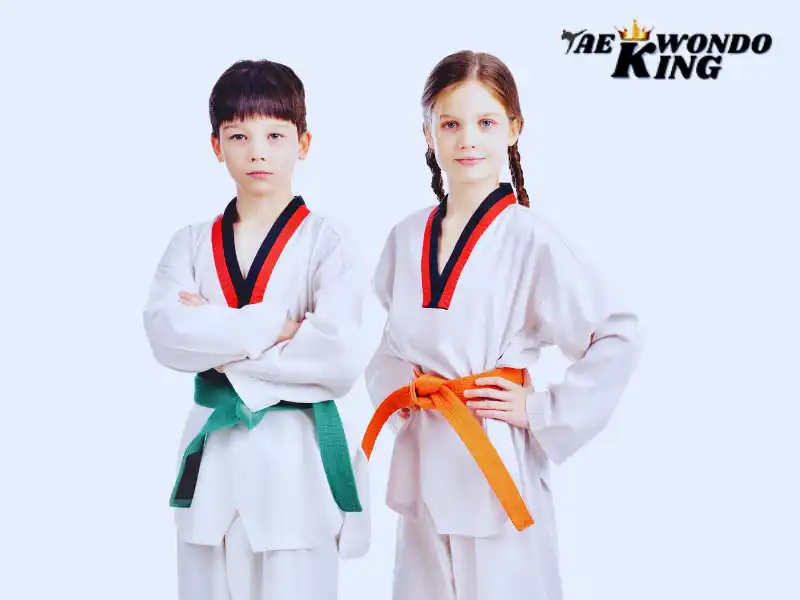
No. Many tournaments have color belt divisions. Beginners can enter, and many events welcome them.
How Long Does a Tournament Last?
A local event may take most of one day. A large championship can run across several days. Your own matches take only minutes, but the waiting takes longer.
Can You Punch to the Head in Taekwondo?
No. Punches are only allowed to the body protector. Head kicks are legal and score more points.
Is Taekwondo Sparring Safe?
Protective gear lowers risk, but injuries can still happen. Referees can stop a match for safety. If you feel hurt, tell your coach right away.
What Should I Do If I Lose My First Match?
Shake hands, bow, and thank your opponent. Then ask your coach for feedback. A first loss is normal and gives you useful information.
Final Thoughts
If you remember one thing, make it this: a tournament is a process. You register, weigh in, wait, compete, and learn. Once you understand that flow, the day feels much more manageable. Read your event rules, pack early, and give yourself time.
My honest opinion is that you do not need to be ready for a medal. You only need to be ready to show up and learn. Expect nerves, long waits, and surprises. Start with a local event, talk to your coach, and keep your notes. If you still wonder how do taekwondo tournaments work after your first one, you will have real answers of your own.

Founder, Owner, and CEO of TaekwondoKing.
He is one of the top 100 martial artists in the World and among the top 20 referees in Bangladesh.
Ehatasamul Alom is an esteemed Kukkiwon Certified Taekwondo 3rd Dan Black Belt with over 15 years of experience in this dynamic martial art. Born in Rajshahi, Bangladesh, Ehatasamul’s journey with Taekwondo began at the tender age of seven. His passion led him to compete at national and international levels, where he has bagged numerous awards and honors. He is also a member of the Taekwondo National Referee Panel.
With a Bachelor’s degree in Sports Science from the prestigious Rajshahi University, Ehatasamul has a deep understanding of the technical and scientific aspects of martial arts and some other martial arts.
In 2022, Ehatasamul created the “TaekwondoKing.com” to share his knowledge, Free Resources, Values, and Real experiences. His articles focus on Taekwondo training techniques, competition strategies, Sport Products Reviews, and the art’s rich history and philosophy. He also writes about the importance of mental fortitude and discipline, key aspects of his teaching philosophy. He has already launched many sports, Taekwondo, and health-related Free online tools. His goal is to inspire both beginners and seasoned practitioners worldwide through insightful and engaging content.
If you need any help, contact Ehatasamul Alom at any time.