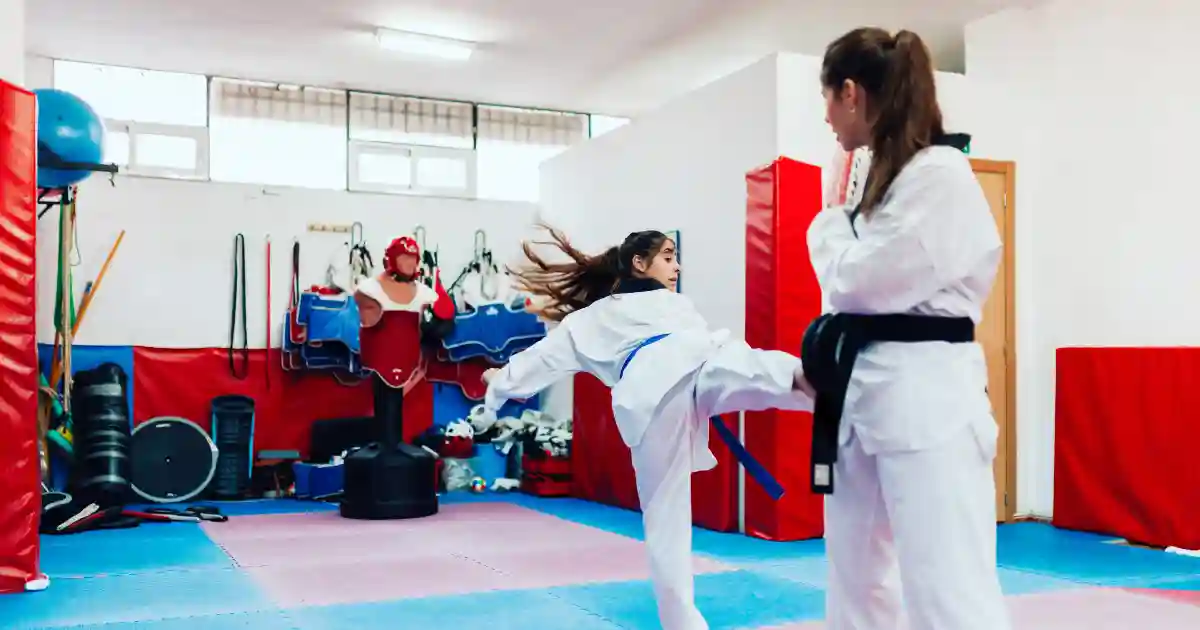
A torn shin guard almost ended one student’s whole season. Not the kick that hit it, just the gear that failed at the worst moment. That’s the real story behind learning how to train taekwondo safely. I watched this happen at a small dojang in Phoenix, Arizona, and it changed how I talk to every new student about preparation. A little muscle soreness after class is normal. Limping through the parking lot every Tuesday is not. Safe training isn’t about being cautious all the time. It’s about building smart habits that let you enjoy this sport for years.
Why Safety Matters in Taekwondo Training
Training safely helps you improve consistently while lowering the risk of avoidable injuries. Healthy athletes simply spend more time learning and less time recovering.
Build long-term progress
Steady, injury-free training beats short bursts of intensity followed by weeks off. Consistency compounds skill far faster than occasional hard pushes.
Reduce preventable injuries
Most training injuries trace back to rushed warm-ups or poor technique. Reviewing how common taekwondo injuries develop and how to prevent them gives new students a clear picture of what safe training is actually protecting against.
Improve confidence
Students who trust their body move more freely during sparring and drills. That confidence grows naturally once safe habits become routine.
Support better performance
A body that isn’t nursing nagging injuries performs better in every drill. Safety and performance work together, not against each other.
Create healthy training habits
Habits formed early tend to stick for years. Building safety into your very first classes makes it automatic later on.
Choose the Right Taekwondo School
A good dojang shapes your technique, confidence, and safety from the very first class. Choosing the right environment is one of the smartest decisions you’ll make.
Qualified instructors
Certified instructors understand progression, technique correction, and injury prevention. Their experience directly shapes how safely students train.
Certified organizations
World Taekwondo (WT)
World Taekwondo governs Olympic-style competition rules and safety standards. Schools following these guidelines usually maintain higher safety practices overall.
Kukkiwon
Kukkiwon serves as the official source for taekwondo rank certification. Instructors trained through this system typically follow structured, safety-conscious curricula.
USA Taekwondo (USATKD)
USA Taekwondo oversees the sport nationally and sets competition and safety standards for member schools. Checking affiliation is a simple way to confirm a program’s credibility.
Safe training culture
A safe culture values control over ego. Watching one class before enrolling reveals a lot about how instructors handle contact and correction.
Clean training facilities
Clean mats and equipment reduce infection risk and show attention to detail. A well maintained space usually reflects well maintained coaching too.
Appropriate student-to-instructor ratio
Smaller class sizes allow closer supervision and faster correction of unsafe technique. Overcrowded classes make it harder to catch small mistakes early.
Table 1: Safety Checklist Before Joining a Dojang
Whenever someone asks me how to choose a good taekwondo school, I suggest watching one class before signing up. A safe dojang is usually easy to recognize.
| What to Check | Why It Matters |
|---|---|
| Certified instructors | Better coaching |
| Clean mats | Lower infection risk |
| Safety rules | Fewer preventable injuries |
| Structured warm-up | Better preparation |
| Protective gear policy | Safer sparring |
| Positive atmosphere | Better learning |
Start Every Session With a Proper Warm-Up
A proper warm-up prepares muscles, joints, and your nervous system for explosive kicking and movement.
Light cardio
A short jog raises your heart rate and body temperature. Warm muscles simply respond better to sudden, explosive movement.
Dynamic stretching
Moving stretches like leg swings prepare the body better than static holds before intense training. They build range of motion while keeping muscles active.
Hip mobility
Loose hips power stronger, safer kicks. Hip circles and gentle rotations open up the joint before it faces real load.
Ankle mobility
Ankles absorb constant stress during pivots and landings. A few minutes of ankle rotation lowers sprain risk considerably.
Shoulder mobility
Blocking and arm movements need loose shoulders. Simple arm circles prepare this joint for repeated use during drills.
Progressive kicking drills
Slow, controlled kicks before full speed work let your body rehearse the pattern safely. Skipping this step is a common and avoidable mistake.
Activation exercises
Bodyweight squats and lunges wake up major muscle groups before intense training begins. This final warm-up step bridges the gap to full intensity safely.
Focus on Proper Technique Before Speed
Good technique creates power naturally. Rushing advanced kicks before mastering basics often increases injury risk.
Correct stance
A stable stance supports every kick and block that follows. Weak foundations lead to wasted power and poor balance.
Balance
Balance training supports safer kicks, pivots, and landings. Reviewing core taekwondo movements and stances helps beginners understand how balance connects every technique together.
Controlled kicking
Controlled kicks build muscle memory correctly the first time. Speed should always follow control, never replace it.
Safe pivoting
Proper pivoting protects the knee during turning kicks. Learning foundational technique before adding speed prevents the twisting injuries that rushed students often experience.
Landing mechanics
Soft, bent-knee landings absorb shock far better than stiff ones. This single habit prevents a huge share of jump-related injuries.
Controlled power
Full power belongs on pads and bags, not on training partners. Controlled power during partner drills keeps everyone training longer.
Listen to instructor corrections
Small corrections prevent big injuries down the road. Students who ask questions after class usually progress faster and safer.
Table 2: Technique Mistakes That Increase Injury Risk
I’ve watched students try spinning hook kicks before feeling comfortable with front kicks. The enthusiasm is great. The timing is sometimes not.
| Common Mistake | Better Habit |
|---|---|
| Skipping basics | Build strong fundamentals |
| Poor pivot | Rotate properly |
| Hyperextending knees | Maintain control |
| Rushing combinations | Increase speed gradually |
| Ignoring feedback | Apply corrections consistently |
Wear the Right Protective Equipment
Protective gear helps reduce impact during sparring and allows you to train with greater confidence.
Dobok
A properly fitted dobok allows full range of motion during kicks and blocks. Loose or restrictive fabric can interfere with safe technique.
Chest protector (Hogu)
The hogu absorbs impact to the ribs and torso during sparring. A well fitted chest protector allows full movement while still cushioning contact.
Headgear
Headgear reduces impact during accidental or intentional head contact. Quality sparring headgear should sit snug without blocking your vision.
Mouthguard
A mouthguard protects teeth and reduces jaw injury risk. A properly fitted mouthguard is one of the cheapest and most important pieces of gear a student can own.
Shin guards
Shin guards protect against the sharp edges of blocked kicks. Reliable shin guards for sparring reduce bruising significantly during contact drills.
Forearm guards
Forearm guards protect the arms during blocking exchanges. They matter most for students in regular heavy contact sparring.
Foot protectors
Foot protectors cushion impact during kicking drills. Comfortable foot protectors let students train longer without discomfort.
Groin protector
This piece protects a sensitive area from direct kicks. A groin protector is standard equipment for both training and competition.
Equipment maintenance
Worn padding stops absorbing impact effectively. Checking straps and foam regularly, like the shin guard story at the start of this guide, prevents gear failure at the worst possible moment.
Train at the Right Intensity
Progress comes from consistent effort, not maximum effort every single session.
Progressive overload
Gradually increasing training demands lets your body adapt safely. Jumping straight to advanced intensity skips the adaptation your joints and muscles need.
Beginner pacing
New students benefit from shorter, lighter sessions at first. Building endurance and technique together prevents early burnout and injury.
Weekly training volume
Most recreational students do well with three to four sessions per week. Competitive athletes may train more, but always with planned recovery built in.
Recovery days
Rest days let muscles and joints repair fully. Skipping them consistently leads to slower progress, not faster progress.
Listening to your body
Your body usually signals fatigue before it signals injury. Paying attention to that signal early prevents bigger setbacks later.
Avoiding overtraining
Overtraining shows up as declining performance, poor sleep, and constant soreness. Reading about managing frustration during intense training also helps students recognize burnout before it turns into an injury.
Safe Sparring Habits
Sparring develops timing and confidence, but control always matters more than power.
Respect your training partner
Sparring works best as a shared learning exercise, not a competition to prove dominance. Respect keeps the training relationship healthy.
Control contact
Controlled contact protects both partners while still building real skill. Reviewing sparring strategy and timing helps students understand that control and effectiveness aren’t opposites.
Follow referee commands
In sparring drills and competition, referee commands exist for safety. Ignoring them removes an important layer of protection for everyone involved.
Wear complete protective gear
Missing even one piece of gear, like an untightened shin guard, raises injury risk significantly. Full gear should be non-negotiable before any sparring session.
Stop immediately after injuries
Continuing to spar through pain almost always makes an injury worse. Stopping early protects your recovery timeline and your training partner’s confidence.
Match partners by experience
Pairing a beginner with a much more advanced student can lead to unnecessary injuries. Good instructors match partners thoughtfully by skill and size.
Communicate during drills
Simple communication about intensity and comfort level keeps sparring sessions safer for both partners involved.
Table 3: Safe vs Unsafe Sparring Habits
One Saturday morning, our coach reminded everyone that their partner should want to train with them again next week. That simple rule says a lot.
| Safe Habit | Unsafe Habit |
|---|---|
| Controlled kicks | Full power unnecessarily |
| Respect partner | Ego-driven sparring |
| Wear gear | Missing protection |
| Follow rules | Ignoring referee |
| Stop after injury | Continue through pain |
Build Strength, Flexibility, and Balance
A stronger body handles training demands more efficiently while supporting healthy movement.
Strength training
Strength training builds the muscle support that protects joints during kicks and landings. Reviewing how taekwondo challenges the body physically shows why this extra conditioning matters so much.
Core stability
A strong core supports balance and protects the lower back during dynamic kicks. Planks and rotational exercises build this foundation well.
Hip strength
Strong hips power kicks and stabilize the pelvis during pivots. This strength directly supports safer, more explosive technique.
Leg conditioning
Squats and lunges build the strength needed to absorb impact safely. Stronger legs mean fewer strains during repeated kicking drills.
Balance exercises
Single-leg drills train the small stabilizer muscles around the ankle and knee. These muscles matter more than most beginners realize.
Flexibility
Flexible muscles reduce strain risk during high kicks. Consistent work on flexibility as a core training habit pays off across every part of your training.
Mobility work
Joint mobility supports full range of motion without strain. Mobility and flexibility work together, though they aren’t quite the same thing.
Recovery Is Part of Safe Training
Recovery isn’t time away from progress. It’s part of the process that allows progress to continue.
Sleep
Muscle repair happens mostly during deep sleep. Students who train hard but sleep poorly recover far slower than they expect.
Hydration
Dehydrated muscles cramp and fatigue faster. Drinking water consistently throughout the day supports better training and recovery.
Balanced nutrition
Protein supports muscle repair, while balanced meals keep energy steady through long sessions. Nutrition is often the most overlooked recovery tool.
Active recovery
Light movement on rest days keeps blood flowing without adding training stress. This speeds recovery compared to complete inactivity.
Stretching
Post-training stretching helps muscles return to their resting length. It’s a small habit that pays off over months of consistent training.
Foam rolling
Foam rolling loosens tight muscles and improves blood flow after hard sessions. A foam roller for post-training recovery is a simple, affordable addition to any home recovery routine.
Managing soreness
Normal soreness fades within a couple of days. Sharp or worsening pain is a different signal and deserves attention rather than being pushed through.
Recognize Early Signs of Injury
Learning the difference between normal soreness and possible injury can help prevent more serious problems.
Persistent joint pain
Joint pain that lingers past a few days, rather than fading, deserves a closer look. This differs from normal muscle soreness.
Swelling
Swelling around a joint often signals a real injury rather than typical training fatigue. It’s worth pausing training to assess it properly.
Bruising
Minor bruising from sparring contact is common and usually harmless. Unusual or severe bruising without clear cause deserves attention.
Reduced range of motion
A joint that suddenly moves less freely than usual is a warning sign. This symptom shouldn’t be trained through.
Sharp pain during movement
Sharp, sudden pain during a specific movement usually points to a real injury. Dull, general soreness is a different and more normal signal.
When to stop training
Stop training the moment pain changes from dull soreness to sharp or sudden pain. Continuing almost always extends your recovery time.
When to seek medical evaluation
Persistent pain, significant swelling, instability, or numbness all warrant a visit to a healthcare professional rather than continued self-treatment.
Table 4: Normal Soreness vs Possible Injury
Almost every student eventually asks if what they’re feeling is normal. The answer often depends on how the pain behaves, not just how much it hurts.
| Normal Training Response | Possible Injury Warning |
|---|---|
| Mild muscle soreness | Sharp pain |
| Temporary stiffness | Joint instability |
| Improves with movement | Worsens with activity |
| Lasts 1 to 3 days | Persists or worsens |
| No swelling | Significant swelling |
Safe Training Tips for Different Skill Levels
Safety looks a little different depending on your experience. Beginners and advanced competitors don’t always face the same risks.
Beginners
New students should prioritize learning correct form over speed or power. Programs built around taekwondo fundamentals for new students usually structure this progression carefully.
Children
Growing bodies need age-appropriate training volume and lighter contact. Guides on teaching taekwondo to young students show how good programs build safety into every lesson.
Teenagers
Teen athletes often push intensity faster than their bodies fully adapt. Balancing enthusiasm with patience prevents many common overuse injuries at this stage.
Adult beginners
Adults starting later in life benefit from longer warm-ups and realistic pacing. Exploring taekwondo training built for adult schedules helps set expectations from day one.
Competitive athletes
Competitors face higher contact and higher stakes. Structured competition safety and medical rules exist specifically to protect athletes during intense matches.
Older practitioners
Older athletes benefit from extra recovery time and consistent mobility work. Research on how taekwondo supports long-term health shows that steady, safe training pays off at any age.
USA Expert Advice on Safe Taekwondo Training
“The best athletes are rarely the ones who train the hardest every day. They’re the ones who train consistently because they stay healthy.” Dr. Jordan Metzl, MD, Sports Medicine Physician (USA)
Progress gradually
Skills build in layers. Rushing past fundamentals to reach advanced technique almost always shows up as a gap later.
Prioritize technique
Clean technique protects joints better than raw effort ever will. Power should always follow good form, not replace it.
Respect recovery
Recovery days aren’t wasted time. They’re part of the process that lets your body absorb the benefits of hard training.
Use properly fitted equipment
Gear that fits correctly does its job far better than gear that’s simply available. Fit matters as much as quality.
Ask for coaching feedback often
A quick question after class can prevent months of repeated mistakes. Good instructors welcome students who want to improve safely.
Real-life context: at many taekwondo schools in California, Texas, and Colorado, instructors begin Monday evening classes with mobility drills before anyone throws a high kick. One coach jokes that hips need coffee before kicks do. Everyone smiles, and everyone warms up properly.
Frequently Asked Questions
How can beginners train taekwondo safely?
Beginners should focus on proper warm-ups, correct technique, and gradual progression rather than rushing toward advanced kicks or full-contact sparring too soon.
What protective gear is required?
Most schools require headgear, a mouthguard, a chest protector, shin guards, and a groin protector for sparring sessions.
How many days per week should I train?
Three to four sessions per week works well for most recreational students, with at least one full rest day included.
Should I train with muscle soreness?
Mild, general soreness is usually fine to train through carefully. Sharp or localized pain is a signal to rest instead.
How can I avoid injuries while sparring?
Wear full protective gear, control contact power, match partners by skill level, and stop immediately if pain occurs.
What warm-up works best?
A combination of light cardio, dynamic stretching, and joint mobility drills prepares the body best for taekwondo training.
When should I stop training because of pain?
Stop as soon as pain shifts from mild soreness to something sharp, sudden, or localized to a specific joint.
Is stretching enough before class?
Stretching alone isn’t enough. Combining it with light cardio and mobility drills prepares the body far more completely.
Does strength training help prevent injuries?
Yes. Strong muscles around joints absorb impact better, which directly reduces strain and sprain risk during kicks and landings.
How can parents help children train safely?
Parents can choose certified schools, confirm proper gear fit, and encourage open communication about pain or discomfort during training.
Final Recommendation
After years of training, coaching, and watching students recover from setbacks that were completely avoidable, my advice stays consistent. Learning how to train taekwondo safely starts with patience, not intensity. Warm up fully every time, respect your recovery days, and never let ego push you past controlled technique. Invest in properly fitted gear and treat instructor feedback as a gift rather than criticism. Safe training won’t promise a career free of every ache, but it will keep you on the mat far longer than rushing ever could.

Founder, Owner, and CEO of TaekwondoKing.
He is one of the top 100 martial artists in the World and among the top 20 referees in Bangladesh.
Ehatasamul Alom is an esteemed Kukkiwon Certified Taekwondo 3rd Dan Black Belt with over 15 years of experience in this dynamic martial art. Born in Rajshahi, Bangladesh, Ehatasamul’s journey with Taekwondo began at the tender age of seven. His passion led him to compete at national and international levels, where he has bagged numerous awards and honors. He is also a member of the Taekwondo National Referee Panel.
With a Bachelor’s degree in Sports Science from the prestigious Rajshahi University, Ehatasamul has a deep understanding of the technical and scientific aspects of martial arts and some other martial arts.
In 2022, Ehatasamul created the “TaekwondoKing.com” to share his knowledge, Free Resources, Values, and Real experiences. His articles focus on Taekwondo training techniques, competition strategies, Sport Products Reviews, and the art’s rich history and philosophy. He also writes about the importance of mental fortitude and discipline, key aspects of his teaching philosophy. He has already launched many sports, Taekwondo, and health-related Free online tools. His goal is to inspire both beginners and seasoned practitioners worldwide through insightful and engaging content.
If you need any help, contact Ehatasamul Alom at any time.