Your palms get sweaty. Your poomsae suddenly feels blurry in your head. That first walk toward the grading panel is a memory every black belt still carries. I have coached hundreds of students through their taekwondo belt test requirements, and I promise the nerves fade once you know exactly what the examiners are looking for. Grading day rewards preparation, not luck. This guide breaks down every part of a belt test, from stances to sparring to board breaking, so you walk in ready instead of guessing. I wrote this the way I coach my own students in Denver, with honest, practical advice built from real testing floors and years spent as both a competitor and a taekwondo referee.
What Are Taekwondo Belt Test Requirements?
Every taekwondo school runs grading a little differently, but most belt tests measure four things: technical skill, physical fitness, discipline, and martial arts knowledge. Once you understand these four pillars, preparation stops feeling random and starts feeling like a checklist you can actually complete. I always tell my beginners that grading is not a surprise quiz. It tests what you already practiced in class.
Why belt testing matters
Belt testing gives structure to your training. Without it, students drift without clear goals. A grading date gives you something to aim for, and that pressure builds real skill. Students who practice taekwondo with a testing goal in mind tend to progress faster than those who train casually.
Who sets grading requirements?
Requirements vary depending on which organization your school follows. Knowing your governing body helps you understand what examiners expect.
World Taekwondo (WT)
WT-affiliated schools usually follow the Kukkiwon curriculum, with Taegeuk forms and Olympic-style sparring rules. My students preparing for WT tests study the official taekwondo kyorugi rules closely, since sparring scoring differs from other systems.
International Taekwon-Do Federation (ITF)
ITF schools use Chang Hon patterns instead of Taegeuk forms, and their sparring style favors different footwork. If your school follows ITF, ask your instructor which patterns apply to your current belt.
Independent schools and associations
Many dojangs blend elements from both systems or build their own curriculum entirely. This is common and not a red flag. Ask your instructor directly which forms and techniques your test will cover.
How requirements change by belt level
Lower belts focus on basic stances, simple kicks, and short forms. Higher belts add combinations, longer poomsae, board breaking, and sometimes teaching demonstrations. The jump between color belts and black belt is usually the biggest leap in difficulty.
Why consistency matters more than perfection
Examiners do not expect flawless technique. They want to see steady, repeatable movement built from months of practice. A slightly imperfect kick performed with confidence scores better than a hesitant, overthought one.
Basic Eligibility Before Taking a Belt Test
Before you demonstrate a single kick, most schools check a few eligibility boxes first. Missing one of these can delay your test even if your technique is ready.
Minimum training period
Most schools require two to four months of training between belt levels. This time allows muscle memory to develop properly. Rushing this window usually shows up as shaky technique on test day.
Class attendance expectations
Instructors track attendance because consistency builds skill faster than occasional long sessions. Schools generally expect regular weekly attendance, not perfect attendance, before approving a student for grading.
Instructor recommendation
Your instructor watches your training far more closely than any single test can capture. Their approval confirms you are ready, and most schools will not let a student test without it.
Good behavior and martial arts etiquette
Respectful behavior in class matters as much as physical skill. Talking back, skipping warmups, or disrespecting training partners can delay a testing recommendation even for a technically strong student.
Age-specific grading requirements
Younger children often test on modified standards, with shorter forms and lighter fitness expectations. Adult students, including those exploring taekwondo for adults or taekwondo lessons for adults, typically face the full standard curriculum. Parents researching martial arts for kids often ask me how grading differs by age, and the honest answer is that examiners simply scale expectations to match physical development.
Registration and testing fees
Most schools charge a small testing fee that covers the new belt, certificate, and examiner time. Ask your front desk early so nothing holds up your registration. Fees typically increase slightly at higher belts, since black belt tests often involve additional examiners, longer testing time, and a formal certificate from a national or international governing body.
Table 1 below comes from years of watching students miss small details that had nothing to do with their kicks. Save yourself the stress and check this list before test day.
| Requirement | Typical Expectation | Why It Matters |
|---|---|---|
| Time in Rank | 2 to 4 months (varies) | Skill development |
| Attendance | Regular classes | Consistent improvement |
| Instructor Approval | Required | Confirms readiness |
| Uniform | Clean dobok and belt | Professional appearance |
| Equipment | Protective gear if needed | Safety during testing |
If your uniform or sparring gear needs replacing before test day, this taekwondo gear set covers most schools’ basic protective equipment requirements in one order. I recommend students keep a spare dobok and belt combo on hand, since a torn uniform the night before testing causes more panic than any missed kick ever will.
Technical Skills You Must Demonstrate
Technical accuracy sits at the center of every grading. Examiners watch for clean movement, balance, and control rather than raw power or speed. Students who spent time on the most important things to learn in taekwondo usually walk into this section with far less anxiety, because the fundamentals already feel familiar.
Basic stances
Stance work forms the foundation of every technique that follows it. Weak stances usually cause weak kicks and punches later in the test.
Walking stance
This narrow, forward-facing stance builds early balance. Beginners often lean too far forward, which examiners notice immediately.
Front stance
A deeper, wider stance used for strong forward strikes. Keep your front knee bent and your back leg straight for proper power transfer.
Back stance
Weight shifts mostly onto the rear leg here, which supports quick blocking and retreating movement. This stance shows up often in self-defense drills and in techniques designed to defend yourself with taekwondo against a sudden grab.
Fighting stance
A relaxed, mobile stance used during sparring. Balance and quick footwork matter more here than depth or power.
Hand techniques
Hand techniques round out your basics score alongside kicks. Clean form matters more than raw speed at this stage.
Punches
Straight punches should rotate from the hip, not just the shoulder. Examiners often ask students to demonstrate punches from a stationary stance first. Practicing on a bag at home with hand wraps helps protect your knuckles while you drill this at full speed.
Blocks
Blocks protect against incoming strikes and demonstrate control. Practice both high and low blocks until they feel automatic, since hesitant blocking is one of the easiest mistakes for an examiner to spot from across the room.
Strikes
Knife hand and palm strikes add variety to your basics demonstration. These often appear in mid-level belt tests and self-defense sections.
Kicking techniques
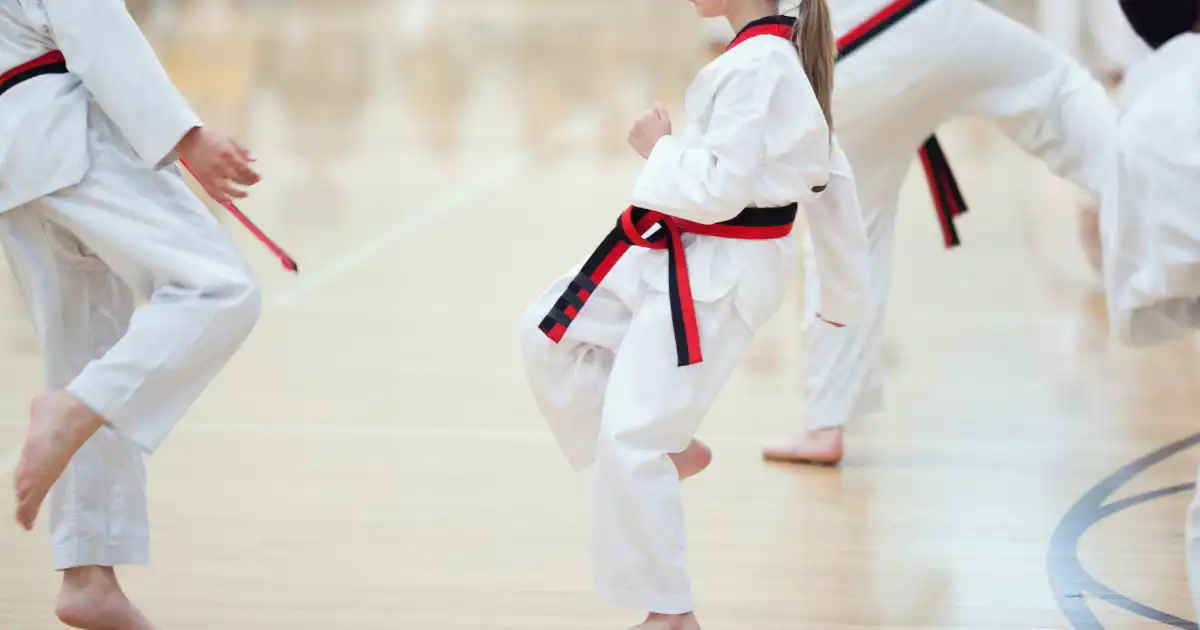
Kicks make up a large portion of any taekwondo grading, since the sport is famous for its kicking variety. Reviewing the hard kicks in taekwondo that examiners test most often gives you a clear priority list for practice. A set of kicking pads at home lets you drill power and accuracy together outside of class hours.
Front kick (Ap Chagi)
The first kick most students learn. Chamber your knee high before extending for proper snap.
Roundhouse kick (Dollyo Chagi)
A powerful, versatile kick used in both forms and sparring. Hip rotation is the key detail examiners watch closely.
Side kick (Yop Chagi)
This kick relies on balance and a strong chamber. Many students rush the chamber and lose power as a result.
Back kick (Dwi Chagi)
One of the harder kicks to control, since it requires looking over your shoulder while striking blind. Practice slowly before adding speed.
Hook kick
A curving kick that catches an opponent from an unexpected angle. Higher belt tests often require this kick with control.
Axe kick
A downward strike that demonstrates flexibility and precision. Poor flexibility often shows up clearly during this kick, which is why I always point students toward my guide on why flexibility is the most important part of taekwondo a few weeks before testing.
Combination techniques
Combining kicks and strikes shows examiners you can chain movement smoothly. Practice two or three technique combinations until the transitions feel seamless. A common pairing involves a roundhouse kick followed by a reverse punch, and drilling this slowly first builds the timing needed to speed it up later without losing form.
Power and balance
Power should come from proper mechanics, not muscle strain. Balance after each kick matters just as much as the kick itself. Many students focus so heavily on the kick itself that they forget the landing, and a wobbly landing after a strong kick still costs points during grading.
Accuracy and control
Hitting the correct target height and angle matters more than speed. Sloppy accuracy is one of the fastest ways to lose points on a technical section. I always tell students to slow every strike down by half during practice weeks, since accuracy built at a slower pace transfers naturally once speed returns.
Poomsae or Patterns Requirements
Forms reveal how well a student understands rhythm, breathing, and technique sequencing. Small details separate an average performance from a strong one, and studying world taekwondo poomsae rankings can show you exactly what elite-level precision looks like.
What is Poomsae?
Poomsae are structured sequences of blocks, strikes, and kicks performed against imaginary opponents. Each form builds on skills from the one before it. The official taekwondo poomsae rules by WT explain exactly how examiners score accuracy, presentation, and power at every belt level.
Why forms are tested
Forms test memory, discipline, and technical consistency all at once. A well-performed poomsae proves a student trained regularly, not just before the test.
Accuracy versus speed
Many students rush their forms out of nerves, and speed almost always costs accuracy. Slow, correct movement scores far better than fast, sloppy movement.
Common mistakes during forms
Forgetting sequences, losing balance during turns, and inconsistent stance depth are the most common errors I see. Practicing your taekwondo moves slowly in front of a mirror catches most of these issues early.
Belt-specific poomsae examples
Each color belt typically pairs with a specific Taegeuk form under the WT system.
Taegeuk 1
The first pattern, focused on basic blocks and a single kick. It introduces the walking stance and front stance together.
Taegeuk 2
Adds slightly more complex footwork and a second kicking technique. Balance during direction changes becomes more important here.
Taegeuk 3
Introduces knife hand strikes and faster technique combinations. This form usually marks a noticeable jump in difficulty.
Higher-level forms
Taegeuk 4 through 8 add jumping kicks, longer sequences, and more advanced stances. Black belt candidates often need near-flawless execution of these forms.
Table 2 reflects a common WT progression I have used with my own students for years, though your school’s exact pairing may differ slightly.
| Belt Level | Typical Poomsae |
|---|---|
| White to Yellow | Taegeuk 1 |
| Yellow to Green | Taegeuk 2 |
| Green to Blue | Taegeuk 3 to 4 |
| Blue to Red | Taegeuk 5 to 7 |
| Red to Black | Taegeuk 8 |
Sparring Requirements During Belt Testing
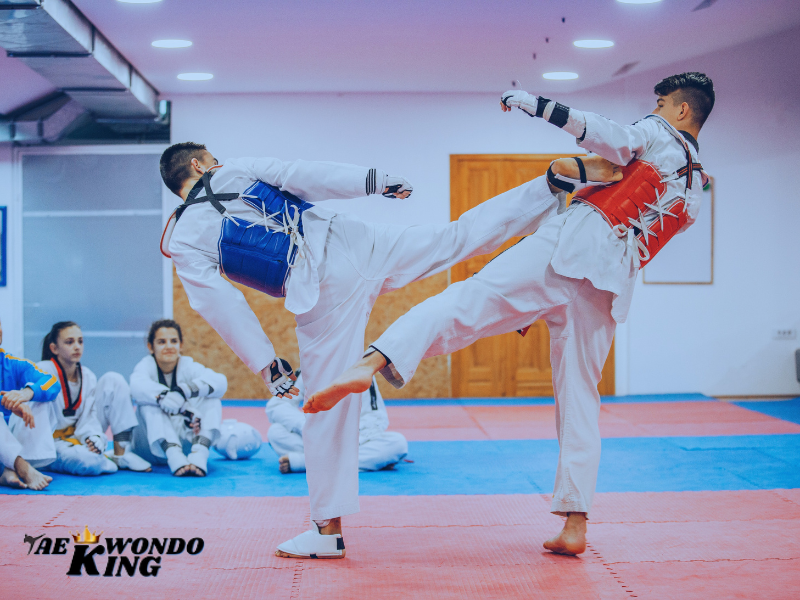
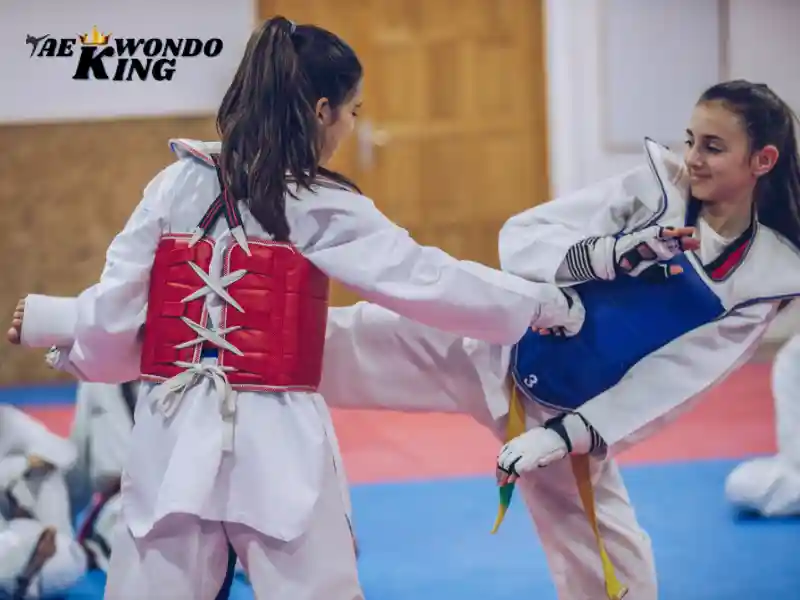
Sparring shows whether a student can apply technique safely under pressure. Judges usually value control far more than aggressive attacking, a point I cover in more depth in my breakdown of strategies for success in taekwondo sparring. A properly fitted chest guard and headgear set is worth owning long before your first sparring test, since borrowed gear rarely fits well.
One-step sparring
A partner throws a single attack while you respond with a set defense and counter. This drill builds reaction speed in a controlled setting.
Three-step sparring
Similar to one-step sparring, but extended across three attacks and counters. It builds longer sequences of defensive thinking.
Free sparring
Unscripted sparring against a live opponent. This section tests real reaction time, spacing, and composure under pressure.
Controlled contact
Most schools require light or controlled contact during testing, especially for lower belts. Excessive force during a test can actually cost points.
Defensive skills
Blocking, footwork, and distance management matter as much as attacking. Reviewing top self-defense techniques alongside sparring drills blends offense and defense evenly in your training.
Ring awareness
Staying aware of ring boundaries and your opponent’s position prevents accidental out-of-bounds penalties. Practice this in regular sparring drills, not just on test day.
Sportsmanship
Bowing before and after sparring, controlling temper, and respecting your partner all factor into an examiner’s overall impression. Poor sportsmanship can lower an otherwise strong sparring score.
Self-Defense Requirements
Many schools include practical self-defense sections because martial arts should build real confidence, not just competition skill.
Wrist grab escapes
A common test scenario involving breaking free from a grabbed wrist using leverage rather than raw strength. This teaches proper technique over brute force.
Basic releases
Releases from bear hugs or clothing grabs often appear at mid-level belts. Practicing these slowly with a partner builds muscle memory safely.
Distance management
Creating space after an escape is just as important as the escape itself. Many students forget this step during testing nerves.
Verbal awareness
Some schools test verbal de-escalation alongside physical technique, since real self-defense often starts with words. This reflects lessons from the most effective self-defense technique training beyond just physical moves.
Safe execution
Examiners want to see control, not force. A safely executed technique on a cooperating partner still demonstrates full understanding, and rushing through self-defense sequences to look tough usually backfires by making the movement look sloppy instead.
Board Breaking Requirements
Board breaking is not only about strength. Proper technique, timing, and confidence usually matter far more than raw power, which lines up closely with what I outline in unveiling the power kicks and strengths and weaknesses of taekwondo.
Why breaking is included
Breaking tests whether a student can commit fully to a technique without hesitation. Hesitation is actually the most common reason breaks fail.
Common breaking techniques
Front kicks, side kicks, and knife hand strikes are the most common breaking techniques at lower belts. Higher belts sometimes add jumping or spinning breaks.
Safety rules
Proper board holding, clear space around the breaker, and correct target height all matter for safety. Never attempt breaking without a trained holder present, and review the taekwondo safety and medical rules by WT with your instructor before your first breaking test. Wearing shin guards and forearm guards during practice sessions also reduces bruising while you build confidence with harder breaks.
Common beginner mistakes
Pulling back at the moment of impact is the most frequent mistake. Full commitment through the target, not just to it, produces a clean break.
Mental preparation
Visualizing the break before attempting it helps calm nerves. A confident mindset genuinely improves your physical outcome here.
Table 3 below outlines what most belt tests include, though board breaking usually only appears starting at intermediate or higher belts.
| Test Section | Usually Required |
|---|---|
| Basics | Yes |
| Kicks | Yes |
| Hand Techniques | Yes |
| Forms (Poomsae) | Yes |
| Sparring | Often |
| Self-Defense | Often |
| Board Breaking | Higher belts |
| Terminology | Sometimes |
| Fitness | Usually |
For consistent breaking practice at home between classes, these training boards hold up well for regular drilling.
Physical Fitness Expectations
Good technique gets much harder when you’re tired. That’s exactly why many instructors build fitness testing into grading day, following patterns similar to the taekwondo GMS rules and regulations used at higher competitive levels. A basic yoga mat at home makes daily stretching and core work far more consistent.
Push-ups
A standard strength check, usually scaled by age and belt level. Form matters more than raw count.
Sit-ups
Core strength supports almost every kicking technique in taekwondo. Weak cores often show up as wobbly kicks during testing.
Squats
Leg strength and endurance both get tested through bodyweight squats. This directly supports stance depth and kicking power.
Jumping exercises
Some schools test jumping jacks or burpees to check overall conditioning. This section is usually short but demanding, and it often comes right before forms, so pacing your energy matters as much as raw effort.
Flexibility
Hip and hamstring flexibility directly affects kick height and axe kick technique. Daily stretching, even just ten minutes, makes a noticeable difference over a few weeks. Students who skip this step are also more prone to the most common injuries in taekwondo, which can delay testing entirely.
Cardiovascular endurance
Sparring rounds and multiple forms in a row test your cardio far more than any single drill. Building fitness through taekwondo training over months naturally prepares you for this section.
Balance testing
Single-leg stands and slow kick holds test balance directly. This connects closely to stance quality throughout the entire test.
Taekwondo Knowledge and Terminology
Belt testing is not only physical. Students should also understand the language, traditions, and values behind the art, something I explore further in taekwondo is not just about fighting, it’s about winning yourself.
Korean terminology
Basic Korean terms for kicks, stances, and commands are commonly tested, especially from green belt onward. Flashcards work well for memorizing these quickly.
Counting in Korean
Counting to ten in Korean is a near-universal grading requirement across most schools. Practice this out loud, not just silently in your head.
Student oath
Many schools require students to recite a short oath or set of tenets from memory. This usually gets tested starting at intermediate belts.
Taekwondo principles
Courtesy, integrity, perseverance, self-control, and indomitable spirit form the five tenets in most curriculums. Examiners sometimes ask students to explain what these mean in their own words, and this connects directly to how taekwondo builds self-discipline over time.
Belt meanings
Each belt color traditionally represents a stage of growth, often compared to a plant growing toward sunlight. Understanding this history deepens appreciation for the journey toward black belt.
Dojang etiquette
Bowing when entering the training floor, addressing instructors properly, and lining up correctly all reflect etiquette. These small habits matter more during testing than most students expect, and they connect closely to how taekwondo builds self-confidence in young students especially.
Common Reasons Students Fail Belt Tests
Most unsuccessful gradings happen because of preparation gaps rather than lack of talent. Knowing these mistakes ahead of time helps you avoid them, much like the lessons I shared in effective exercises to manage anger from a taekwondo master regarding staying calm under pressure.
Forgetting forms
This is the single most common reason students fail. Practicing poomsae daily, even briefly, prevents this almost entirely.
Poor attendance
Skipping classes in the weeks before testing leaves gaps in muscle memory. Consistency beats occasional intense practice sessions.
Weak fundamentals
Rushing ahead to advanced techniques without solid basics eventually catches up with a student. Strong basics make every later technique easier.
Lack of confidence
Hesitant, second-guessed movement reads as weakness to examiners, even when the technique itself is correct. Confidence genuinely affects scoring.
Incorrect etiquette
Forgetting to bow, talking during the test, or ignoring instructions can lower scores even with strong technical performance.
Poor conditioning
Running out of energy midway through testing hurts every section that follows. Fitness preparation matters just as much as technique practice, which is why I always link conditioning back to how taekwondo is hard on the body when talking with new students.
Rushing techniques
Speed without control almost always looks worse than controlled, moderate-paced technique. Slow down and trust your training.
How to Prepare for Your Next Belt Test
Preparation feels far less stressful when you follow a simple routine instead of cramming during the final week before testing. This mirrors the mindset behind why you should start taekwondo in the first place, treating training as a long-term habit rather than a short sprint.
Build a weekly practice plan
Spread your practice across the week instead of one long session. Short, consistent sessions build memory better than occasional marathons.
Practice forms daily
Even five minutes of daily poomsae practice keeps sequences fresh in your memory. Consistency here pays off more than any other single habit.
Improve flexibility
Daily stretching improves kick height and reduces injury risk. Focus especially on hips and hamstrings before axe kick or hook kick practice.
Record yourself
Filming your forms and kicks reveals mistakes you cannot see or feel in the moment. A simple phone tripod stand keeps your camera steady so you can watch your full form without a training partner holding the phone. Compare your recordings weekly to track improvement.
Ask instructors for feedback
Your instructor sees details you miss on your own. Ask specific questions rather than a general “how am I doing.”
Simulate a grading
Run a full mock test at home or in class, including forms, kicks, and terminology. This builds familiarity with the testing format itself.
Rest before testing day
Avoid intense training the night before your test. A well-rested body performs noticeably better than an exhausted one.
Table 4 below shows a simple two-week plan I have given many of my own students before grading. Adjust the days based on your own school’s specific test format.
| Day | Main Focus |
|---|---|
| Monday | Basics and stances |
| Tuesday | Kicks |
| Wednesday | Poomsae |
| Thursday | Sparring |
| Friday | Self-defense |
| Saturday | Mock grading |
| Sunday | Recovery and stretching |
A quality jump rope and resistance band set works well for the cardio and flexibility days built into this plan.
USA Expert Advice for Passing a Belt Test
“A belt test shouldn’t reveal what you learned yesterday. It should show the habits you’ve built over months of training.” This reflects advice long shared by senior USA Taekwondo educators, and it captures exactly what examiners look for on grading day. It also echoes what I wrote about becoming a skilled taekwondo referee, where consistent habits mattered more than any single impressive moment.
Focus on consistency over perfection
Steady, repeatable technique beats an occasional flawless kick surrounded by inconsistent ones. Examiners notice patterns, not single moments.
Listen carefully to examiner commands
Missing a command mid-test can throw off an entire section. Stay focused on instructions even when nervous.
Demonstrate confidence without rushing
Confident movement at a controlled pace scores far better than fast, anxious technique. Slow down and trust your preparation.
Respect etiquette from start to finish
Bow properly, address examiners respectfully, and maintain composure throughout. Etiquette influences scoring more than most students realize.
Treat grading as another class
Students who treat testing like just another training session usually perform better than those who build it up into something terrifying. It really is just another day on the mat.
Real-life context worth sharing here: at many taekwondo schools across Dallas and Chicago, Saturday morning belt tests begin with a respectful bow-in before students demonstrate basics. Instructors often remind nervous students to slow down and breathe. Those simple words calm nerves better than any last-minute tip I have ever given.
Frequently Asked Questions
What are the basic taekwondo belt test requirements?
Most tests require demonstrating stances, kicks, hand techniques, forms, and basic fitness. Higher belts add sparring, self-defense, and board breaking on top of these fundamentals.
How long do you need to train before testing?
Most schools require two to four months of consistent training between belts. Your instructor’s approval matters more than any fixed calendar date.
Do all schools require board breaking?
Not always. Many schools introduce breaking starting at intermediate belts rather than from white belt onward.
Is sparring mandatory for every belt?
Sparring often starts appearing at yellow or green belt, depending on the school. Lower belts sometimes skip it entirely for safety reasons.
What happens if you fail a belt test?
Most schools allow a retest after additional practice time, usually within a few weeks. Failing a test is common and rarely permanent.
How should I prepare the week before grading?
Focus on light review rather than intense new practice. Rest, hydration, and confidence matter more in the final days than cramming new skills.
What uniform should I wear?
A clean dobok with your current belt tied correctly is standard. Torn or dirty uniforms can affect the professional impression you give examiners.
Can children and adults have different requirements?
Yes. Children often test on modified fitness and form standards compared to adult students, especially at lower belts.
How difficult is the black belt test?
Black belt tests are significantly longer and more demanding, often including full poomsae sets, breaking, sparring, and sometimes a teaching demonstration. Preparation typically spans several months of focused training.
Do WT and ITF have different grading standards?
Yes. WT schools use Taegeuk forms and Olympic-style sparring rules, while ITF schools use Chang Hon patterns and different sparring conventions. Always confirm which system your school follows before testing.
Final Recommendation
After years on both sides of the testing table, as a student and as an examiner, my honest recommendation is simple. Master your basics before chasing advanced kicks, and practice your forms daily rather than the week before grading. Meeting the taekwondo belt test requirements comes down to consistent habits, not talent or luck. Show up to class regularly, ask your instructor direct questions, and treat every belt test as a normal part of your training rather than a frightening event.
I still remember my own early gradings, standing nervously in line, convinced I would forget everything the moment the examiner called my name. That fear faded once I realized examiners genuinely want students to succeed. They are not looking for perfection. They are looking for proof that you showed up, practiced honestly, and respected the process. I have watched nervous white belts grow into confident black belts using exactly this approach, and I believe any dedicated student, at any age, can do the same.

Founder, Owner, and CEO of TaekwondoKing.
He is one of the top 100 martial artists in the World and among the top 20 referees in Bangladesh.
Ehatasamul Alom is an esteemed Kukkiwon Certified Taekwondo 3rd Dan Black Belt with over 15 years of experience in this dynamic martial art. Born in Rajshahi, Bangladesh, Ehatasamul’s journey with Taekwondo began at the tender age of seven. His passion led him to compete at national and international levels, where he has bagged numerous awards and honors. He is also a member of the Taekwondo National Referee Panel.
With a Bachelor’s degree in Sports Science from the prestigious Rajshahi University, Ehatasamul has a deep understanding of the technical and scientific aspects of martial arts and some other martial arts.
In 2022, Ehatasamul created the “TaekwondoKing.com” to share his knowledge, Free Resources, Values, and Real experiences. His articles focus on Taekwondo training techniques, competition strategies, Sport Products Reviews, and the art’s rich history and philosophy. He also writes about the importance of mental fortitude and discipline, key aspects of his teaching philosophy. He has already launched many sports, Taekwondo, and health-related Free online tools. His goal is to inspire both beginners and seasoned practitioners worldwide through insightful and engaging content.
If you need any help, contact Ehatasamul Alom at any time.