A spinning kick lands, the crowd gasps, and the scoreboard jumps by five points before you even understand what happened. That confusion is exactly why so many new fans want to know how taekwondo matches are scored. Coaching athletes for over a decade, I’ve watched hundreds of matches with parents and beginners sitting beside me, completely lost by the scoreboard. Once you learn the point values and penalty rules, every exchange starts to make sense in seconds.
This guide breaks down modern World Taekwondo scoring using real competition examples, from point values and electronic gear to penalties, the golden round, and how athletes actually win. I watched this same confusion play out at a local tournament in Denver last spring, where a father next to me kept asking why a spinning kick was worth so much more than a punch.
Understanding the Basics of Taekwondo Match Scoring
Before learning the point values, it helps to understand how modern WT competitions judge a match. Today’s events combine electronic scoring technology with referee decisions for fairness and accuracy.
If you are just starting to explore the sport, it helps to first understand what taekwondo actually involves as a martial art before diving into the scoring rules themselves.
What is the World Taekwondo (WT) scoring system?
The WT scoring system is the official method used to award points during Olympic-style sparring, known as Kyorugi. It combines sensors, referee judgment, and instant video review to decide every point.
How scoring has changed over the years
Scoring used to rely entirely on human judges pressing buttons by hand. That system caused real controversy, since judges sometimes missed fast techniques or disagreed on close calls. If you’re curious how far the sport has come, the story of how modern taekwondo rules developed is worth a read.
Why electronic scoring replaced manual judging
Electronic sensors reduce bias and catch techniques the human eye can miss. This shift mirrors many of the same fairness goals covered in the official taekwondo referee rules and regulations.
Objectives of the scoring system
The scoring system exists to reward accurate, powerful, legal techniques while discouraging dangerous or unsportsmanlike behavior. Fairness and athlete safety both guide every rule, and this balance is exactly why the sport keeps refining its equipment and procedures year after year.
Who keeps score during a match?
A team of corner judges, a center referee, and electronic sensors work together. Reviewing what a taekwondo referee actually does during competition helps explain how these roles overlap during a live match.
How Points Are Awarded in Taekwondo
Every legal scoring technique has a specific point value. Understanding these values helps you follow every exchange without guessing.
One point for a valid punch
A punch to the trunk protector earns one point. It is the lowest scoring technique, but still a useful tool for controlling distance and pace.
Legal punching area
Only the front and sides of the trunk protector count. Punches to the head or back never score.
Proper punching technique
The punch must land with a closed fist and clear, controlled force. A glancing or pushing motion will not register as a scoring punch. Beginners often build this technique on a basic taekwondo training gear starter kit on Amazon, which usually includes hand wraps and light gloves suited for early punch drills.
Two points for a valid body kick
A basic kick to the trunk protector earns two points. This is the most common scoring technique in any match, and it forms the foundation taught early in most academies, similar to what’s outlined in the first techniques taught to new taekwondo students.
Electronic body protector scoring
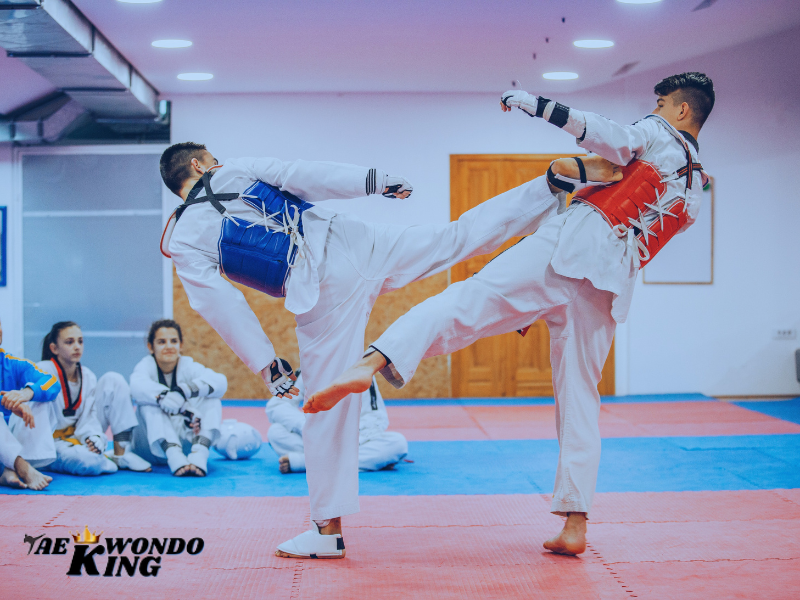
The Hogu contains sensors that register kicks meeting a minimum force threshold. Light contact will not trigger a score.
Required impact force
Athletes must generate enough power to trip the sensor. This is one reason strength and conditioning matter just as much as technique, a balance many gyms build through the routines found in how taekwondo supercharges overall fitness.
Three points for a turning body kick
A spinning or turning kick to the trunk earns extra value for its difficulty. Point values should reflect the latest WT competition rules used at the time of publication, so always confirm current figures with official sources.
What counts as a turning kick?
Any kick where the athlete rotates their body before impact, such as a spinning back kick, qualifies for the bonus.
Common examples
A spinning hook kick or a turning side kick to the body are the most frequently seen turning techniques in competition.
Three points for a valid head kick
Any legal kick landing on the head protector earns three points, regardless of whether it involves a spin.
Legal target area
Only the front and sides of the head count. Strikes to the back of the head are illegal and can result in a penalty instead of a score.
Accuracy requirements
Head kicks require precise timing and control, which is why coaches spend so much time on the specific stretching routines that build the flexibility needed for head height kicks.
Five points for a turning head kick
This is the highest value technique in taekwondo scoring. A spinning kick that lands cleanly on the head protector earns five points instantly.
Why spinning kicks earn more
These techniques require exceptional balance, timing, and risk. A missed spinning kick often leaves the athlete open to a counterattack, which is part of why the reward is so high.
High-risk versus high-reward techniques
Coaches often debate when a spinning kick is worth the risk. Many of the hardest kicks taught in taekwondo fall into this exact category.
As a coach, I tell new students to memorize this table before watching a tournament. Once you know the points, every exchange starts to make sense.
| Technique | Points Awarded | Requirements |
|---|---|---|
| Valid Punch to Trunk | 1 | Accurate punch with proper technique |
| Standard Body Kick | 2 | Electronic body protector registers impact |
| Turning Body Kick | 4* | Valid turning kick to trunk |
| Standard Head Kick | 3 | Legal kick to head |
| Turning Head Kick | 5 | Valid spinning kick to head |
*Point values should reflect the latest WT competition rules used at the time of publication.
What Counts as a Valid Scoring Technique?
Not every strike scores. A technique must meet WT rules for target area, power, balance, and proper execution.
Legal target areas
Only the trunk protector and head protector count as scoring zones. Everything else, including the arms, legs, and back, is off limits.
Proper technique requirements
Techniques must use the correct part of the foot or fist and land with clear control, not a wild or careless motion. Practicing on a sturdy freestanding kick training target on Amazon helps athletes develop this control long before they ever step into live sparring.
Controlled contact
Referees look for controlled, purposeful strikes. Reckless or uncontrolled attacks are more likely to draw a penalty than a score.
Minimum impact threshold
Sensors require a set amount of force before registering a hit. Lightly tapping the protector will not score, even with perfect technique.
Maintaining balance after scoring
An athlete who falls immediately after landing a kick may still score, but poor balance overall often signals weak technique and invites a counterattack. Coaches spend real time correcting this early, since balance problems are also linked to some of the most common injuries seen in taekwondo training.
Why some kicks don’t register
Many beginners get frustrated when a kick that looked strong does not score. Usually the issue is target accuracy or insufficient force, both of which improve with practice using proven taekwondo moves built for scoring accuracy.
Understanding Electronic Scoring Equipment
Modern taekwondo relies heavily on technology. Electronic protectors help reduce human error while keeping scoring consistent, a shift that also improved match safety, an area covered closely in the official taekwondo safety and medical rules.
Electronic chest protector (Hogu)
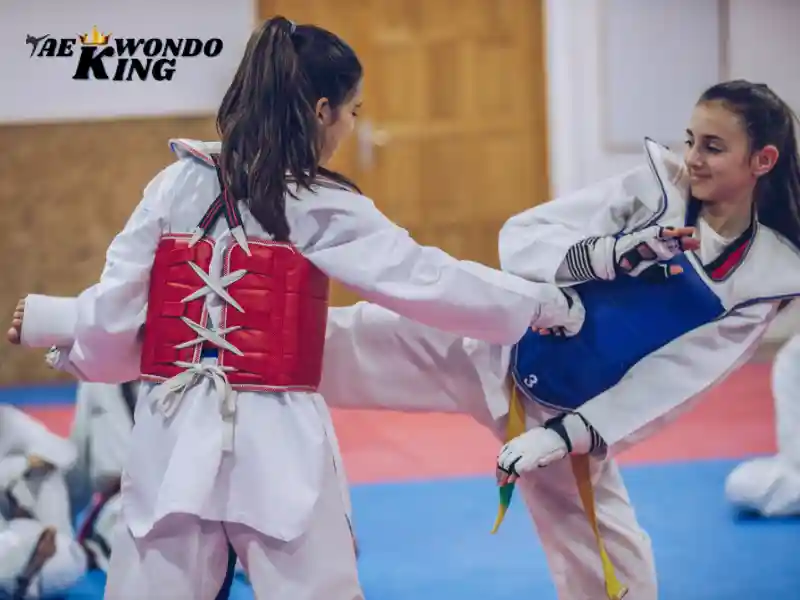
The Hogu is worn over the trunk and contains internal sensors that detect kicks and punches. Every athlete training for competition eventually needs a properly fitted electronic-compatible sparring gear set on Amazon to train with realistic scoring feedback. Fit matters here more than people expect, since a loose Hogu can shift during a match and cause a clean kick to miss the sensor zone entirely.
Electronic head protector
This headgear detects head kicks using the same sensor technology as the Hogu, while also protecting the athlete from injury. A properly sized electronic head protector on Amazon matters just as much for safety as it does for accurate scoring during sparring practice.
Sensor-equipped socks
Special socks with built in transmitters allow the head and body sensors to register the exact force and location of a kick. Training with a matched set of taekwondo sensor socks on Amazon helps athletes get comfortable with the exact feel of competition gear well before tournament day.
Referee scoring tablets
Corner judges use handheld tablets to confirm or challenge points, especially for punches, which are not electronically scored. Coaches sometimes recommend athletes practice with a basic taekwondo mouthguard and shin guard combo on Amazon during these punch focused drills, since manual scoring rounds often involve closer contact exchanges.
Video replay system
Coaches can request a review of disputed calls using recorded footage, giving both sides a fair chance to challenge questionable decisions. This system alone has resolved many controversies that older, fully manual scoring formats could never fix.
How sensors detect impact
Pressure sensors inside the protectors measure force and transmit data instantly to the scoring system, which calculates whether the hit meets the scoring threshold.
I’ve noticed many beginners think referees award every point manually. In reality, technology does much of the work before officials confirm specific actions.
| Equipment | Purpose | Used For |
|---|---|---|
| Electronic Hogu | Detect body kicks | Body scoring |
| Head Protector | Detect head kicks | Head scoring |
| Sensor Socks | Register foot impact | Electronic scoring |
| Referee Tablet | Penalties & punches | Manual decisions |
| Replay System | Review disputed actions | Coach challenges |
Understanding Gam-jeom Penalties
Penalties affect the score immediately. Even one careless mistake can change the outcome of a close match. Staying calm under pressure and avoiding careless penalties ties directly into the self discipline habits taekwondo builds over time.
What is a Gam-jeom?
A Gam-jeom is a penalty point awarded to the opponent for breaking a rule. Unlike a warning, it directly adds to the other athlete’s score.
How penalties affect the scoreboard
Every Gam-jeom subtracts nothing from the offending athlete directly, but instead adds one point to their opponent’s total, shifting the score in real time.
Stepping out of bounds
Leaving the ring boundary during an exchange results in a penalty, encouraging athletes to manage their footwork carefully.
Falling intentionally
Dropping to the ground to avoid an attack or waste time is a common and heavily penalized violation.
Grabbing or holding
Taekwondo is a striking sport, so grabbing an opponent to control distance or block a kick draws an immediate penalty.
Pushing
Using hands to shove an opponent off balance instead of striking is treated the same way as grabbing.
Avoiding the fight
Excessive backward movement or stalling tactics can result in a penalty for lack of engagement.
Illegal attacks
Strikes to the back, groin, or below the waist are not just unscored, they are actively penalized for safety reasons.
Unsportsmanlike behavior
Disrespectful gestures, arguing with officials, or unsafe conduct toward an opponent all fall under this category.
How Athletes Win a Taekwondo Match
Scoring the most points is only one way to win. WT rules provide several victory conditions, a topic explored in more depth in how you can actually win a fight using taekwondo.
Winning by points
The athlete with the highest score after the final round wins, assuming no other victory condition applies first.
Winning by point gap
If one athlete builds a large enough lead during a round, the match can end early under the point gap rule.
Winning by knockout (KO)
If an opponent cannot continue after a legal strike, the match ends immediately in favor of the athlete who landed it. True knockouts are rare in modern competition, though the different ways an athlete can knock out an opponent are still worth understanding for safety reasons.
Winning by referee stoppage (RSC)
Referees can stop a match for safety reasons if an athlete appears unable to defend themselves effectively.
Opponent disqualification
Repeated rule violations or serious misconduct can lead to disqualification, awarding the win to the other athlete. Weight class mismatches can sometimes contribute to safety concerns during a match, which is one reason understanding taekwondo weight limit categories matters before entering any tournament bracket.
Opponent withdrawal
If an athlete cannot continue due to injury or another reason, their opponent wins by default. This rule protects athlete health above all else, since no competition result is worth risking a serious injury.
Winning due to accumulated penalties
Reaching a set number of Gam-jeom penalties results in an automatic loss, regardless of the point total on the board.
How the Golden Round Works
Sometimes matches finish level after regulation time. That’s when the Golden Round decides the winner.
When overtime begins
If the score is tied after the third round, an additional sudden victory round begins immediately.
Golden Round scoring rules
The first athlete to score any point in the Golden Round wins the match outright, making every single exchange critical.
Priority and superiority
In rare cases where neither athlete scores, judges may award the win based on who displayed clear dominance or aggression during the extra round. This outcome is uncommon, since most Golden Rounds end quickly once one athlete commits to a clean attack rather than waiting passively for the other to make the first move.
Tactical adjustments during overtime
Smart athletes often shift strategy in the Golden Round, favoring safer, higher percentage techniques over risky spinning kicks.
Common mistakes during Golden Round
Rushing in recklessly is the most common error. Patience combined with a single clean attack wins more Golden Rounds than aggression alone, and staying composed under that pressure often comes down to the confidence athletes build through consistent taekwondo training.
Tournament experience teaches one simple lesson: don’t focus only on points. Smart athletes understand every possible route to victory.
| Winning Method | Explanation |
|---|---|
| Higher Score | Most points after final round |
| Point Gap | Lead reaches required margin |
| Knockout | Opponent cannot continue |
| Referee Stops Contest | Safety decision |
| Disqualification | Rule violation |
| Withdrawal | Opponent quits |
| Penalty Accumulation | Too many Gam-jeoms |
How Judges and Referees Make Scoring Decisions
Technology helps, but experienced officials still play a critical role in every match.
Center referee responsibilities
The center referee manages the match directly, calling penalties, controlling pace, and confirming punches that electronic sensors cannot detect. Becoming one takes years of preparation, a path described firsthand in what it takes to become a skilled taekwondo referee.
Corner judges
These officials confirm scoring decisions and help resolve disputes, working closely with the center referee throughout the match.
Jury review
A jury oversees the overall fairness of the competition and can intervene in unusual or controversial situations, adding another layer of accountability beyond the referees on the mat.
Coach video challenge
Coaches can request a formal review of a specific call, using recorded footage to argue for a change in the score. This tool has become one of the most valuable additions to modern taekwondo, since it gives coaches a real voice when a call seems clearly wrong.
When scores can be changed
Scores can only be adjusted through the official challenge process, never through informal complaints during the match itself.
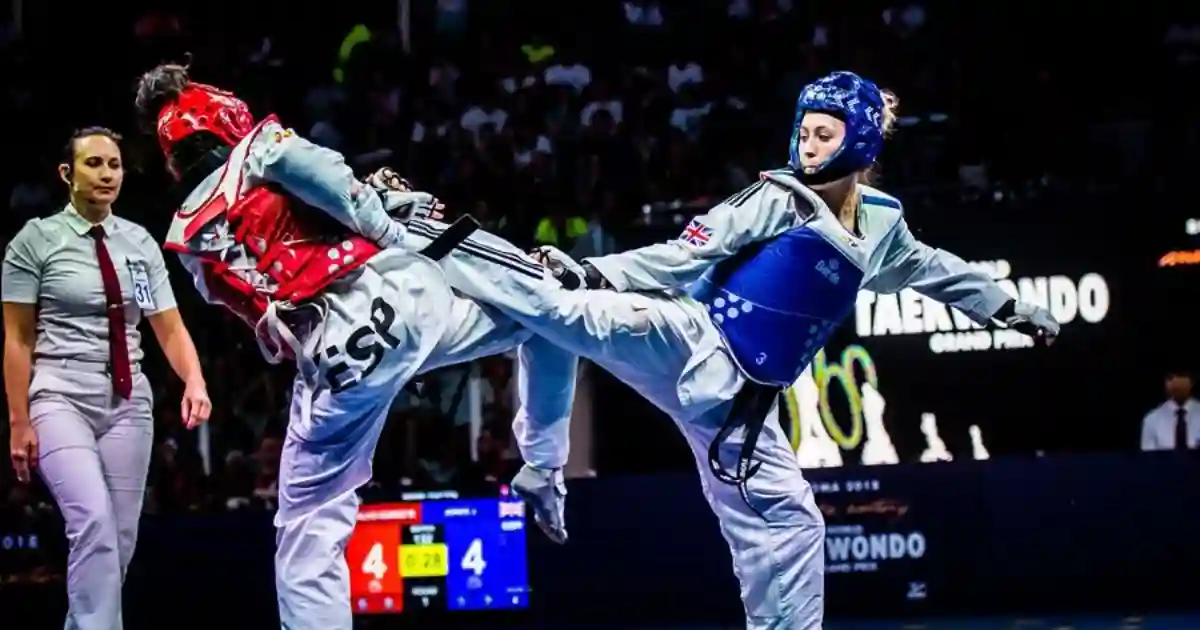
Understanding the Match Scoreboard
The scoreboard shows much more than the total points. Learning each section helps you follow the action in real time.
Total points
This is the running score for both athletes across all rounds combined.
Round scores
Some formats display points earned in each individual round, helping fans track momentum shifts and see the overall strengths and weaknesses different taekwondo athletes bring into a match.
Penalties
Gam-jeom counts are typically shown separately, since they factor directly into the final score and potential disqualification.
Time remaining
A visible countdown clock shows how much time is left in the current round.
Coach challenges
The scoreboard often displays whether a coach has used their available video review request.
Match status
Indicators show whether the match is active, paused for a review, or has ended.
Common Scoring Mistakes Beginners Make
Nearly every new athlete makes these errors. The encouraging part is that they are easy to fix with practice and awareness, and most fall directly under the most important lessons learned early in taekwondo training.
Chasing flashy kicks
New competitors often go for high value spinning kicks too early, ignoring safer scoring opportunities.
Ignoring penalties
Some beginners focus so heavily on offense that they forget stepping out of bounds or grabbing carries a real cost.
Poor timing
Throwing a technique a fraction of a second too early or late often means it lands with too little force to score.
Weak contact
Technique without enough power will not trigger the electronic sensors, no matter how accurate the aim.
Losing balance
Falling after an attack, even a scoring one, can open the door to an immediate counterattack.
Attacking outside legal targets
Strikes to the arms, legs, or back waste energy and never register as points.
Forgetting ring management
New athletes often get pushed to the edge of the ring without realizing it, leading to accidental boundary penalties.
Scoring Strategy Used by Experienced Competitors
Winning isn’t always about throwing more kicks. Often it’s about scoring smarter, protecting the lead, and forcing opponents into mistakes, a mindset built through countless hours of dedicated taekwondo practice and repetition.
Building an early lead
Veteran competitors often push hard in round one to build a cushion, then adjust their approach based on the score. This pattern shows up often when studying current world taekwondo kyorugi rankings, where top ranked athletes consistently control pace from the opening exchange.
Using body kicks consistently
Reliable two point body kicks add up faster than athletes expect, and they carry far less risk than head height techniques.
Creating spinning kick opportunities
Advanced athletes set up spinning kicks with feints and footwork rather than throwing them randomly, a skill built through years of practicing advanced taekwondo moves and combinations.
Managing penalties
Smart competitors avoid unnecessary risks that could hand free points to their opponent through a Gam-jeom.
Reading the electronic scoring system
Understanding how much force is needed to trigger a score helps athletes commit fully to each technique instead of holding back.
Adapting during each round
Strategy often shifts significantly between rounds based on the score, energy levels, and the opponent’s visible weaknesses.
One thing I noticed during weekend tournaments in Texas is that experienced athletes often win with patience, not constant attacks. Smart scoring beats reckless volume.
| Beginner Habit | Advanced Strategy |
|---|---|
| Throw many random kicks | Wait for high-percentage attacks |
| Ignore penalties | Protect every point |
| Chase knockouts | Control the scoreboard |
| Panic when behind | Stay patient and adjust tactics |
| Focus only on offense | Mix defense with counterattacks |
USA Expert Advice on Winning Through Smart Scoring
Coach Gareth Brown, a USA National Team coach, often reminds his athletes that consistently winning competitors are not always the fastest. They are the ones who understand the rules better than everyone else.
Know the rules before tournament day
Reviewing the current scoring rules and penalty list before every tournament prevents costly surprises mid match.
Train with electronic protectors
Practicing with the same gear used in competition builds an instinct for how much force is needed to score. A reliable taekwondo electronic scoring hogu and headgear set on Amazon lets athletes train under realistic conditions well before tournament day.
Practice scoring combinations
Drilling combinations that mix punches, body kicks, and occasional head kicks builds versatility that pure kickers often lack. A durable taekwondo kicking paddle and target set on Amazon makes it much easier to drill these combinations safely at home between class sessions.
Review match videos regularly
Watching footage of your own matches reveals patterns opponents can exploit, along with missed scoring opportunities.
Respect penalties as much as points
Treating every Gam-jeom as seriously as a missed scoring chance keeps athletes disciplined under pressure. This mental discipline connects closely to the role high self esteem plays in competitive taekwondo success.
Real-life context: At many USA local tournaments held on Saturdays, athletes spend part of the warm-up testing electronic hogus with sensor socks. You’ll often hear coaches remind students, don’t chase the highlight kick, score the clean one first. That practical mindset wins more matches than flashy techniques alone. This same discipline shows up off the mat too, in habits like managing frustration and anger through structured training, which keeps athletes composed during close matches.
Coaches and parents preparing a young athlete for their first tournament often start by reviewing what beginners should know before their first taekwondo competition, since match day nerves can undo months of good training. Proper gear matters here too. A well fitted taekwondo sparring gear bundle on Amazon, including shin guards and forearm pads, keeps young competitors protected while they learn the scoring system firsthand. Packing a spare mouthguard and a backup pair of taekwondo forearm and shin guards on Amazon in the competition bag has saved more than one match day for families I have coached over the years.
Frequently Asked Questions
How many points is a body kick in taekwondo?
A standard body kick earns two points, while a turning or spinning body kick earns more, following the values shown in the point table above.
How many points is a head kick?
A standard head kick earns three points, while a turning or spinning head kick earns five, the highest value in the entire scoring system.
Do punches score in taekwondo?
Yes, a legal punch to the trunk protector earns one point, though punches are used far less often than kicks in modern competition. Many gyms still emphasize punching fundamentals early on, similar to the approach found in effective self defense techniques taught alongside sparring skills.
What is a Gam-jeom penalty?
A Gam-jeom is a rule violation that adds one point directly to the opponent’s score, covering actions like grabbing, falling, or stepping out of bounds.
What happens if the score is tied?
A Golden Round begins, and the first athlete to score any point in that round wins the match immediately.
How do electronic protectors work?
Sensors inside the Hogu and head protector measure the force and location of each strike, transmitting the data instantly to the scoring system.
Can coaches challenge scoring decisions?
Yes, coaches can request a video review of a disputed call, though each team typically has a limited number of challenges per match.
What techniques score the most points?
A turning or spinning kick to the head scores the most points, reflecting the difficulty and risk involved in landing it cleanly. Building toward these techniques safely usually starts with beginner friendly taekwondo lessons designed for adults before progressing to advanced sparring drills.
Can you win without scoring more points?
Yes, athletes can win through a knockout, referee stoppage, disqualification, withdrawal, or accumulated penalties, regardless of the point total.
Are Olympic taekwondo scoring rules different?
Olympic competitions follow the same core WT scoring system used in most major international tournaments, though specific rule updates are confirmed before each Olympic cycle. Adaptive divisions follow a related structure outlined in the official para taekwondo competition rules by WT.
Understanding the full scoring picture also means knowing where to train. Parents researching options for their kids often start by comparing academies, since finding the right taekwondo gym and coaching environment makes a real difference in how quickly scoring instincts develop.
Final Recommendation
After years of coaching and refereeing at the competitive level, my honest advice is this. Learn the point values first, then study the penalties, since a single Gam-jeom can undo an entire round of hard work. Watch a few full matches with the scoreboard in view before your first tournament, and you will start recognizing patterns almost immediately. Train with electronic gear early so your body understands exactly how much force scores a point, not just how a technique looks. Respect the Golden Round rules, since one clean strike there decides everything. If you are teaching a younger athlete these concepts, pairing scoring lessons with a structured guide for teaching kids taekwondo fundamentals builds understanding much faster than rules alone. Understanding how taekwondo matches are scored will not just make you a smarter spectator. It will make you a smarter, more strategic athlete the next time you step onto the mat.

Founder, Owner, and CEO of TaekwondoKing.
He is one of the top 100 martial artists in the World and among the top 20 referees in Bangladesh.
Ehatasamul Alom is an esteemed Kukkiwon Certified Taekwondo 3rd Dan Black Belt with over 15 years of experience in this dynamic martial art. Born in Rajshahi, Bangladesh, Ehatasamul’s journey with Taekwondo began at the tender age of seven. His passion led him to compete at national and international levels, where he has bagged numerous awards and honors. He is also a member of the Taekwondo National Referee Panel.
With a Bachelor’s degree in Sports Science from the prestigious Rajshahi University, Ehatasamul has a deep understanding of the technical and scientific aspects of martial arts and some other martial arts.
In 2022, Ehatasamul created the “TaekwondoKing.com” to share his knowledge, Free Resources, Values, and Real experiences. His articles focus on Taekwondo training techniques, competition strategies, Sport Products Reviews, and the art’s rich history and philosophy. He also writes about the importance of mental fortitude and discipline, key aspects of his teaching philosophy. He has already launched many sports, Taekwondo, and health-related Free online tools. His goal is to inspire both beginners and seasoned practitioners worldwide through insightful and engaging content.
If you need any help, contact Ehatasamul Alom at any time.