How long does a taekwondo match last? That was the first question I asked before my first tournament. I pictured a long fight, like a boxing bout. Then I watched a match and it felt over in a blink. Later, I stepped in myself and two minutes felt like twenty.
The honest answer depends on your age group, your event, and the rules in use. In this guide, I will break down round times, rest breaks, and total match length. You will also learn why a match takes longer than the clock says, and how to train for it.
How Long Does a Taekwondo Match Last? The Short Answer
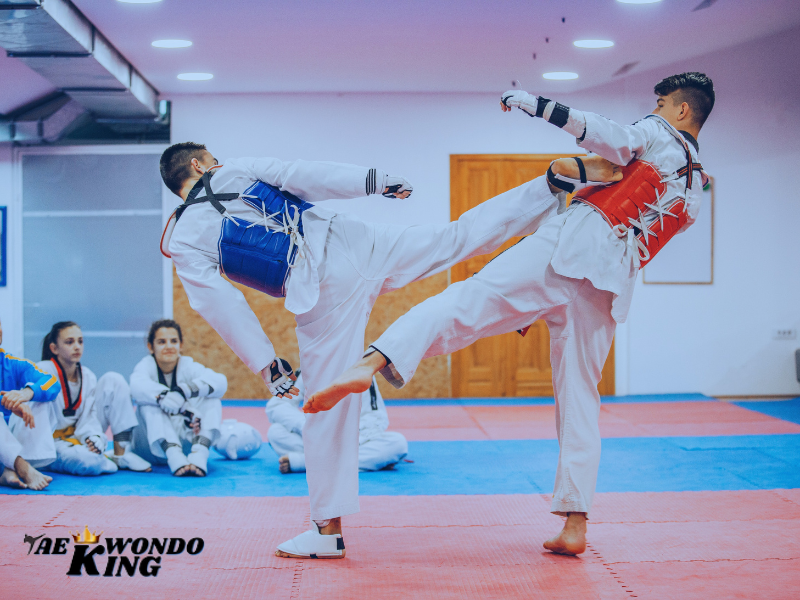
Here is the short version. A senior sparring match under World Taekwondo (WT) rules usually has three rounds of two minutes. You get a one-minute rest between rounds. That means up to six minutes of fighting.
Many matches end sooner. Some events use a best-of-three format, so a fighter who wins the first two rounds finishes early. Other matches stop after a knockout, a referee decision, or a big point lead.
Round Times by Age Group
Age matters more than most people think. Younger athletes fight shorter rounds. The WT-style event outlines I checked list these times.
| Division | Round time | Rest between rounds |
|---|---|---|
| Senior | 2 minutes | 1 minute |
| Junior | 1.5 minutes | 1 minute |
| Cadet | 1.5 minutes | 1 minute |
Not every event follows this exactly. A few outlines I read list juniors at two minutes instead. The event’s technical delegate can also change the times. Always read the outline for your own tournament.
A Note About Rules and Events
Rules differ between organizations. WT sparring, ITF-style matches, school events, and local open tournaments can all use different clocks. The numbers in this article come from WT-style events and a few local examples.
I am not able to confirm the rules for your specific event. Check the rulebook or ask the organizer. It takes two minutes and removes a lot of stress.
How Long Does a Taekwondo Match Last From Start to Finish?
Round time is only part of the story. A match also has rest breaks, bows, and possible extra rounds. Let me add it up for you.
The numbers below are clock time only. They do not include stops during the fight. I will cover those in the next section.
| Scenario | Fight time | Total with rest |
|---|---|---|
| Senior, won in 2 rounds | 4 minutes | 5 minutes |
| Senior, goes 3 rounds | 6 minutes | 8 minutes |
| Junior or cadet, won in 2 rounds | 3 minutes | 4 minutes |
| Junior or cadet, goes 3 rounds | 4.5 minutes | 6.5 minutes |
So the official clock for one senior match tops out at about eight minutes. That is shorter than most people expect. It is also hard work, and I will explain why later.
Why Some Matches End After Two Rounds
In a best-of-three match, you win by taking two rounds. If you win the first two, there is no third round. The match ends right there.
I remember watching a match that was over in a few minutes. The winner looked calm. The loser looked confused. A fast start can end a match before it really begins.
What Happens When a Match Goes Three Rounds
When the rounds split, you get a full third round. Both fighters are tired by then. Mistakes pile up, and small things like footwork and focus decide the result.
Third rounds are where I learned the most about myself. My plan fell apart if my legs were empty. Fitness matters more than most beginners expect.
How Long Does a Taekwondo Match Last in Real Time?
A match lasts longer than the clock suggests. The referee can pause the time. Injuries, equipment problems, and reviews all add real minutes.
I cannot give you one exact figure for real time. It changes with every match. A clean match may run close to the clock. A messy one can stretch much longer.
| Cause of delay | What happens |
|---|---|
| Injury or medical stop | The clock pauses for first aid |
| Equipment problem | The referee stops play to fix it |
| Video replay request | The match waits for a review |
| Penalty or rule question | The referee pauses to explain and decide |
| Bows and commands | Short pauses at the start and end |
When the Clock Stops
The referee controls the clock. A common command is “kal-yeo,” which means break. After it, fighters must stop attacking. In many situations, the time stops while the referee deals with the issue.
This is why you should never judge a match length by the clock alone. A two-minute round can take a lot longer to finish in the ring.
The One-Minute Injury Rule
If a fighter gets hurt, the referee can stop the time for medical help. The sources I found describe up to one minute of first aid. If the fighter cannot continue after that, the referee can end the match.
I have seen this part up close, and it is never fun. Everyone goes quiet. The best thing you can do is stay calm and wait. Do not walk around or lose your focus.
Video Replay and Equipment Checks
In WT events, coaches can ask for a review of certain calls. The match waits while officials check it. A coach may also ask for a test of the scoring equipment.
These pauses are short, but they add up. If you are the fighter, use them. Breathe, sip water if allowed, and think about your next move.
Ties and Golden Rounds: Does the Match Get Longer?
A tie can add time. Some events use a golden round. This is a short extra round where the first valid score wins. In the WT rules I looked at, it lasts one minute.
Not every event uses it. Newer best-of-three formats do not have a golden round. Some other events still use one, and some use a tiebreak list instead. Ask your coach before the event.
Where Golden Rounds Still Show Up
Local tournaments often use their own tie rules. One local rule sheet I read used two rounds, then a golden round if needed. Another style adds up total points.
If you are not sure, treat a tie as a possible extra minute of hard fighting. Prepare for it. That mindset saved me from panic once.
How Long Does a Taekwondo Match Last at Local Tournaments?
Local and school events can look very different from WT events. Organizers often shorten rounds to keep the day moving. They may also use fewer rounds for kids.
This is why I always tell students not to compare their match to a video of the Olympics. Different rules, different clocks.
| Event type | Example timing |
|---|---|
| WT senior event | 3 rounds of 2 minutes |
| WT junior or cadet event | 3 rounds of 1.5 minutes |
| One US state games (2019) | Kids: 2 rounds of 1 minute |
| One local rule sheet | Adults: 2 rounds of 2 minutes, plus golden round if tied |
These are examples, not a promise. Old rule sheets may be out of date. Check the latest outline for the event you plan to enter.
Kids’ Matches
Kids’ matches are often shorter. Some events use two short rounds with a brief break. This keeps matches safe and fun for younger students.
As a coach, I like this. Kids need to learn the basics before long, tiring rounds. A short match is enough to teach nerves, distance, and sportsmanship.
Adult and Black Belt Matches
Adult matches at local events may use two or three rounds. Some rule sheets use a break as short as 30 seconds. That can feel harsh if you trained for a full minute.
I once prepared for a long rest and found a short one. My heart rate did not drop in time. Now I always check the break length before I plan my warm-up and pacing.
Poomsae, Belt Tests, and Other “Matches”
Not every taekwondo event is sparring. Poomsae and belt tests have their own time. Many people search for match length when they really mean one of these.
Poomsae is a set pattern of moves, judged for accuracy and form. It does not use rounds. It is a single performance.
How Long Is a Poomsae Performance?
In the event outlines I read, recognized poomsae performances run up to about 90 seconds. Freestyle poomsae ran about 90 to 100 seconds in one outline. These numbers may change by event.
That is short, but it is demanding. You cannot hide mistakes. One wobble or one forgotten move can cost you.
What About Belt Tests?
Belt tests vary a lot by school. Some include sparring. Some do not. The time depends on the school and the belt level.
I cannot give you a standard number. Your instructor is the best source. Ask what you will be tested on and how long each part runs.
Why Two Minutes Feels Longer Than You Think
The clock says two minutes. Your body says something different. Sparring uses short, hard bursts. Your breathing gets fast, and your legs burn.
The first time I sparred a full round, I thought something was wrong with me. I was not unfit. I was just not used to this kind of effort.
What Fatigue Does to Your Match
When you tire, your kicks drop. Your hands fall. Your timing gets late. These are small changes, but they cost points.
A tired fighter also makes bad choices. I have thrown wild kicks late in a round just to get it over with. It never worked. Staying simple always worked better.
How to Train for Match Length
Train in the same pattern as the match. Work hard for the length of a round. Rest for the length of the break. Repeat.
| If your event uses | Train like this |
|---|---|
| 3 rounds of 2 minutes | Three 2-minute drills with 1-minute rests |
| 3 rounds of 1.5 minutes | Three 90-second drills with 1-minute rests |
| A golden round | One extra 1-minute drill at the end |
| Short rest breaks | Cut your rest time in practice |
Pad drills, shadow sparring, and light sparring all work. Start easy and build slowly. If you feel sharp pain or dizziness, stop and talk to a coach or doctor.
Myths About Taekwondo Match Length
Some ideas about match time float around gyms and forums. A few are wrong. Here are the ones I hear most.
| Myth | Reality |
|---|---|
| Every match lasts the full time | Many end early by knockout, penalty, or lead |
| All events use the same clock | Round times vary by age and event |
| The clock never stops | The referee can pause it |
| Short matches are easy | Two minutes of sparring is intense |
“Short Matches Mean Less Pressure”
This one surprised me the most. A short match leaves little room for mistakes. A slow start can cost you the round.
I used to treat round one as a warm-up. That was a mistake. In a short round, every second counts from the first whistle.
Planning Your Tournament Day Around Match Length
The match itself may be short. The day is not. You may wait for hours, then fight for a few minutes. Plan for both parts.
I learned this the hard way. I once warmed up too early and went cold before my match. Also I once ate too late and felt heavy. Small things like this matter.
Time Your Warm-Up
Warm up so you are ready, not tired. Start with light movement. Add kicks and short bursts. Stop when you feel loose.
Ask the staff how many matches are before yours. Watch the ring if you can. That helps you guess when to start. Plans change, so stay flexible.
Handle the Waiting
Bring water, a light snack, and a warm layer. Keep your mind calm. Do not scroll on your phone for two hours.
Watch other matches and notice the pace. See how the rounds feel. This helps you set your own plan and reduces first-match nerves.
Quick Answers About Taekwondo Match Length
These are the questions people ask me most. I kept the answers short so you can scan them fast.
How long does a taekwondo match last at the Olympics?
An Olympic match has three rounds of two minutes, with one-minute rests. That is up to six minutes of fighting. Some matches end sooner, and the referee can pause the clock.
How long does a taekwondo match last for kids?
It depends on the event. WT-style cadet and junior matches often use 1.5-minute rounds. Local kids’ matches can be even shorter. Check your event outline.
How many rounds are in a taekwondo match?
Most WT-style matches have three rounds. In a best-of-three match, you win by taking two rounds. Some local events use only two rounds.
How long is the rest between taekwondo rounds?
One minute in most WT-style events. Some local events use a shorter break, such as 30 seconds. Confirm this before you compete.
Does the clock stop during a taekwondo match?
Yes, the referee can pause it for injuries, equipment problems, and some reviews. That means a match often takes longer in real time than the round times add up to.
Final Thoughts
So, how long does a taekwondo match last? For a senior WT-style match, expect up to three rounds of two minutes with one-minute rests. Junior and cadet rounds are often 1.5 minutes. Real time runs longer because of pauses, and local events may use their own clocks. The short clock can fool you. Those minutes are some of the hardest you will spend.
My honest advice is simple. Confirm the rules for your event. Train in round-length blocks. Plan your warm-up around the schedule. Then trust your practice. Rules change over time, so always check the latest outline before you compete.

Founder, Owner, and CEO of TaekwondoKing.
He is one of the top 100 martial artists in the World and among the top 20 referees in Bangladesh.
Ehatasamul Alom is an esteemed Kukkiwon Certified Taekwondo 3rd Dan Black Belt with over 15 years of experience in this dynamic martial art. Born in Rajshahi, Bangladesh, Ehatasamul’s journey with Taekwondo began at the tender age of seven. His passion led him to compete at national and international levels, where he has bagged numerous awards and honors. He is also a member of the Taekwondo National Referee Panel.
With a Bachelor’s degree in Sports Science from the prestigious Rajshahi University, Ehatasamul has a deep understanding of the technical and scientific aspects of martial arts and some other martial arts.
In 2022, Ehatasamul created the “TaekwondoKing.com” to share his knowledge, Free Resources, Values, and Real experiences. His articles focus on Taekwondo training techniques, competition strategies, Sport Products Reviews, and the art’s rich history and philosophy. He also writes about the importance of mental fortitude and discipline, key aspects of his teaching philosophy. He has already launched many sports, Taekwondo, and health-related Free online tools. His goal is to inspire both beginners and seasoned practitioners worldwide through insightful and engaging content.
If you need any help, contact Ehatasamul Alom at any time.