The first time I stood next to a tournament mat, I thought a fight would be over in a blink. Then I watched the clock stop, the referee call breaks, and the fighters bow in and out. So, how long is a taekwondo match? On paper, the answer is short. In real life, it feels longer.
In this guide, I will walk you through the real numbers. You will see round times, rest breaks, the golden round, and the ways a match can end early. I will also share a few mistakes I made, and how the clock should change the way you train.
How Long Is a Taekwondo Match Under World Taekwondo Rules?
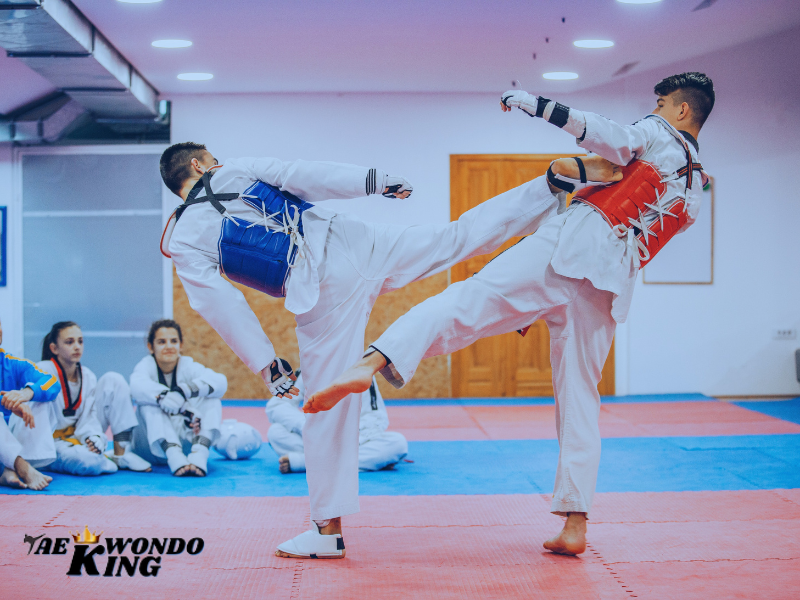
The standard answer is simple. A sparring match, called kyorugi, has three rounds. Each round lasts two minutes. You get a one minute rest between rounds. That is the format in the World Taekwondo competition rules in force as of June 1, 2026.
Add it up and you get six minutes of fighting. Add the two rest breaks and the full clock reads eight minutes. Rules change from time to time, so check the latest version before a big event.
| Match Part | Standard Time |
|---|---|
| Round 1 | 2 minutes |
| Rest break | 1 minute |
| Round 2 | 2 minutes |
| Rest break | 1 minute |
| Round 3 | 2 minutes |
| Total fighting time | 6 minutes |
| Total with breaks | 8 minutes |
Why Is the Real Time Longer Than the Clock Time?
The clock stops a lot. Every time the referee calls “Kal-yeo,” which means break, the match time stops. It starts again on “Kye-sok,” which means continue.
So the scoreboard may say eight minutes, while your watch says more. Penalty calls, falls, and fighters stepping out of bounds all add small pauses. A knockdown adds a longer one. I cover those pauses in a later section.
How Fast Can Points Pile Up in Two Minutes?
Two minutes sounds short. Then you see how points work. A punch to the body scores one point. A kick to the body scores two. A kick to the head scores three. A turning kick doubles the value, so it is four points to the body and six to the head. Each penalty on your opponent adds one more point for you.
One good exchange can swing a round. That is why the short clock never feels slow. It also explains why the golden round and the point gap rule matter so much.
How Long Is a Taekwondo Match When the Score Is Tied?
A tie after round three needs a decider. That decider is the golden round. It lasts one minute, and it starts after a one minute rest.
Here is the twist. The scores from the first three rounds are wiped out. Both fighters start at zero. The first fighter to score two points wins. A fighter also wins if the opponent gets two gam-jeom, which are penalty points.
Do the math and the longest standard match on the clock runs ten minutes. That is six minutes of rounds, two rest breaks, one more rest, and the one minute golden round.
What Happens If Nobody Scores Two Points in the Golden Round?
Sometimes the golden minute ends with fewer than two points. Then the referee and judges use a superiority decision. The rules list the tiebreakers in a set order. I find the order easier to remember in a table.
| Order | What Decides It |
|---|---|
| 1 | A point scored by a punch in the golden round |
| 2 | More hits registered by the scoring system in the golden round |
| 3 | More rounds won in the first three rounds |
| 4 | Fewer gam-jeom across all four rounds |
| 5 | Referee and judges decide, based on the golden round |
A single punch point in the golden round can settle a tied match before anything else on the list. That is a good reason to keep your punching sharp, even if kicks get all the attention.
How Long Is a Taekwondo Match in the Best-of-Three Rounds System?
World Taekwondo rules also include a best-of-three system. Each round is still two minutes, with one minute of rest. There is no golden round.
Instead, each round is scored on its own. A tied round goes to a superiority decision, which starts with who scored more points with turning or spinning kicks. The fighter who wins more of the three rounds takes the match.
How Long Is a Taekwondo Match If It Ends Early?
Many matches never reach the final buzzer. That is why eight minutes is the full length, not a promise. Several things can end a match sooner.
| Early Ending | What Triggers It |
|---|---|
| Point gap | A 20-point lead after round two, or at any time in round three |
| Referee stops the contest | A fighter cannot continue, or the referee or doctor decides it is unsafe |
| Punitive declaration | A fighter collects ten gam-jeom |
| Withdrawal | A fighter quits from injury, or the coach throws in the towel |
| Disqualification | A failed weigh-in, or no show after the third call |
How Does the Point Gap Rule Work?
This rule confuses many new fans. If one fighter leads by 20 points after round two, the referee stops the match. The same thing happens if the gap hits 20 at any point in round three.
Big gaps can happen faster than you think. A clean turning kick to the head is worth six points. Per the rules, the point gap does not apply in senior semifinals and finals.
What About Knockouts and Safety Stops?
A knockdown stops the clock. The referee counts out loud, and the count must reach eight before the fight can restart. If the fighter cannot continue, the referee stops the contest.
Safety comes first in the rules. The referee can stop a match to protect a fighter. The doctor on site can end it too.
Which Penalties Can Cut a Match Short?
Penalties are called gam-jeom. Each one gives your opponent a point. Stepping out of bounds, falling, grabbing, pushing, stalling, and kicking below the waist can all earn one. So can hitting the head with the hand.
A fighter who collects ten gam-jeom loses by punitive declaration. That limit is high. Still, penalties add up fast in a close match, because each one is also a free point for your opponent.
How Long Is a Taekwondo Match for Kids, Cadets, and Juniors?
Not every fighter gets the senior format. World Taekwondo splits fighters by age. Cadets are 12 to 14. Juniors are 15 to 17. Seniors fight in the adult division.
At several 2026 events I checked, junior and cadet matches used three rounds of 90 seconds with a one minute rest. Senior matches at the same events kept the two minute rounds. The rules also let the event’s technical delegate, the official in charge of rules for that event, change the round setup.
| Event Type | Round Setup |
|---|---|
| Senior at World Taekwondo events | 3 rounds of 2 minutes, 1 minute rest |
| Many junior and cadet events | 3 rounds of 90 seconds, 1 minute rest |
| Options a technical delegate can pick | 3 x 1 minute, 3 x 90 seconds, 2 x 2 minutes, or 1 x 5 minutes |
| Local or club events | Set by the organizer, so check the bulletin |
How Long Is a Taekwondo Match at Local Tournaments?
Local events often bend the rules. National bodies can change details with approval. The USA Taekwondo 2026 kyorugi rules, for example, say contest duration may be modified with prior approval.
So younger kids and color belt divisions may get shorter rounds. I cannot give one number that fits every event. The tournament bulletin is the only place to check, and I read it twice before I register.
How Long Is a Taekwondo Match Once the Clock Stops?
Clock time and real time split apart here. Some pauses are short. Some are long. Knowing them helps you plan your energy.
| Pause | What Happens to the Clock |
|---|---|
| Referee calls Kal-yeo | The clock stops until the referee calls Kye-sok |
| Knockdown | The clock stops while the referee counts to at least eight |
| Injury treatment | One minute of first aid, plus up to two more if the doctor asks |
| Rest between rounds | One minute off the fight clock |
How Long Can Injury Time Last?
After an injury, the referee stops the match and allows one minute for first aid. The doctor on site can ask for up to two more minutes. If the fighter still cannot continue, the referee declares a result under the rules.
A bruise is different. If the referee thinks the pain comes only from a bruise, the referee tells the fighter to stand up and continue. Three refusals end the match.
Is the Buzzer Always the End of the Round?
Not quite. The rules say a gam-jeom can still be given and scored after the match clock runs out. So the round may be over, but the referee’s call still counts.
Watch the last ten seconds of each round too. A passive penalty in that window gives the other fighter two points, not one. Stepping out of bounds, falling, and running away all count as passive.
How Long Is a Taekwondo Match Compared With a Whole Tournament Day?
The match is the short part. The waiting is the long part. Weigh-in happens the day before. A random weigh-in can happen on the morning of the competition. Then you wait for your call.
The athlete calling desk announces your name three times, starting 30 minutes before the scheduled start. Miss the third call and you are disqualified. That rule still makes my stomach drop. Your rest time between matches depends on the bracket and the schedule, and it changes at every event.
| Mistake | Better Approach |
|---|---|
| Warming up too early | Time your warm-up so you are ready when the calls begin |
| Missing the calls | Stay near the calling desk, because the third missed call means disqualification |
| Trusting the posted schedule | Schedules shift, so stay ready and fed |
| Packing the wrong mouthguard | Bring a white or clear one that covers your upper teeth |
| Wearing gear that does not fit | Inspectors check fit, and they can send you to change it |
What Should You Do While You Wait?
Keep it simple. Stay warm, sip water, and eat something light that you already know sits well. Skip anything new on tournament day. Stay close enough to hear your name.
I pack my spare gear first now, not last. Inspectors check that your gear is approved and fits before you step on the mat. A missing mouthguard is a silly way to lose a day of work.
A Note for Parents
If you are a parent, plan for waiting. Ask the coach for your child’s division, the round format, and the check-in time. The match may last only a few minutes. The day around it can run much longer.
How Long Is a Taekwondo Match in Poomsae and Other Formats?
Poomsae is not a fight. It is a performance judged by scores, so there are no rounds. The time limit applies to the routine. At several 2026 World Taekwondo events I checked, recognized poomsae had a limit of 90 seconds. One freestyle event asked for 90 to 100 seconds.
So if you came here from a poomsae search, think in seconds, not minutes. Sparring is the format with rounds, rests, and a golden round.
How Long Is Sparring in Regular Class?
Class sparring has no universal rule. Your instructor sets the rounds. Some schools copy the tournament format, and some use shorter drills. Ask your instructor, then train to the format of your next event.
What About ITF-Style Events?
ITF-style events follow their own rulebook, so the numbers can differ. I do not want to guess here. Check the organizer’s rules for the exact round times.
How Long Is a Taekwondo Match, and How Should You Train for It?
Knowing how long a match runs changes how you train. Two minutes sounds short. It is not, when you move the whole time. I trained for general fitness before I trained for rounds, and that was backward.
Train in Timed Rounds
Use a timer. Spar or drill for two minutes, then rest for one. Repeat three times. This matches the standard format, and it teaches your body the rhythm. If you will compete as a junior or cadet, switch to 90 second rounds.
Pace Round One
I used to sprint in round one. By round three, my kicks were slow and my guard dropped. Match length punishes that. Aim for steady pressure early, so you still have energy for the finish.
What Does Each Round Feel Like?
Round one is a feeling-out round. You test distance and watch your opponent’s habits. Round two is where tired legs start to show. Round three is about decisions.
If you lead, you protect the lead without stalling. If you trail, you take smart risks. Stalling costs you a penalty, and the last ten seconds cost double.
Use the One Minute Rest
The rest is short. I wasted mine early on by replaying mistakes in my head. Now I breathe, sip water, and listen to my coach. Only one thing matters in that minute: get ready for the next round.
Practice the Overtime Minute
The golden round is one minute where one point can change everything. Practice starting from zero. Drill a clean punch, a safe kick, and calm footwork. Then you will not panic if the match goes there.
Final Thoughts
So, how long is a taekwondo match? In the standard format, it is three rounds of two minutes with one minute of rest. That is six minutes of fighting and eight minutes on the clock. A tie adds a one minute golden round. Real time runs longer because the clock stops, and many matches end early.
My honest opinion is simple. Learn the format for your own event first. Junior, cadet, and local rules can differ, and rules change over time. Then train in timed rounds, respect the last ten seconds, and treat the rest minute like a real tool. You will feel calmer on the mat.

Founder, Owner, and CEO of TaekwondoKing.
He is one of the top 100 martial artists in the World and among the top 20 referees in Bangladesh.
Ehatasamul Alom is an esteemed Kukkiwon Certified Taekwondo 3rd Dan Black Belt with over 15 years of experience in this dynamic martial art. Born in Rajshahi, Bangladesh, Ehatasamul’s journey with Taekwondo began at the tender age of seven. His passion led him to compete at national and international levels, where he has bagged numerous awards and honors. He is also a member of the Taekwondo National Referee Panel.
With a Bachelor’s degree in Sports Science from the prestigious Rajshahi University, Ehatasamul has a deep understanding of the technical and scientific aspects of martial arts and some other martial arts.
In 2022, Ehatasamul created the “TaekwondoKing.com” to share his knowledge, Free Resources, Values, and Real experiences. His articles focus on Taekwondo training techniques, competition strategies, Sport Products Reviews, and the art’s rich history and philosophy. He also writes about the importance of mental fortitude and discipline, key aspects of his teaching philosophy. He has already launched many sports, Taekwondo, and health-related Free online tools. His goal is to inspire both beginners and seasoned practitioners worldwide through insightful and engaging content.
If you need any help, contact Ehatasamul Alom at any time.