A friend once asked me, “So how is taekwondo played? Do you just kick each other until someone gives up?” I laughed, but I understood the question. From the outside, a match looks fast and confusing. Numbers jump on a screen, a referee shouts in Korean, and nobody explains a thing.
In this guide, I explain how taekwondo is played in simple words. You will learn how a sparring match works, how points are scored, and which moves are not allowed. You will also see how forms competition works. I share what I wish I had known before my first sparring session, so you can walk in feeling ready.
How Is Taekwondo Played? The Short Answer
Here is the short version. Taekwondo is played in two main ways. In sparring, two athletes score points by landing kicks and punches. In forms, one athlete performs a set pattern while judges score it.
Most people mean sparring when they ask this question. So most of this article focuses there. I cover forms later, because they matter too.
Is Taekwondo Really “Played”?
Taekwondo is a martial art, so many instructors say “train” or “practice” instead of “play.” But people search for how taekwondo is played because they see it as a sport. That is fair. It has rules, scores, and winners, and it has been an Olympic sport since the 2000 Sydney Games.
I use both words in this guide. Use whichever feels natural to you.
The Main Ways Taekwondo Is Played
Taekwondo has more than one competition format. Here is a quick map before we go deeper.
| Event | What Happens |
|---|---|
| Kyorugi (sparring) | Two athletes face off and score points with kicks and punches |
| Poomsae (forms) | One athlete, or a team, performs a set pattern while judges score it |
| Team and mixed team events | Athletes compete as a group, with rules that vary by event |
| Para taekwondo | Adapted rules for athletes with impairments; in sparring, only kicks score |
| Kyukpa (breaking) | Boards are broken to show power and accuracy, often in tests and demonstrations |
Not every school or tournament offers every event. Check what your local club does before you sign up.
How Is Taekwondo Played in a Sparring Match?
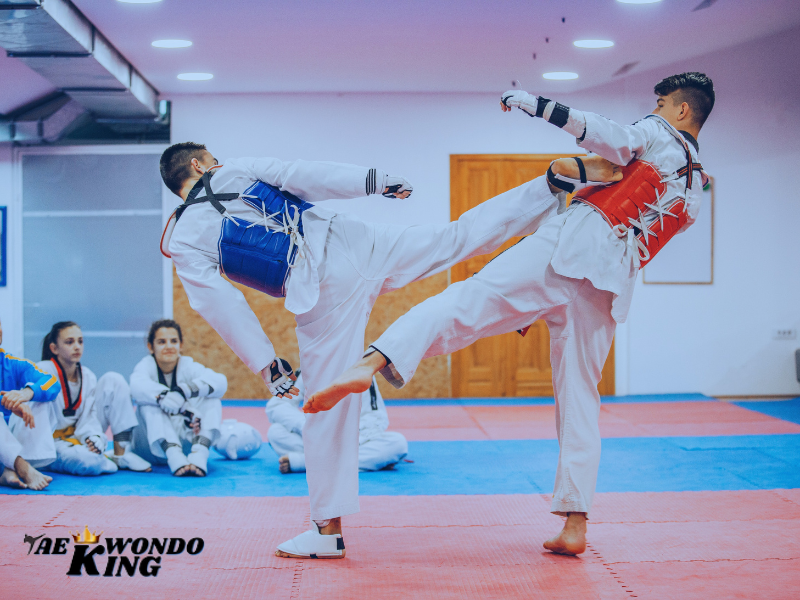
Sparring is the part you see on TV. It looks wild, but it follows a clear order. Once you know the order, it gets much easier to follow.
How a Match Starts
Two fighters enter the ring. One wears red, called Hong. The other wears blue, called Chung. In most formal matches, they bring their head protectors tucked under one arm.
The referee checks that each fighter has a mouthguard. Then both fighters bow to the referee and to each other. The referee calls commands in Korean, such as “Charyeot” for attention and “Kyeong-rye” for bow. Then the match begins.
I still remember how strange the bowing felt at first. I wanted to start kicking right away. Now I see why it matters. That bow sets the tone for the whole match.
How Long a Match Lasts
At senior level, a standard match has three rounds. Each round is two minutes long. Fighters get a one-minute break between rounds.
Local events and younger age groups often use shorter rounds. Some school tournaments I have seen use only two short rounds. Always check the rules for your own event.
How a Winner Is Decided
The winner is usually the fighter with more points after the rounds. A knockout also ends the match. So does a disqualification.
If the score is tied, a short extra round, often called a golden round, can decide it. Some events also stop a match early if one fighter leads by a very large gap. The exact numbers have changed in recent years, so I will not quote them here. Check the current rulebook for your event.
Where You Can and Cannot Hit
This part confuses beginners the most. The rules are simple once you see them.
Kicks and punches are allowed on the trunk, the part of the body covered by the chest protector. You cannot hit the spine. On the head, only kicks are allowed. Punching the head is not allowed in competition.
That last rule surprises many new viewers. They expect boxing-style punches to the face. Taekwondo is a kicking sport first, and the rules protect the head from hand strikes.
How Points Work When Taekwondo Is Played
Scoring is where most people get lost. Here is the simple version. Different kicks are worth different points, and harder techniques earn more.
| Technique | Points |
|---|---|
| Valid punch to the trunk | 1 |
| Valid kick to the trunk | 2 |
| Valid turning kick to the trunk | 4 |
| Valid kick to the head | 3 |
| Valid turning kick to the head | 6 |
These values come from recent World Taekwondo rule summaries. Scoring has changed before and may change again. If you plan to compete, read the latest rulebook for your event instead of trusting any article, including this one.
What Makes a Point “Valid”
A point is not just a touch. The hit must be clean and strong enough to count. A light tap does not score.
In many high-level events, electronic sensors in the body and head protectors register the hit. Punches are often confirmed by judges or by special gloves. This system takes a lot of guesswork out of scoring.
Why Turning Kicks Are Worth More
Turning kicks are spinning kicks, like a spinning back kick or a spinning hook kick. They are harder to do. They also leave you exposed if you miss.
That is why the rules reward them. A good spinning head kick can change a match in one second. I have watched strong fighters win rounds with just one of them.
The Strategy Behind the Numbers
Early on, I chased head kicks all the time. They looked cool, and they scored big. But I missed a lot, and I got tired fast.
Then I watched a calm opponent beat me with simple body kicks. She scored again and again, and I never caught up. That day taught me that steady, clean points beat flashy misses.
Fouls and Penalties: How Taekwondo Players Lose Points
Taekwondo has strict rules to keep matches fair and safe. When a fighter breaks a rule, the referee gives a penalty called a gam-jeom. In general, each gam-jeom gives the opponent a point.
Here are some common fouls you will see.
| Foul | What It Looks Like |
|---|---|
| Crossing the boundary line | Stepping outside the ring with any part of the foot |
| Grabbing or pushing | Holding the opponent or shoving them away |
| Kicking below the waist | Low kicks are not allowed |
| Hitting the head with the hand | Punching to the face or head |
| Passivity | Avoiding the fight or stalling |
| Attacking after “Kalyeo” | Hitting after the referee calls a break |
This is not the full list. Falling down, attacking a fallen opponent, and misconduct can also be penalized. The official rulebook has every detail.
The Passivity Rule
Taekwondo wants action. A fighter who runs away or stalls can get penalized. Recent rules are even stricter about stalling near the end of a round.
I used to think backing up was a smart way to protect a lead. In taekwondo, it can cost you points. If you want to win, you have to stay in the fight.
A Mistake I Made With the Boundary Line
In my first tournament, I stepped out of the ring more than once. I was so busy defending that I forgot to watch the line. Each step cost me a point.
I felt silly afterward. Now I check the floor with my feet and my eyes as I move. It sounds small, but it saves points.
What Gear Is Used When Taekwondo Is Played
Gear keeps sparring safe and makes scoring possible. You do not need every piece on day one. But you should know what each piece does.
| Gear | Why It Matters |
|---|---|
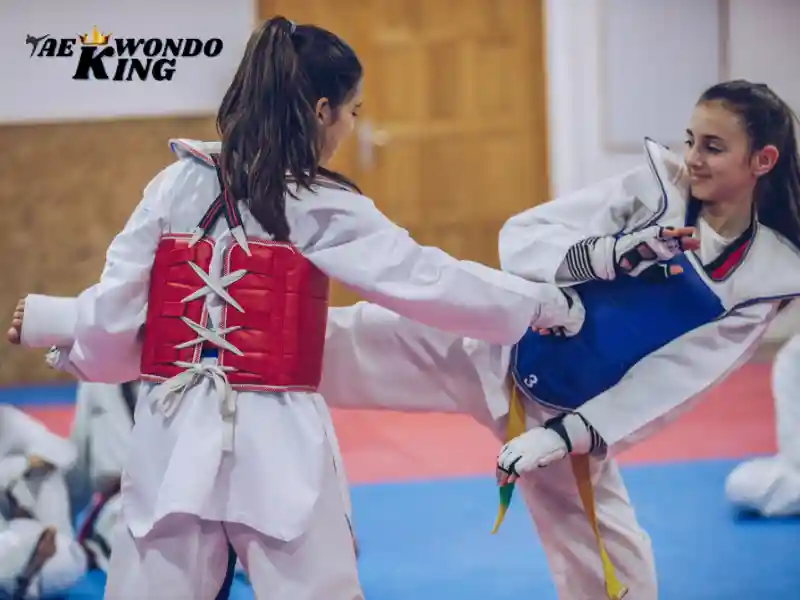
| Trunk protector (hogu) | Covers the body and often holds the scoring sensors |
| Head protector | Protects the head from kicks |
| Mouthguard | Protects teeth and jaw |
| Groin guard | Protects a sensitive area |
| Forearm and shin guards | Absorb impact on arms and legs |
| Hand protectors | Protect the hands and may detect punches in some setups |
Fit Matters More Than Brand
A protector that is too loose can shift around and leave gaps. One that is too tight can limit your breathing. When I bought my first set, I picked the cheapest one. It slid around and distracted me the whole round.
If you can, try gear on before you buy. Ask your instructor for advice. Many clubs also lend gear to beginners.
How Is Taekwondo Played in Forms Competition (Poomsae)?
Not all taekwondo competition involves fighting. Poomsae is the forms side. It is quieter, but it is just as demanding.
What Poomsae Looks Like
In poomsae, an athlete performs a set pattern of blocks, strikes, kicks, and stances. There is no opponent. You imagine one.
Judges score the performance. They look at how accurate your technique is. They also look at things like power, rhythm, and how well you show energy and focus.
Recognized and Freestyle Forms
Many events use recognized poomsae, which are official patterns everyone must know. Some events also have freestyle poomsae, where athletes create their own routine. Rules and formats vary, so check each event.
Some events use rounds that narrow the field, such as preliminaries, semi-finals, and finals. You may need to perform more than once in a single event.
Why I Respect Forms Competitors
I used to think forms were the “easy” side. Then I tried to hold a stance perfectly still under a judge’s eyes. My legs shook, and my mind went blank.
Forms taught me something sparring never did. You cannot hide behind speed or luck. Every small mistake shows.
Class Sparring vs Tournament Matches
Many beginners think class sparring looks just like a tournament. It usually does not. The goals are different, and so is the pace.
| Comparison Point | In Class | In a Tournament |
|---|---|---|
| Contact level | Often light and controlled | Hits must be clean and strong enough to score |
| Scoring | Often informal or none | Official scoring with referees and judges |
| Main goal | Learn timing and distance | Win the match |
| Who runs it | Your instructor | Trained match officials |
Every school is different. Some classes spar harder than others. Ask your instructor what to expect before your first session.
Why Class Sparring Feels Different
In class, your partner wants you to improve. Your instructor can stop and explain a mistake. That makes it a safe place to try new ideas.
A tournament is faster and less forgiving. Nobody pauses to teach you. I learned that the hard way when I froze in my first match.
How I Would Start Playing Taekwondo as a Beginner
If you are new, do not rush to the tournament side. Build your base first. Good habits early will save you months of bad ones later.
Your First Few Classes
Most beginner classes include a warm-up, basic stances, kicks, and simple forms. Many schools do not include full sparring on day one. That is normal.
I was nervous before my first class. I thought everyone would stare at me. They did not. Most people were busy worrying about their own kicks.
Your First Sparring Session
When you first spar, you will usually wear gear and work light with a partner. Your goal is not to win. Your goal is to stay calm and keep your hands up.
My first session was a mess. I held my breath, kicked too hard, and ran out of energy in under a minute. Slowing down helped more than anything else.
Common Beginner Mistakes
Almost every beginner makes the same errors. I made all of these. Here is how to fix them.
| Mistake | Better Approach |
|---|---|
| Kicking as hard as possible | Aim for clean, controlled kicks |
| Dropping your hands | Keep your hands up near your face |
| Standing still | Keep your feet moving |
| Throwing only one kick | Mix kicks, fakes, and footwork |
| Holding your breath | Breathe steadily through the round |
Basic Strategy: Distance, Timing, and Patience
Taekwondo is not only about fast legs. It is also about thinking. Good fighters make smart choices about when to move and when to wait.
Distance Is Everything
Distance means how far you stand from your opponent. Too close, and you cannot kick. Too far, and you cannot reach.
I spent months learning this. My coach told me to “own the space.” At first, I did not get it. Now I see that the person who controls distance often controls the match.
Timing and Counterattacks
Timing means choosing the right moment to attack. Many scores come from counterattacks. You wait for your opponent to move, then you strike.
A counterattack needs patience. I used to attack first all the time. I got tired, and I got hit. Waiting for the right moment felt strange, but it worked better.
Stamina Counts
Three rounds is a long time when you are moving fast. Stamina keeps your technique clean when you get tired. Without it, your kicks get sloppy and your guard drops.
Footwork drills, skipping rope, and regular classes all helped me. Nothing fancy. Just steady practice.
Is Taekwondo Safe? Injury Prevention Basics
Taekwondo is a contact sport. Bruises, sprains, and sore muscles can happen, and more serious injuries are possible. Good habits lower the risk, but they cannot remove it.
Habits That Help
Warm up before every class. Stretch gently. Wear properly fitted gear when you spar. Tell your partner if the contact feels too hard.
If you get hurt, stop and tell your instructor. Do not try to “walk it off” if something feels wrong. For any hit to the head, or any pain that does not fade, see a doctor or other qualified health professional.
Why Control Matters
Control is a big part of safe sparring. A good partner hits cleanly without trying to hurt you. I learned to respect partners who could control their kicks. They helped me improve without fear.
Frequently Asked Questions About How Is Taekwondo Played
How is taekwondo played in simple words?
Taekwondo is played mainly through sparring and forms. In sparring, two athletes score points by landing legal kicks and punches. In forms, one athlete performs a set pattern while judges score it.
How do you win a taekwondo match?
You usually win by having more points after the rounds. A knockout or the opponent’s disqualification can also end the match. Tied matches may go to a short extra round.
How long is a taekwondo match?
At senior level, a standard match has three rounds of two minutes, with a one-minute break between rounds. Younger divisions and local events may use shorter rounds.
Can you punch in taekwondo?
Yes, but only to the trunk. Punches to the head are not allowed in competition. Only kicks can target the head.
Is taekwondo a full-contact sport?
In competition, hits must be clean and strong enough to score. In class, contact is often lighter and more controlled. It depends on the school.
How is taekwondo played at the Olympics?
Olympic taekwondo uses World Taekwondo sparring rules. Athletes compete in weight categories, and electronic scoring helps decide points. Taekwondo has been an Olympic sport since the 2000 Sydney Games.
Final Thoughts
The biggest lesson I learned is that taekwondo is easier to follow than it looks. Once you know the basics, you can see the plan behind the speed. There are rounds, points, rules, and clear ways to win. Good fighters win with smart choices, not just fast legs.
My honest advice is to start slow and stay curious. Learn the rules, build your base, and do not rush into tournaments. Rules change from time to time, so always check the current rulebook for your event. Then enjoy the process. Everyone who steps onto the mat started out confused too.

Founder, Owner, and CEO of TaekwondoKing.
He is one of the top 100 martial artists in the World and among the top 20 referees in Bangladesh.
Ehatasamul Alom is an esteemed Kukkiwon Certified Taekwondo 3rd Dan Black Belt with over 15 years of experience in this dynamic martial art. Born in Rajshahi, Bangladesh, Ehatasamul’s journey with Taekwondo began at the tender age of seven. His passion led him to compete at national and international levels, where he has bagged numerous awards and honors. He is also a member of the Taekwondo National Referee Panel.
With a Bachelor’s degree in Sports Science from the prestigious Rajshahi University, Ehatasamul has a deep understanding of the technical and scientific aspects of martial arts and some other martial arts.
In 2022, Ehatasamul created the “TaekwondoKing.com” to share his knowledge, Free Resources, Values, and Real experiences. His articles focus on Taekwondo training techniques, competition strategies, Sport Products Reviews, and the art’s rich history and philosophy. He also writes about the importance of mental fortitude and discipline, key aspects of his teaching philosophy. He has already launched many sports, Taekwondo, and health-related Free online tools. His goal is to inspire both beginners and seasoned practitioners worldwide through insightful and engaging content.
If you need any help, contact Ehatasamul Alom at any time.