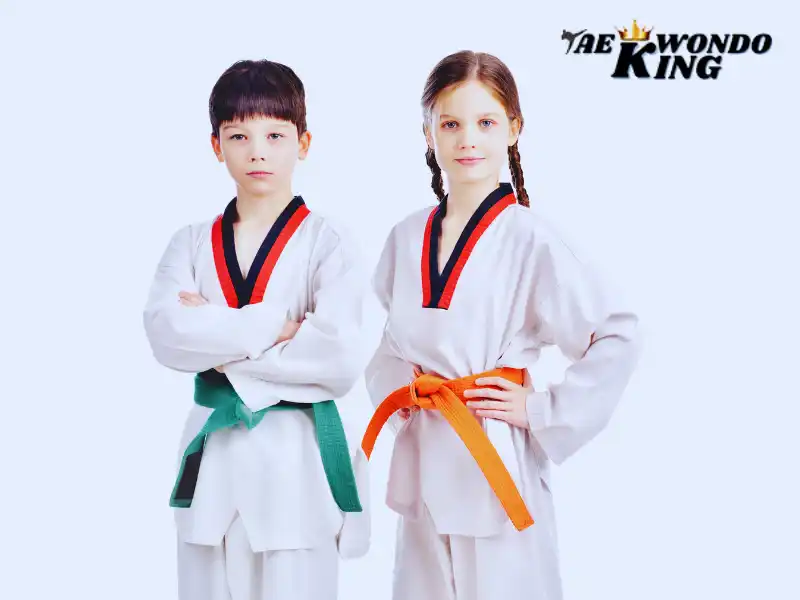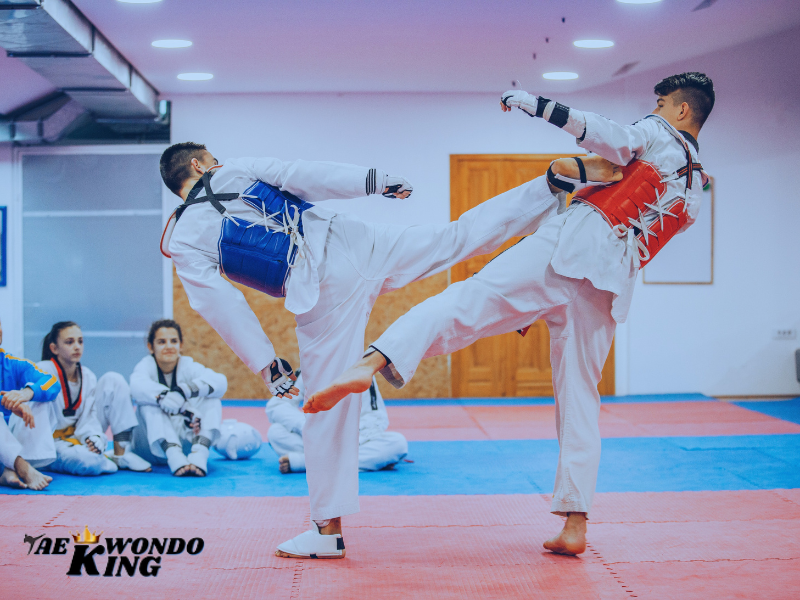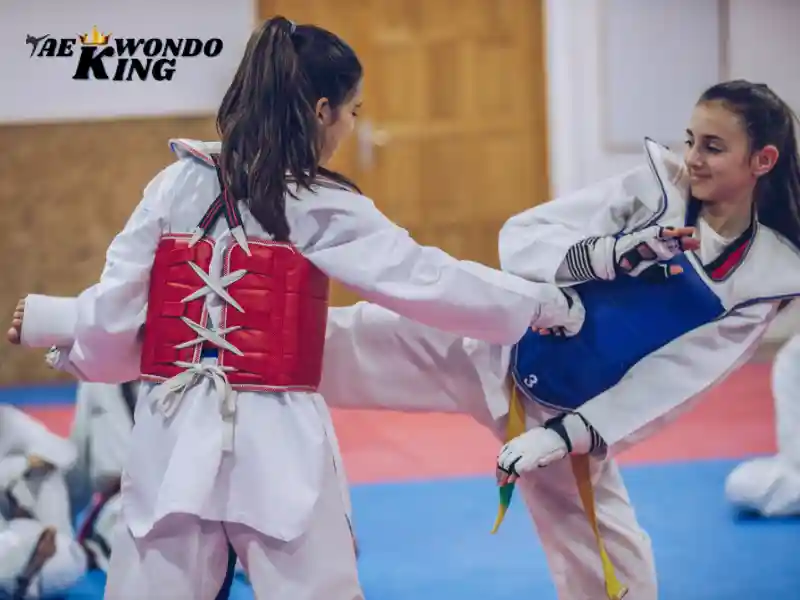
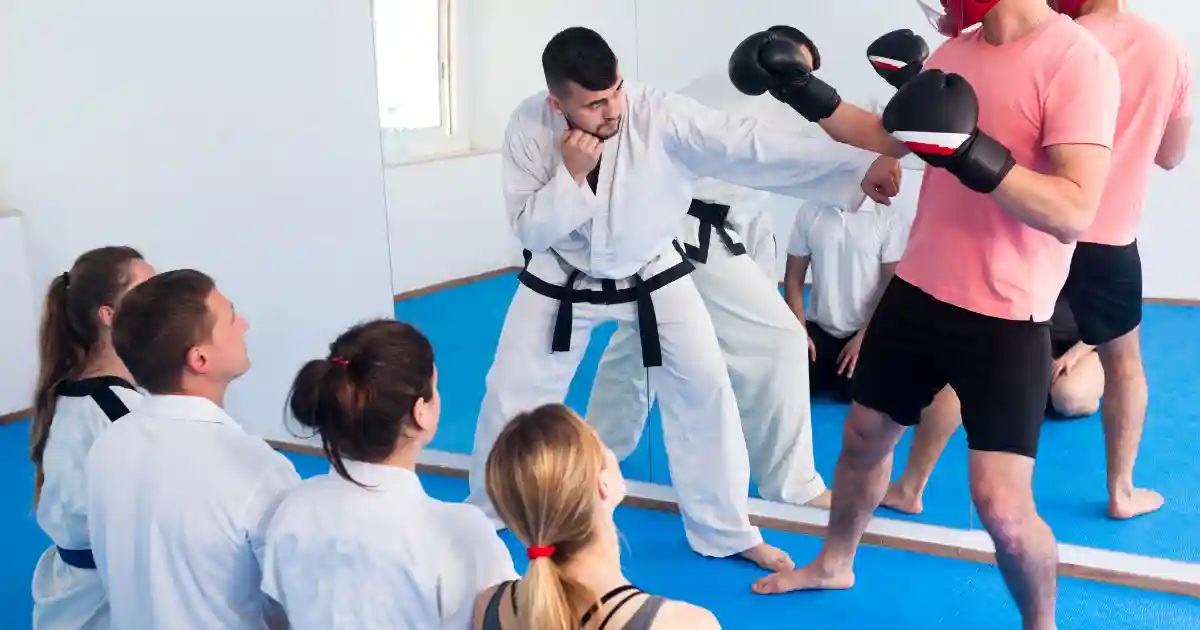
It is 5:25 p.m. The mats are down. Kids are already bouncing around the dojang. One student forgot his belt. Another keeps asking when sparring starts.
I coached a Saturday class in Minneapolis for years, and that scene never fully goes away. You learn to plan for it instead of fighting it. Creating a taekwondo lesson plan is not about writing a script you read out loud. It is a simple roadmap that helps you control time, teach one clear skill, adapt to the students in front of you, and finish with a review that actually sticks. In this guide, I will walk you through goals, class structure, warm-ups, drills, sparring, Poomsae, assessment, and ready-to-use templates you can copy tonight.
What Is a Taekwondo Lesson Plan?
A lesson plan turns a broad training goal into a class students can actually follow. It tells you what to teach, how to teach it, and how to check whether the class learned it.
What a Taekwondo Lesson Plan Should Include
A solid plan covers the class level, student age, class length, and the main learning objective. It also lists the technical skill, the warm-up, the teaching progression, practice drills, partner work, conditioning, review, assessment, cool-down, and any equipment needed. If you are still building your own supply of pads and cones, this gear set is a good starting point for a home dojang or a small studio.
Lesson Plan vs Training Program vs Curriculum
These three words get mixed up often, and the mix-up causes messy planning.
A lesson plan covers one class. A training program covers a series of sessions over weeks or months. A curriculum is the broader map of skills and knowledge students are expected to learn across their entire belt journey. If you want to see how these pieces connect for a full syllabus, our guide on tae kwon do belts in order shows how curriculum goals shift from white belt to black belt.
Why Coaches Should Not Just Wing It
Winging it wastes class time. You end up running too many unrelated drills, repeating the same skill without adding challenge, and watching students get bored. Skill progression suffers, and you lose any clear way to measure improvement. A short plan on paper, even five lines, beats no plan every single time.
What Makes a Good Taekwondo Lesson Plan?
A strong plan is simple enough to use while class is moving, but detailed enough that you know exactly where the session is heading.
One Clear Main Objective
Pick one goal per class. Examples include improving the roundhouse kick chamber, learning a basic front stance, practicing Taegeuk Il Jang, sharpening defensive footwork, or building a basic Kyorugi combination. One goal keeps the whole class focused.
Match Every Drill to the Objective
Ask yourself why each drill exists. If your main goal is roundhouse kicking, every major activity should build toward the chamber, the pivot, the extension, the re-chamber, and the recovery. Drills that do not serve the goal just eat up your clock.
Build From Simple to Complex
This progression becomes one of the biggest ideas in this whole guide: explain, demonstrate, isolate, practice, combine, apply, and review. Every strong class follows some version of this order, whether you teach kicks, blocks, or full Taekwondo kicks names and combinations.
Leave Room for Coaching Adjustments
A plan should give you structure, not handcuffs. Build in room for beginners who need more explanation, advanced students who finish early, a crowded class, limited equipment, students arriving late, or a drill that simply is not working that day. The best coaches I know treat their written plan as a guide, not a contract.
How to Create a Taekwondo Lesson Plan Step by Step
This section is the real how-to. Follow these seven steps and you will have a working plan in under ten minutes.
Step 1: Know Your Students
Consider age, belt level, skill level, class size, fitness, previous experience, and competition background. A plan for six white belts looks nothing like a plan for six red belts, and treating them the same is one of the mistakes new taekwondo coaches make most often.
Step 2: Choose One Main Skill
Pick a single focus such as Ap Chagi, Dollyo Chagi, Yop Chagi, blocking, stance, footwork, Poomsae, or a Kyorugi combination. One skill per class. Resist the urge to teach three things at once.
Step 3: Write a Measurable Objective
A weak objective says “students will practice roundhouse kicks.” A strong objective says “by the end of class, students can perform a controlled roundhouse kick with a correct chamber, pivot, extension, and re-chamber.” The strong version tells you exactly what to watch for.
Step 4: Select the Warm-Up
Warm-ups should prepare the body for the movements you are about to teach. For a kicking class, use light jogging, dynamic mobility, hip movements, leg swings, knee chambers, and light kicking. For a Poomsae class, use joint mobility, stance movement, balance work, controlled stepping, and torso rotation. Our full warm-up drills for Taekwondo class guide breaks these down by age and belt level.
Step 5: Choose Teaching Drills
Move students through basic movement, isolated skill work, repetition, combination, partner drills, and applied practice. That order keeps the class building instead of scattering.
Step 6: Decide How You Will Assess Students
Ask whether they can perform the movement, explain the key point, repeat it under light pressure, and use it correctly in a live setting. Assessment does not need to be complicated.
Step 7: Add a Short Review
Finish by asking one or two students to demonstrate or explain the main skill. This tiny step locks in what they learned and gives you a quick read on how the class went.
The Basic Structure of a Taekwondo Class
Good structure feels natural. Students should never spend half the class standing around while you search for the next drill.
1. Opening and Attendance
Line-up, greeting, attendance, a quick safety check, and a stated class objective all belong here. This takes three to five minutes when run well.
2. Warm-Up
General movement, dynamic mobility, and Taekwondo-specific movement patterns come next.
3. Skill Instruction
You explain the skill, demonstrate it, break it into parts, and correct errors as they appear.
4. Skill Practice
Students repeat the movement while you give live coaching feedback. This is where most of the learning actually happens.
5. Applied Drills
Pads, partners, footwork, reaction work, and combinations turn the isolated skill into something usable.
6. Main Activity
Depending on the lesson, this could be Kyorugi, Poomsae, pad work, partner drills, controlled sparring, or a skill circuit.
7. Review and Cool-Down
End with a skill recap, a few questions, light stretching or recovery work, a respectful bow, and a short preview of next class.
60-Minute Taekwondo Lesson Plan Template
A 60-minute class can disappear fast. Between attendance, shoe issues, water breaks, and the inevitable “Coach, look at this,” several minutes vanish before you even start teaching. This table gives you a realistic starting point built from years of running these exact classes.
| Class Section | Time | Main Purpose |
|---|---|---|
| Opening | 3 min | Focus and explain goal |
| Warm-up | 8 min | Prepare body |
| Skill demonstration | 7 min | Teach technique |
| Technical drills | 12 min | Build skill |
| Partner/pad drills | 10 min | Apply movement |
| Main activity | 12 min | Challenge students |
| Review/cool-down | 8 min | Reinforce learning |
How to Adjust the 60-Minute Plan
For kids, shorten explanations and add more movement breaks. For beginners, slow the pace and repeat cues often. Also For adults, spend more time on the why behind each step. For advanced students, raise the intensity and add tactical choices. For competition classes, lean harder into the main activity block.
What if Your Class Is Only 45 Minutes?
Trim the warm-up to five minutes, the demonstration to five minutes, and combine the technical and applied drills into one 20-minute block. Keep the review short but never skip it.
What if Your Class Is 90 Minutes?
Add more technical repetitions, extra conditioning, deeper Poomsae detail, more Kyorugi application, and a longer review. Ninety minutes gives you room to actually test skills under light pressure, which shorter classes rarely allow.
Example Taekwondo Lesson Plan for Beginners
This is where the guide gets highly actionable. Here is a full plan built around one of the very first kicks every student learns.
Lesson Goal
The skill is Ap Chagi, the front kick.
Class Objective
Students learn the basic chamber, extension, recoil, and return to stance.
60-Minute Beginner Lesson
| Time | Activity | Coaching Focus |
|---|---|---|
| 0 to 3 min | Line-up and goal | Focus |
| 3 to 10 min | Warm-up | Mobility |
| 10 to 17 min | Demonstration | Technique |
| 17 to 27 min | Chamber drill | Knee position |
| 27 to 37 min | Front-kick repetitions | Control |
| 37 to 47 min | Pad work | Accuracy |
| 47 to 55 min | Partner movement | Timing |
| 55 to 60 min | Review | Retention |
Beginner Coaching Cues
Keep your cues short. Try “knee up,” “point the target,” “kick, then pull back,” “hands stay up,” “balance first,” and “slow is okay.” Short cues stick better than long explanations, especially with younger students.
Common Beginner Errors
Watch for dropped hands, leaning backward, over-kicking, skipping the re-chamber, losing balance, and looking at the floor instead of the target. Catching these early saves months of correcting bad habits later.
Example Taekwondo Lesson Plan for Kids
Kids need movement, variety, and clear tasks. A technically perfect plan can still flop if eight-year-olds spend ten minutes standing in a line.
Use Games to Teach Skills
Try a kick-the-target game, mirror footwork, “coach says,” reaction cones, a balance challenge, or number call-outs. Games teach the same skills as drills, just with more energy and less complaining.
Keep Explanations Short
Follow this order: show, let them try, correct, try again. Long lectures lose kids fast.
Add Controlled Competition
Use friendly challenges built around accuracy, balance, speed, reaction, and technique. Avoid making every activity about winning, since that pressure can backfire with younger students. For a deeper look at teaching this age group, see our ultimate guide to teaching kids Taekwondo.
Example 45-Minute Kids Class
Structure it as a 5-minute opening, an 8-minute warm-up, a 10-minute skill block, a 10-minute game or drill, a 7-minute partner activity, and a 5-minute review.
Example Taekwondo Lesson Plan for Adults
Adult beginners often need a different coaching approach than kids, even when learning the exact same kick.
Adult Class Priorities
Focus on clear explanation, technique, mobility, practical application, controlled intensity, and confidence. Our Taekwondo lessons for adults guide covers this age group in more depth.
Avoid Treating Adults Like Oversized Kids
An adult who worked eight hours at a desk may not be thrilled when you immediately ask for a head-height kick. Ease into range of motion before asking for full power or full height.
Example Adult Beginner Lesson
Topic: the roundhouse kick. Progress through stance, knee chamber, pivot, hip rotation, extension, re-chamber, pad work, and finally a controlled combination. A taekwondo for adults mindset means respecting both the goal and the body doing the work.
Creating a Taekwondo Lesson Plan for Kyorugi
Kyorugi needs a different lesson design because students must move from technical practice toward decision-making and live application. World Taekwondo’s education structure recognizes dedicated coach training for Kyorugi, which reinforces that competition coaching is its own specialized area rather than just “doing more sparring.”
Kyorugi Lesson Objective
Common goals include improving distance control, practicing the cut kick, improving the counterattack, developing footwork, or practicing attack combinations. Our guide on Taekwondo sparring footwork pairs well with this section.
Kyorugi Progression
Follow this order: technical drill, partner drill, limited resistance, situational sparring, controlled sparring. Skipping straight to hard sparring is a common shortcut that backfires.
Example Kyorugi Lesson
Include a dynamic warm-up, footwork work, technique, a partner drill, a reaction drill, a situation drill, controlled sparring, and a review. If students struggle with nerves before this stage, our piece on sparring anxiety in Taekwondo offers practical ways to help.
Avoid Making Every Kyorugi Class Hard Sparring
Technical learning and controlled practice both deserve a real place in the lesson. Constant hard sparring raises injury risk and burns students out faster than it builds skill. See our notes on how to avoid getting hit in sparring for drills that build defense before intensity.
Creating a Taekwondo Lesson Plan for Poomsae
Poomsae lessons need precision, memory, balance, stance quality, rhythm, and technique. It is a different teaching mode from sparring, and it rewards patience.
Choose One Poomsae Goal
Pick a new sequence, stance depth, blocking position, turning mechanics, timing, or accuracy. One clear target keeps the class from feeling scattered.
Break Poomsae Into Sections
Teach in this order: section, movement, transition, full sequence. Trying to teach an entire form in one pass overwhelms most students, especially beginners working through the early forms listed in our list of all TKD forms.
Teach the Why, Not Only the Pattern
Cover direction, stance, chamber, balance, breathing, rhythm, and application. Students who understand the why remember the pattern far longer than students who only memorize steps. Our full breakdown of all Poomsae names can help you plan a full-year Poomsae curriculum.
Poomsae Lesson Plan Example
Build a 60-minute plan around one Taegeuk or one section of an advanced Poomsae. Spend most of the time on repetition with correction, not on covering new material.
Taekwondo Lesson Plan by Belt Level
A single class plan should never get copied unchanged across every belt group in your dojang.
I recommend reviewing this table before writing any plan, since belt level should shape almost every decision you make.
| Level | Main Teaching Focus | Suitable Activities |
|---|---|---|
| White belt | Basic movement | Stances, blocks, basic kicks |
| Yellow belt | Technique control | Combinations, pad work |
| Green/blue | Skill connection | Combinations, Poomsae, partner drills |
| Red belt | Application | Advanced combinations, Kyorugi |
| Black belt | Precision/application | Strategy, refinement, leadership |
Beginner Lesson Planning
Keep fewer skills, more repetition, simple language, and more demonstrations. Beginners need reassurance more than complexity.
Intermediate Lesson Planning
Add combinations, timing work, partner drills, and more decision-making. This is where students start connecting isolated skills into something usable.
Advanced Lesson Planning
Increase pressure, application, tactical choices, precision, and competition demands. Advanced students often want to be pushed, and a plan that stays too easy can stall their progress. Our guide on why belt progress feels slow explains one common reason advanced students plateau.
How to Write Taekwondo Learning Objectives
This section moves the guide beyond “here are some drills” and into real coaching craft.
Weak vs Strong Objectives
Weak: “practice roundhouse kicks.” Strong: “students will perform five controlled roundhouse kicks on each side while maintaining balance and correct chamber.” The strong version tells you exactly what success looks like.
Use Observable Actions
Useful verbs include perform, demonstrate, identify, explain, apply, combine, defend, execute, and correct. Vague verbs like “understand” or “know” are hard to measure, so avoid them in your written objective.
Match the Assessment to the Objective
If the objective says “perform,” watch performance. If it says “explain,” ask the student to explain. This sounds simple, but coaches sometimes overcomplicate it without meaning to.
How to Choose Taekwondo Drills for a Lesson
The best drill is not always the hardest drill. It is the one that solves the lesson’s main problem.
Choose Drills Based on the Skill
For kicks, use chamber drills, pad work, balance drills, and combination drills. A kick shield like this one makes pad work far more consistent than air kicking alone. For footwork, use cone drills, shadow movement, partner movement, and reaction drills. A simple cone set like this covers most footwork needs for a full season.
Use a Progression of Difficulty
Move from easy to moderate to challenging to applied. Jumping straight to the hardest version of a drill usually causes more frustration than progress.
Avoid Drill Overload
A 60-minute class does not need 17 drills. Fewer drills with better coaching almost always produce a cleaner, more effective lesson.
How to Assess Students During a Taekwondo Class
Assessment does not need a clipboard and a fancy spreadsheet. A simple coaching clipboard like this is enough if you like keeping written notes during class.
Use Observation
Look for technique, balance, control, timing, accuracy, and understanding as students move through each drill.
Use Quick Questions
Ask “what is your first movement,” “where should your knee point,” “what happens after the kick,” and “why do we pivot.” Quick questions surface understanding faster than long quizzes.
Use Student Demonstration
Choose one or two students to demonstrate the skill in front of the group. This builds confidence and gives you a clear look at where the class stands.
Use Peer Feedback Carefully
Give students simple criteria such as good chamber, good balance, good guard, and good control. Avoid letting students become mini-coaches before they fully understand the skill themselves.
USA Expert Advice for Taekwondo Lesson Planning
For the American coaching angle, it helps to connect lesson planning with formal coach education rather than inventing a separate “American method.”
USA Taekwondo has maintained a dedicated coach education program, and World Taekwondo’s governance materials identify USA Taekwondo’s coach education as part of the broader international coaching development system. I am not able to verify every specific detail of that program from where I sit, so I would encourage any coach reading this to confirm current requirements directly through USA Taekwondo’s own coach education page before enrolling.
USA Taekwondo Coach Education
This typically covers continuing coach education, technical development, athlete development, competition coaching, and professional coaching habits. Our overview of Taekwondo coaching certification programs walks through several current options.
Expert Reference: Dr. Jeongwoo Jeon
World Taekwondo’s published materials identify Professor Jeongwoo Jeon of Kyung Hee University as a contributor to its Olympic Solidarity coaching resources. I have not independently verified the current details of his role, so I would treat this as a starting point for your own research rather than a confirmed quote.
What a U.S. Coach Can Take From This
Focus on practical application, athlete needs, clear progression, coach observation, ongoing education, and adaptation to the actual class in front of you. These principles apply whether you coach in a small home studio or a large commercial dojang.
A Realistic U.S. Dojang Scenario
Picture a Tuesday evening class at 6:00 p.m. in a suburban U.S. dojang. Fourteen students show up: five beginners, six intermediate students, and three advanced students. A skilled coach can use one central lesson goal, such as roundhouse kick control, while giving each group a slightly different version of the same drill. Beginners work on the basic chamber. Intermediate students add pad accuracy. Advanced students add a controlled combination. Everyone works toward the same goal at their own level.
Common Taekwondo Lesson Planning Mistakes
Trying to Teach Too Much
One class should not attempt to teach three kicks, two blocks, a new Poomsae, sparring tactics, conditioning, and a belt-test review all at once. That is not a lesson. That is a buffet.
No Clear Objective
Students leave sweaty but unsure what they actually learned that day.
Too Much Talking
Demonstrate the skill. Let students move. Correct them as they go. Long explanations lose attention fast, especially with kids.
Too Much Repetition Without Progression
Repetition matters, but the task should evolve as students improve. Repeating the exact same drill for forty minutes teaches far less than gradually raising the difficulty.
Ignoring Different Ability Levels
Offer an easier version, a standard version, and an advanced version of your main drill whenever possible.
No Backup Plan
Prepare alternatives for a small space, missing equipment, a large class, mixed belts, or low attendance. A portable set of pads and cones travels well if you ever need to run class somewhere unfamiliar.
Taekwondo Lesson Plan Template Coaches Can Reuse
This is one of the most useful parts of this entire guide, so bookmark it.
Blank Lesson Plan Template
| Section | Coach Notes |
|---|---|
| Date | |
| Class level | |
| Age group | |
| Class length | |
| Main skill | |
| Learning objective | |
| Equipment | |
| Warm-up | |
| Demonstration | |
| Technical drills | |
| Partner work | |
| Main activity | |
| Assessment | |
| Cool-down | |
| Homework/practice |
Quick Pre-Class Checklist
Confirm the goal is written, the warm-up is chosen, the main drill is selected, the progression is planned, equipment is ready, a backup drill is ready, assessment is decided, and safety issues are considered. A basic first aid kit like this belongs in every coach’s bag alongside this checklist.
How to Improve Your Taekwondo Lesson Plan After Class
Do not just write the plan and forget it once class ends.
Spend two minutes after class asking a few honest questions.
What Worked?
- Which drill got the best response?
- Which explanation landed clearly?
- Which activity produced the cleanest technique?
What Did Not Work?
Where did students get confused? Was the drill too hard? Did the class wait around too long at any point? Did the timing slip somewhere?
What Should Change Next Time?
Keep a tiny coach log. One real example from my own notes: “roundhouse chamber drill worked better with pads than with air kicks. Keep it. Shorten the explanation next Tuesday.” That kind of short note beats a ten-page theory document every time.
Final Recommendation
After years of running classes and rebuilding plans that fell flat, my honest recommendation is this: keep your plan simple, pick one goal per class, and match every drill to that goal. Do not chase a perfect written document. Chase a class where students leave knowing exactly what they practiced and why it mattered. Use the 60-minute template above as your default, adjust it for the age group and belt level in front of you, and spend two minutes after every class writing down what worked. That habit alone will improve your coaching faster than any single drill or template ever could.
Frequently Asked Questions About Creating a Taekwondo Lesson Plan
How Do You Create a Taekwondo Lesson Plan?
Know your students, choose one goal, set a measurable objective, plan the warm-up, teach the skill, add progressive drills, apply the skill, then assess and review.
What Should a Taekwondo Lesson Plan Include?
It should include the objective, warm-up, technique, drills, application, assessment, and cool-down.
How Long Should a Taekwondo Class Lesson Plan Be?
It should match your actual class length, whether that is 45, 60, or 90 minutes, using the templates above as a starting point.
How Do You Plan a 60-Minute Taekwondo Class?
Use the 60-minute table earlier in this guide as your default structure, then adjust the timing slightly for your group.
How Do You Write a Taekwondo Lesson Plan for Beginners?
Focus on fewer skills, more demonstrations, basic movements, repetition, simple language, and controlled drills.
How Do You Make a Taekwondo Lesson Plan for Kids?
Lean on games, short activities, movement variety, age-appropriate tasks, and clear instructions rather than long explanations.
What Should I Teach First in a Taekwondo Class?
Most beginner classes start with foundational movement, etiquette, stance, basic blocks, and basic kicks, following the school’s own curriculum.
How Do You Plan a Taekwondo Sparring Lesson?
Follow this progression: technique, then partner drill, then limited resistance, then situational practice, then controlled sparring.
What Is the Difference Between a Taekwondo Lesson Plan and Curriculum?
A lesson plan covers today’s class. A curriculum maps what students learn across many classes over months or years.

Founder, Owner, and CEO of TaekwondoKing.
He is one of the top 100 martial artists in the World and among the top 20 referees in Bangladesh.
Ehatasamul Alom is an esteemed Kukkiwon Certified Taekwondo 3rd Dan Black Belt with over 15 years of experience in this dynamic martial art. Born in Rajshahi, Bangladesh, Ehatasamul’s journey with Taekwondo began at the tender age of seven. His passion led him to compete at national and international levels, where he has bagged numerous awards and honors. He is also a member of the Taekwondo National Referee Panel.
With a Bachelor’s degree in Sports Science from the prestigious Rajshahi University, Ehatasamul has a deep understanding of the technical and scientific aspects of martial arts and some other martial arts.
In 2022, Ehatasamul created the “TaekwondoKing.com” to share his knowledge, Free Resources, Values, and Real experiences. His articles focus on Taekwondo training techniques, competition strategies, Sport Products Reviews, and the art’s rich history and philosophy. He also writes about the importance of mental fortitude and discipline, key aspects of his teaching philosophy. He has already launched many sports, Taekwondo, and health-related Free online tools. His goal is to inspire both beginners and seasoned practitioners worldwide through insightful and engaging content.
If you need any help, contact Ehatasamul Alom at any time.