A new white belt stands in the middle of the dojang. The instructor says, “ready stance.” Then comes the first turn. Left foot? Right foot? Block or punch? Suddenly the entire pattern disappears from memory. I saw this exact moment happen in a Portland studio more times than I can count. Five minutes earlier, the student knew the whole thing. Now their brain has apparently left the building. Helping beginners learn Poomsae means understanding why this happens in the first place.
Poomsae can look simple from the outside, but a beginner is juggling stance, direction, hand technique, footwork, sequence, balance, breathing, and rhythm all at once. This guide will show coaches and beginners how to break Poomsae into small parts, teach movements in the right order, memorize the pattern, correct common mistakes, practice at home, and prepare for a belt test.
What Is Poomsae and Why Is It Hard for Beginners?
Poomsae is more than memorizing a sequence. A beginner is learning a new movement language while also trying to remember where to go next.
What Does Poomsae Mean?
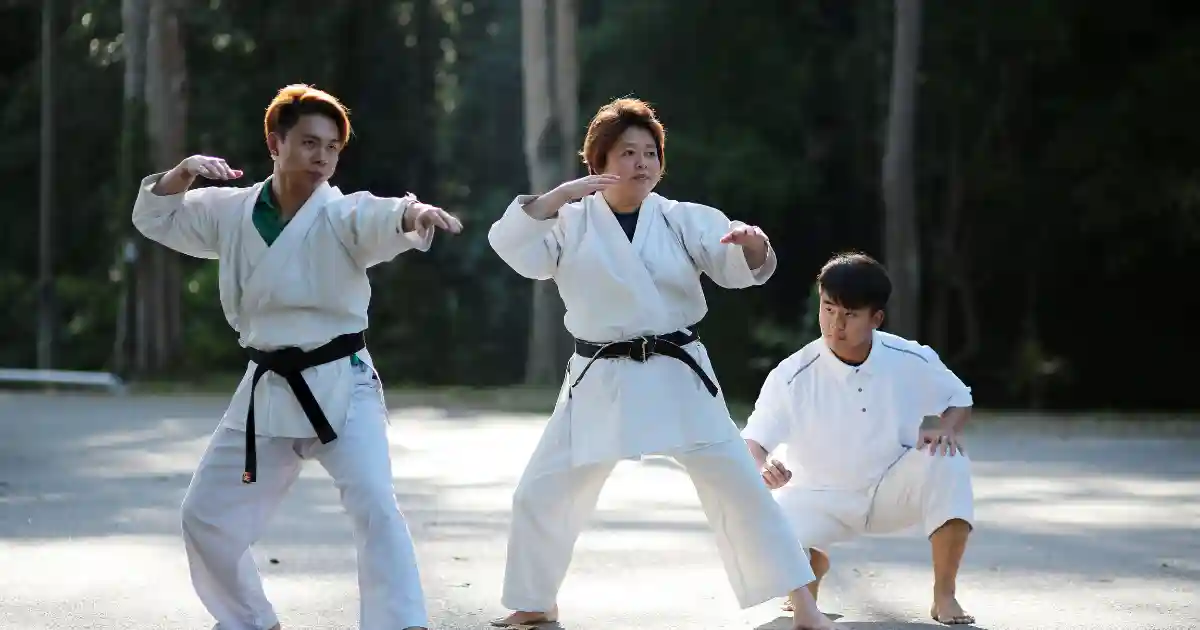
Poomsae is a set pattern of stances, blocks, strikes, and kicks performed in a fixed sequence. Think of it as a solo form or a choreographed routine that shows technique, balance, and control. It is different from Kyorugi, which is sparring against a live opponent, since Poomsae has no partner and no reaction to defend against.
Why Beginners Struggle With Poomsae
Too many new movements arrive at once. Left and right confusion, sudden direction changes, unfamiliar Korean terms, poor balance, a forgotten sequence, and the urge to rush all pile up together. Any one of these alone is manageable. All of them at once overwhelms a brand new student.
Poomsae Is a Skill, Not a Memory Test
The movement has to become familiar through repetition, not just memorized like a phone number. Understanding the pattern actually helps memory more than pure repetition alone. Kukkiwon describes Taegeuk 1 Jang as the first Poomsae, and links it directly to understanding basic movements and building skill through that initial practice.
Start Beginners With the Right Poomsae
The first Poomsae should feel like a foundation, not a maze. Start with the form that matches the student’s actual curriculum and organization.
Taegeuk 1 Jang for Kukkiwon/WT-Style Beginners
This is usually the first Taegeuk form because it introduces basic stances, blocks, and punches without overwhelming complexity. Its movements are simple, but beginners should still never rush through the full sequence on day one. Our full guide to all Poomsae names shows how this first form fits into the wider system.
Teach the Individual Movements First
Before teaching the whole form, cover the ready stance, walking stance, low block, middle punch, basic stepping, and turning. Students who know these pieces cold learn the full pattern far faster.
Do Not Start With the Entire Pattern
Avoid “watch me once, then copy me.” Instead, demonstrate, explain, practice one unit, connect two units, repeat, then add the next section. This order respects how beginners actually learn movement.
Curriculum May Differ by School
Kukkiwon and WT schools, ITF schools, and independent Taekwondo organizations do not all teach the same forms in the same order. Never assume your school’s sequence matches another dojang’s, even within the same city.
Break Poomsae Into Small Movement Units
This is one of the most important teaching ideas in this whole guide. Beginners learn better when a long pattern becomes several small, repeatable chunks.
What Is a Poomsae Unit?
A unit combines stance, direction, technique, and recovery into one small package. That package is much easier to hold in memory than a long, unbroken sequence.
Teach One Unit at a Time
For example, turn, then low block, then step, then punch. Practice that single unit until it feels natural before adding anything else.
Use 3 to 5 Movement Chunks
Instead of asking a student to remember all of Taegeuk 1 Jang at once, break it into chunk one, chunk two, chunk three, chunk four, and chunk five.
Connect the Chunks
Start by connecting unit one and unit two. Then connect unit two and unit three. Finally, link the full chain from unit one through unit four.
Why Chunking Helps
Chunking lowers mental overload, makes correction easier, speeds up recall, and makes home practice far more manageable for a new student.
Teach the Direction Before the Technique
Many beginners do not forget the punch itself. They forget where the punch is supposed to go.
Teach the Poomsae Floor Pattern
Arrows, floor markers, simple diagrams, and clear coach demonstrations all help a student picture the pattern in space rather than guessing at it.
Teach Left and Right Clearly
Use direct verbal cues such as “turn left,” “step forward,” “face the back,” and “return to center.” Vague directions create the confusion you are trying to avoid.
Use the Korean Terms Gradually
Introduce terms like Joonbi, Ap Seogi, Ap Kubi, Arae Makki, and Momtong Jireugi slowly. Do not throw ten Korean words at a white belt in the first five minutes of their very first class.
Use a Simple Direction Cue
A cue like “face, step, block, punch” becomes a mental map the student can run through on their own, even at home.
Demonstrate Poomsae So Beginners Can Copy It
A good demonstration is not about looking impressive. It should be easy to follow.
Demonstrate at Beginner Speed
Show it slow first, then at normal speed later, and explain the key pauses along the way.
Show From the Student’s View
Stand where students can mirror your movements directly. Avoid constantly turning your back without explaining why.
Demonstrate One Section Twice
Show it once at normal speed, then a second time at a slower teaching speed so students can actually track each part.
Use Visual Anchors
Point out exactly where the foot lands, where the eyes look, where the hands finish, and where the body faces at the end of each movement.
Beginner Poomsae Teaching Sequence
A structured teaching sequence makes the lesson easier for both coach and student. USA Taekwondo’s Poomsae development camps have used a similar progression, moving from basic stances and basic Poomsae unit movement into basic kicking, segment work, transitions, and evaluation.
Step 1: Warm-Up
Light movement, stance practice, and hip and shoulder mobility come first. Our warm-up drills for Taekwondo class guide works well as a starting template.
Step 2: Review Basic Techniques
Cover blocks, punches, and stances before touching the actual Poomsae sequence.
Step 3: Teach One Poomsae Unit
Introduce a single unit and let students repeat it until it feels natural.
Step 4: Connect Two Units
Link the new unit to the one before it.
Step 5: Practice the Section
Repeat the connected section several times with light correction.
Step 6: Perform Without Help
Let students run the section on their own, without a coach counting along.
Step 7: Give One or Two Corrections
Pick the most important fix, not every possible fix.
Step 8: Perform Again
Give students the chance to apply that single correction immediately.
Beginner Poomsae Lesson Plan Table
Beginners do not need a marathon lesson. A short, focused practice block is often more useful than repeatedly running the whole form while making the same mistakes over and over.
| Time | Activity | Main Goal |
|---|---|---|
| 5 min | Warm-up | Prepare body |
| 5 min | Stances | Foot position |
| 10 min | Basic techniques | Form |
| 10 min | Poomsae chunk | Sequence |
| 5 min | Connect chunks | Memory |
| 5 min | Full practice | Independence |
| 5 min | Feedback | Correction |
Adjust the Lesson for Children
Shorter chunks, more demonstrations, more repetition, fun challenges, and less lecture time all help younger students stay engaged. Our ultimate guide to teaching kids Taekwondo covers this age group in far more depth.
How to Help Beginners Memorize Poomsae
Memory is often the biggest beginner complaint. “I know it when you do it, but I forget when you stop.”
Use Movement Memory
Repeat the same section often, and practice without constantly watching the coach for cues.
Use Verbal Memory
Build a simple spoken sequence such as “turn, block, step, punch” that the student can say quietly to themselves.
Use Visual Memory
Watching the coach, watching a trusted instructional video, and using a floor diagram all reinforce the pattern visually. Kukkiwon has released a series of eight educational videos covering Taegeuk 1 Jang through Taegeuk 8 Jang, with instructional explanations rather than simple demonstrations, which makes them a solid reference for serious home practice.
Use Chunk Memory
Remember the pattern as A to B to C to D, rather than twenty separate individual movements.
Use Reverse Practice Carefully
Practice the last section first, then connect it back to the section before it. This works especially well for students who repeatedly forget the ending of a form.
Poomsae Memory Tricks for Beginners
These are practical tricks any beginner can use at home without a coach present.
Name the Movement Out Loud
Say “left turn, low block, step, punch” while performing the sequence. Speaking the steps engages a different part of memory than movement alone.
Use a Floor Arrow
Draw a simple line on the floor, mark the turns, and mark the starting point clearly.
Use the “Where Am I?” Check
After every chunk, ask which direction you are facing, which foot just moved, and what technique comes next.
Use the No-Mirror Test
Once the pattern feels familiar, stop watching yourself in the mirror, perform it from memory, and check your work afterward.
Do Not Practice Until Exhausted
Fatigue makes technique sloppy and memory worse, not better. Our guide on training Taekwondo safely explains why pushing past fatigue backfires for skill learning.
Common Beginner Poomsae Mistakes and How to Correct Them
Forgetting the Next Movement
This usually happens when a student memorized isolated techniques instead of the actual pattern. Chunk practice fixes it directly.
Wrong Foot First
A poor starting position causes this almost every time. Reset the stance carefully before every single repetition.
Turning the Wrong Direction
Direction was likely never taught clearly in the first place. Floor arrows solve this fast.
Looking Down at the Feet
This usually means the student does not fully trust their own balance yet. Slow stance work rebuilds that trust over time.
Rushing the Movements
Students often believe speed equals skill. Slow-motion repetition breaks that assumption quickly.
Arms Look Right but Feet Are Wrong
Correct the base first, then move on to hand position. Fixing the feet usually cleans up the arms automatically.
Strong Techniques but Poor Transitions
Practice the movement between techniques directly. Do not only drill the finished positions and skip the connecting steps.
Copying the Coach Without Understanding
Ask the student to explain what comes next before they perform it. If they cannot explain it, they have not actually learned it yet.
Poomsae Beginner Mistake Table
This table works as a quick diagnostic guide for coaches and parents. Keep each correction short enough to use during a live class without breaking the flow.
| Beginner Problem | Likely Cause | Coach Fix |
|---|---|---|
| Forgets sequence | Too much at once | Use chunks |
| Wrong direction | Poor spatial map | Use arrows |
| Wrong foot | Weak starting stance | Reset Joonbi |
| Looks down | Low confidence | Slow stance drills |
| Rushing | Wants to finish | Count rhythm |
| Weak blocks | Position unclear | Isolate technique |
| Poor balance | Stance issue | Slow repetitions |
| Stops halfway | Memory gap | Practice last chunk |
How to Correct Poomsae Without Overwhelming Beginners
Correction is necessary, but too much correction at once makes a beginner feel like they have forty-seven things wrong with them all at the same time.
Correct One Main Error First
Prioritize in this order: safety, direction, foot position, stance, technique, speed, and presentation.
Use One Coaching Cue
Short cues like “long stance,” “turn first,” “eyes forward,” “finish the block,” or “relax your shoulders” work far better than a paragraph of feedback.
Let the Student Try Again
Follow this simple loop: correction, repetition, feedback.
Praise Specific Improvement
Instead of a generic “good job,” try “your front foot stayed planted that time.” That gives the student something concrete to repeat.
How to Teach Poomsae to Children
Children often learn Poomsae differently than adult beginners. Keep the lesson active and concrete rather than abstract.
Use Games
A direction game, freeze-and-hold stance, “coach calls the next movement,” a memory relay, and a mirror game all teach the same skills with more energy.
Keep Chunks Short
Very young students do well with two to four movements per chunk. Add length gradually as their recall improves.
Use Simple Language
Skip anything like “rotate your sagittal alignment.” Just say “turn your body here.”
Make Mistakes Normal
Laugh with them, reset, and try again. Embarrassment has no place in a beginner class.
How Parents Can Help Beginners Practice Poomsae at Home
Parents do not need to become Taekwondo instructors to help their child practice effectively.
Ask the Right Questions
Instead of “did you practice,” try “show me the first section,” “which way do you turn,” or “what’s next?”
Create a Small Practice Space
A clear floor, safe footwear or an appropriate training setup, and no furniture corners nearby all reduce both distraction and injury risk.
Keep Home Practice Short
Five to ten minutes, one section, and one clear goal beats a long unfocused session every time.
Avoid Constant Correction
Let the instructor handle the technical details that parents may not fully understand themselves. Encouragement matters more than correction at home.
USA Expert Advice on Teaching Beginner Poomsae
Barbara Brand joined USA Taekwondo’s leadership team to help build Poomsae programs from grassroots level through the international stage. She is a longtime member and coach of the U.S. National Poomsae Team, a 7th Dan, and someone with decades of hands-on Poomsae coaching experience across every level of the sport.
Barbara Brand’s Beginner-to-Elite Coaching Perspective
Her career spans national team competition, coaching, and now national program leadership, which gives her a rare view of what actually separates a strong beginner foundation from one that causes problems later.
Verified Expert Quote
When she officially joined USA Taekwondo, Brand said she was excited to help create new opportunities for Poomsae athletes at every level. That grassroots-upward philosophy applies directly to beginner teaching, not just elite programs.
Apply That Grassroots Idea to Beginners
Build the basics first, develop movement quality before speed, give useful and specific feedback, create a clear progression, and resist the urge to rush advanced presentation onto a brand new student.
Another Strong U.S. Coaching Reference
Giduk Gun has served as a regional Poomsae coach for USA Taekwondo, leading development camps where athletes receive direct evaluation on technique, accuracy, and overall performance. His camps consistently emphasize building foundational stances and hand techniques before adding rhythm, speed, and expression, which mirrors the exact chunking approach covered earlier in this guide.
How to Use Video to Help Beginners Learn Poomsae
Video turns a vague “something looks wrong” into a visible, fixable problem. A simple phone tripod like this makes this kind of self-review far easier to set up consistently.
Record From the Front
Check symmetry, hand position, stance width, and shoulder position.
Record From the Side
Check posture, stance length, body alignment, and chamber.
Slow the Video Down
Watch the transition points, foot placement, the turning point, and the finishing position of each movement.
Compare Only One Thing at a Time
Do not try to judge stance, hands, breathing, rhythm, power, and eyes all in one viewing. Pick one focus and stick with it.
Create a Beginner Poomsae Progress Tracker
This is a genuinely useful place to bring in a simple tracking habit rather than relying on memory alone.
Track These Skills
Sequence memory, direction, stance, blocks, punches, balance, rhythm, breathing, confidence, and independent performance all deserve their own line.
Score Each Skill
Use a simple one to five scale. One means needs full help, two means frequent mistakes, three means improving, four means mostly independent, and five means consistent.
Track Weekly Progress
Compare week one against week two, then week three, then week four to see real movement over time instead of guessing.
Beginner Poomsae Progress Table
This table works well as a printable tracker. The goal is never to judge a new student harshly. It is to show exactly where the next practice session should focus.
| Skill | Week 1 | Week 2 | Week 3 | Week 4 |
|---|---|---|---|---|
| Sequence | ||||
| Direction | ||||
| Stance | ||||
| Hand technique | ||||
| Balance | ||||
| Rhythm | ||||
| Confidence |
Build a Beginner Poomsae Practice Planner
Rather than a generic form, a useful planner should match practice directly to a student’s biggest current problem.
Planner Inputs
Belt level, which Poomsae, age, available practice time, biggest problem, training frequency, and whether practice happens at home or in the dojang.
Common Problem Options
I forget the sequence, I forget directions, my stance is weak, I rush, I lose balance, I forget hand techniques, I struggle with transitions, or I need test preparation.
Planner Output
A daily practice plan, a rep count, the section to focus on, a coaching cue, a memory drill, a video suggestion, and a simple progress check.
Example Output
Goal: learn Taegeuk 1 Jang, with ten minutes of practice time. Day one covers the first movement unit. Day two adds the first and second unit together. 3rd Day connects the first three units. Day four runs the full pattern slowly. Day five runs the full pattern without help. Coach cue for the week: “direction first.”
A 10-Minute Beginner Poomsae Practice Routine
Give beginners a routine they can use immediately after finishing this guide.
Minutes 0 to 2: Stance Review
Joonbi, Ap Seogi, and Ap Kubi, held and checked carefully.
Minutes 2 to 4: Technique Review
Low block, middle punch, and basic transitions between them.
Minutes 4 to 7: Poomsae Chunk Practice
Run the first section, then the second section, then connect them together.
Minutes 7 to 9: Full Practice
Run the full sequence slowly, without coach help.
Minute 9 to 10: Self-Check
Ask whether you faced the right direction, used the correct foot, and finished each technique fully.
How Long Does It Take a Beginner to Learn Poomsae?
Avoid chasing one rigid number here. Learning speed depends on age, training frequency, previous movement experience, memory, coaching quality, and the complexity of the specific Poomsae.
What Affects Learning Speed?
Training frequency, quality of instruction, age, previous martial arts experience, coordination, home practice, and simple confidence all shape how fast a student progresses.
Learning the Sequence vs Mastering the Technique
A beginner may memorize the order fairly quickly but still need much longer to improve stance, balance, timing, power, precision, breathing, and presentation. Our guide on tae kwon do belts in order shows how these skills are expected to deepen across an entire belt journey.
Don’t Rush Belt Test Preparation
The real goal is reliable movement, not simply surviving the pattern one time under pressure. Our Taekwondo belt test requirements guide and our piece on how to prepare for a Taekwondo belt test both go deeper into this timeline.
Common Mistakes Coaches Make When Teaching Beginners Poomsae
Teaching the Whole Form at Once
This overwhelms working memory almost immediately.
Moving Too Fast
Speed without a solid base just builds sloppy habits faster.
Correcting Everything at Once
Pick one fix. Save the rest for next time.
Using Too Much Korean Terminology Too Soon
New vocabulary and new movement at the same time is simply too much for most beginners.
Letting Students Copy Without Understanding
Copying without understanding rarely survives long term without a coach constantly present.
Practicing Only the Full Form
Chunked practice should stay in the rotation even after a student can run the whole pattern.
Ignoring Basic Stances
Weak stances quietly undermine every other part of the form. This connects closely to what makes a good coaching foundation, something we cover in what makes a good Taekwondo coach.
Making Beginners Feel Embarrassed by Mistakes
Embarrassment shuts down learning fast. Keep the tone light and supportive instead.
Using Advanced-Athlete Standards Too Early
A brand new white belt should never be judged against elite presentation standards.
Beginner Poomsae Checklist
Use this simple checklist before, during, and after every practice session.
Before Practice
Know today’s section, clear the practice space, review your stance, and review any key terms you need.
During Practice
Move slowly, check your direction, check foot placement, finish each technique fully, and remember to breathe.
After Practice
Perform the section without help, identify one honest mistake, repeat that section, and record your progress. A simple notebook or planner like this works well for keeping a written practice log at home.
Gear That Supports Consistent Poomsae Practice
A few simple tools make consistent practice easier without adding real cost or complexity.
A lightweight yoga mat like this protects joints during slow stance work at home. A pair of training shoes designed for forms like these can improve pivot control on hard floors. A foam floor marker set like this recreates the floor-arrow drill covered earlier in this guide. A small phone stand like this keeps video review hands-free and consistent from week to week.
Final Recommendation
After years of coaching brand new white belts through their very first Poomsae, my honest recommendation is this: slow down before you speed up, chunk the pattern instead of teaching it whole, and correct one thing at a time. Helping beginners learn Poomsae is not about talent or memory tricks alone. It is about giving a student a clear, repeatable structure they can trust. Use the chunking method, the weekly progress table, and the ten-minute routine in this guide, and stay patient with the process. Every student I have watched succeed with Poomsae followed roughly this same path, just at their own pace.
Frequently Asked Questions About Helping Beginners Learn Poomsae
What Is the Easiest Poomsae for a Beginner?
Taegeuk 1 Jang is usually the easiest and most common starting form in Kukkiwon and WT-style schools.
How Do Beginners Memorize Poomsae?
Chunking the pattern into small units, using verbal cues, and practicing consistently all build memory faster than trying to memorize the whole form at once.
How Long Does It Take to Learn Taegeuk 1 Jang?
Most beginners can learn the basic sequence within a few weeks of regular practice, though refining the technique takes longer.
What Should Beginners Learn Before Poomsae?
Basic stances, blocks, punches, and simple stepping should come before the full Poomsae sequence.
How Do You Teach Poomsae Step by Step?
Warm up, review basic techniques, teach one unit, connect units, practice, perform independently, correct, then perform again.
Why Do Beginners Forget Poomsae?
Trying to learn too much at once, unclear direction cues, and rushing through practice are the most common causes.
How Can I Practice Poomsae at Home?
Use short, focused sessions of five to ten minutes, one section at a time, following the ten-minute routine in this guide.
Should Beginners Practice Poomsae Every Day?
Short, consistent daily practice generally works better than one long weekly session.
How Do You Correct Poomsae Mistakes?
Correct one main error at a time using a single clear coaching cue, then let the student try again.
Should Beginners Learn Korean Taekwondo Terms?
Yes, but gradually, alongside the movements rather than all at once at the very start.
How Can Parents Help Children Practice Poomsae?
Ask specific questions, create a small safe practice space, and keep sessions short and encouraging.
Can Video Help Beginners Learn Poomsae?
Yes. Video makes invisible mistakes visible, especially for stance width, direction, and transitions.
What Is Taegeuk 1 Jang?
It is the first Poomsae in the Kukkiwon and WT curriculum, focused on basic stances, blocks, and punches.
How Can I Prepare for a Poomsae Belt Test?
Focus on reliable, consistent movement rather than speed, and practice the full sequence without help well before test day.
Is Poomsae the Same as Taekwondo Forms?
Yes. Poomsae is the Korean term for the forms or patterns practiced in Taekwondo.

Founder, Owner, and CEO of TaekwondoKing.
He is one of the top 100 martial artists in the World and among the top 20 referees in Bangladesh.
Ehatasamul Alom is an esteemed Kukkiwon Certified Taekwondo 3rd Dan Black Belt with over 15 years of experience in this dynamic martial art. Born in Rajshahi, Bangladesh, Ehatasamul’s journey with Taekwondo began at the tender age of seven. His passion led him to compete at national and international levels, where he has bagged numerous awards and honors. He is also a member of the Taekwondo National Referee Panel.
With a Bachelor’s degree in Sports Science from the prestigious Rajshahi University, Ehatasamul has a deep understanding of the technical and scientific aspects of martial arts and some other martial arts.
In 2022, Ehatasamul created the “TaekwondoKing.com” to share his knowledge, Free Resources, Values, and Real experiences. His articles focus on Taekwondo training techniques, competition strategies, Sport Products Reviews, and the art’s rich history and philosophy. He also writes about the importance of mental fortitude and discipline, key aspects of his teaching philosophy. He has already launched many sports, Taekwondo, and health-related Free online tools. His goal is to inspire both beginners and seasoned practitioners worldwide through insightful and engaging content.
If you need any help, contact Ehatasamul Alom at any time.