How do you win a taekwondo match? On paper, the answer is easy. You score more points than your opponent. In the ring, it feels very different. The first time I sparred in a match, I thought one strong kick would do the job. It did not.
Winning takes more than power. You need to understand scoring, rounds, penalties, distance, and timing. In this guide, I will share what I wish someone had told me earlier. You will learn how points work and which rules decide close rounds. You will also see which tactics work and which mistakes quietly lose matches.
How Do You Win a Taekwondo Match? The Main Ways It Ends
A match can end in a few different ways. Once you know them, you can plan your rounds with more care.
Most matches end on points. Some end early. A few end because of a knockout or a rule break. Here is a quick view.
| Way to win | How it happens |
|---|---|
| Points | You have more points when the round or match ends |
| Point gap | You lead by enough points that the round stops early |
| Knockout | Your opponent cannot continue after a clean hit |
| Penalties or disqualification | Your opponent breaks rules too often or too badly |
| Referee stop | An injury or safety problem ends the contest |
A quick note before we go deeper. Rules change, and they differ between events. The scoring here follows World Taekwondo (WT) rules. That includes the updates from June 2026. Your tournament may use a different version. Always check your event rulebook before you compete.
Why Points Win Most Matches
Knockouts look exciting, but they are rare. So how do you win a taekwondo match most of the time? You collect small, clean points.
I learned this the hard way. I used to wait for one big shot. Meanwhile, my opponent quietly scored body kicks and won the round. Steady points beat a single hero kick almost every time.
What Changes Between WT, ITF, and Local Events
Not every tournament uses the same system. WT sparring uses electronic scoring. Other styles and local events may use judges or different point values.
If you train for a school tournament, ask the organizer how they score. Ask about rounds, penalties, and tie rules. That five-minute chat can save you a lot of confusion on match day.
Scoring Rules: How Do You Win a Taekwondo Match on Points?
Scoring is where many new fighters get confused. Some hits look great but earn nothing. Others look small and score well. If you want to know how do you win a taekwondo match on points, start here.
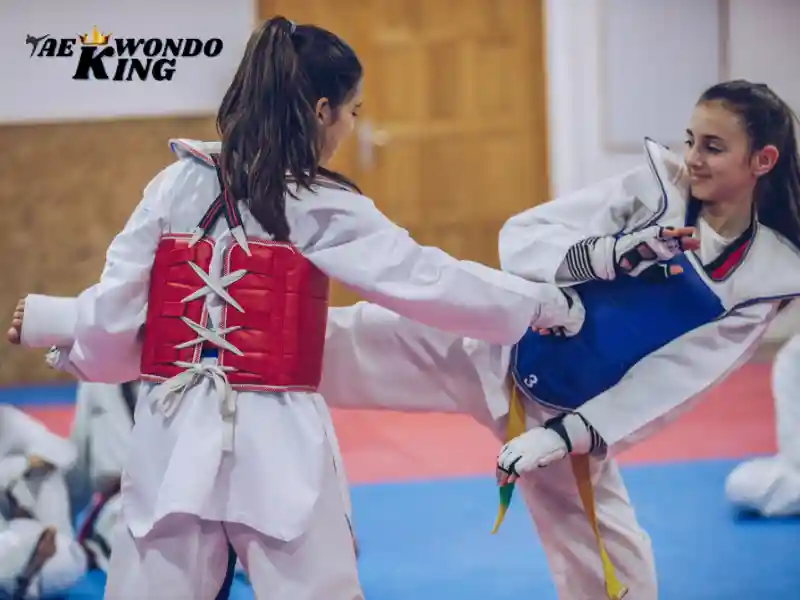
In WT events, most points come from the electronic protector and scoring system. Sensors in the chest protector, head guard, and socks record valid kicks. A technical judge helps check punches and extra points for turning kicks.
The Point Values You Need to Memorize
These are the WT values after the June 2026 changes. Older articles and videos may show different numbers, so double-check them.
| Technique | Points |
|---|---|
| Valid punch to the trunk | 1 |
| Valid kick to the trunk | 2 |
| Valid kick to the head | 3 |
| Valid turning kick to the trunk | 4 |
| Valid turning kick to the head | 6 |
| Gam-jeom (penalty) given to your opponent | 1 point to you |
Notice the pattern. Harder and riskier techniques earn more. A spinning head kick used to be worth 5. Under the June 2026 update, it is worth 6. Head punches are never allowed.
Why Turning Kicks Are Worth So Much
A turning kick means a kick with a real turning motion. Think spinning hook kick or a back kick. These are hard to land because your back faces your opponent for a moment.
Referees look for real rotation. A back kick needs your head and shoulders to turn with your legs. A lazy half-turn may only earn the lower value. I lost points early on because my turn was too small.
Gam-jeom: How Your Opponent’s Mistakes Give You Points
A gam-jeom is a penalty. Each one gives your opponent 1 point. Common causes include grabbing, pushing, falling down, and stepping out of bounds.
This matters for your game plan. You do not have to score every point yourself. A calm fighter who stays legal often collects penalty points for free. The other person rushes and breaks rules.
How the Match Is Built: Rounds, Point Gap, and Ties
A match is more than one long fight. It has a shape. When you understand that shape, you stop wasting energy.
Senior WT matches often run three rounds of two minutes. You get one minute of rest between rounds. Many events use a best-of-three format. In that system, the score resets each round. You win by taking two rounds. Some events add up total points instead. Some use a golden round for ties. Check which system your event uses.
How Do You Win a Taekwondo Match in a Best-of-Three Format?
In a best-of-three match, each round is its own small fight. You can lose a round and still win the match.
That idea freed me up mentally. If round one goes badly, you do not have to panic. You can reset, change your plan, and take the next two rounds.
The Point Gap Rule
If you build a big enough lead, the round can stop early. Under the June 2026 update, that lead is 15 points. It used to be 12. The change came with the higher value for spinning head kicks.
There is one more detail. In the sources I checked, the point gap does not apply in senior semifinals and finals. Confirm this for your own event before you rely on it.
The Last Ten Seconds Are a New Trap
The 2026 update added a rule many fighters still miss. In the last 10 seconds of a round, a passive gam-jeom gives your opponent 2 points, not 1. It still counts as only one gam-jeom.
Passive behavior includes these actions:
- Crossing the boundary line
- Falling down
- Running away or avoiding the fight
- Rejecting a technical card request
Also, a foot over the line now earns a gam-jeom. Any part of the foot counts. Not just the whole foot. Stay near the center late in a round.
Ties and Tiebreakers
Tie rules vary by event. Some use a short golden round where the first valid score wins. Others use a superiority list that looks at things like technique quality.
I cannot give you one rule that fits every tournament. What I can say is this. Never assume a tie will be a coin flip. Ask your coach what the tiebreaker is before your first match.
How Do You Win a Taekwondo Match With Smart Distance and Footwork?
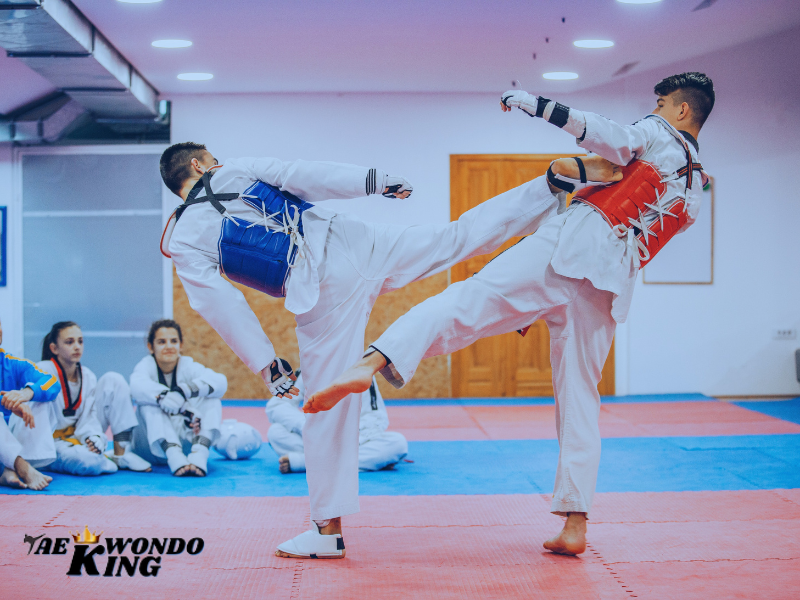
Good footwork wins more matches than strong legs. You cannot score from too far away. You cannot defend from too close. That is the real answer to how do you win a taekwondo match against a faster fighter.
Early on, I trained my kicks daily and ignored my feet. My kicks looked sharp in the air. In the ring, they landed short. Once I fixed my movement, my scoring changed fast.
Learn Your Three Ranges
Every fighter lives in three ranges. Far, middle, and close. Each range calls for different tools.
| Range | What I use | What to watch out for |
|---|---|---|
| Far | Fakes, then a quick step-in kick | Overstepping and getting countered |
| Middle | Roundhouse kicks to the body | Leaving your guard open after the kick |
| Close | Short kick, quick exit | Grabbing or holding earns a penalty |
Most points come from the middle range. That is where the body kick lives. Learn to enter it safely and leave it fast.
Stay Light, Not Bouncy
You will see fighters bounce nonstop. It looks cool, but it can waste energy. The goal is to stay light so you can move in any direction.
I now use a small, relaxed rhythm. I save big movement for the moment I attack or escape. Think of it like a spring. You do not need to bounce all day. You need to be ready.
Use the Ring, Do Not Fight It
The ring is your friend and your enemy. The boundary line can trap you. Retreat in a straight line, and you run out of space.
Learn to circle instead. Slide off to the side and keep the center. The fighter who controls the center forces the other person to take the risks.
How Do You Win a Taekwondo Match? The Techniques I Trust
You do not need twenty kicks. You need a few you can land under pressure. I keep my list short on purpose.
My honest rule is simple. Use the technique you can repeat when you are tired. Fancy moves fade in round three. Basics hold up.
The Roundhouse Is Your Workhorse
The body roundhouse kick scores 2 points and sets up everything else. It is fast, flexible, and safe when you use good timing.
Train it from both legs. Many fighters only kick well with their strong side. Smart opponents notice that quickly and defend it.
Counter-Attacks Score More Than You Think
Waiting can feel passive, but a good counter is active. You let your opponent attack, then punish the opening.
Here are counters I rely on. Test them in practice before you use them in a match.
| When your opponent does this | Try this counter |
|---|---|
| Steps in with a long kick | Back-step, then kick the body |
| Throws a roundhouse | Slide off the line, then hit the open side |
| Rushes forward every time | Hit first with a quick push kick, then angle out |
| Bounces and waits | Fake once, watch the reaction, then score |
| Keeps both hands low | Look for a safe head kick opening |
None of these work every time. Opponents adapt. That is why you test, watch, and adjust.
When to Go for Head and Spinning Kicks
Head kicks score 3 points. Turning head kicks score 6 points. That is tempting, but the risk is real. A missed spinning kick can leave you open to a quick counter.
I treat big kicks as tools for special moments. I use them when my opponent drops their guard. Also I use them when I am behind late. Never use them as your only plan.
Mistakes That Quietly Lose Taekwondo Matches
Most lost matches are not lost by one big error. They slip away through small habits. I have made almost every one of these.
If you fix just two or three, you will notice a difference right away.
| Mistake | Better approach |
|---|---|
| Chasing head kicks all match | Build points with body kicks first |
| Dropping your guard after kicking | Return to guard before your foot lands |
| Standing flat-footed | Stay light on your toes |
| Stepping on or over the line | Know where you are, and use the center |
| Ignoring the scoreboard | Check the score between rounds |
| Fighting angry | Breathe and reset after each stop |
The Head Kick Obsession
I went through a phase where I only wanted head kicks. I missed a lot. Also I got scored on a lot.
A coach finally told me to forget the head for one full practice. I scored more points in that single session than in the previous week. Body kicks pay the bills. Head kicks are bonus income.
Ignoring the Rules Between Whistles
Many fighters think the match only counts when they kick. But penalties matter too. Falling down, stepping out, and holding can all cost you.
I once gave away points just by backing out of the ring twice. It felt silly later. Now I check my position before every retreat.
How Do You Win a Taekwondo Match Round by Round?
You do not need a perfect plan. You need a flexible one. I think about each round as a simple job.
Keep it small. One goal per round is easier to remember when your heart is pounding.
Round One: Read and Test
Use the first round to learn. Watch how your opponent moves. See which leg they favor. Check if they like to attack or wait.
Try to score a few safe body kicks. Do not give away your best moves yet. Information is worth more than flash in round one.
Round Two: Adjust and Take Control
By now you have a read. Use it. If they rush, counter. If they wait, fake and enter.
This is also where you can build a small lead. A lead lets you fight with less stress. It also makes your opponent take more risks.
Round Three: Finish Smart
Round three is about composure. Your legs are tired. Your mind may be too. Stick to simple techniques.
If you are ahead, stay active and avoid passivity penalties. If you are behind, take careful risks. Do not throw everything away in panic.
What to Do When You Are Ahead or Behind
Your score should change how you fight. Many people forget this and use the same plan no matter what.
| Situation | Smart move |
|---|---|
| Ahead, with time left | Stay active and hold the center |
| Behind early | Stay patient and set traps |
| Behind late | Take a planned risk, not a wild one |
| Tied | Go with your most reliable kick |
| Last 10 seconds | Do not run, fall, or cross the line |
Training That Helps You Win: Fitness for a Taekwondo Match
Skill matters, but fitness decides how long your skill lasts. A tired fighter makes sloppy choices. I learned this in a tough third round. How do you win a taekwondo match when your legs feel empty? You train for it ahead of time.
You do not need a fancy plan. Also, You need consistent work that matches the demands of a match.
Build Stamina That Matches the Clock
A match is short bursts of effort with small breaks. Train that way. Do hard intervals, then rest, and repeat.
Two minutes of work and one minute of rest is a good starting pattern. It matches a typical round. Pad drills, shadow sparring, and jump rope all fit well.
Practice Sparring With a Purpose
Sparring without a goal teaches bad habits. Pick one thing for each session. Maybe it is counters. Maybe it is staying in the center.
Film a few rounds if you can. Watching yourself is humbling. You will see things your coach has been trying to explain for months.
Keep Your Body Healthy
Flexibility and leg strength help your kicks. They also help you avoid injuries. Warm up well and do not skip cool-downs.
If something hurts in a sharp or unusual way, do not push through it. Rest and ask a qualified coach or medical professional. A short break is better than a long injury.
The Mental Side: Stay Calm When It Counts
Nerves are normal. My hands used to shake before every match. I thought I was not ready. I just cared. Students often ask me how do you win a taekwondo match when you feel scared. You win the next point, not the whole match.
You cannot remove nerves. Also, You can learn to work with them. A simple routine helps a lot.
Build a Pre-Match Routine
Keep it short and repeatable. Warm up. Breathe slowly. Picture one or two things you want to do in round one.
Do the same routine every time. Familiar actions tell your brain, “I know this part.” That calm helps you think clearly.
Reset After Every Break
After a stop, take one slow breath. Do not carry the last exchange into the next one. Good or bad, it is gone.
This habit saved me many times. A bad moment grows when you replay it in your head mid-fight.
Coaches, Replays, and Cards: The Part Many Fighters Ignore
Your coach is part of your game plan. Under the 2026 WT update I read, coaches now have two cards. Knowing them helps when you ask how do you win a taekwondo match after a bad call.
The challenge card, in blue or red, is for referee calls. Examples include a missed technical point, a wrong punch call, or a questionable gam-jeom. If the request is rejected, the coach loses that card.
What the Technical Card Covers
The green technical card handles non-judgment problems. Examples are time issues, phantom points, scoreboard errors, and equipment tests. The coach keeps this card even if the review goes against them.
Per the update, a rejected request can still bring a gam-jeom for misconduct. In the last 10 seconds, that could mean 2 points for your opponent. Talk with your coach about when to use each card. Verify the exact wording in the current rulebook.
Quick Answers to Common Questions
These are the questions I hear most. I kept the answers short so you can scan them fast.
How many points do you need to win a taekwondo match?
There is no fixed number. You need more points than your opponent when the round or match ends. A 15-point lead can also end a round under current WT rules. That does not apply in senior semifinals and finals.
How do you win a taekwondo match if you are smaller or shorter?
Use speed, angles, and counters. Stay out of reach, then step in fast and kick the body. A smaller fighter can win by scoring clean points and avoiding long exchanges.
What is the easiest way to score in taekwondo sparring?
A clean body kick is the most reliable. It scores 2 points. It also carries less risk than head kicks or spinning kicks.
Is a head kick worth the risk?
Sometimes. It scores 3 points, and a turning head kick scores 6. But a missed attempt can cost you position. Use head kicks when you see a clear opening.
Does a penalty give your opponent points?
Yes. Each gam-jeom gives your opponent 1 point. In the last 10 seconds of a round, a passive gam-jeom gives 2 points.
Can you punch to the head in taekwondo?
No. Punches to the head are not allowed. Valid punches to the trunk score 1 point.
Final Thoughts
So, how do you win a taekwondo match? You score cleanly, stay legal, control distance, and keep your head calm. The question sounds simple, and now you know why it is not. Big kicks look great, but steady body kicks and smart movement win more rounds. My biggest lesson was simple. Stop chasing flash. Build habits you can trust.
Be realistic with yourself. You will lose matches. You will make mistakes. That is how you learn. Pick one or two ideas from this guide. Practice them in your next sparring session. Then check your event rulebook before you compete. Rules change, so always confirm the latest version.

Founder, Owner, and CEO of TaekwondoKing.
He is one of the top 100 martial artists in the World and among the top 20 referees in Bangladesh.
Ehatasamul Alom is an esteemed Kukkiwon Certified Taekwondo 3rd Dan Black Belt with over 15 years of experience in this dynamic martial art. Born in Rajshahi, Bangladesh, Ehatasamul’s journey with Taekwondo began at the tender age of seven. His passion led him to compete at national and international levels, where he has bagged numerous awards and honors. He is also a member of the Taekwondo National Referee Panel.
With a Bachelor’s degree in Sports Science from the prestigious Rajshahi University, Ehatasamul has a deep understanding of the technical and scientific aspects of martial arts and some other martial arts.
In 2022, Ehatasamul created the “TaekwondoKing.com” to share his knowledge, Free Resources, Values, and Real experiences. His articles focus on Taekwondo training techniques, competition strategies, Sport Products Reviews, and the art’s rich history and philosophy. He also writes about the importance of mental fortitude and discipline, key aspects of his teaching philosophy. He has already launched many sports, Taekwondo, and health-related Free online tools. His goal is to inspire both beginners and seasoned practitioners worldwide through insightful and engaging content.
If you need any help, contact Ehatasamul Alom at any time.