Years ago, a friend told me he practiced taekwondo. I laughed it off and asked for a friendly spar. Within seconds, I learned how little I understood about kicks. I couldn’t reach him, and he could reach me from far away.
That moment made me curious. I wanted to know how to beat someone who knows taekwondo, and I wanted a real answer, not internet bravado. In this guide, I’ll share what I’ve learned about distance, timing, footwork, and mindset. I’ll also be honest about what’s hard and what’s overhyped.
Does “Knowing Taekwondo” Mean the Same Thing for Everyone?
No, and this is the first thing people get wrong. Someone who knows taekwondo might be a beginner, a form specialist, or a tournament fighter. Each one is a very different challenge.
Before you plan anything, figure out who you’re dealing with. A good plan for a casual student won’t work on a seasoned competitor.
| Experience Level | What You Can Usually Expect |
|---|---|
| Beginner colored belt | Basic kicks, limited timing |
| Intermediate student | Better balance, cleaner kicks |
| Black belt | Solid technique and control |
| Competitive sparring athlete | Fast, tactical, hard to read |
I should say this table is a general guide, not a rule. Belt levels vary by school and country. Always judge the person, not the belt.
Forms Practitioners vs. Sparring Fighters in Taekwondo
Taekwondo has two big sides. Poomsae means the pattern-based forms. Kyorugi means sparring. Someone strong in forms may be less comfortable in a live match.
I once trained with a student who had beautiful forms. Their sparring was far weaker. I assumed they’d be easy, but they still had solid balance and good distance sense. Never assume.
Why Your Own Background Matters
Your experience changes your plan. If you’ve trained in boxing, judo, wrestling, or another art, you have tools that differ from a kicker’s. If you’ve never trained, you’ll rely on basics like movement and awareness.
Be honest with yourself about this. Your plan should fit your skills, not a video you watched once.
What Makes It Hard to Beat Someone Who Knows Taekwondo
Taekwondo trains fast, long-range kicks. Practitioners spend years building flexibility, balance, and timing. That’s a strong combination.
Still, strong doesn’t mean unbeatable. Every style has patterns, and patterns create openings. Let’s look at what you’re really up against.
The Reach and Speed of Kicks
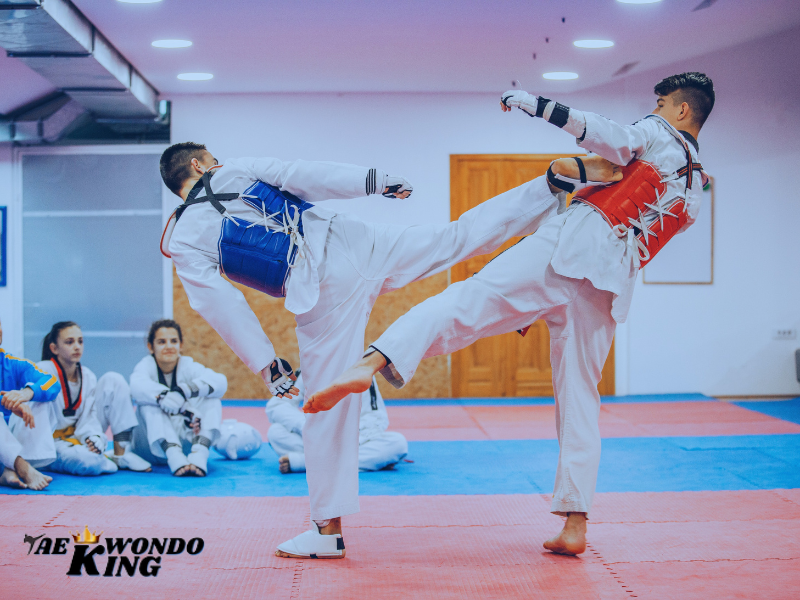
A leg reaches farther than an arm. A trained kicker can attack before you can strike back. If you stand still, they own that space.
I used to freeze when I saw a kick start. That was my first mistake. Freezing gives a kicker free time to land the technique.
The Bounce and Rhythm Problem
Many taekwondo practitioners bounce in their stance. It isn’t just for show. Also, It hides their timing and keeps them ready to move.
It took me a while to notice this. Once I started watching their rhythm, I saw when it changed. A change in bounce often came right before an attack.
Skills That Surprise Newcomers
Some skills catch people off guard. Fakes, quick foot changes, and spinning kicks are common. Flexibility also lets them kick high with little warning.
None of this makes them magic. It just means you need a plan. Let’s build one.
Where Someone Who Knows Taekwondo Is Strong and Where They Are Weaker
Every style has trade-offs. Taekwondo is excellent at certain things. It also trains habits that may leave gaps.
I like to think in terms of strengths and how to respond to them. That keeps my plan simple and practical.
| Their Strength | How to Handle It |
|---|---|
| Long-range kicks | Control distance, keep moving |
| Fast footwork | Use angles, don’t chase |
| Fakes and feints | Stay calm, don’t overreact |
| High kicks | Watch their hips, stay light |
Common Habits You Can Learn to Spot
Many fighters repeat favorite kicks. Some drop their hands after kicking. Some step back in a straight line after an attack. These are habits, not weaknesses guaranteed in every person.
Watch for patterns during the first few exchanges. Ask yourself what they throw most and where they go afterward. The answers guide your plan.
Why Rules Shape Their Habits
Sport taekwondo has rules about scoring and contact. Those rules push fighters toward certain techniques. For example, many competition rules limit what you can grab or hold.
I’m not an official referee, and rules change. If you’re training or competing, read the current rulebook of your event, such as the World Taekwondo competition rules. Don’t rely on memory.
Distance Control: The Heart of How to Beat Someone Who Knows Taekwondo
If I could teach only one idea, it would be distance. It decides who gets to attack and who has to defend. Most people lose this battle without noticing.
Think in three zones. Each zone needs a different mindset.
| Range | Their Advantage | Your Plan |
|---|---|---|
| Far | Free kicks | Don’t stay in a straight line |
| Middle | Clean roundhouse | Slip off the line, reply |
| Close | Little room to kick | Stay tight, then reset |
Don’t Stand in Their Favorite Range
A kicker loves the range where their foot just reaches you. If you stand there, you’re a target. Keep moving in and out.
I like to stay a half step outside their range. When I decide to act, I step in with purpose. That small habit saved me a lot of bruises.
Getting Close Without Getting Kicked
Closing the gap is the hardest part. If you rush straight in, you run into the kick. I did this a lot at first.
A better way is to enter right after they kick, or after a fake. A kick takes time to recover from. That moment is your window. Use it with control, and stay ready to step out again.
Why Close Range Is Not a Magic Fix
Many people say “just get close.” It sounds easy, but it isn’t always. Trained fighters can step back, turn, or hit shorter strikes.
Close range helps because it reduces kicking room. But you still need good footwork and a plan. Walking in without one just trades one problem for another.
Footwork Tips to Beat Someone Who Knows Taekwondo
Good footwork makes every other skill work. Without it, even the best counter is useless. I can’t stress this enough.
You don’t need fancy moves. You need a few clean habits you can use under pressure.
Use Angles Instead of Straight Lines
Most kicks travel in straight or curved lines toward you. A small step off that line changes the whole picture. The kick may miss or land weakly.
Practice side steps in slow motion first. Then speed up. Once it feels natural, you’ll move without thinking.
Move Back Smartly, Not Just Fast
Running backward in a straight line is a classic trap. A kicker can follow you easily. You also risk going out of bounds in sparring.
Try stepping off to a side instead of directly back. That keeps you in the fight and makes their next move harder. It’s a small change with a big payoff.
Keep Your Weight Light
Heavy, flat feet are slow. Stay on the balls of your feet. This helps you change direction quickly.
I used to stand too flat-footed. Moving lighter made my reactions feel sharper. It also helped me save energy during longer sessions.
Timing Tricks That Help You Beat Someone Who Knows Taekwondo
Timing is the other half of the puzzle. You can have perfect footwork and still lose without good timing. It’s about acting at the right moment.
There are two clean windows. One is as they start an attack. The other is right after it ends.
Countering During Their Attack
When someone begins a kick, they commit their weight. That makes them less flexible for a moment. If you slip the kick and reply quickly, you can catch them off balance.
This takes practice with a partner. Start with slow, light contact. Speed comes later.
Attacking After Their Kick Ends
Right after a kick, the fighter is resetting. Their balance and guard may be a little off. A fast, simple reply can land well.
Keep it simple. A short, clean technique beats a wild one. I learned that after many messy attempts.
Using Fakes to Create Openings
A fake is a small move that makes them react. If they flinch or step, you learn how they respond. Then you can use that reaction.
Try a quick shoulder move or foot shuffle. Don’t overdo it, or you’ll tire yourself out. A few good fakes beat many sloppy ones.
Mistakes People Make When Trying to Beat Someone Who Knows Taekwondo
Most people fail for the same few reasons. I made nearly all of them. Fixing these helped me more than learning new tricks.
| Common Mistake | Better Approach |
|---|---|
| Standing still | Keep moving and use angles |
| Rushing in blindly | Enter after a fake or kick |
| Only blocking with arms | Move your feet first |
| Chasing the kicker | Control the space, let them come |
| Letting anger decide | Breathe and reset |
The Danger of Underestimating a Smaller Opponent
Some people assume a lighter fighter is easy. I did this too. But speed and technique can beat size more often than you’d think.
I can’t give you a reliable statistic on this. It’s just my own observation. Treat every opponent with respect and you’ll make better choices.
Losing Your Calm After the First Hit
Getting kicked feels shocking. Your first instinct is to swing wildly. This usually makes things worse.
After a hit, take a breath. Reset your stance. A calm mind sees more openings than an angry one.
Myths About How to Beat Someone Who Knows Taekwondo
The internet is full of confident advice. Some of it sounds smart and falls apart in practice. Here are myths I hear most often.
| Myth | Reality |
|---|---|
| Kickers can’t fight up close | Many train for it, so don’t assume |
| Just grab the leg | It can be risky and may break rules |
| Taekwondo doesn’t work | It works well in its own setting |
| Strength beats technique | Timing and distance often matter more |
Why “Taekwondo Doesn’t Work” Is Too Simple
You’ll hear people claim taekwondo is useless. That’s an oversimplification. It’s a well-developed sport with real skill behind it.
Does it have limits? Yes, every style does. But dismissing it makes you careless, and carelessness gets you hit.
Why Fighting Styles Can’t Be Ranked Easily
People love to debate which style wins. The honest answer is that it depends. Rules, skill, size, fitness, and setting all matter.
I don’t think there’s a clean ranking. A skilled person usually beats an unskilled one, no matter the style. That’s less exciting but more accurate.
The Mental Game When You Face Someone Who Knows Taekwondo
Fear plays a bigger role than most people admit. A fast kicker can make you flinch before anything lands. That flinch gives away your plan.
I’m not a sports psychologist, so I’ll share only what helped me in practice. Small habits made a real difference.
Learn to Control the Flinch
Flinching happens when your brain expects a hit. The fix is repetition in a safe setting. Slow drills teach your body that an incoming kick isn’t an emergency.
Start with soft contact and a trusted partner. Raise the speed bit by bit. Over time, your reactions get calmer, and you start to see openings.
Treat Every Exchange as Information
Getting hit feels bad. But it also teaches you something. What kick was it? Where were you standing? Were you moving or still?
After each round, I try to name one lesson. This keeps me learning instead of stewing. A coach or partner can also point out patterns you missed.
Respect Without Fear
Respecting your opponent keeps you careful. Fearing them makes you freeze. There’s a big difference.
I try to treat every opponent as skilled until they show otherwise. That mindset kept me alert without making me tense.
Fitness and Conditioning for Facing a Kicker
You’ll move more than you expect when facing a good kicker. Staying light on your feet is tiring. Fitness helps you keep your plan alive when you’re tired.
You don’t need a perfect routine. A few basics, done regularly, go a long way.
Build Leg Endurance and Balance
Your legs do a lot of work. Simple exercises like skipping rope and light footwork drills help. Balance work also matters when you step off a line.
I found short, regular sessions worked better than occasional hard ones. Small habits add up.
Protect Your Body While You Train
Sparring a kicker stresses your legs, ribs, and joints. Warm up before you start. Stretch gently and stop if something hurts.
If pain doesn’t fade, see a qualified professional. A short break is better than a long injury. I learned that after ignoring a sore hip too long.
Drills to Prepare You for Someone Who Knows Taekwondo
Reading helps, but practice makes the ideas stick. Find a trusted partner and work slowly. Good drills turn thinking into habit.
I keep my drills simple. Each one targets one skill.
| Drill | What It Builds |
|---|---|
| Distance dance with a partner | Range awareness |
| Slow kick slip drill | Timing and calm |
| Fake and react practice | Reading opponents |
| Light sparring rounds | Using skills under pressure |
Start Slow, Then Speed Up
Begin at a gentle pace. Focus on clean movement, not power. Fast and sloppy practice builds bad habits.
Once the pattern feels easy, add speed. Then add a little resistance. This gradual path worked best for me.
Train With People Who Challenge You
Practicing with someone who understands kicks is helpful. A good partner gives honest feedback. A qualified coach can spot mistakes you miss.
If you can, train at a local gym or school. Ask about safe sparring practice and the right gear. Don’t try to learn everything alone.
A Simple Game Plan for a Match or Sparring Session
Knowing tactics is one thing. Using them under pressure is another. A basic plan keeps your head clear when things speed up.
I like to split a session into three phases. It stops me from panicking and trying everything at once.
Start by Watching and Testing
Spend the first moments learning. Stay mobile and avoid big risks. Note which kicks they throw and from where.
Throw a few light fakes. See how they react. Each answer gives you useful information.
Pick One or Two Ideas and Stick to Them
Don’t try ten things at once. Choose a counter and a fake, then use them well. Repeat what works, but vary your timing.
When I tried to do everything, I did nothing well. A small plan made me sharper and calmer.
Stay Calm When You’re Tired
Late in a session, everyone gets sloppy. Slow your breathing and keep your feet light. Avoid wild exchanges.
If you’re ahead, stay careful. If you’re behind, stay patient and wait for a clean chance. Panic usually costs more.
What About a Real Fight?
Some people search this keyword because they fear a real conflict. I want to be honest here. Sport sparring and real fights are very different.
Sparring has rules, referees, and protective gear. A real situation has none of that. The safest answer is to avoid fights whenever you can.
Why De-escalation Beats Any Technique
Walking away is a skill. Staying calm, speaking softly, and creating distance can prevent harm. No technique is worth a serious injury or legal trouble.
If you ever feel threatened, leave if you can. Seek help from other people or authorities. That is smarter than trying to “win.”
Why Sparring Skills Don’t Transfer Perfectly
Light-contact sport skills don’t automatically work in an unplanned fight. Clothing, space, and stress change everything. Overconfidence is dangerous.
If self-defense is your goal, look for a qualified self-defense instructor. They can teach safe, realistic habits. I can’t promise any technique will work in a real emergency.
Quick Answers About Beating Someone Who Knows Taekwondo
People ask the same few questions again and again. Here are short, honest answers. They’re my views, not guaranteed facts.
How Do You Beat Someone Who Knows Taekwondo With No Training?
Focus on distance, movement, and staying calm. Avoid rushing in. If possible, don’t fight at all. Safe practice with a coach is a better path than a street test.
What Is the Best Strategy Against a Taekwondo Fighter?
There’s no single best strategy. Most good plans use distance control, angles, and timing. Watch your opponent’s habits and adjust.
Is It Better to Close the Distance or Keep Away?
Both can work. Staying away keeps you safe but may give them free kicks. Closing in reduces kicking room but is risky if done carelessly. Mix both, and time your entries.
Can a Boxer or Wrestler Beat Someone Who Knows Taekwondo?
It can happen, but it depends on skill, rules, and setting. Different arts offer different tools. I can’t confirm a clear winner, and I’d be cautious about anyone who claims one.
How Long Does It Take to Improve?
There’s no fixed timeline. It depends on how often you train and who you train with. Most people improve gradually with steady practice. Be patient with yourself.
Final Thoughts
If I had to sum it up, learning how to beat someone who knows taekwondo comes down to distance, timing, and calm. Don’t rely on tricks or myths. Move your feet, watch the rhythm, and act at the right moment.
Be realistic too. You won’t master this in one session, and some people will still beat you. That’s normal. Train safely with a good partner, check the current rules for your setting, and ask a qualified coach when you’re unsure. Stay curious and keep learning.

Founder, Owner, and CEO of TaekwondoKing.
He is one of the top 100 martial artists in the World and among the top 20 referees in Bangladesh.
Ehatasamul Alom is an esteemed Kukkiwon Certified Taekwondo 3rd Dan Black Belt with over 15 years of experience in this dynamic martial art. Born in Rajshahi, Bangladesh, Ehatasamul’s journey with Taekwondo began at the tender age of seven. His passion led him to compete at national and international levels, where he has bagged numerous awards and honors. He is also a member of the Taekwondo National Referee Panel.
With a Bachelor’s degree in Sports Science from the prestigious Rajshahi University, Ehatasamul has a deep understanding of the technical and scientific aspects of martial arts and some other martial arts.
In 2022, Ehatasamul created the “TaekwondoKing.com” to share his knowledge, Free Resources, Values, and Real experiences. His articles focus on Taekwondo training techniques, competition strategies, Sport Products Reviews, and the art’s rich history and philosophy. He also writes about the importance of mental fortitude and discipline, key aspects of his teaching philosophy. He has already launched many sports, Taekwondo, and health-related Free online tools. His goal is to inspire both beginners and seasoned practitioners worldwide through insightful and engaging content.
If you need any help, contact Ehatasamul Alom at any time.