Learning how to fight a taekwondo fighter felt almost unfair the first time I tried it. The kicks came fast. They came from angles I did not expect. And I kept backing up until I ran out of space. If that sounds familiar, this guide is for you.
I want to share what I learned from sparring against kickers, plus the mistakes I made along the way. You will learn how they move, how to control distance, how to defend, and how to counter. One note first. This guide focuses on sparring and sport fighting. Real fights are risky, and walking away is always the smarter win.
How to Fight a Taekwondo Fighter Starts With Understanding Their Game
Before you plan anything, you need to know what you are facing. A taekwondo fighter plays a different game than a boxer or a wrestler. Once you see the pattern, the fear drops a lot.
Why Taekwondo Fighters Feel So Hard to Hit
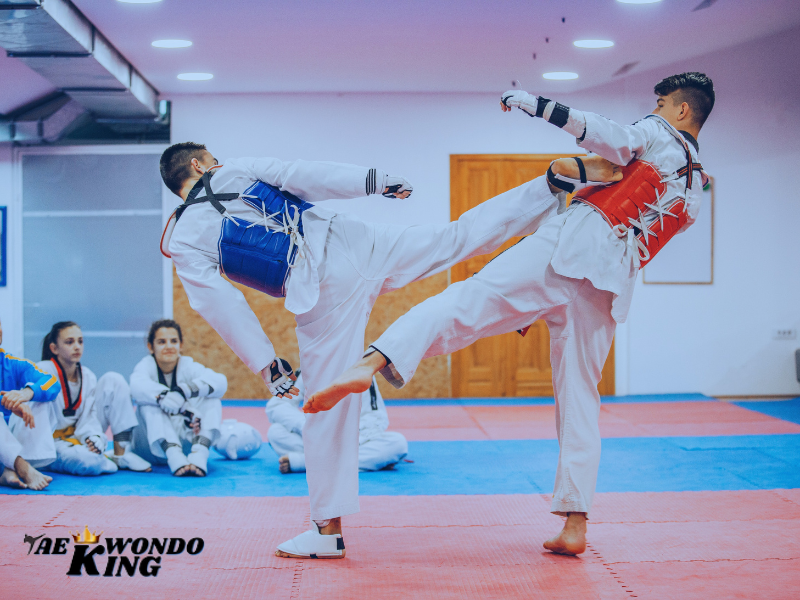
Most taekwondo fighters live on the outside. They stand sideways in a bladed stance. They bounce on their toes. Their lead leg stays ready to fire at any moment.
That setup gives them reach. A kick travels farther than a punch, so they can score before you can answer. It feels like fighting someone with longer arms.
I used to think they were just fast. Speed played a part. But range mattered more. They controlled the gap, and I did not.
The Kicks You Will See Most
You do not need to know every kick. You need to know the few that show up again and again. This table covers the main ones.
| Kick | What You Will See | Best Answer |
|---|---|---|
| Turning kick (dollyo chagi) | A fast snap to your body or head from the side | Block, angle off, then counter |
| Front leg push kick | Lead leg pushes at your belly or hips | Step off the line and hit back |
| Back kick (dwit chagi) | They spin and thrust the heel straight back | Move off the center line |
| Axe kick (naeryeo chagi) | The leg lifts high and drops down | Step back or sideways, keep hands up |
| Spinning hook kick | A full turn, then a heel sweep to the head | Duck or step in close |
Names change between schools, but the ideas stay the same. In my experience, these five cover a big part of what a typical kicker throws.
Three Fighter Types You Will Meet
Not every kicker fights the same way. After a few rounds, I started sorting them into three rough types. These are my own labels, not official terms.
The first is the point hunter. This fighter moves a lot, throws quick kicks, and runs away. The second is the counter kicker. This fighter waits for you to attack, then fires back. The third is the pressure kicker. This fighter walks forward and throws heavy kicks.
Each type needs a different plan. Against the point hunter, cut off the ring and stay patient. Against the counter kicker, fake more and attack less. Also, Against the pressure kicker, use angles and counter hard when they stop.
Distance Control Wins Most Rounds
If you only remember one thing from this article, remember distance. Almost every problem against a kicker comes back to range.
Why Staying at Long Range Loses
Long range is their home. If you stand there, you hand them free shots. I made this mistake for months. I waited outside and hoped to react in time. It almost never worked.
At that range, they pick the moment. You only react. That is a bad deal for you.
How to Fight a Taekwondo Fighter Without Eating Every Kick on the Way In
The goal is not to rush in. The goal is to enter when they make a timing mistake. These steps worked best for me.
- Step in right after they finish a kick, while their leg is landing.
- Move at an angle instead of straight down the middle.
- Keep your hands up while you enter.
- Throw a quick punch or hook, then reset or work inside.
Do not enter with your hands low and your eyes closed. I tried that more than once. It ended with a kick to the head and a very quiet walk back to my corner.
Why Inside Range Makes Kickers Uncomfortable
Up close, long kicks lose power and room. Many kickers feel rushed here. They try to push you away instead of fighting. That gives you time to work.
Not every kicker is weak inside, though. Some train for it. Test it early and do not assume.
Cutting the Ring Without Chasing
Chasing a kicker in a straight line rarely works. They just circle away and kick as you arrive. Cutting the ring works better. You take the space away step by step instead of sprinting after them.
Think of it like herding. Move slightly to one side, then the other, so their escape routes shrink. When they run out of room, they must fight. That is when your counters get easier. It takes patience, and patience was the hardest skill for me to learn.
Defense Basics When You Fight a Taekwondo Fighter
Defense is where most people struggle. You cannot hit what you cannot reach. But you can stay safe until the right moment shows up.
Guard and Head Position
Keep your hands up and your chin tucked. It sounds basic, but kickers love a dropped hand. Head kicks often land when you stop paying attention.
I also learned to stop staring at their legs. In my experience, hips and shoulders give you more warning. Legs can fake you out. Hips are harder to hide.
Checking, Blocking, and Moving Off the Line
You have more than one way to answer a kick. The right choice depends on your rules, your gear, and your comfort level.
| Defense | Best Used When |
|---|---|
| Forearm or shin block | You need to stay in range for a counter |
| Step back | You need a reset and have room |
| Angle off | You plan to counter right away |
| Shin check | Your rules allow full-contact kicks |
| Slip or duck | A head kick comes slow or obvious |
Shin checks hurt if you do them wrong. Learn them from a qualified coach before you try them in sparring.
Why Backing Straight Up Fails
Backing straight up is the most common reflex. It feels safe, but it is not. A kicker’s range grows as you retreat, and you run out of space fast.
Move to the side instead. Many coaches suggest circling away from the back leg, since that is the power side. It helped me, but it depends on their stance. Try it in light rounds first.
Timing Tricks for Beating Fast Kickers
Speed matters less than timing. You do not need to be faster. You need to be earlier or later at the right moment.
Counter When the Kick Lands
Every kick has a recovery. When the leg comes back, a short window opens. That is your chance.
Block or move, then hit right away. I missed this window for a long time. I would block and then pause, as if I needed to admire my own defense. That pause gave them a free reset.
Break Their Rhythm
Taekwondo fighters love a steady bounce. They kick on a beat. If you break the beat, they lose comfort.
Try small fakes. Step in, then step out. Change your speed. Pause in the middle of a step. A kicker who cannot read your rhythm often rushes.
Learn the Tells
Every fighter gives clues before a kick. If you spot them early, you gain extra time.
| Tell | What It Often Means |
|---|---|
| Faster bounce | They are about to attack |
| Hips turning sideways | A turning or side kick may follow |
| Lead foot lifting slightly | A quick push kick may be coming |
| Head or shoulder turning away | A spinning kick may follow |
| Sudden stillness | They are waiting to counter |
These are patterns, not rules. Smart fighters hide them, and some will use them to bait you.
Use Your Own Low-Risk Attacks
You do not have to be the one who only defends. A quick jab, a lead push, or a light feint can disrupt their balance. It also forces them to think about you instead of their next kick.
Keep these attacks small and safe. Big swings leave you open. I like short, sharp actions that ask a question, like “will you kick into this?” Their answer tells me a lot about what to do next.
Fighting a Taekwondo Fighter in Different Settings
The advice changes with the rules. A plan that works in a dojang will not fit a kickboxing ring. Know your setting first.
In a Taekwondo Sparring Match
Kyorugi is a scored sport. Points come from clean, legal hits, and rules vary by event. I am not certain of the current scoring values. Please check the latest World Taekwondo rulebook or your own federation’s rules.
In general, kicks tend to score higher than punches in this format. That means you may need sharper defense and better counter timing. Many rule sets also limit punches to the head, so read the rules before you plan.
In Kickboxing or MMA
Full-contact rules change a lot. Depending on the sport, you may punch the head, check kicks, clinch, or even go to the ground. Taekwondo kicks can still work here, but fighters often adjust their style.
Where the rules allow it, pressure with punches and leg kicks can make a long-range kicker uncomfortable. That is a general idea, not a promise. Skill level matters more than style.
In a Real-World Situation
If you are thinking about a street situation, my honest advice is to avoid it. Fights are unpredictable. Weapons, friends, and bad luck can change everything in seconds.
Training builds fitness and confidence, but it offers no guarantee. De-escalating and leaving safely is the best result. Local laws also differ, so this is not legal advice.
| Setting | Main Challenge | Smart Focus |
|---|---|---|
| Taekwondo match | Fast scoring kicks | Counters and timing |
| Kickboxing | Long-range kicks | Punch combos and leg kicks, if allowed |
| MMA | Surprise kicks | Pressure, clinch, and takedowns |
| Self-defense | Unpredictable risks | De-escalate and leave safely |
A Simple Game Plan for Your Next Round
A plan takes pressure off. When I face a new kicker, I use a basic three-round idea. It keeps my head clear.
- Round one: Watch. Learn their range and spot their favorite kick.
- Round two: Test. Try your entries and counters in small doses.
- Round three: Commit. Use what worked and drop what did not.
Real events may have different round lengths or rules, so adjust to fit. And sometimes the plan falls apart in the first ten seconds. That is normal. Reset and keep going.
Staying Calm When the Kicks Start Flying
Fear is the hidden problem. When the first kick whistles past your head, your body wants to panic. Panic makes you stiff, and stiff fighters get hit.
Breathe out slowly between exchanges. Accept that you will take a few shots. Set one small goal per round, like “enter once on the angle.” Small goals feel doable, and they build confidence fast.
Beginner Basics vs Advanced Adjustments
If you are new, start small. Keep your guard up, learn the main kicks, and practice moving off the line. Do not try fancy counters yet. Solid basics beat risky tricks.
If you have more experience, add layers. Set traps with your own rhythm. Pretend to retreat, then step in as they chase. Mix your targets so they cannot guess where you will go next. Advanced work is mostly about hiding your intentions.
Common Mistakes When You Fight a Taekwondo Fighter
I have made most of these myself. Some cost me points. A few cost me a sore shin for a week.
| Mistake | Why It Hurts | Better Approach |
|---|---|---|
| Chasing them straight on | You walk into kicks | Angle in and cut the ring |
| Dropping your hands | Head kicks land | Keep your guard tight |
| Watching only the legs | You get faked easily | Watch hips and shoulders |
| Freezing after a block | They reset and kick again | Counter right away |
| Staying at long range | You give away free shots | Control the distance |
Myths That Waste Your Time
Some ideas spread online and sound great. Many fall apart in the ring. Here are the ones I hear most.
- “Kickers cannot punch.” Some can. Do not assume.
- “Their kicks are weak.” Not always. A clean kick can hurt.
- “Just take them down.” That depends on your rules and your skill.
- “Fast beats everything.” Good timing often beats raw speed.
Footwork and Fitness That Help You Handle Kickers
You can know every tip in this article and still struggle. Without good legs and good movement, the plan does not work.
Footwork Comes First
Good footwork saves energy. Small steps, quick pivots, and a balanced base matter more than flashy moves. Many taekwondo fighters switch stances, so practice moving against both left and right setups.
I spent too long working on punches and too little on feet. Once I fixed that, kicks felt slower and easier to read. That was a big surprise.
Facing Switch Stance and Southpaw Kickers
Many kickers switch stance in the middle of a round. A switch changes which leg is closest to you and which kick is likely. It can also make your usual counter feel wrong.
When I first faced this, I kept using the same angle and kept getting caught. Now I reset my plan after every switch. I ask myself which leg is in front and which is loaded. That quick check takes a second and saves a lot of pain.
Conditioning and Flexibility
Fast rounds drain you. Build your cardio and your leg strength. Tired legs mean late reactions, and late reactions mean getting kicked.
Flexibility helps too. A loose hip and hamstring protect you when you block or check. Warm up well, and stretch based on advice from a coach or health professional you trust.
Lessons I Wish I Learned Sooner
Looking back, a few lessons stand out. None of them are fancy, but they changed how I spar.
First, losing a round teaches more than winning one. Every time a kicker beat me, I learned what they liked to throw. Second, advice from a friend or a video rarely fits you perfectly. Test it, then change it to fit your body and your rules. Third, rest matters. Tired fighters make sloppy choices, and sloppy choices get kicked.
Last, enjoy the process. Sparring a good kicker is a great way to sharpen your reflexes. Once I stopped treating every round like a test, I improved faster.
Drills to Prepare for a Taekwondo Fighter
Drills turn ideas into habits. These are the ones that helped me most. Ask a coach if you are unsure about safety.
| Drill | What It Builds |
|---|---|
| Shadow footwork with angles | Movement and balance |
| Partner distance game | Range control |
| Block-and-counter pairs | Timing and reaction |
| Pad rounds with kick defense | Defense under pressure |
| Light sparring with limits | Pattern recognition |
Try recording your rounds when you can. Watching yourself is humbling, but it shows patterns fast. I noticed my hands dropped every time I got tired. I never felt it in the moment.
Staying Safe While You Train
Sparring against kickers can hurt. Good gear and smart habits keep you training longer. This part is not exciting, but it matters.
Wear a mouthguard, shin guards, a groin guard, and head protection if your gym uses them. Agree on intensity with your partner before you start. Stop if something feels wrong. I am not a doctor, so see a health professional for pain that does not go away.
Light and controlled rounds teach more than hard ones. You learn timing and distance without the fear of injury. Save the hard rounds for when you are ready.
Quick Answers to Common Questions
These are the questions I see most often. I kept the answers short and honest.
Is Taekwondo Effective in a Real Fight?
It depends on the person, the training, and the situation. Taekwondo builds speed, flexibility, and distance control, and those skills help. But sport training does not cover everything. I cannot give an exact answer, and anyone who does is guessing.
What Is a Taekwondo Fighter’s Biggest Weakness?
There is no single weakness. Many rely on range, so pressure and angles often cause trouble. Some are less comfortable in close grappling, depending on their training. Every fighter is different.
How Do You Fight a Taekwondo Fighter Who Is Taller?
Get inside their range, use angles, and counter after their kicks. Staying far away favors the taller kicker. Patience helps, because the right entry rarely shows up in the first few seconds.
Can a Boxer Beat a Taekwondo Fighter?
It depends on the rules, the skill of both fighters, and the setting. Boxers have strong hands and good head movement. Kickers have reach and variety. Neither side wins every time.
Final Thoughts
The biggest lesson I learned is simple. Distance and timing matter more than speed. If you control the gap, stay calm, and counter at the right moment, how to fight a taekwondo fighter stops feeling like a mystery. It starts feeling like a puzzle.
Be realistic, though. You will get kicked. You will make mistakes. Everyone does. Train with a good partner, keep your rounds light while you learn, and check your event’s rules. Keep at it, and the kicks will start to look slower.

Founder, Owner, and CEO of TaekwondoKing.
He is one of the top 100 martial artists in the World and among the top 20 referees in Bangladesh.
Ehatasamul Alom is an esteemed Kukkiwon Certified Taekwondo 3rd Dan Black Belt with over 15 years of experience in this dynamic martial art. Born in Rajshahi, Bangladesh, Ehatasamul’s journey with Taekwondo began at the tender age of seven. His passion led him to compete at national and international levels, where he has bagged numerous awards and honors. He is also a member of the Taekwondo National Referee Panel.
With a Bachelor’s degree in Sports Science from the prestigious Rajshahi University, Ehatasamul has a deep understanding of the technical and scientific aspects of martial arts and some other martial arts.
In 2022, Ehatasamul created the “TaekwondoKing.com” to share his knowledge, Free Resources, Values, and Real experiences. His articles focus on Taekwondo training techniques, competition strategies, Sport Products Reviews, and the art’s rich history and philosophy. He also writes about the importance of mental fortitude and discipline, key aspects of his teaching philosophy. He has already launched many sports, Taekwondo, and health-related Free online tools. His goal is to inspire both beginners and seasoned practitioners worldwide through insightful and engaging content.
If you need any help, contact Ehatasamul Alom at any time.