The first time I sparred a good taekwondo fighter, I felt helpless. I could see the kicks coming. I still got tagged again and again. It was annoying, and it made me curious. I wanted to know how to beat a taekwondo fighter, not just survive one.
Since then, I’ve spent a lot of time thinking about this problem. I’ve watched matches, drilled with partners, and made plenty of mistakes. In this guide, I’ll share what I learned about distance, timing, footwork, and common traps. You’ll also see which advice actually helps and which advice sounds good but fails.
Why Is It So Hard to Beat a Taekwondo Fighter?
Taekwondo fighters train one thing for years: scoring with kicks from long range. That focus makes them hard to deal with. Most people have never faced that kind of attack.
Here’s the short version. Their legs are long weapons. Their footwork is bouncy. Their rhythm is hard to read. You’re fighting a problem you haven’t solved before.
Why the Kicking Range Feels Unfair at First
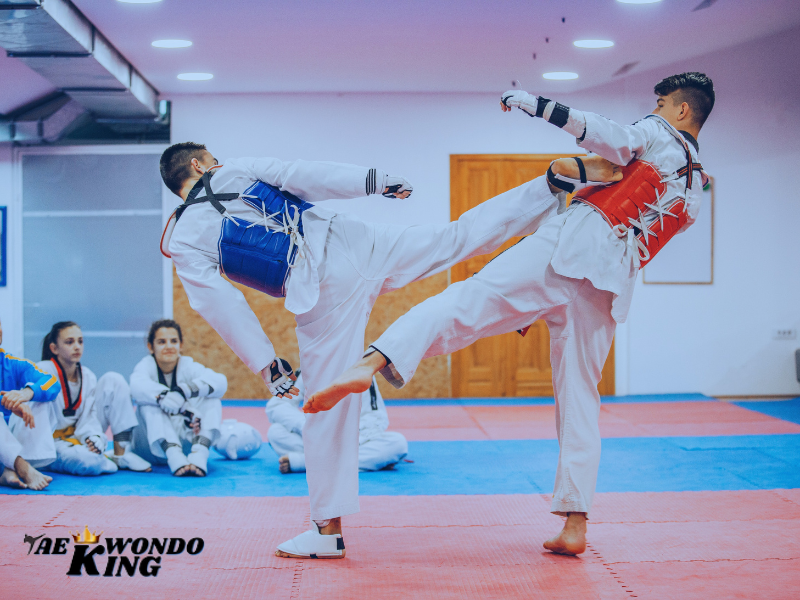
A leg reaches farther than an arm. So a kicker can hit you before you can hit back. If you stand still, you lose the range battle every time.
I made this mistake early on. I stood in front of my partner and waited. I figured I’d block and counter. Instead, I got kicked while I was still deciding what to do.
What a Taekwondo Fighter Does Well (and Where They’re Weaker)
Most competitive taekwondo fighters are fast, flexible, and good at fakes. They also use the ring well and keep a steady rhythm. These are real strengths.
But they have gaps too. Sport taekwondo rules shape their habits. Many fighters rely on one or two favorite kicks. Some are less comfortable at close range. Some drop their guard after kicking. Those habits are where you find openings.
Know Your Opponent Before You Try to Beat a Taekwondo Fighter
Not every taekwondo fighter fights the same way. Some wait and counter. Some chase you down. Some look flashy but throw the same two kicks all match.
Spend the first round learning. Watch what they do when you don’t attack. Their habits show up quickly.
| Fighter Type | How They Fight | Your Best Plan |
|---|---|---|
| Counter-puncher of kicks | Waits, then kicks as you enter | Fake, then step in off their kick |
| Pressure fighter | Walks forward, throws constantly | Use angles and counters |
| Rhythm fighter | Bounces, hides timing | Break their rhythm with fakes |
| One-kick specialist | Repeats a favorite kick | Prepare one clean counter |
How to Read a Taekwondo Fighter’s Stance and Rhythm
Watch the hips and the lead foot. A taekwondo fighter’s setup often tells you what’s coming. A hip turn can signal a roundhouse. A quick shuffle can hide a back leg attack.
Also count the bounce. Most fighters bounce at a steady beat. When the beat changes, an attack often follows. It took me months to notice this, but now I look for it first.
Distance Control: The Core of How to Beat a Taekwondo Fighter
If I had to pick one skill, it would be distance. Almost every good plan to beat a taekwondo fighter starts here. You decide where the fight happens, or they do.
Think of three ranges. Each one needs a different mindset.
| Range | What the Fighter Wants | What You Should Do |
|---|---|---|
| Long | Free kicks, easy scoring | Stay moving, don’t stand still |
| Middle | Clean roundhouse hits | Counter or slip off the line |
| Close | Space to reset | Smother, then step away |
Stay Out of Their Comfort Range
A taekwondo fighter loves the distance where their kick just lands. Your job is to never stay there. Step in, step out, and change the picture.
I like to stay slightly out of range and bounce. Then I step in only when I plan to act. This keeps me from feeding free points.
Closing the Gap Without Eating a Kick
Closing in is the hardest part. If you rush straight at a kicker, you walk into the kick. Many people do this, and I did too.
A better way is to move in as they kick or right after. A kick takes time to recover from. Entering during that moment is much safer than entering cold. You can also use a fake first, then step in when they react.
Best Counters to Beat a Taekwondo Fighter’s Common Kicks
Taekwondo fighters repeat a small group of kicks. If you know them, you can prepare for them. That’s much easier than guessing.
Here’s a simple guide. Treat it as a starting point, not a rulebook. Every fighter is different.
| Their Kick | A Useful Counter Idea |
|---|---|
| Roundhouse to the body | Step off the line, counter fast |
| Roundhouse to the head | Slip back or angle out, then reply |
| Push or front kick | Take the angle, don’t stay square |
| Back kick or spin kick | Move off the line and stay light |
How to Beat the Roundhouse Kick
The roundhouse (often called dollyo chagi) is the most common kick you’ll face. It’s fast, and it covers a lot of space. You can’t just stand there.
I got better when I stopped trying to block it with my arms. Instead, I moved my feet. A small step to the side and back made the kick miss. Then I could counter while they were off balance.
Handling Back Kicks and Spinning Kicks
Spinning attacks look scary. But they have a weakness. The fighter turns their back or shoulder to you for a moment. That’s your clue.
When you see the turn start, don’t stay in the line of the kick. Move off the line, keep your guard up, and look for a quick reply. Don’t chase the kick itself. Chase the opening after it.
Dealing With Fast Front Leg Attacks
Front leg kicks are quick and often used to measure distance. They also set up bigger attacks. Many people over-react to them.
My advice is to stay calm. Notice whether the kick is a real attack or a test. If you jump at every test, you’ll tire out. If you ignore every one, you’ll get hit. Pick your moments.
Footwork and Timing Tips to Beat a Taekwondo Fighter
Footwork is the real engine of a good plan. You can have great counters, but without movement you’ll never use them. Timing makes those counters land.
I’ll keep this simple. Two ideas matter most: angles and timing.
Use Angles Instead of Straight Lines
Taekwondo fighters are good at attacking straight lines. So don’t stay on one. A small step to the side changes everything.
When you move off the line, their kick may miss. Even if it lands, it often lands weaker. And you’re in a better place to answer.
Learn When to Counter and When to Attack First
There are two clean moments to act. One is when they start the kick. The other is right after it ends. Both need good timing.
Early on, I tried to attack at random. It rarely worked. Once I waited for a trigger, my success rate improved. I don’t have exact numbers for that, so take it as my personal sense. It did feel clearly better.
Break Their Rhythm With Fakes
A fake makes your opponent react. If they flinch or move, you learn something. Then you can attack the reaction.
Try a small shoulder move or quick foot shuffle. Watch what the fighter does. If they always react the same way, you have a pattern to use.
Fitness and Conditioning That Help You Beat a Taekwondo Fighter
Strategy matters, but fitness matters too. Taekwondo fighters are often quick and light on their feet. If you tire out, you can’t move well.
You don’t need fancy gear. You do need steady work on a few basics.
Build Leg Speed and Balance
Fast legs help you step in and out. Balance helps you survive when a kick lands. I found simple footwork drills more useful than heavy lifting.
Skipping rope, light shuffles, and short sprints all help. Pick a few and do them often. Consistency beats intensity here.
Don’t Ignore Recovery and Injury Prevention
Sparring a kicker puts stress on your legs, hips, and ankles. I learned this the hard way after pushing too hard in training. A sore hip taught me to warm up properly.
Always warm up before sparring. Stretch gently, and rest when something feels wrong. If pain doesn’t go away, see a qualified professional. A short break is better than a long injury.
Mistakes I See When People Try to Beat a Taekwondo Fighter
Most people lose to taekwondo fighters for the same few reasons. I’ve made almost all of these myself. Fixing them helped me more than learning any new trick.
| Common Mistake | Better Approach |
|---|---|
| Standing still and waiting | Keep moving and change angles |
| Rushing in straight | Enter after a fake or their kick |
| Blocking every kick with arms | Use footwork first, then guard |
| Chasing the kick, not the opening | Reply after the kick finishes |
| Getting angry after a point | Stay calm and reset |
Letting Frustration Drive Your Decisions
Getting hit by a fast kick feels humiliating. Your first reaction is to attack wildly. I did this, and it just fed their counters.
After a point, I now take a breath. I reset my stance and slow things down. A calm head sees openings more clearly.
Myths About How to Beat a Taekwondo Fighter
Some advice online sounds confident but doesn’t hold up well. I fell for a few of these myself. Here are the ones I hear most often.
| Myth | Reality |
|---|---|
| Kickers are helpless up close | Many are trained for it, so don’t assume |
| Just grab the leg and win | Rules may penalize grabbing, and it’s risky |
| Blocking is enough | Blocking alone leaves you passive |
| Power beats speed | Speed and timing often matter more |
Why “Just Rush Them” Usually Fails
People love this advice. It sounds simple. But rushing without a plan gives a kicker free targets.
A rush can work as part of a plan. You need a fake, an angle, or good timing first. Without those, you’re just walking into the kick.
Drills That Help You Beat a Taekwondo Fighter
You can’t fix this problem by reading alone. You need to practice with a partner. The right drills make these ideas feel natural.
I keep my drills simple. Each one targets a clear skill.
| Drill | What It Builds |
|---|---|
| Distance dance with a partner | Range awareness |
| Slip-and-counter on slow kicks | Timing and calm |
| Fake and react practice | Reading opponents |
| Light sparring rounds | Using skills under pressure |
Start Slow, Then Add Speed
Begin at a gentle pace. Focus on clean movement, not power. Fast, messy practice builds messy habits.
Once the pattern feels easy, add speed. Then add a bit of resistance. This step-by-step approach worked best for me.
A Simple Game Plan to Beat a Taekwondo Fighter in a Match
Knowing tactics is one thing. Using them under pressure is another. A basic plan keeps your head clear when the match speeds up.
I like to break a match into phases. It stops me from panicking and trying everything at once.
Early Phase: Watch and Test
Spend the first part of the match learning. Stay mobile and don’t take big risks. Notice which kicks they throw, how often, and from what distance.
Throw a few light fakes. See how they react. Do they back up, counter, or ignore you? Every answer gives you information you can use later.
Middle Phase: Pick One or Two Ideas
Don’t try ten things. Choose one or two tools and use them well. Maybe it’s a counter to their favorite roundhouse and a fake-and-step-in.
When I tried to do everything, I did nothing well. Keeping the plan small made me sharper. If something works, repeat it carefully, but vary the timing so they can’t predict you.
Late Phase: Stay Smart and Calm
Late in a match, people get tired and sloppy. That’s true for you and for them. Slow down your breathing and keep your feet light.
If you’re ahead, don’t get greedy. Stay at a safe distance and avoid wild exchanges. If you’re behind, stay patient and look for the clean moment. Panic usually costs more points.
The Mental Side of Facing a Taekwondo Fighter
Fear is a big part of this. A fast kicker can make you flinch before anything happens. That flinch gives away your plan.
I can’t claim to be a sports psychologist. I can share what helped me in practice. Small habits made a real difference.
Control the Flinch
Flinching happens when your brain expects a hit. The fix is repetition. Slow, safe drills teach your body that a kick coming isn’t an emergency.
Start with soft contact and a trusted partner. Then raise the speed little by little. Over time, your reactions get calmer. That calm helps you see the openings.
Treat Every Point as Information
Losing a point feels bad. But it also tells you something. What kick was it? Where were you standing? Were you moving or still?
After each round, I try to name one lesson. It keeps me learning instead of stewing. You can even ask your coach or partner to point out patterns you missed.
Practical Tips for Sparring Safely Against a Kicker
Safety isn’t a side note. Kicks can hurt, especially to the head and body. Good habits protect you and your partner.
These tips come from general good practice. Follow your coach’s rules first, and adjust to your event’s requirements.
Wear Proper Protective Gear
Use the gear your class or event requires. That usually includes a head guard, body protector, mouth guard, and protection for hands, forearms, and shins. Check what your school or tournament expects.
Poorly fitted gear can slip or fail to protect you. I once trained with a loose guard and spent half the round fixing it. Make sure everything fits well before you start.
Agree on Contact Levels
Before sparring, talk with your partner. Decide whether it’s light, medium, or full contact. Mismatched expectations cause most training injuries I’ve seen.
If a partner goes too hard, say so politely and early. A good partner will adjust. If they don’t, tell your coach.
Using the Rules to Your Advantage
If you’re sparring under taekwondo rules, the rules shape everything. They affect how you score and what you should avoid. Learn them well.
I’m not an official referee, and rules change. Check the current World Taekwondo competition rules or your own tournament’s rules before you plan around any detail.
Know What Scores and What Gets Penalized
Rules usually reward clean, controlled hits to legal targets. They often penalize things like grabbing, pushing, or leaving the ring. Exact point values have changed over the years.
So don’t rely on memory, mine or anyone else’s. Read the latest rulebook. Then build your plan around what actually counts in your event.
Watch the Ring Edge
The edge of the ring can help or hurt you. A fighter who gets pushed to the boundary has fewer options. They might also take a penalty for stepping out.
Use angles to move your opponent toward the edge. But stay careful, because you can end up there too. Awareness of the ring is part of the game.
What About a Real Street Fight?
Some people search this keyword because they worry about a real fight. I want to be honest here. Sport sparring and real fights are very different.
Sport taekwondo has rules, referees, and protective gear. A real situation has none of that. My honest advice is to avoid fights and leave when you can. De-escalation is a better skill than any technique.
Why Sparring Skills Don’t Directly Transfer
Light-contact sport skills don’t automatically work in an unplanned fight. The setting, clothes, and surface all change things. Stress changes how you move too.
I wouldn’t want anyone to feel overconfident after reading a sparring guide. If self-defense is your goal, look for a qualified self-defense instructor. They can teach safe, realistic habits.
Quick Answers to Common Questions
People ask the same few questions about this topic. Here are short, honest answers. I’m sharing my view, not guaranteed facts.
How Do You Beat a Taekwondo Fighter With No Kicking Experience?
Focus on distance, footwork, and timing. Learn a few simple counters and practice them often. You don’t need fancy kicks to make a good plan.
What Is the Biggest Weakness of a Taekwondo Fighter?
It depends on the fighter. Many rely on a few favorite kicks and can be predictable. Some are less comfortable when forced to adapt. Watch your opponent to find their real gap.
Is It Better to Counter or Attack First?
Both work. Countering is often easier to start with because you react to what they do. Attacking first works best when you use a fake or a trigger. Try both in training and see what suits you.
Can a Smaller Fighter Beat a Taekwondo Fighter?
Yes, it’s possible. Skill, timing, and distance control matter a lot. Size helps, but it isn’t everything. I can’t give you a reliable statistic on this, so treat it as general experience.
How Long Does It Take to Get Good at This?
There’s no fixed answer. It depends on your training time, partners, and coaching. Most people I know improved gradually over months of regular practice. Be patient with yourself.
Final Thoughts
If you remember one thing, make it this. Learning how to beat a taekwondo fighter is mostly about distance, timing, and staying calm. Fancy tricks matter much less. Move your feet, read the rhythm, and wait for the right moment.
Be realistic too. You won’t solve this in one session, and some fighters will still beat you. That’s normal. Practice with a good partner, stay safe, and learn from each round. Check the current rules for your event, and ask a qualified coach when you’re unsure.

Founder, Owner, and CEO of TaekwondoKing.
He is one of the top 100 martial artists in the World and among the top 20 referees in Bangladesh.
Ehatasamul Alom is an esteemed Kukkiwon Certified Taekwondo 3rd Dan Black Belt with over 15 years of experience in this dynamic martial art. Born in Rajshahi, Bangladesh, Ehatasamul’s journey with Taekwondo began at the tender age of seven. His passion led him to compete at national and international levels, where he has bagged numerous awards and honors. He is also a member of the Taekwondo National Referee Panel.
With a Bachelor’s degree in Sports Science from the prestigious Rajshahi University, Ehatasamul has a deep understanding of the technical and scientific aspects of martial arts and some other martial arts.
In 2022, Ehatasamul created the “TaekwondoKing.com” to share his knowledge, Free Resources, Values, and Real experiences. His articles focus on Taekwondo training techniques, competition strategies, Sport Products Reviews, and the art’s rich history and philosophy. He also writes about the importance of mental fortitude and discipline, key aspects of his teaching philosophy. He has already launched many sports, Taekwondo, and health-related Free online tools. His goal is to inspire both beginners and seasoned practitioners worldwide through insightful and engaging content.
If you need any help, contact Ehatasamul Alom at any time.