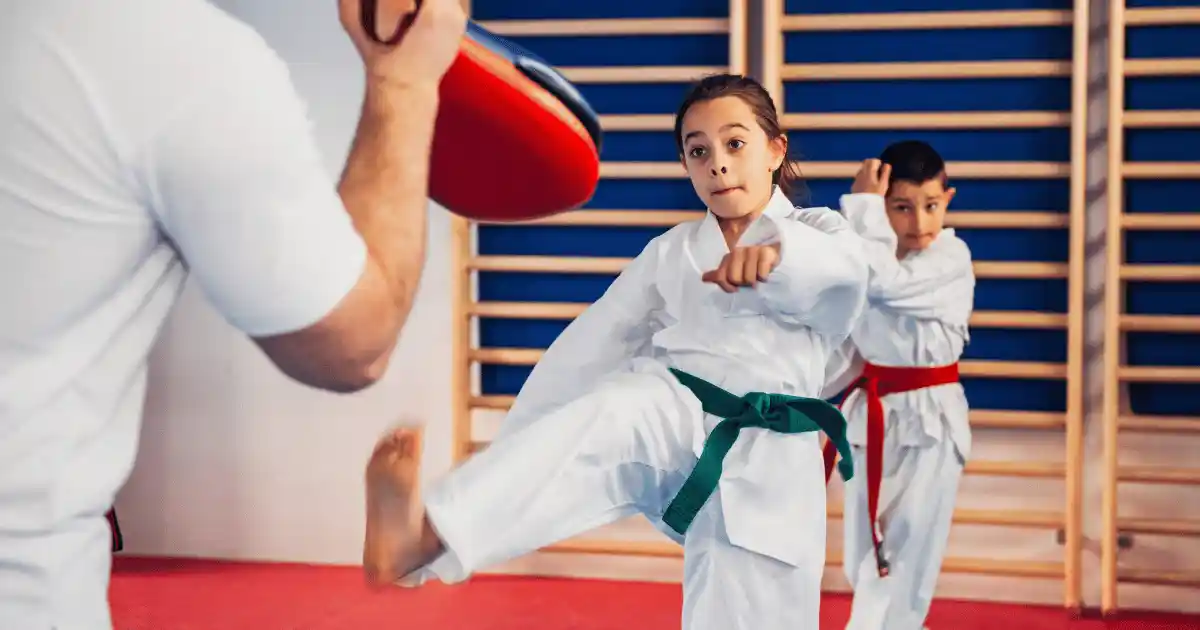
Picture two classes in the same week, at the same dojang, with the same coach. Saturday morning brings a room full of giggling kids chasing pads. Tuesday evening brings tired adults asking why the supporting foot turns during a front kick. Same technique. Same coach. Completely different needs. That contrast sits at the heart of Taekwondo coaching children vs adults, and I learned it the hard way years ago in a small gym in Charlotte, North Carolina, when I tried to teach a kids class exactly like an adult class. It did not go well. This guide breaks down what actually changes between the two groups, based on real coaching experience rather than guesswork.
What Is the Difference Between Coaching Children and Adults in Taekwondo?
Children and adults can both learn Taekwondo well. They just learn in different ways. Good coaches adjust the lesson to the person standing in front of them, rather than expecting everyone to fit one teaching style.
Children Often Need More Structure and Variety
Short activities hold attention better than long ones. Frequent changes keep energy high. Simple instructions cut confusion fast. Games and challenges turn repetition into something kids actually want to do.
Adults Often Want More Context
Adults often ask why a technique works. They want to know how a movement connects to purpose. Explaining the reasoning behind a drill builds trust with grown students faster than any pep talk.
Children Learn Through Play and Repetition
Fun drills stick better than serious ones for young students. Repeated patterns build muscle memory over time. Movement-based learning beats sitting and listening for this age group every time.
Adults May Learn Through Understanding
Technical detail satisfies adult curiosity. Questions deserve real answers, not brush-offs. Problem-solving during a drill often helps adults retain a technique longer than pure repetition.
Both Groups Still Need the Same Foundations
Safety always comes first, no matter the age group. Respect flows both directions between coach and student. Clear instruction, good technique, and positive feedback matter equally for a five-year-old and a fifty-year-old.
The Golden Coaching Rule
Teach the student in front of you, not the age group on paper.
Taekwondo Coaching Children vs Adults at a Glance
I put this table together after years of running back-to-back kids and adult classes. The biggest difference is not that one group is better to coach. It is that their needs are simply different, and this quick comparison helps new coaches spot where to adjust.
| Coaching Area | Children | Adults |
|---|---|---|
| Attention | Shorter periods | Often longer |
| Instructions | Simple and brief | More detailed if useful |
| Motivation | Fun and praise | Progress and purpose |
| Learning | Play and repetition | Understanding and practice |
| Discipline | Clear routines | Mutual respect |
| Physical needs | Development-based | Individual ability |
| Feedback | Immediate and simple | Detailed and specific |
| Safety | Close supervision | Self-awareness plus supervision |
| Goals | Confidence and skills | Fitness, skills, or competition |
| Lesson style | Dynamic | Structured and flexible |
How Communication Changes When Coaching Children vs Adults
The words a coach chooses can shape an entire class. A five-year-old and a forty-five-year-old might perform the exact same kick, yet they rarely need the same explanation.
How to Communicate With Children
Use short sentences that land fast. Choose simple words over technical terms. Give one instruction at a time. Add visual demonstrations whenever possible. Clear signals, like a raised hand or a whistle, keep young groups on track.
Example
Instead of “Rotate your supporting foot externally while extending the hip,” try this instead: “Turn your foot. Lift your knee. Now kick.” Same technique, far less confusion.
How to Communicate With Adults
Adults often appreciate technical explanations. Basic anatomy helps them understand why a joint moves a certain way. Purpose matters to this group. Tactical context, especially for those exploring Taekwondo lessons for adults, builds confidence in the technique itself.
Example
Explain why the supporting foot turns. Explain how hip rotation affects kicking range. Also, Explain why balance matters more than raw speed at this stage.
Avoid Talking Down to Adults
Adults are beginners in Taekwondo. They are not beginners at life, and treating them like children insults their intelligence fast.
Avoid Talking Over Children
Get down to a child’s physical level when speaking. Make eye contact before giving instructions. Check understanding often, since kids will nod along even when confused.
Motivation Differences in Children’s and Adult Taekwondo
Motivation rarely works the same way twice. A child may want a new belt because it feels exciting. An adult may just want to move better after sitting at a desk all week.
What Often Motivates Children
Fun drives most young students forward. Friends keep them coming back. Belts feel like real achievements. Games add excitement. Praise from a coach means more than most adults realize. Small wins build lasting motivation.
What Often Motivates Adults
Fitness pulls many adults through the door, often after reading about how Taekwondo supercharges fitness. Self-defense matters to plenty of new students. Stress relief keeps others training long after the novelty fades. Skill development, competition goals, personal challenge, and social connection round out the list.
Use the Student’s Reason for Training
Ask a simple question: “Why did you start Taekwondo?” Then actually listen to the answer before planning your next lesson.
Avoid Assuming Everyone Wants Competition
Some children love tournaments. Some adults do too. Many students in both groups simply want to enjoy training without ever stepping into a ring.
Practical Coaching Example
A child says, “I want to get my next belt.” An adult says, “I want to feel more confident.” The coach should never give both students the exact same motivational speech.
Attention Span and Class Structure for Children vs Adults
A good lesson has rhythm. With children, that rhythm usually needs to move faster than most new coaches expect.
Structuring a Children’s Class
Short activity blocks work best. Frequent movement keeps energy channeled productively. Simple games teach technique without feeling like a lecture, especially with soft kicking targets that keep young students engaged. Partner drills build social skills alongside physical ones. Clear transitions prevent chaos between activities.
Example Children’s Session
Five to ten minutes for a warm-up game. Five minutes on basic technique. Ten minutes for a skill drill. Ten minutes of partner activity. Also, Ten minutes for a game or application. Five minutes for cool-down and review.
Structuring an Adult Class
Adults can usually handle longer technical blocks. More detailed drills suit their attention span. Extended partner work builds deeper skill. Tactical discussion, similar to what appears in official Kyorugi rules, often fits naturally into adult sessions.
Example Adult Session
Warm-up first. Mobility work next. Technical instruction follows using proper pads for accuracy work. Repetition builds the pattern. Partner drills sharpen application. Controlled sparring tests it live. Cool-down closes the session.
Avoid the “One Long Drill” Problem
For children, change activities before boredom wins the room. For adults, change activities when learning quality starts to drop rather than sticking to a rigid clock.
Physical Development and Safety When Coaching Children
Children are still growing. Coaching them takes more than simply shrinking an adult class down to size.
Consider Age and Development
Coordination develops at different rates across ages. Balance improves gradually through practice. Strength builds slowly and safely with the right approach. Motor control matures over years, not weeks.
Do Not Treat Children Like Miniature Adults
Excessive conditioning has no place in a kids class. High-volume repetitive training risks overuse injuries early. Unnecessary punishment exercises, like endless push-ups for talking, teach fear instead of discipline.
Use Age-Appropriate Activities
Focus on movement quality over intensity. Coordination games build a strong foundation. Balance work supports every future kick, the same foundation covered in why so many people start Taekwondo at a young age. Basic strength develops through play, not weightlifting. Skill development stays the true priority for young Taekwondo students.
Monitor Fatigue
Children may not always recognize when they need a break, so the coach has to watch closely instead of waiting for a complaint.
Coach Observation
Watch for loss of coordination during drills. Watch for sudden changes in behavior mid-class. Also, Watch for poor technique appearing out of nowhere. Watch for unusual tiredness that was not there ten minutes earlier.
Physical Differences When Coaching Adult Taekwondo Students
Adults bring a completely different set of coaching considerations. Some walk in fit and flexible. Some have not exercised in years. Also, Some arrive with old injuries and heroic confidence about what their body can still do.
Ask About Training History
Know their previous sports background. Know their current exercise habits. Also, Know about past injuries before assigning any hard kicks. Know their current activity level honestly.
Adapt for Mobility
Hip mobility limits many adult beginners early on. Hamstring flexibility affects kicking height directly, closely tied to the ideas in why flexibility matters most for new students. Ankle mobility shapes stance quality more than most students realize.
Progress Gradually
Never assume that because someone is an adult, they can automatically handle full intensity. That assumption causes most preventable Taekwondo injuries.
Respect Individual Differences
Two adults of the exact same age may have completely different physical abilities, shaped by years of very different life experience.
Practical Rule
Age is useful information. Ability is better information, and a smart coach always checks both.
Children’s vs Adults’ Taekwondo Coaching Needs Compared
This is where the comparison becomes practical. Use this table while planning a class and ask yourself what this specific group needs from you today, since the answer can shift even within the same age group.
| Coaching Need | Children | Adults | Coach Adjustment |
|---|---|---|---|
| Focus | Short bursts | Longer blocks | Adjust activity length |
| Instructions | Simple | Detailed if needed | Change language |
| Motivation | Fun and praise | Purpose and progress | Link to goals |
| Feedback | Quick and clear | Specific and detailed | Adapt depth |
| Exercise | Skill-based | Individualized | Scale intensity |
| Discipline | Routine | Respect and agreement | Set expectations |
| Questions | Short answers | Encourage discussion | Allow context |
| Progress | Belts and skills | Personal goals | Track outcomes |
Discipline and Behaviour Management in Children’s Taekwondo
Children need boundaries. They also need to know exactly what those boundaries are before they can follow them.
Set Rules Early
Listen when the coach speaks. Respect training partners at all times, and always wear proper protective gear during contact drills. Keep hands and feet controlled during drills. Follow safety instructions without exception, the same standard covered in Taekwondo safety and medical rules.
Use Consistent Consequences
Avoid random punishment that changes based on your mood. Be predictable, since children thrive on knowing what happens next.
Avoid Fear-Based Coaching
Shouting is not the same as leadership, and kids can usually tell the difference faster than adults think.
Redirect Behaviour
Instead of “Stop messing around!” try, “Eyes this way. We are starting the next drill.” The redirect works better than the scold almost every time.
Use Positive Reinforcement
Praise listening when you see it. Praise effort even without perfect technique. Also, Praise respect shown to training partners. Praise improvement, however small.
Discipline and Leadership When Coaching Adults
Adults usually respond better to clear expectations than to authoritarian behavior borrowed from a kids class.
Treat Adults as Adults
Explain the rules rather than just stating them. Explain safety reasoning behind each precaution. Also, Explain the reason behind coaching decisions whenever it helps buy-in.
Maintain Professional Boundaries
Stay friendly without losing structure. Stay consistent across every class you teach, a habit closely linked to earning trust the way a certified referee earns credibility over years of fair calls.
Handle Conflict Calmly
Listen first before responding to a disagreement. Respond clearly once you understand the actual issue.
Avoid the “I’m the Black Belt, So I’m Always Right” Mindset
Rank creates responsibility. It does not remove the need to listen, a lesson every good Taekwondo referee also learns early in their career.
Feedback Differences When Coaching Children and Adults
TKD Feedback should help students improve without making them afraid to try again.
Feedback for Children
Keep it short. Keep it positive. Also, Keep it specific. Keep it immediate. For example: “Good balance. Now keep your hands up.”
Feedback for Adults
You can often provide more technical detail here. More context helps adults connect the dots. More self-correction becomes possible once they understand the why, a process closely tied to the core moves every adult beginner eventually masters. For example: “Your kick is landing well, but your supporting foot is limiting your hip rotation.”
Do Not Overcorrect Either Group
Fix the most important issue first, and let the smaller details wait for next class.
Let Students Try Again
A correction only matters if the student gets a real chance to apply it right away.
Feedback Formula
Notice, then explain, then correct, then rehearse. That order works for both a six-year-old and a sixty-year-old.
How to Coach Children’s and Adults’ Confidence
Confidence sits at the center of martial arts coaching. Your job is to challenge students without ever making them feel incapable.
Building Confidence in Children
Celebrate effort over outcome. Use achievable goals that stack into bigger wins, tracked with something as simple as a training journal or belt chart. Avoid public embarrassment at all costs, since one bad moment can push a child away from training for good.
Building Confidence in Adults
Normalize mistakes early and often. Show visible progress, even small progress, to keep adults motivated. Respect the vulnerability it takes for a grown adult to start something new, a theme worth pairing with lessons on building self-confidence through consistent training.
Handle Fear of Failure
A nervous student may avoid sparring entirely. They may avoid asking questions in front of the group. They may simply hold back during drills without saying why.
Coach the Person, Not Just the Technique
Sometimes the best coaching correction has nothing to do with the kick. Sometimes it is just, “You’re doing fine. Let’s try it again.”
Coaching Taekwondo Sparring for Children vs Adults
Sparring needs special care because the physical and emotional risks shift with age.
Children’s Sparring
Focus on control above everything else. Focus on rules that keep contact light. Also, Focus on distance management early, using well-fitted sparring gear sized for smaller athletes. Focus on basic movement patterns. Focus on confidence more than winning.
Adult Beginner Sparring
Control still comes first for adults. Defense matters just as much as offense. Distance and timing become more nuanced. Tactical awareness grows with experience, closely tied to the strategies covered in Taekwondo sparring techniques.
Match Partners Carefully
Consider size differences before pairing students. Consider experience levels honestly. Also, Consider skill gaps that could turn a drill into a mismatch, a concern echoed in coverage of common Taekwondo injuries. Consider temperament, since some students spar too aggressively for a beginner partner. Consider control ability above all.
Do Not Let Sparring Become a Fight
Training is for learning, not for proving a point.
Key Coaching Question
Before each round, ask, “What is the goal of this round?” That single question keeps sparring purposeful instead of chaotic.
Coaching Poomsae for Children vs Adults
Poomsae offers another useful comparison, since the technical content stays similar while the teaching method changes completely.
Teaching Poomsae to Children
Use visual cues instead of long verbal explanations. Break patterns into small sections, and use a step-by-step training chart if your students respond well to visuals. Repeat often, since kids need more reps than adults to lock in a sequence. Add games to keep the process fun, following the same spirit found in official Poomsae rules.
Teaching Poomsae to Adults
Explore technique depth adults can actually absorb. Explore timing between movements. Also, Explore balance through each transition. Explore power generation at the right moments. Explore performance quality for those aiming at competition.
Avoid Teaching the Entire Pattern Too Quickly
Break it into position first. Then movement. Then direction. Also, Then rhythm. Only then move to the full sequence.
Children’s and Adults’ Taekwondo Coaching Goals
Goals shape every coaching decision you make. A recreational child’s goal may be confidence and enjoyment, while an adult athlete may chase competition results. Neither goal outranks the other. The coach simply needs to know what success looks like for that specific student.
| Student Type | Common Goal | Coaching Focus |
|---|---|---|
| Young beginner | Fun | Movement and confidence |
| Older child | Skill | Technique and progress |
| Teen athlete | Competition | Performance and tactics |
| Adult beginner | Fitness | Safe skill development |
| Adult recreational | Wellbeing | Enjoyment and consistency |
| Adult competitor | Performance | Tactical and physical preparation |
| Older adult | Mobility | Safe movement and confidence |
USA Expert Advice on Coaching Children and Adults
Good expert references should add real authority, not just a name dropped in for search rankings.
Potential Expert Reference: Dr. William Sands
Dr. William Sands is a recognized figure in athlete development, training design, and long-term physical preparation, making him a useful reference point for coaches thinking through age-based training decisions.
Expert Angle
Individual athlete development stands at the center of his work. Appropriate training progression matters more than rushing students forward. Physical preparation supports long-term success. Long-term athlete development frameworks apply well beyond his original sport.
Apply the Principle to Taekwondo
Coaches should consider biological development before assigning intense drills, similar to how Para Taekwondo competition rules account for individual athlete differences. Training age matters as much as calendar age. Physical maturity varies widely even within the same class. Individual needs should always outweigh a one-size-fits-all plan.
Suggested Expert Question
“How should coaches adjust training for athletes at different stages of development?” A specialist in long-term athlete development would likely point straight back to individualized planning over rigid, age-based templates.
Quote Guidance
Use a direct quote only when it can be verified from a reliable primary source. Otherwise, paraphrase the expert’s published guidance honestly.
Mistakes Coaches Make When Teaching Children and Adults the Same Way
This section covers a major secondary search intent: what actually goes wrong when coaches fail to adapt their approach.
Using the Same Instructions
Children may need simpler language than adults require. Adults often want more context than a child needs.
Using the Same Training Load
Physical needs differ sharply between a growing body and a fully developed one, which is exactly why coaches track wear on training equipment differently for each group, and why guidance on how demanding Taekwondo is on the body applies unevenly across ages.
Using the Same Motivation
Goals differ between the two groups, and a mismatched pep talk falls flat every time.
Using the Same Discipline Style
Behavior management differs, since fear-based tactics that barely work on adults can genuinely harm a child’s relationship with training.
Using the Same Feedback
Feedback depth should change based on what the student can actually process.
Assuming Age Is the Only Difference
Individual needs matter more than labels, since two ten-year-olds or two forty-year-olds can be worlds apart.
The Better Approach
Same values. Different methods.
What Children and Adults Have in Common in Taekwondo
The comparison should never make the two groups sound completely unrelated.
Both Need Safety
Safe training environments protect everyone. Appropriate contact levels prevent unnecessary injury, a principle grounded in the official GMS rules and regulations.
Both Need Good Coaching
Clear instructions help every student, regardless of age. Useful feedback moves both groups forward.
Both Need Progress
Students of every age want to feel real improvement, not just attendance.
Both Need Respect
Every student deserves dignity, whether they are six or sixty, a value reflected in why Taekwondo builds self-discipline across all ages.
Both Need Enjoyment
People stay where they enjoy learning, and that single truth applies to every dojang in the country.
How to Plan One Taekwondo Lesson for Children and Adults
Using the same technical theme shows exactly how a lesson should change between groups.
Example Topic: Front Kick
Children’s Version
Start with a warm-up game. Add a balance drill. Move to front kick practice with soft kicking pads sized for smaller feet. Turn it into a target game. Finish with a simple partner activity.
Adults’ Version
Start with a mobility warm-up. Move to a technical breakdown. Add repetition to lock in the pattern. Continue with pad work using solid training equipment. Add a distance drill. Close with controlled application.
What Stays the Same
Safety never changes. The core technique never changes. A clear goal never changes.
What Changes
Explanation depth changes. Drill complexity changes. Pace changes. Motivation approach changes.
A Sample Coaching Plan for Children vs Adults
A practical side-by-side lesson plan makes this comparison easy to apply. The key is not building two unrelated classes. Start with the same technical goal, then adapt the path each group takes to reach it.
| Session Stage | Children | Adults |
|---|---|---|
| Warm-up | Game-based movement | Mobility and movement |
| Technique | Short demonstration | Detailed explanation |
| Practice | Simple repetition | Structured repetition |
| Drill | Fun challenge | Technical drill |
| Application | Controlled game | Partner application |
| Sparring | Basic, supervised | Controlled tactical work |
| Review | Quick recap | Discussion and feedback |
How New Coaches Can Learn to Teach Both Age Groups
A coach who can teach both children and adults well becomes far more valuable to any dojang.
Observe Experienced Coaches
Watch how they speak to each group differently. Watch how they manage time across an hour. Also, Watch how they correct errors without crushing confidence, much like the careful approach found in what I learned from years of practicing Taekwondo.
Assist Children’s Classes
Learn patience here first. Learn energy management next. Also, learn behavior management through direct practice, the same groundwork covered in this guide to teaching kids Taekwondo.
Assist Adult Classes
Learn technical explanation skills. Learn individual adaptation for different fitness levels. And Learn goal-based coaching that respects why each adult walked through the door.
Ask for Feedback
Ask a senior coach directly: “What would you change about how I taught that class?” Their answer will teach you more than a dozen books.
Keep a Coaching Journal
Record what worked after each session. Record what failed honestly, without excuses. Also, Record student response to specific drills. Record your next adjustment before you forget it.
The 30-Day Plan to Improve Age-Appropriate Coaching
Here is a practical way to apply everything in this article over one month.
Week 1: Observe
Watch a children’s class and an adult class back to back. Record pace differences. Record language differences. Also, Record activity length differences.
Week 2: Practise Communication
Teach one technique to a child. Teach the same technique to an adult. Notice exactly how your explanation changes between the two.
Week 3: Adapt One Lesson
Take one lesson plan and build two versions from it. Create a children’s version first. Create an adult version second.
Week 4: Get Feedback
Ask a senior instructor to review your approach honestly, the same way experienced Taekwondo coaches once reviewed yours.
The Coaching Challenge
Teach the same technique to both groups. Then ask yourself, “What did I change, and why?”
Frequently Asked Questions About Taekwondo Coaching Children vs Adults
Is coaching children harder than coaching adults?
Not necessarily. The challenges are different rather than one group being universally harder to teach.
Is Taekwondo good for children?
Yes, when taught with age-appropriate methods and close attention to safe, structured practice.
Can adults learn Taekwondo as beginners?
Absolutely. Training can be adapted to individual ability, no matter the starting fitness level, much like the paths described for Taekwondo beginners of any age.
Do children and adults learn Taekwondo differently?
Yes. Attention span, communication style, motivation, and physical development all shift between the two groups.
Should children and adults train together?
Mixed classes can work in some settings, though most coaches find separate age groups easier to manage safely.
How should Taekwondo coaches motivate children?
Lean on fun, praise, progress, and goals that feel achievable within a few weeks.
How should Taekwondo coaches motivate adults?
Connect training to personal goals, visible progress, fitness gains, and skill development.
Is Taekwondo sparring safe for children?
Safety depends on supervision, clear rules, proper protective equipment, and appropriate partner matching.
How do you teach Taekwondo to a nervous adult?
Use gradual exposure, controlled drills, and a genuinely supportive training environment, along with comfortable training gear that helps a nervous student feel prepared rather than exposed.
What is the biggest difference between coaching children and adults?
The core difference lies in adapting communication, motivation, and lesson structure to fit the student in front of you.
Taekwondo Coaching Children vs Adults Self-Assessment
Communication I adjust my language for age. I avoid unnecessary jargon. I check understanding often.
Lesson Planning I change activity length by group. I plan age-appropriate drills. I keep a clear goal for every session.
Physical Training I consider individual ability first. I monitor fatigue closely. I progress students gradually rather than rushing.
Motivation I understand each student’s personal goals. I use appropriate encouragement for their age. I recognize progress, however small.
Safety I match students appropriately for drills and sparring. I monitor contact levels at all times. I follow safeguarding practices without exception.
Coaching Development I observe other coaches whenever I can. I request feedback regularly, and I use it.
Final Recommendation
I have coached both crowded kids classes and quiet evening adult sessions long enough to know one truth: the technique rarely changes, but the person in front of you always does. From my own years running programs across busy American gyms, watching new coaches at academies from Nevada to Chicago, the coaches who succeed are the ones who stop teaching the calendar and start teaching the student.
Adjust your language for children. Add context for adults. Protect growing bodies. Respect grown minds. Taekwondo coaching children vs adults is not about picking a favorite group. It is about becoming skilled enough to serve both well, and that skill is what separates a good coach from a great one.

Founder, Owner, and CEO of TaekwondoKing.
He is one of the top 100 martial artists in the World and among the top 20 referees in Bangladesh.
Ehatasamul Alom is an esteemed Kukkiwon Certified Taekwondo 3rd Dan Black Belt with over 15 years of experience in this dynamic martial art. Born in Rajshahi, Bangladesh, Ehatasamul’s journey with Taekwondo began at the tender age of seven. His passion led him to compete at national and international levels, where he has bagged numerous awards and honors. He is also a member of the Taekwondo National Referee Panel.
With a Bachelor’s degree in Sports Science from the prestigious Rajshahi University, Ehatasamul has a deep understanding of the technical and scientific aspects of martial arts and some other martial arts.
In 2022, Ehatasamul created the “TaekwondoKing.com” to share his knowledge, Free Resources, Values, and Real experiences. His articles focus on Taekwondo training techniques, competition strategies, Sport Products Reviews, and the art’s rich history and philosophy. He also writes about the importance of mental fortitude and discipline, key aspects of his teaching philosophy. He has already launched many sports, Taekwondo, and health-related Free online tools. His goal is to inspire both beginners and seasoned practitioners worldwide through insightful and engaging content.
If you need any help, contact Ehatasamul Alom at any time.