For a long time, I thought I would get better at sparring by simply doing more of it. More rounds. More kicks. More sweat. It did not work. I kept making the same mistakes and getting tagged by the same kicks. Learning how to fight better in taekwondo took a different approach.
This guide shares what finally made a difference for me. You will learn how to fix your stance, move with purpose, time your kicks, and stay calm under pressure. I will also point out the habits that held me back, so you can skip some of the pain.
What Fighting Better in Taekwondo Really Means
Fighting better does not mean fighting harder. It means making smarter choices in each exchange. A calm fighter with good basics often beats a wild one with more power.
It Is Not About Being Faster
Many students think speed is everything. Speed helps, but it is only one tool. Timing, distance, and balance matter more. A well-timed kick beats a fast but sloppy one.
I used to rush every attack. I felt quick, but I was easy to read. When I slowed down my thinking, my results got better. That is the first big lesson in how to fight better in taekwondo.
Know the Rules You Are Fighting Under
Your plan depends on your rule set. Competition sparring, school sparring, and light drills all reward different things. Check what scores, what is banned, and what the referee watches for.
Rules change between events and over time, so read the current rulebook for your own match. I once lost points for a habit I did not know was penalized. That was a cheap lesson, but an annoying one.
Beginner and Advanced Fighters Need Different Goals
A beginner should aim for balance, a steady guard, and one or two reliable kicks. An advanced fighter can work on fakes, counters, and ring control. Do not rush ahead. Skipping steps is the slowest way to learn how to fight better in taekwondo.
I tried advanced tricks before my basics were ready. My kicks looked fancy in practice and fell apart in sparring. Going back to basics felt like a step backward. It was actually the fastest way forward.
Start With Your Stance and Guard
Good fighting begins with how you stand. If your base is shaky, every kick you throw will be weaker. A solid stance gives you balance, speed, and safety.
Find a Fighting Stance That Fits You
Your stance should feel loose and ready. Stand with your feet about shoulder width apart. Turn your body slightly to the side. Bend your knees a little so you can move in any direction.
Many students bounce in a light rhythm. A bounce keeps your legs alive. But do not bounce too high or too wildly. Big bounces waste energy and make your timing easy to read.
Keep Your Guard Where It Helps
Your hands should protect your head and body. Keep them up, but relaxed. Tense arms get tired fast. I used to drop my hands after every kick. Then I wondered why I got hit so often.
Here are the common stance problems I see, and the quick fixes I use.
| Stance Problem | Quick Fix |
|---|---|
| Feet too close together | Widen to shoulder width |
| Standing too upright | Bend the knees slightly |
| Hands dropping after kicks | Reset the guard every time |
| Bouncing too high | Keep the bounce small |
Footwork: The Skill Behind How to Fight Better in Taekwondo
Footwork is the engine of good sparring. It lets you kick, avoid, and reset. Without it, even a great kick lands late or misses.
Most students spend far more time on kicks than on moving. I did the same. When I finally trained my steps, my kicks improved without extra kick practice.
Small Steps Beat Big Lunges
Big lunges feel powerful, but they leave you off balance. Small steps keep you ready to kick or retreat. Think of footwork as many tiny adjustments.
Try this at home. Set a cone or a water bottle on the floor. Step toward it and away from it using short steps. Keep your knees soft. Do this for a few minutes before class.
Angles and Pivots
Moving in a straight line makes you easy to hit. A small step to the side changes everything. It lets you counter while your partner misses.
Practice a pivot after every attack. Kick, then turn off the line. This habit protects you from the quick counter. It also makes you harder to predict.
| Drill | What It Trains |
|---|---|
| Cone steps | Small, balanced steps |
| Step and pivot | Angle changes |
| Shadow sparring | Rhythm and flow |
| Line drills | Straight movement control |
Study Your Partner Like a Game Plan
Sparring is not just reaction. It is also reading. Every partner has habits, and you can use them. A few quiet seconds of watching can save you many points.
Spot Their Favorite Kick
Most fighters lean on one or two kicks. Watch for it in the first round. Once you know it, you can plan a counter. This is one of the simplest ways to put how to fight better in taekwondo into practice.
I used to guess what my partner would do. Now I watch first. I look at the lead foot, the hips, and the shoulders. These show the kick before the leg moves.
Notice Their Weak Side
Many fighters guard one side better than the other. Some are slow to turn. Others drop their hands after a kick. Pick one weak spot and test it lightly. If it works, keep going.
Do not try to fix everything at once. One clear plan beats five half plans.
Distance and Timing: The Hidden Part of Sparring
Distance and timing decide who scores. You can have great kicks and still miss every time if you stand in the wrong place. This part took me the longest to learn.
Find Your Range
Your range is the space where your kick lands but theirs cannot. It changes with your height and leg length. A taller fighter usually likes more space. A shorter fighter often needs to close in.
Ask a partner to stand still while you test your reach. Throw slow kicks and notice where they land. Then move one step back and test again. This simple test teaches you more than you would think.
Attack Timing Versus Counter Timing
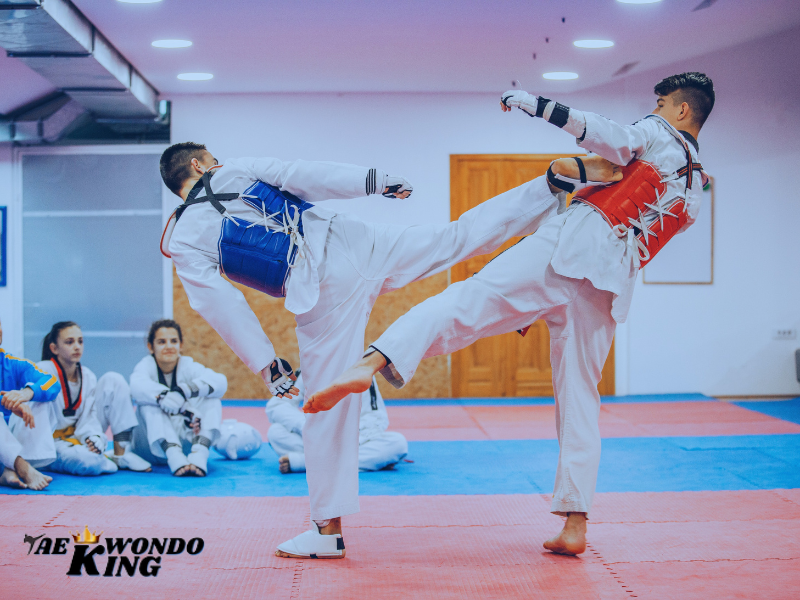
There are two main ways to score. You can attack first, or you can counter. Each needs different timing. Attacking works best when your partner is moving or resting. Countering works best when they commit to a kick.
I was a pure attacker for years. Then a coach pushed me to counter more. My scores improved quickly, because countering takes less energy and uses your partner’s own movement.
| Range | Best Tools | Common Risk |
|---|---|---|
| Long | Fast front-leg kicks | Overreaching |
| Middle | Turning and push kicks | Getting countered |
| Close | Short hands, quick clinches | Getting stuck |
Kicks That Help You Score
Kicks are the heart of taekwondo sparring. But you do not need every kick in the book. A few reliable kicks, done well, beat a long list of weak ones.
Master a Few Kicks First
Pick two or three kicks that feel natural. Many students start with the turning kick and the push kick. Practice them until you can throw them without thinking.
I wasted months trying to learn flashy kicks. Then I realized my basic turning kick was still sloppy. Once I cleaned it up, my sparring jumped forward. This is a core part of how to fight better in taekwondo.
Fakes and Setups
A good fake makes your real kick land. Lift your knee as if you will kick one way, then kick another. Or step forward, pause, and kick. Your partner reacts to the first move and opens up.
Fakes need to look real. Lazy fakes do not fool anyone. Start by making your fake match your real kick for the first half of the motion.
| Kick | Best Use |
|---|---|
| Push kick | Control distance |
| Turning kick | Main scoring tool |
| Back kick | Surprise counter |
| Axe kick | Short-range finisher |
Partner Drills That Build Real Sparring Skill
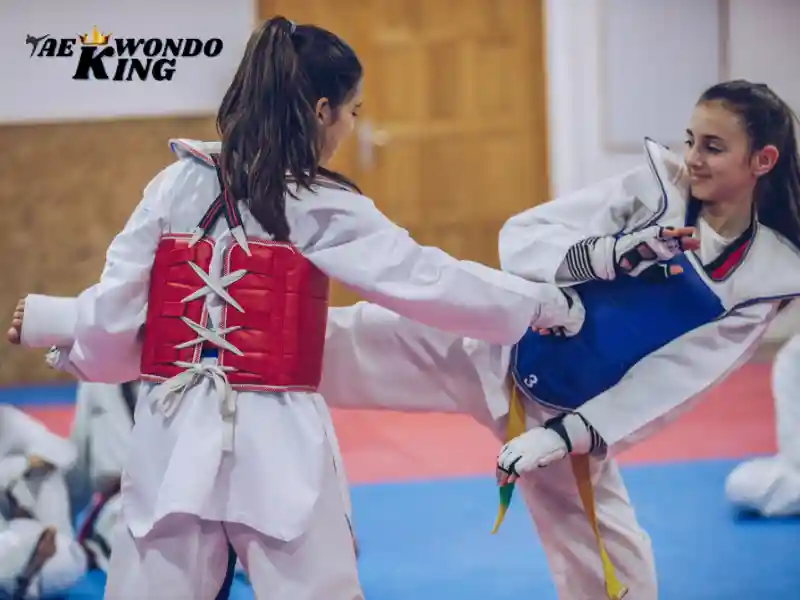
Solo practice helps, but partner drills teach timing. They give you a live target and a live reaction. Keep them light and controlled so both of you stay safe.
Pad Work With a Purpose
Do not just kick a pad and walk away. Ask your partner to move it. Practice stepping in, kicking, and stepping out. Add a pivot after each kick. This turns simple pad work into a mini sparring drill.
I like short rounds with a clear goal. One round is only for distance. Another is only for the pivot. Small goals keep your mind sharp.
Slow Sparring Rounds
Slow sparring sounds silly, but it works. Move at half speed and focus on form. You can see your mistakes clearly when nothing is rushed. It also lets you try new ideas without fear of being hit hard.
Many students skip this step. They want full speed every time. But slow rounds helped me more than I expected. They made my fast rounds cleaner.
Defense and Counters
Defense is not boring. It is what lets you stay in the fight. A fighter who can avoid kicks has more chances to score.
Avoid, Check, and Counter
You can handle a kick in three ways. You can move out of range. You can check it with your shin. Or you can step aside and counter. The best choice depends on the moment.
Checking needs good timing. Done wrong, it hurts. Practice it slowly with a partner before you try it in a fast round. Learning how to fight better in taekwondo means learning to protect yourself as well as to score.
Reset After Every Exchange
After a kick, many students freeze. That is when they get hit. Build a habit of resetting. Step back, raise your guard, and breathe. Then decide what to do next.
This tiny habit cut my mistakes in half. I cannot give an exact number, but it felt like a very big change.
Myths That Slowed My Progress
A few popular ideas about sparring sounded smart, but they held me back. Letting go of them made my training simpler. Here are the ones I fell for.
Myth: More Power Always Wins
Power helps, but a hard kick that misses scores nothing. A light, accurate kick at the right moment scores. Control and timing beat strength more often than you might think.
Myth: You Must Be Very Flexible
Good flexibility is useful. But you do not need to do full splits to spar well. A modest range of motion with good timing and balance can take you far. Work on flexibility steadily and do not force it.
Mistakes I Made While Learning How to Fight Better in Taekwondo
Everyone makes mistakes. The trick is catching them early. These are the ones I made most often. Fixing them gave me bigger gains than learning new techniques.
| Mistake | Better Approach |
|---|---|
| Rushing every attack | Wait for the right moment |
| Dropping my guard | Reset after every kick |
| Staying in one spot | Keep moving and changing angles |
| Copying flashy kicks | Master a few basics |
| Ignoring defense | Practice avoiding and checking |
The worst habit was ignoring feedback. A coach told me something simple, and I brushed it off. Weeks later, I finally listened, and it fixed a problem I had for months.
Adjusting to Different Opponents
Not every partner fights the same way. A plan that works on one person may fail on the next. Learning how to fight better in taekwondo means learning to adapt.
Taller Opponents
A taller partner has longer reach. Do not stand still at the edge of their range. Stay outside it, or step in close and work there. Short steps and quick pivots help a lot.
Shorter Opponents
A shorter partner often moves in fast. Keep your guard up and use push kicks to keep them away. Angle off after each kick so they cannot rush you.
Left-Handed Opponents
Some partners stand with the opposite foot forward. This feels odd at first. Your kicks may line up differently. Spend a few rounds just watching and adjusting. Ask a left-handed partner to drill with you often.
Fitness and Safety for Better Sparring
You cannot fight well if you are tired or hurt. Stamina, flexibility, and safe training habits all play a part. They are not glamorous, but they matter.
Build Stamina Without Burning Out
Sparring rounds are tiring. Short interval work helps. Try skipping rope, shadow sparring, or fast footwork drills. Keep each round about the same length as your real match.
Rest matters too. I used to train every day and wondered why I felt slow. A rest day or two each week made me faster, not slower.
Stretch and Protect Your Joints
Taekwondo needs flexible hips and hamstrings. Warm up before you stretch. Cold stretching can cause strains. Pay attention to your knees and ankles, because kicks put stress on them. Your long-term plan for how to fight better in taekwondo should include injury prevention.
Always wear your gear in sparring. That means a headguard, mouthguard, shin guards, and a groin guard. If something hurts in a sharp way, stop and get it checked. I am not a doctor, so see a professional for any real injury.
Gear That Helps You Train Better
Good gear will not make you a better fighter. But it keeps you safe and lets you train harder. Poor gear can get in the way.
Pick Gear That Fits
Your headguard should sit firmly and not block your sight. Shin guards should not slide. A mouthguard should fit well so you can breathe. I once used loose guards, and they twisted on every kick. It was distracting and a little painful.
Ask your coach for advice if you are unsure. Rules for approved gear can vary by event, so check before you buy.
The Mental Side of Sparring
Sparring tests your nerves as much as your legs. Many fighters know the right moves but freeze when a partner comes forward. Calm thinking is a skill you can train, and it is a quiet part of how to fight better in taekwondo.
Handle Nerves Before a Round
Nerves are normal. I still feel them. A few slow breaths before a round help me settle. I also give myself one simple goal, like keeping my guard up.
One simple goal beats a long list. When you try to remember ten things, you do none of them well. Pick one thing, then let the rest come naturally.
Review Your Rounds
After each session, think about what went well. Then pick one thing to fix next time. Some students film their sparring. Video shows habits you cannot feel in the moment.
I was surprised by how often I dropped my hands. I felt like my guard was fine. The video said otherwise.
Habits That Keep You Improving
Good sparring is built over months. The students who improve most are not the most talented. They are the ones who keep showing up and keep learning. A few small habits make that easier.
Keep a Simple Training Log
After class, write two lines. Note one thing that went well and one thing to fix. It takes a minute. Over a few weeks, patterns appear. You may see the same mistake again and again.
I started a log after a frustrating month. Reading it back showed me that I dropped my guard in almost every note. That one fact changed my training.
Ask Better Questions
Do not just ask your coach, “How was that?” Ask something specific. Try, “Was my guard high on that last kick?” or “Was I too close when I kicked?” Specific questions get useful answers.
Coaches are busy. A clear question helps them help you. It also shows that you want to learn how to fight better in taekwondo, not just collect belts.
Stay Patient With Slow Weeks
Some weeks feel like you are going backward. That is normal. Your body is tired, or your mind is stuck on a new habit. Keep training and keep the basics clean. Progress often shows up after a slump.
A Simple Weekly Plan
You do not need a complex plan. You need steady practice you can repeat. A weekly plan makes how to fight better in taekwondo feel less random. This is a plan I would follow again, and you can change it to fit your own schedule.
| Day | Focus |
|---|---|
| Monday | Footwork and stance |
| Tuesday | Kick technique |
| Wednesday | Rest or light stretching |
| Thursday | Partner drills |
| Friday | Stamina intervals |
| Saturday | Controlled sparring |
| Sunday | Full rest |
Common Questions About How to Fight Better in Taekwondo
People often ask the same questions. Here are short, honest answers.
How Long Does It Take to Get Better at Sparring?
It depends on how often you train and who coaches you. Many students notice small gains in a few weeks of focused training. Real confidence usually takes months. I cannot promise a set timeline.
What Is the Most Important Skill for Sparring?
I would say footwork. It supports every kick and every defense. If you only fix one thing about how to fight better in taekwondo, start there.
Can I Fight Better Without a Coach?
You can work on fitness and footwork alone. But a coach sees mistakes you cannot see. If you can, get regular feedback from one.
How Do I Stop Freezing During Sparring?
Start with light, controlled rounds. Give yourself one simple goal each time. Freezing fades as sparring becomes familiar.
Final Thoughts
The biggest lesson I learned is that good sparring comes from basics. A solid stance, smart footwork, good timing, and a calm mind beat flashy moves. If you want to know how to fight better in taekwondo, start with the simple parts and practice them often.
Be patient with yourself. You will get kicked sometimes, and that is part of learning. Pick one idea from this guide and work on it for a week. Stay patient while you learn how to fight better in taekwondo, because progress is slow but real. Then add another. Small steps, repeated often, add up faster than you think.

Founder, Owner, and CEO of TaekwondoKing.
He is one of the top 100 martial artists in the World and among the top 20 referees in Bangladesh.
Ehatasamul Alom is an esteemed Kukkiwon Certified Taekwondo 3rd Dan Black Belt with over 15 years of experience in this dynamic martial art. Born in Rajshahi, Bangladesh, Ehatasamul’s journey with Taekwondo began at the tender age of seven. His passion led him to compete at national and international levels, where he has bagged numerous awards and honors. He is also a member of the Taekwondo National Referee Panel.
With a Bachelor’s degree in Sports Science from the prestigious Rajshahi University, Ehatasamul has a deep understanding of the technical and scientific aspects of martial arts and some other martial arts.
In 2022, Ehatasamul created the “TaekwondoKing.com” to share his knowledge, Free Resources, Values, and Real experiences. His articles focus on Taekwondo training techniques, competition strategies, Sport Products Reviews, and the art’s rich history and philosophy. He also writes about the importance of mental fortitude and discipline, key aspects of his teaching philosophy. He has already launched many sports, Taekwondo, and health-related Free online tools. His goal is to inspire both beginners and seasoned practitioners worldwide through insightful and engaging content.
If you need any help, contact Ehatasamul Alom at any time.